Skip to content
Artwork for A Productive Conversation
BusinessCareersManagement

A Productive Conversation

Mike Vardy

Hosted by productivity strategist Mike Vardy, A Productive Conversation offers insightful discussions on how to craft a life that aligns with your intentions. Each episode dives into the art of time devotion, productiveness, and refining your approach to daily living. Mike invites guests who are thinkers, doers, and creators to share their strategies for working smarter and living more intentionally. From practical tips to deep dives on mindset shifts, this podcast will help you reframe your relationship with time and find balance in a busy world.

Subscribe and join the conversation—because a productive life is more than just getting things done.

Play
  • 23 episodes
  • weekly
  • Avg 41 min
  • English
Counted on this page — what you have heard stays on this device, so it is not something the list can be paged by.
  • June 5 · 56 min

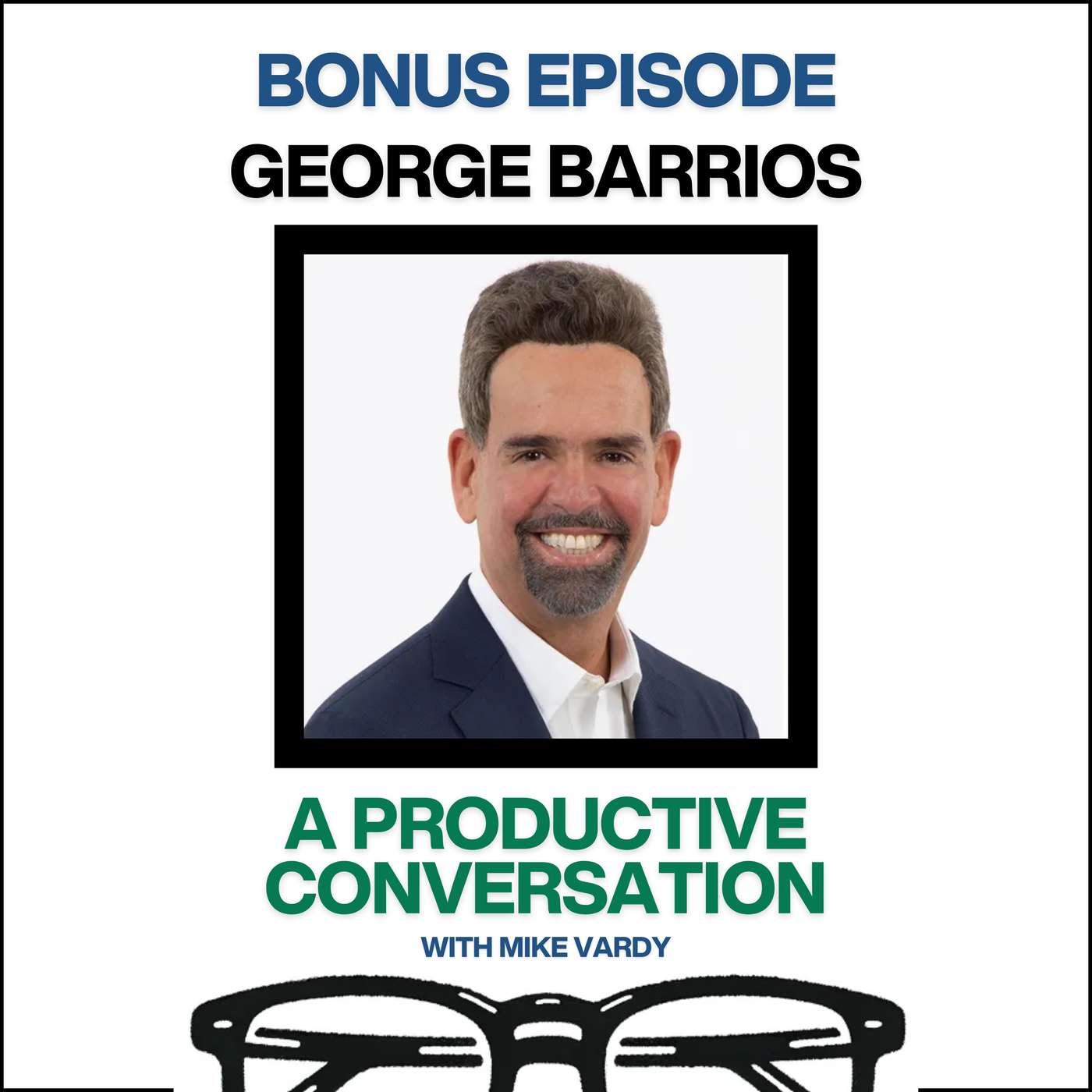
    Sometimes Wrong, Never in Doubt: The Confidence That Comes From Doing the Work (with George Barrios)

    My book, Productiveness, is now available. It's about the difference between doing more and doing what matters, and how we lost the ability to tell them apart. I'll send the release date the day it's set. Visit https://mikevardy.com/productiveness to learn more and get your copy today. There is a difference between confidence and bravado, and most people have never really had to find out which one they actually carry. Confidence — real confidence — is built in the gap between the work you've done and the hard thing in front of you. Bravado is what fills that gap when the work hasn't been done. My guest in this bonus episode has spent decades inside some of the most pressure-tested environments in business, and that distinction was never abstract for him. It was survival. George Barrios is the former Co-President and Co-CEO of WWE and the author of Sometimes Wrong, Never in Doubt: How a Cuban Kid from Queens Transformed WWE. The book traces the lessons he gathered growing up in Flushing, Queens, through his rise inside corporate America, and into the center of a global media pivot that Wall Street initially ridiculed — and later celebrated as one of the most brilliant transformations in the public markets. I jumped at the chance to have this conversation. As a lifelong wrestling fan, I made that abundantly clear. This is a bonus episode, and it more than earned its runtime. Six Discussion Points Real confidence isn't a personality trait — it's a record of preparation. The "sometimes wrong, never in doubt" mantra only holds up when it's earned through genuine craft-level work, not performance or false bravado. The Swamp of Despair is a real and necessary part of doing anything great — George and his co-CEO Michelle Wilson lived through it during WWE's transformation, and the graphic that mapped that arc became a touchstone for leading others through uncertainty without showing doubt. Your first zip code never fully leaves you — George's Queens upbringing shaped his willingness to disagree, push back intellectually, and refuse to accept "that's just how it is" as an answer. That edge has a shadow side, but directed well, it becomes a competitive advantage. Winning the battle for time, not just eyeballs — the strategic reframe that drove WWE's entire media approach was measuring time spent consuming content, not raw view counts. Attention lives inside time, and that distinction changed everything. Writing is the process by which you discover you don't know what you're talking about — George's most consistent advice to anyone starting out is to read and write relentlessly, not as discipline, but as the only real way to develop a genuine point of view. Inversion thinking as a practical tool — when George and Michelle were on the phone with lawyers trying to shut down pirated WWE content in China, flipping the assumption entirely led to one of the most counterintuitive and consequential decisions of the transformation. Assume you're wrong. Ask what you'd do then. Three Connection Points Sometimes Wrong, Never in Doubt by George Barrios Readwise — the book highlight recall tool George uses daily to surface and connect past reading: What is TimeCrafting? Mike Vardy on managing your relationship with time This bonus episode didn't come with a polished set of talking points — it came with the kind of directness that only develops after you've been in enough rooms where the stakes were real and hesitation wasn't an option. If there's one thing I want you to take from this conversation, it's that the confidence worth having isn't something you put on. It's something that accumulates quietly, from doing the work no one is watching. Sit with that for a while.
  • S1 · E660
    June 3 · 30 min

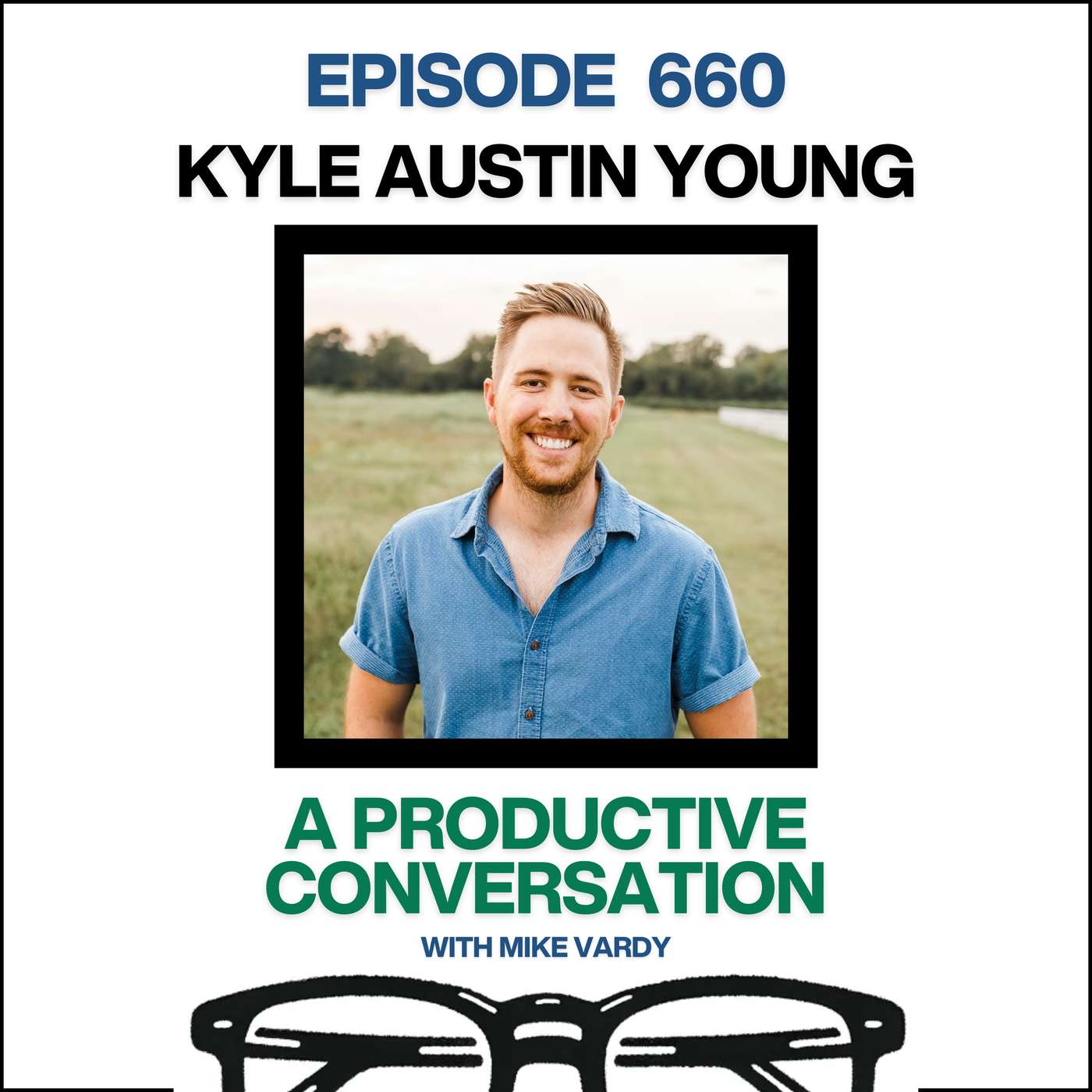
    Why Playing the Odds Beats Beating the Odds (with Kyle Austin Young)

    My book, Productiveness, is now available. It's about the difference between doing more and doing what matters, and how we lost the ability to tell them apart. I'll send the release date the day it's set. Visit https://mikevardy.com/productiveness to learn more and get your copy today. Most of us have been told that success is about mindset — stay positive, visualize the outcome, trust the process. But what if that advice is quietly working against you? What if the more honest — and more useful — move is to look directly at what could go wrong, name it clearly, and then do something about it? That's the argument Kyle Austin Young makes in his book Success is a Numbers Game. Kyle isn't asking you to become a pessimist. He's asking you to stop pretending uncertainty doesn't exist — and start using it as a lever. This episode gets into probability, decision-making, and what it actually means to give yourself better odds. Six Discussion Points The reason generic optimism fails: unnamed, unfocused anxiety doesn't disappear when you think positive — it just goes underground Why "success is a numbers game" isn't about obsessing over data, but about acknowledging that ignoring uncertainty is its own kind of risk The averaging trap: multiplying the odds of what has to go right reveals a predicted failure even when each individual step feels doable How the Miracle on Ice reframes as probability rather than miracle — and what the US hockey program's subsequent growth tells us about the compounding effect of one win The success diagram as a practical tool: mapping what has to go right, identifying the potential bad outcomes beneath each step, and using creativity to reduce those risks Why AI is most useful in this framework as a brainstorming partner — helping you surface obstacles and workarounds you might not think to name on your own Three Connection Points Success is a Numbers Game by Kyle Austin Young Connect with Kyle on LinkedIn Stop Managing Your Time. Start Crafting Your Time Instead. A complementary piece designed to help you structure your time so the pauses Kyle recommends actually have a place to land What Kyle is really describing is the difference between hoping things go well and actively improving the odds that they will. That's a distinction that matters whether you're chasing a career goal, building a creative practice, or simply trying to follow through on what you said you'd do. The success diagram isn't a complicated tool — it's a focused one. And focus, as Kyle puts it, is what lets you live your life and still recognize the right moment when it arrives. If this conversation shifted something for you, I'd encourage you to sit with it — and maybe grab the book.

  • S1 · E659
    May 27 · 47 min

    Intention or Inertia: What Intentional Living Actually Looks Like in Practice

    My book, Productiveness, is now available. It's about the difference between doing more and doing what matters, and how we lost the ability to tell them apart. I'll send the release date the day it's set. Visit https://mikevardy.com/productiveness to learn more and get your copy today. The word "intentional" has been hollowed out. It's on coffee mugs, in Instagram bios, and attached to productivity advice that treats it like a personality trait rather than a practice. But intentional living isn't a vibe — and it's not the opposite of busy. It's a specific practice: asking, before you spend your time and energy, whether what you're doing actually aligns with what you value. That question is harder to sit with than most people expect. And most productivity systems never even ask it. This episode is the second in a series of solo livestreams I've been running, and it builds directly on last week's conversation about why busy isn't a badge — it's a blur. If busyness adds motion to the blur, intentional living is what clears it. What I'm walking through today is the operating system I use to do that: TimeCrafting. Not as a concept, but as something that actually runs your day-to-day life. Six Discussion Points The word "intentional" has been so overused it's nearly meaningless — and reclaiming its operational definition is the first step toward building a life that reflects what you actually value. Most people oscillate between the Ruthless Realm (all output, no alignment) and the Reckless Realm (all ideas, no follow-through) — and TimeCrafting is the path back to the Reasoned Realm, where choices are anchored rather than accidental. Reason isn't logic and it isn't emotion — it lives in the middle, and it's harder to sustain precisely because it offers less of the certainty that binary thinking provides. Daily themes aren't a rigid schedule — they're a gravitational pull, a lens you apply to your day rather than a rule you enforce on it, and a theme day that honors 70% still builds the cadence that intentional living depends on. The most clarifying question you can ask at any decision point is: "Am I acting from intention or inertia?" — and the answer often reveals whether you're building momentum or simply filling time with motion. TimeCrafting isn't just for work — the most durable themes are universal ones (connection, attunement, exploration, stewardship) that apply equally to your personal and professional life, which means you don't have to shift modes when you leave your desk. Three Connection Points Check out the YouTube channel The Productivity Diet — goes deeper into mindset, method, and mastery across the TimeCrafting approach Previous episode in this series: Busy Isn't a Badge — It's a Blur — the setup for everything covered here Intentional living isn't something you install once and leave running in the background. It's something you return to — like a rhythm, like a practice. The question isn't whether you're productive. It's whether you're willing yourself toward the right things. That distinction is where TimeCrafting lives. And if this episode gave you even one question worth sitting with — whether it's "what day is it?" or "am I acting from intention or inertia?" — then it's already doing its job.

Showing 21–23 of 23 episodes