Skip to content
Artwork for 1001 Ghost, Chiller & Lovecraft Stories

1001 Ghost, Chiller & Lovecraft Stories

Jon R. Hagadorn

A spine-chilling collection of classic stories and tales from the other side featuring classics from a wide variety of writers that include H.P. Lovecraft, Edgar Allen Poe, Algernon Blackwood, M.R. James, and many others. Radio dramas (suspense, horror, and gothic) will also be featured.

Play
  • 24 episodes
  • Avg 30 min
  • English
Counted on this page — what you have heard stays on this device, so it is not something the list can be paged by.
  • September 6 · 29 min

    SMEE by A.M. BURRAGE A GAME OF HIDE AND SEEK TURNS DEADLY

    🎙️ 1001 Ghost, Chiller & Lovecraft Stories SHOW NOTES "SMEE" by A.M. Burrage A Christmas Eve game of hide‑and‑seek becomes a brush with the dead. A.M. Burrage's "Smee" is one of the finest English ghost stories of the early 20th century — subtle, atmospheric, and built around the kind of slow‑creeping dread that M.R. James himself praised Burrage for achieving . First published in December 1929 in Nash's Pall Mall Magazine, the story has become a classic of holiday hauntings: a tale where a simple parlor game turns into a chilling encounter with something that should not be there. 🕯️ Story Summary It is Christmas Eve, and a group of fourteen friends gather in an old country house — the perfect setting for childish games after a good dinner and holiday cheer. Someone suggests hide‑and‑seek, and the group erupts in enthusiastic approval… except for one man: Jackson. Jackson refuses to play. When pressed, he explains that he once stayed in a house where a girl died during hide‑and‑seek — she opened the wrong door in the dark, fell down a servants' staircase, and broke her neck . But then he adds something even more unsettling: "I was there when something else happened. Something worse." Jackson proposes a different game: SMEE — a variation of hide‑and‑seek played in total darkness. One player secretly becomes "Smee," hides, and remains silent when found. The others must locate Smee by touch and challenge them with the word "Smee." The real Smee never answers. One by one, players gather silently around the hidden figure until everyone is found. It is meant to be noisy, chaotic, and fun. But in a large, old house, it can take a long time… and strange things can happen in the dark. During the game, the narrator encounters a silent figure standing in a small, cold room — a figure he assumes is one of the players. But when the lights come on, he learns that no one else was ever in that room. The person he stood beside — the one who refused to answer — was not part of the game at all. And when Jackson later reveals the name of the girl who died in the house, the narrator realizes with horror that the silent figure he found matches her description exactly. The game of SMEE has drawn a ghost into the circle. 👻 Why "SMEE" Works So Well Classic English ghost‑story atmosphere — Christmas Eve, an old house, candlelight, and youthful merriment. A slow build of dread — Burrage uses silence, darkness, and suggestion rather than shock. A perfect twist — the narrator's "player" was never alive. A haunting backstory — the girl who died on the servants' staircase becomes the ghost who joins the game. A timeless structure — a party game becomes a supernatural encounter. This is Burrage at his best: understated, eerie, and unforgettable. 🧩 Themes & Tone Games that open doors to the unseen The thin veil between memory and haunting The danger of old houses and forgotten tragedies The uncanny silence of the dead The story is perfect for listeners who love M.R. James, E.F. Benson, and the classic British tradition of Christmas ghost stories. 📚 Publication Notes First published December 1929 in Nash's Pall Mall Magazine Written by A.M. Burrage, later praised by M.R. James as one of the writers who "best realized" the possibilities of the ghost story Frequently anthologized in Christmas ghost‑story collections Public domain 🔔 Programming Note New stories every Sunday at noon ET Tune in to 1001 Ghost, Chiller & Lovecraft Stories for weekly releases of classic horror, supernatural tales, and eerie fiction from the masters of the genre. 🎧 Suggested Outro "SMEE" reminds us that some games should never be played in the dark — especially in old houses where tragedy has left its mark. Burrage's tale lingers long after the lights come back on, whispering that sometimes, when we call out 'Smee,' something answers by staying silent."

  • August 30 · 29 min

    HORROR: THE KIT BAG by ALGERNON BLACKWOOD

    1001 Ghost, Chiller & HP Lovecraft Stories SHOW NOTES — THE KIT BAG by Algernon Blackwood This week's story is one of Algernon Blackwood's most chilling psychological ghost tales — a masterwork of creeping dread from the early 20th century. "The Kit Bag" blends the horrors of a brutal murder case with the uncanny suggestion that evil sometimes leaves a residue… one that can cling to objects, rooms, and even the air around us. Blackwood, one of the great architects of supernatural fiction, understood better than most that terror is most effective when it whispers rather than shouts. In The Kit Bag, he places us inside the mind of a man who believes he has left the horrors of a murder trial behind — only to discover that some things refuse to stay buried. Story Summary (No Spoilers) After weeks assisting in the prosecution of a gruesome murder case, a young legal clerk prepares to leave London for a much‑needed Christmas holiday. Exhausted and shaken by the evidence he has handled, he borrows a large army kit bag from his employer to pack his things. But once the bag is in his possession, strange sensations begin to creep in. A weight. A presence. A feeling that the bag is not entirely empty… and not entirely alone. As the night deepens, the clerk begins to suspect that the horrors of the courtroom may have followed him home — and that the kit bag itself may carry more than clothing. Blackwood builds the tension slowly, masterfully, until the final reveal delivers one of his most memorable shocks. Why This Story Matters A perfect example of Blackwood's psychological horror, where fear grows from atmosphere, suggestion, and the frailty of the human mind. A precursor to Lovecraftian dread, emphasizing unseen forces and the terror of the unknown. A classic "haunted object" tale, executed with subtlety and intelligence. A winter ghost story, making it ideal for late‑night listening. Themes & Atmosphere The lingering stain of evil The thin boundary between imagination and reality Isolation in the dead of night The uncanny presence of objects touched by violence The slow tightening of psychological terror About Algernon Blackwood Blackwood (1869–1951) was one of the most influential supernatural writers of his era. His stories often explore the intersection of nature, mysticism, and the unknown. Lovecraft himself admired Blackwood's ability to evoke cosmic dread without ever fully revealing the source of terror. The Kit Bag remains one of his most anthologized ghost stories — a compact, atmospheric masterpiece. Release Schedule This episode is part of our continuing series of classic supernatural fiction at 1001 Ghost, Chiller & HP Lovecraft Stories. If you enjoy this tale, explore our growing library of Blackwood, Lovecraft, M.R. James, and other masters of the uncanny.

  • August 23 · 48 min

    HP LOVECRAFT THE COLOR OUT OF SPACE (PT 2)(CONCLUSION)

    1001 GHOST, CHILLER & LOVECRAFT STORIES Show Notes – The Colour Out of Space (Part Two – Final Half) Summer of Lovecraft In the second half of "The Colour Out of Space," Lovecraft's slow‑burn cosmic horror reaches its devastating peak. What began as a strange meteorite and an indescribable shimmering "colour" has now become a full‑scale corruption — a force that drains life, warps nature, and unravels the minds of everyone who comes near it. Part Two follows the final, tragic descent of the Gardner family as the alien presence tightens its grip on their farm. The crops glow with unnatural hues, the animals behave with eerie agitation, and the very soil seems to pulse with a sickly vitality. The horror is not loud or violent — it is quiet, creeping, and inevitable. What Happens in Part Two The story's tension escalates as: The Gardner family deteriorates, physically and mentally, under the influence of the colour. The well becomes the focal point of the corruption — a reservoir of shimmering, unnatural light and the source of the farm's doom. Nahum Gardner's final days reveal the full extent of the horror, as he tries desperately to explain what happened before succumbing to the same fate as his family. The narrator witnesses the aftermath, discovering the last terrible signs of the colour's feeding and the final burst of alien energy that escapes into the sky. The blasted heath is born, a dead, gray wasteland where nothing grows — a permanent scar left by something not meant for Earth. Lovecraft's mastery is on full display here: the horror is not a creature you can fight, nor a villain you can outwit. It is a cosmic force, indifferent and unstoppable, leaving behind only ruin and unanswered questions. Themes in the Final Half Cosmic Indifference: Humanity is powerless against forces beyond comprehension. Environmental Corruption: The land itself becomes a victim, twisted into something unrecognizable. Psychological Collapse: The Gardners' unraveling is as terrifying as the physical mutations around them. The Unknown: The colour's motives, origins, and nature remain unexplained — which is precisely what makes it terrifying. Legacy and Influence The final half of The Colour Out of Space is often cited as one of the most chilling examples of cosmic horror ever written. Its imagery and themes have inspired: Multiple film adaptations, including Die, Monster, Die! (1965), The Curse (1987), and the acclaimed Color Out of Space (2019) starring Nicolas Cage. Modern cosmic horror films such as Annihilation and The Mist, which echo its themes of environmental mutation and incomprehensible forces. Countless writers and artists, who continue to draw from Lovecraft's vision of horror rooted in the vast, uncaring universe. This final half is where Lovecraft's concept of "cosmic dread" becomes fully realized — not through monsters, but through the collapse of everything familiar. SUPPORT THE 1001 STORIES NETWORK If you're enjoying our Summer of Lovecraft series here at 1001 Ghost, Chiller & Lovecraft Stories, please take a moment to leave a review wherever you listen. Reviews help new listeners discover the show and keep these classic tales alive. Share this episode with fans of cosmic horror, weird fiction, or anyone who loves a story that lingers long after the final line. And don't forget — 1001 True Crime From Another Time is now offering gripping new episodes covering headline‑making crimes from decades past. Follow that podcast for more great listening.

  • August 16 · 26 min

    H.P. LOVECRAFT THE COLOR OUT OF SPACE (PT 1 OF 2) (NEW) 1001'S SUMMER OF LOVECRAFT

    1001 GHOST, CHILLER & LOVECRAFT STORIES Show Notes – The Colour Out of Space (Part One) Summer of Lovecraft Few stories in the Lovecraft canon have cast a longer shadow than "The Colour Out of Space." First published in 1927 in Amazing Stories, it remains one of Lovecraft's most chilling and atmospheric works — a tale of cosmic intrusion told not through monsters or cults, but through the slow poisoning of a quiet New England farm. About the Story – Part One In Part One, we meet the narrator, a surveyor exploring the blasted, barren region known locally as the "blasted heath." The land is dead, gray, and strangely desolate — a place where nothing grows and no birds sing. As he asks questions, the locals grow uneasy, hinting at a terrible history connected to the Gardner family, who once lived on the land before it became the wasteland he now sees. Lovecraft builds dread slowly, revealing only fragments of the past: a meteorite that fell from the sky… a strange, shimmering color no one could quite describe… and the beginning of a corruption that seeped into the soil, the water, and the lives of everyone who lived nearby. Part One sets the stage for one of Lovecraft's most unforgettable descents into cosmic horror — a story where the terror comes not from what we see, but from what we cannot possibly understand. Its Popularity and Ranking Among Lovecraft's Greatest Works "The Colour Out of Space" is widely regarded as: One of Lovecraft's top three greatest stories, often ranked alongside The Call of Cthulhu and The Shadow Over Innsmouth. Lovecraft's personal favorite of all his works — he said it best captured the kind of cosmic dread he aimed to create. A foundational piece of science‑fiction horror, influencing generations of writers and filmmakers. Readers and scholars often praise it for its slow‑burn tension, its eerie rural setting, and its terrifying sense of inevitability. It remains one of the most frequently anthologized Lovecraft stories and a cornerstone of cosmic horror. Movies and Adaptations Inspired by the Story This tale has spawned multiple film adaptations and countless homages: Die, Monster, Die! (1965) – starring Boris Karloff, loosely based on the story. The Curse (1987) – a more direct adaptation set on a Tennessee farm. Color Out of Space (2019) – starring Nicolas Cage, widely praised for capturing the story's surreal, psychedelic horror. Numerous unofficial adaptations, radio dramatizations, and graphic novels. Its influence can also be felt in films like Annihilation, The Mist, and even Poltergeist — stories where an unseen force warps nature and reality. Lovecraft's "colour" — something outside the spectrum of human sight — remains one of the most haunting concepts in horror fiction. SUPPORT THE 1001 STORIES NETWORK If you're enjoying our Summer of Lovecraft here at 1001 Ghost, Chiller & Lovecraft Stories, please take a moment to leave a review wherever you listen. Reviews help new listeners discover the show and keep these classic tales alive. Share the episode with friends who love cosmic horror, weird fiction, or Lovecraft's chilling imagination. And be sure to check out 1001 True Crime From Another Time, now offering gripping new episodes covering headline‑making crimes from decades past — stories of mystery, scandal, and justice that once captivated the nation.

  • August 14 · 22 min

    THE WHISPERER IN DARKNESS (CHAP 8) CONCLUSION

    THE WHISPERER IN DARKNESS – Chapter 8 Summary "The Horror Behind the Curtain" Chapter 8 is the moment where Lovecraft finally pulls the curtain back — literally and figuratively — and reveals the true horror at the heart of the story. Albert Wilmarth, already uneasy from his strange visit with the bedridden Henry Akeley, tries to sleep in the farmhouse. But the night is alive with whispers — soft, buzzing voices that seem to drift through the walls. The sounds are not human, and they are not meant for him. Something is communicating in the darkness. Unable to ignore the dread rising inside him, Wilmarth investigates. What he discovers behind Akeley's curtain is one of Lovecraft's most unforgettable shocks: a revelation that Akeley is not the man speaking to him at all. The voice, the frail figure in the bed, the calm assurances — all of it is a grotesque deception engineered by the Mi-Go. Akeley has been taken. His body is gone. What remains is a horrifying imitation, assembled to lure Wilmarth into trust. The "peace" the creatures promised was a lie. The "demonstration" they prepared is a trap. And the crates in the next room — filled with strange machinery and containers meant to hold human brains for transport across the cosmos — confirm the full scope of their intentions. Realizing he is alone in the house with beings that can move silently, communicate without speech, and manipulate human flesh like clay, Wilmarth flees into the night. His escape is frantic, desperate, and fueled by the knowledge that he has seen something humanity was never meant to witness. Chapter 8 is the climax of Lovecraft's creeping dread — the moment when cosmic horror becomes real, physical, and inescapable. It is the chapter that transforms The Whisperer in Darkness from eerie folklore into full‑blown mythos terror.

  • August 12 · 47 min

    THE WHISPERER IN DARKNESS (CHAPS 6-7)

    Show Notes – The Whisperer in Darkness, Chapter 6 & Chapter 7 CHAPTER 6 – The Invitation to Darkness Chapter 6 marks a turning point in The Whisperer in Darkness, as Albert Wilmarth's cautious academic curiosity begins to give way to something far more dangerous. After weeks of correspondence with Henry Akeley — the isolated Vermont farmer who claims to be under siege by strange beings in the hills — Wilmarth receives a final, unsettling letter. Akeley insists the danger has passed. The creatures, he says, were misunderstood. Peace has been made. He invites Wilmarth to visit his remote farmhouse to learn the truth for himself. But the tone of the letter is wrong. Too calm. Too polished. Too unlike the terrified, desperate man who had been writing before. And yet, Wilmarth's rational mind pushes aside his doubts. He boards the train north, traveling deeper into the wild, forested hills of Vermont, where folklore, fear, and cosmic mystery intertwine. Lovecraft builds tension masterfully here. The journey is quiet, but the dread grows with every mile. Wilmarth senses something is off — the silence of the countryside, the strange behavior of the locals, the way the mountains seem to watch him. Chapter 6 is the slow tightening of the rope, the moment when curiosity becomes peril, and the reader knows that whatever waits at Akeley's farmhouse will not be what Wilmarth expects. CHAPTER 7 – The House of the Whisperer Chapter 7 delivers one of Lovecraft's most chilling set pieces. Wilmarth arrives at Akeley's farmhouse — a lonely, decaying structure deep in the woods — and finds Akeley bedridden, frail, and strangely altered. His voice is weak, his movements limited, and he insists on speaking from behind a curtain, claiming illness and exhaustion. The house is filled with oddities: • strange mechanical devices • sealed crates marked with cryptic symbols • and a room prepared for a "demonstration" that Akeley promises will change Wilmarth's understanding of the universe. Akeley speaks of the beings in the hills — the Mi-Go — not as enemies, but as enlightened travelers from beyond the stars. He claims they have offered humanity a chance to explore the cosmos in ways never imagined. His words are persuasive, almost hypnotic, but something about his voice… its tone… its resonance… feels wrong. Wilmarth tries to remain polite, but unease gnaws at him. The house is too quiet. Akeley's condition too strange. And the "demonstration" he promises — involving disembodied brains transported across space — pushes Wilmarth's skepticism to its breaking point. Chapter 7 is Lovecraft at his atmospheric best: a slow, creeping horror built not on monsters leaping from shadows, but on the dreadful realization that something in the room is terribly, impossibly wrong. Preview of Chapter 8 – The Horror Behind the Curtain In Chapter 8, Wilmarth's suspicions explode into full terror. A nighttime sound — a whisper not meant for human ears — leads him to a discovery behind Akeley's curtain that shatters everything he thought he knew. The truth about Akeley, the Mi-Go, and the "peace" they promised is revealed in one of Lovecraft's most unforgettable scenes.

  • August 9 · 34 min

    THE WHISPERER IN THE DARKNESS (CHAPS 4-5) H.P. LOVECRAFT

    Akeley's letters change from panic stricken to peaceful, convincing Wilmuth that all is ok and that Akeley is sitting on world-changing information. Wilmuth lets his ambition overcome his sense of caution and books a train ride to visit Akeley., who has aked him to bring the phonograph, the pictures, and all the letters with him.

  • August 7 · 18 min

    THE WHISPERER IN THE DARKNESS (CHAP 3) H.P. LOVECRAFT

    🎙 1001 Ghost, Chiller & Lovecraft Stories H.P. Lovecraft – THE WHISPERER IN THE DARKNESS (Chapter 3 Summary) Chapter 3 Summary: Chapter 3 marks a turning point in the story, as Henry Akeley's letters shift from anxious warnings to full‑blown descriptions of direct encounters with the beings he believes inhabit the Vermont hills — the Mi‑Go. His tone is no longer merely fearful; it is desperate, exhausted, and tinged with the sense that he is fighting a losing battle. Akeley recounts how the creatures have begun approaching his farmhouse at night, leaving strange footprints around the property and whispering in their eerie, buzzing voices from the darkness. He describes hearing them move across his porch, tapping at his windows, and attempting to communicate with him. The Mi‑Go seem to be testing him, watching him, and closing in. He also reveals that he has been receiving threatening messages, warning him to stop corresponding with Wilmarth. Some letters arrive in envelopes bearing no postmark — suggesting they were delivered by hand, perhaps in the dead of night. Others contain cryptic symbols or strange, powdery residues. Akeley's fear intensifies when he discovers that the creatures have tampered with his dogs, leaving one dead and another badly injured. This attack convinces him that the Mi‑Go are not merely curious — they are hostile, and they want him isolated. Wilmarth, reading these letters from the safety of Arkham, feels torn between skepticism and mounting dread. The details are too specific, too consistent, and too terrifying to dismiss. Akeley's final letter in this chapter hints that he may soon be forced to abandon his home entirely. Chapter 3 establishes: The Mi‑Go's escalating harassment of Akeley Strange nighttime visitations and whispered voices Threatening messages delivered in unnatural ways Akeley's growing isolation and desperation Wilmarth's increasing belief that something truly monstrous is happening Chapter 3 deepens the mystery and tightens the tension, preparing the listener for the chilling revelations that follow.

  • August 5 · 26 min

    THE WHISPERER IN THE DARKNESS (CHAP 2) H.P. LOVECRAFT

    🎙 1001 Ghost, Chiller & Lovecraft Stories H.P. Lovecraft – THE WHISPERER IN THE DARKNESS (Chapter 2 Summary) RELEASE SCHEDULE: Every Sun 12pm ET, Wed 4pm ET, Fri 4pm ET thru Aug 14th Chapter 2 Summary: In Chapter 2, Professor Albert Wilmarth becomes increasingly entangled in the strange events unfolding in rural Vermont. After receiving Henry Akeley's first alarming letter, Wilmarth begins corresponding with him more frequently — and the tone of Akeley's messages grows darker with each exchange. Akeley describes nighttime visitations, eerie voices whispering outside his farmhouse, and strange tracks appearing around his property. He sends Wilmarth photographs, phonograph recordings, and detailed accounts of the creatures he believes are stalking him — the legendary Mi-Go, beings said to inhabit the remote hills and caves of the region. Wilmarth, still skeptical but deeply unsettled, tries to reconcile Akeley's claims with rational explanations. Yet the evidence Akeley provides is too specific, too vivid, and too consistent to ignore. The professor begins to sense that Akeley is not merely frightened — he is being systematically terrorized, isolated, and watched. Chapter 2 builds the tension masterfully: Akeley's letters shift from curiosity to desperation Strange sounds and movements surround his home The Mi-Go seem to be closing in Wilmarth realizes he may be dealing with something far beyond folklore By the end of the chapter, the reader — and Wilmarth — are left with a chilling question: If Akeley's warnings are true, what else might be hiding in the Vermont hills? Be sure to follow the show so you don't miss the next chapters — the dread only deepens from here.

  • August 2 · 16 min

    THE WHISPERER IN THE DARKNESS (CHAP 1) 1001 SUMMER OF LOVECRAFT 2026

    🎙 1001 Ghost, Chiller & Lovecraft Stories Summer of Lovecraft at 1001 This story plays Sun (12 ET), Wed (4pm ET, Fri 4pm ET) thru Fri August 14) H.P. Lovecraft – THE WHISPERER IN THE DARKNESS (Chapter 1 Summary) Chapter 1 Summary: Lovecraft opens The Whisperer in the Darkness with a disturbing event: catastrophic floods sweep through rural Vermont, tearing through isolated farms and mountain valleys. As the waters recede, strange things begin appearing along the riverbanks — shapes that resemble human bodies, yet are grotesquely distorted, with features that seem not quite human at all. Newspapers dismiss these reports as panic and superstition. Locals insist the shapes are simply drowned livestock or debris. But folklore scholar Albert Wilmarth, who teaches at Miskatonic University, senses something deeper. He has long studied the old legends of the Vermont hills — stories of strange beings, whispered about for generations, known as the Mi-Go. The chapter builds tension through rumor, testimony, and the uneasy divide between science and superstition. Wilmarth receives letters from residents who swear they saw something unnatural in the floodwaters. Others speak of lights in the hills, strange buzzing voices, and shadowy figures moving at night. Wilmarth tries to remain rational, but the consistency of the accounts — and the fear behind them — begins to unsettle him. The chapter ends with a name that will dominate the rest of the story: Henry Akeley, a reclusive farmer who claims to have proof that the Mi-Go are real… and that they are watching. Chapter 1 establishes: The Vermont floods and the strange "corpses" seen afterward The first hints of the Mi-Go legend Wilmarth's skeptical but growing curiosity The eerie atmosphere of rural isolation and whispered fear The introduction of Henry Akeley, whose letters will drive the story forward This chapter sets the stage for the creeping dread that defines Lovecraft's tale — a slow descent from rumor into terrifying possibility.

  • April 12 · 26 min

    HAUNTED TALES WITH CHRISTINA

    SHOW NOTES Haunted Tales with Christina A Journey Into the Shadows of the Unexplained In this episode of Haunted Tales with Christina, listeners are invited into a world where the veil between the living and the dead feels just a little thinner. Christina guides us through a series of eerie encounters and atmospheric legends, blending personal storytelling with classic ghost‑lore in a way that feels intimate, unsettling, and deeply human. With her signature calm, steady narration, Christina explores hauntings that linger not just in abandoned houses or forgotten roads, but in memory, emotion, and the quiet corners of everyday life. Each tale unfolds like a candlelit confession — part mystery, part folklore, part whispered warning. Today her shrink sends her to a haunted house in London to get in touch with her inner self. Some stories chill, others intrigue, and a few carry the soft ache of unresolved history. But all of them remind us why ghost

  • March 28 · 25 min

    THE HOUSE OF THE SEVEN GABLES Chapter 21 The Departure

    The Departure In this series finale, we witness the end of an era. The Seven Gables is no longer a prison or a tomb, but a relic of a past that has finally been laid to rest. In Chapter 21, the threads of the Maule curse and the Pyncheon greed are finally untangled. This is the final chapter of Nathaniel Hawthorne's masterpiece. It's the moment where the heavy, dusty curtains of the Pyncheon legacy are finally pulled back to let in the light. Credits Producer Gizelle Erickson Executive Producer Jon Hagadorn Music: Thanks to Sound Gallery By Dmitry Taras "Scary Horror Music" LibriVox recording read by: Mark F. Smith Follow us on Social Media Instagram: 1001_ghost_stories Facebook: 1001 Ghost, Chiller, and Lovecraft Stories Reddit: 1001 Ghost, Chiller & Lovecraft Stories LinkedIn: 1001 Ghost, Chiller, and Lovecraft Stories

  • March 21 · 21 min

    THE HOUSE OF THE SEVEN GABLES Chapter 20: The Flower of Eden

    The Flower of Eden In this episode, we explore Chapter 20, where the Eden of the title refers not to a physical place, but to the blossoming relationship between Phoebe and Holgrave amidst the literal shadow of death. While Judge Pyncheon lies cold in the parlor, a new life is beginning just a few rooms away. This chapter serves as the emotional resolution of the novel's romantic arc. It is a moment of stillness and profound connection that stands in stark contrast to the macabre imagery of the previous chapters. Credits Producer Gizelle Erickson Executive Producer Jon Hagadorn Music: Thanks to Sound Gallery By Dmitry Taras "Scary Horror Music" LibriVox recording read by: Mark F. Smith Follow us on Social Media Instagram: 1001_ghost_stories Facebook: 1001 Ghost, Chiller, and Lovecraft Stories Reddit: 1001 Ghost, Chiller & Lovecraft Stories LinkedIn: 1001 Ghost, Chiller, and Lovecraft Stories

  • March 14 · 36 min

    THE HOUSE OF THE SEVEN GABLES Chapter 19: Alice's Posies

    Alice's Posies In this episode, we cover Chapter 19, where the "storm" has literally and figuratively passed. The focus shifts from the dead Judge to the return of the living, as Phoebe Pyncheon comes back to a house that is fundamentally changed. This chapter provides the breath of fresh air the reader (and the characters) desperately needs after the suffocating darkness of the Judge's death. It's a transition from the macabre back into the light, though the light reveals a startling new reality. Credits Producer Gizelle Erickson Executive Producer Jon Hagadorn Music: Thanks to Sound Gallery By Dmitry Taras "Scary Horror Music" LibriVox recording read by: Mark F. Smith Follow us on Social Media Instagram: 1001_ghost_stories Facebook: 1001 Ghost, Chiller, and Lovecraft Stories Reddit: 1001 Ghost, Chiller & Lovecraft Stories LinkedIn: 1001 Ghost, Chiller, and Lovecraft Stories

  • March 7 · 40 min

    THE HOUSE OF THE SEVEN GABLES Chapter 18 Governor Pyncheon

    Governor Pyncheon In this episode, we cover Chapter 18, "Governor Pyncheon." While previous chapters were filled with the frantic movement of Hepzibah and Clifford's flight, this chapter is defined by a terrifying, heavy stillness. The narrator takes on a taunting, almost ghoulish tone as he addresses the unmoving figure of Judge Jaffrey Pyncheon. This chapter is widely considered one of the most stylistically unique and macabre pieces of writing in Hawthorne's career. It is a haunting "memento mori" that shifts the narrative focus from plot progression to a deep, ironic meditation on the futility of greed. Credits Producer Gizelle Erickson Executive Producer Jon Hagadorn Music: Thanks to Sound Gallery By Dmitry Taras "Scary Horror Music" LibriVox recording read by: Mark F. Smith Follow us on Social Media Instagram: 1001_ghost_stories Facebook: 1001 Ghost, Chiller, and Lovecraft Stories Reddit: 1001 Ghost, Chiller & Lovecraft Stories LinkedIn: 1001 Ghost, Chiller, and Lovecraft Stories

  • February 28 · 35 min

    THE HOUSE OF THE SEVEN GABLES Chapter 17 The Flight of Two Owls

    The Flight of Two Owls In this episode, we follow Hepzibah and Clifford as they flee the scene of Judge Pyncheon's death. For the first time in decades, the "two owls" leave their dark nest and venture into a world that has moved on without them. This chapter is one of the most surreal and modern-feeling sections of the entire novel. After the claustrophobic tension of the Gables, Hawthorne suddenly throws his two most reclusive characters into the rushing speed of the 19th-century Industrial Revolution. Credits Producer Gizelle Erickson Executive Producer Jon Hagadorn Music: Thanks to Sound Gallery By Dmitry Taras "Scary Horror Music" LibriVox recording read by: Mark F. Smith Follow us on Social Media Instagram: 1001_ghost_stories Facebook: 1001 Ghost, Chiller, and Lovecraft Stories Reddit: 1001 Ghost, Chiller & Lovecraft Stories LinkedIn: 1001 Ghost, Chiller, and Lovecraft Stories

  • February 21 · 30 min

    THE HOUSE OF THE SEVEN GABLES Chapter 16: Clifford's Chamber

    Clifford's Chamber This chapter is the point of no return for the novel. The tension that has been building since the Judge's arrival in the previous chapter finally snaps, leading to one of the most eerie and surreal sequences in all of Gothic literature. In this episode, we cover the chilling events of Chapter 16. As a literal and metaphorical storm rages, the power dynamics within the House of the Seven Gables are flipped upside down in a single, silent moment. Credits Producer Gizelle Erickson Executive Producer Jon Hagadorn Music: Thanks to Sound Gallery By Dmitry Taras "Scary Horror Music" LibriVox recording read by: Mark F. Smith Follow us on Social Media Instagram: 1001_ghost_stories Facebook: 1001 Ghost, Chiller, and Lovecraft Stories Reddit: 1001 Ghost, Chiller & Lovecraft Stories LinkedIn: 1001 Ghost, Chiller, and Lovecraft Stories

  • February 14 · 41 min

    THE HOUSE OF THE SEVEN GABLES Chapter 15: The Scowl and Smile

    This chapter is where the slow-burn tension of the novel finally catches fire. With Phoebe gone, the "protective sunshine" has vanished, leaving Hepzibah and Clifford vulnerable to the family's most dangerous predator. Show Notes Summary: The Scowl and Smile In this episode, we break down Chapter 15, a masterclass in psychological tension and the deconstruction of a villain. With a storm brewing outside, an even darker presence enters the House of the Seven Gables: Judge Jaffrey Pyncheon. Credits Producer Gizelle Erickson Executive Producer Jon Hagadorn LibriVox recording read by: Mark F. Smith Music: Thanks to Sound Gallery By Dmitry Taras "Scary Horror Music" Follow us on Social Media Instagram: 1001_ghost_stories Facebook: 1001 Ghost, Chiller, and Lovecraft Stories Reddit: 1001 Ghost, Chiller & Lovecraft Stories LinkedIn: 1001 Ghost, Chiller, and Lovecraft Stories

  • February 13 · 28 min

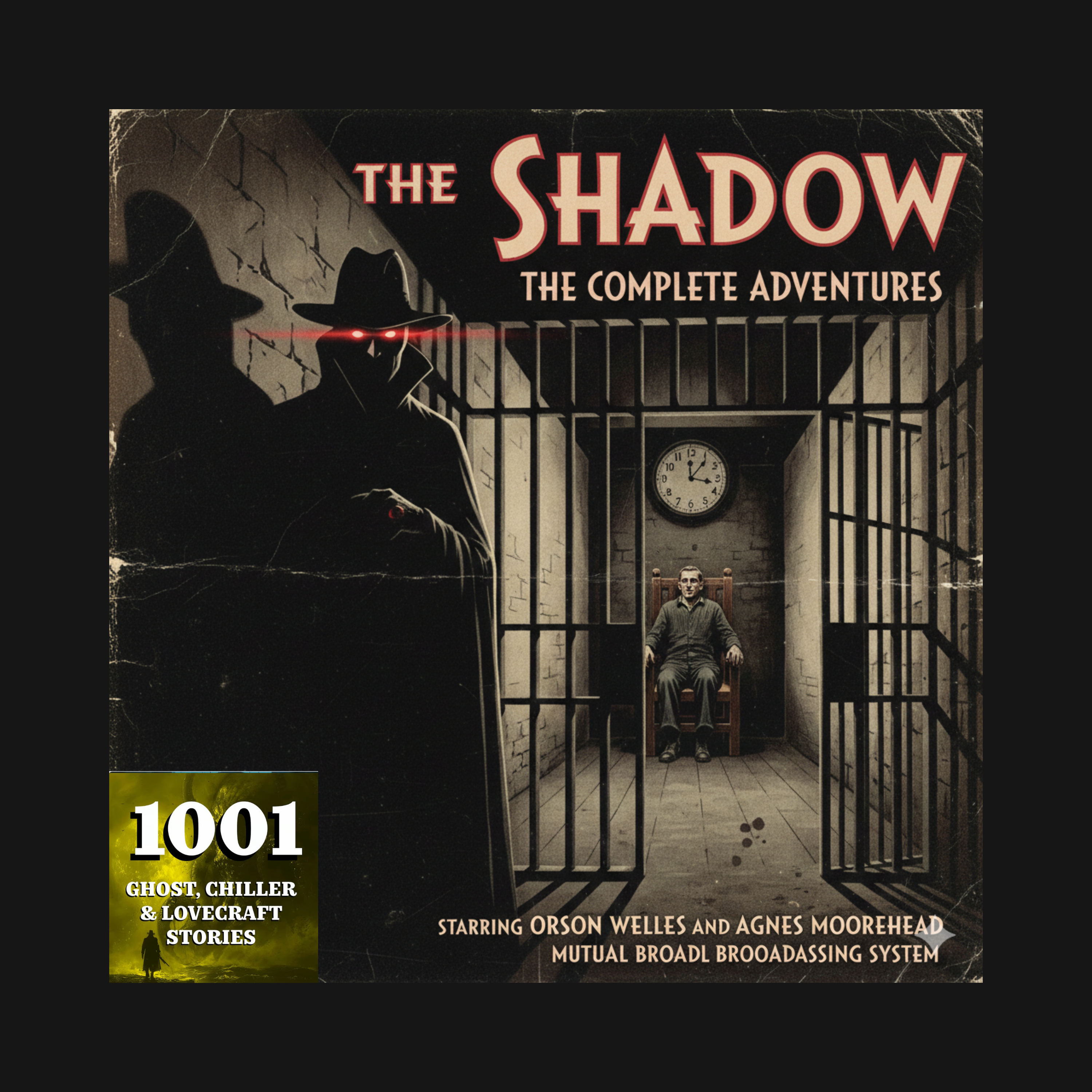
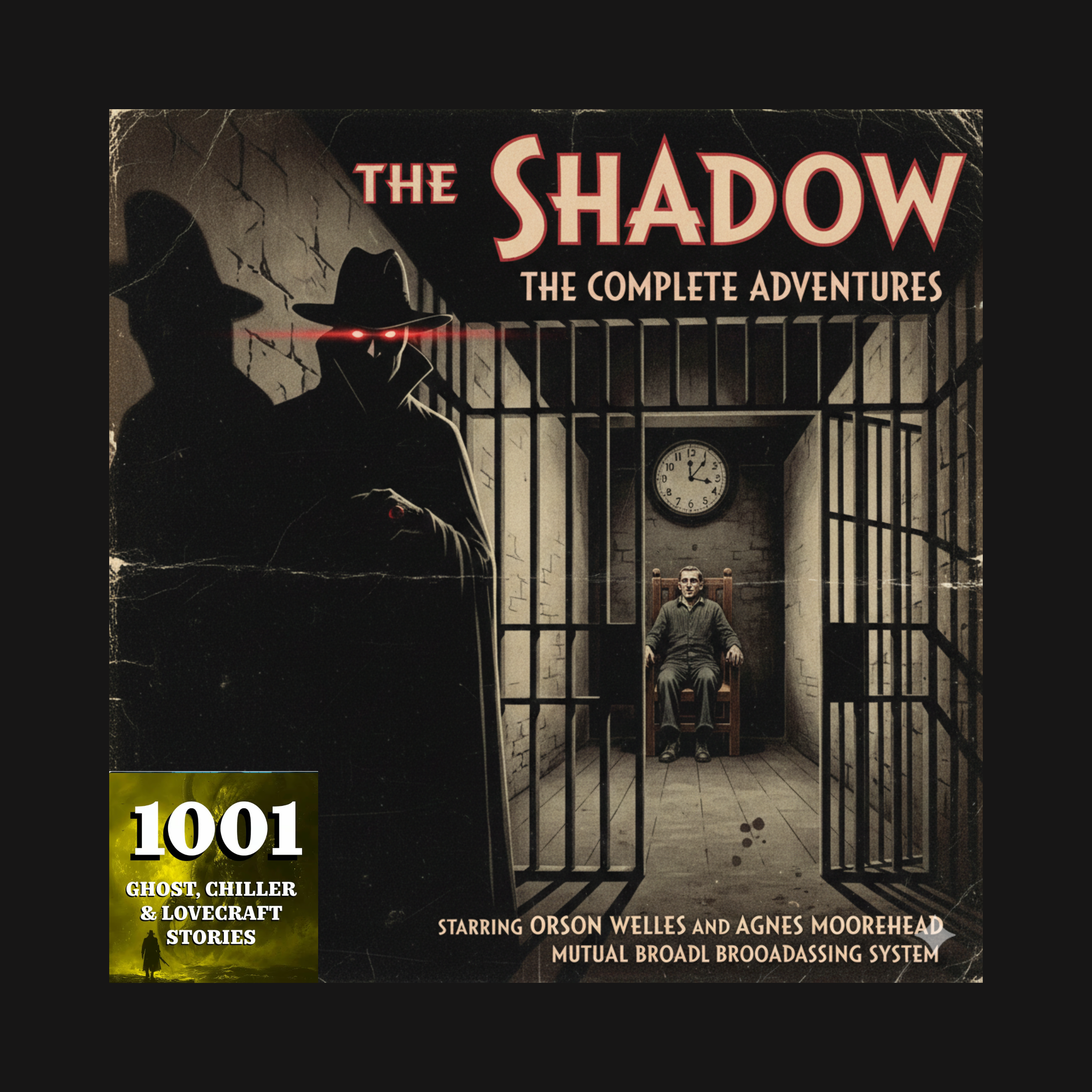
    THE SHADOW Episode 11: The Poison Death

    This episode is a gripping high-stakes thriller that sees the Shadow racing against a ticking clock to save the entire city from a mass casualty event. Episode Overview Title: "The Poison Death" First Aired: January 30, 1938 Network: Mutual Broadcasting System Sponsor: Blue Coal Cast & Voice Actors The Shadow / Lamont Cranston: Orson Welles Margot Lane: Agnes Moorehead Commissioner Weston: Dwight Weist Announcer: Ken Roberts Supporting Cast: Featured various members of the Mercury Theatre troupe, who often provided the diverse voices of city officials and panicked citizens. Episode Summary The city is thrown into a state of absolute panic when a series of mysterious poisonings breaks out among the population. The terror escalates when the Mayor receives a threatening letter signed by none other than The Shadow. The letter claims that the vigilante is tired of being unappreciated and is now holding the city hostage for $100,000—or he will poison the entire water supply. Lamont Cranston knows he is being framed, but he has a double mission: he must clear his name while stopping the real culprit, a deranged chemist named Gerber. As the police hunt for the renegade Shadow, Cranston and Margot Lane track the chemist to his laboratory. The climax is a desperate race to the suburbs to intercept Gerber before he can dump his lethal toxins into the main reservoir, proving that even a hero's reputation is a weapon in the hands of a madman. Trivia & Fun Facts Early Terrorist Trope: Historians often note that this episode is one of the earliest examples in mass media of a modern terrorist plot, focusing on an attack on public utilities rather than a simple robbery or individual murder. Framing the Hero: This was one of the first times the radio show used the Imposter Shadow trope. It added a layer of tension because the Shadow had to evade the very police he usually helped. Welles's Workload: At the time of this broadcast, Orson Welles was so busy with his theater company that he famously did not attend rehearsals for The Shadow. He would show up minutes before airtime and perform the script "cold," which he claimed made his reactions to the plot twists more authentic. Surviving Audio: "The Poison Death" is one of the well-preserved episodes of the 1937–38 season, often included in "Best of Orson Welles" OTR (Old Time Radio) collections. Credits Research and Production Gizelle Erickson Executive Producer Jon Hagadorn The Shadow sourced by AcousticMonster on Internet Archive Follow us on Social Media Instagram: 1001_ghost_stories Facebook: 1001 Ghost, Chiller, and Lovecraft Stories Reddit: 1001 Ghost, Chiller & Lovecraft Stories LinkedIn: 1001 Ghost, Chiller, and Lovecraft Stories

  • February 11 · 31 min

    THE SHADOW Episode 10: The Society of the Living Dead

    This episode is widely considered one of the most chilling and macabre entries in the Orson Welles era, diving deep into the realms of horror and medical suspense. Episode Overview Title: "The Society of the Living Dead" First Aired: January 23, 1938 Network: Mutual Broadcasting System Sponsor: Blue Coal Cast & Voice Actors The Shadow / Lamont Cranston: Orson Welles Margot Lane: Agnes Moorehead Commissioner Weston: Dwight Weist Announcer: Ken Roberts The Villain: Often voiced by a guest actor from the Mercury Theatre, playing the role of a mad scientist/cult leader. Episode Summary The story plunges the listener into a nightmare of biological horror. A series of prominent citizens are falling into a state of suspended animation, a death-like trance that defies medical explanation. These victims are not truly dead, yet they are being entombed in a secret, underground sanctuary. The Shadow discovers that a brilliant but deranged scientist has formed The Society of the Living Dead. By using a secret drug, he is collecting people to serve as his slaves in a subterranean empire, or perhaps to wait out a perceived coming apocalypse. Lamont Cranston must infiltrate this living tomb, risking the drug's effects himself, to pull the living dead back from the brink of the grave. The episode is famous for its claustrophobic atmosphere and the genuinely unsettling idea of being buried alive. Trivia & Fun Facts Horror Roots: This episode draws heavy inspiration from the "Gothic Horror" and "Mad Scientist" tropes that were popular in Universal Monsters films of the 1930s. Soundscapes of the Grave: The sound department had to work overtime to create the muffled, echoing acoustics of an underground tomb, adding to the listener's sense of unease. A Welles Favorite: Fans of Orson Welles often point to this episode as one of his best vocal performances, as he balances the cool logic of Cranston with the terrifying, otherworldly whispers of the Shadow. Suspended Animation: The concept of suspended animation was a popular pseudoscience topic in 1930s pulp magazines, often used to bridge the gap between crime fiction and early science fiction. Credits Research and Production Gizelle Erickson Executive Producer Jon Hagadorn The Shadow sourced by AcousticMonster on Internet Archive Follow us on Social Media Instagram: 1001_ghost_stories Facebook: 1001 Ghost, Chiller, and Lovecraft Stories Reddit: 1001 Ghost, Chiller & Lovecraft Stories LinkedIn: 1001 Ghost, Chiller, and Lovecraft Stories

Showing 1–20 of 24 episodes