Skip to content
Artwork for Weltgeist
Weltgeist · Today · 45 min

Nietzsche's Final Book - Or Is it?

Get exclusive access to NordPass’ best offer here: http://nordpass.com/weltgeist Or, use code 'weltgeist' at the checkout to get additional 1 month for FREE Support us on Patreon, get access to exclusive videos: ▶ https://www.patreon.com/WeltgeistYT BUY THE BOOK: https://amzn.to/3JZLlSH OUR ANALYSES: ▶ Beyond Good and Evil: https://youtu.be/WIHXZUltfqk ▶ The Antichrist: https://youtu.be/qej1Z8Qzq_c ▶ Genealogy of Morals: https://youtu.be/6PUx4cOfFcI ▶ Twilight of the Idols: https://youtu.be/YpVr_NEvWYA ▶ The Will to Power: https://youtu.be/He6ZC7ZFBt8 ▶ Daybreak: https://youtu.be/cOL2z7nuXdA ▶ The Joyful Science: https://youtu.be/U0fTBOJ-C_I ▶ The Antichrist: https://youtu.be/qej1Z8Qzq_c TIMESTAMPS: 00:00 Introduction 03:20 An unlikely meeting 05:07 Nietzsche in Jena 09:16 The clergyman 11:44 My Sister and I 18:35 A Freudian slip 22:30 Edgy Nietzsche 23:42 Christian Nietzsche 25:45 Political Nietzsche 29:10 Should you read this book? 34:52 Conclusion My Sister and I is an obscure book supposedly written by Nietzsche, published in 1951. So half a century after Nietzsche's death. Still, it caused quite a stir, with heated debates going back & forth over whether or not this book is authentic. This video explores the crazy story of the manuscript, and how it ended up from a mental asylum in New York City. The book is a counterpoint to Ecce Homo, Nietzsche's other work of biography. But here, the style is much more toned down. Nietzsche comes across as weak, a man completely exhausted by life, no power left, except to find rare moments of lucidity and write this book. Featuring thoughts on mortality, the afterlife, and shocking biographical revelations. It also dabbles in Nietzschean philosophy. He claims he was wrong about Tolstoy and Schopenhauer, and above all, Jesus Christ. The book hints at a possible conversion of Nietzsche. As a mirror-image of Ecce Homo, the book has some philosophical points to make. Mainly on the nature of good and evil, and the Christian faith. There is some critique of Karl Marx here as well (which is suspect, as Marx never appears directly by name in other writings by Nietzsche.) Other passages betray a Freudian influence. A curious little work well worth reading for any Nietzsche enthusiast. With music from Kevin MacLeod http://incompetech.com This video was sponsored by NordPass. Learn more about your ad choices. Visit megaphone.fm/adchoices

0:00-45:16

transcript

No transcript — this publisher did not publish one.

show notes

Get exclusive access to NordPass’ best offer here: http://nordpass.com/weltgeist
Or, use code 'weltgeist' at the checkout to get additional 1 month for FREE

Support us on Patreon, get access to exclusive videos:
▶ https://www.patreon.com/WeltgeistYT

BUY THE BOOK: https://amzn.to/3JZLlSH

OUR ANALYSES:
▶ Beyond Good and Evil: https://youtu.be/WIHXZUltfqk
▶ The Antichrist: https://youtu.be/qej1Z8Qzq_c
▶ Genealogy of Morals: https://youtu.be/6PUx4cOfFcI
▶ Twilight of the Idols: https://youtu.be/YpVr_NEvWYA
▶ The Will to Power: https://youtu.be/He6ZC7ZFBt8
▶ Daybreak: https://youtu.be/cOL2z7nuXdA
▶ The Joyful Science: https://youtu.be/U0fTBOJ-C_I
▶ The Antichrist: https://youtu.be/qej1Z8Qzq_c

TIMESTAMPS:
00:00 Introduction
03:20 An unlikely meeting
05:07 Nietzsche in Jena
09:16 The clergyman
11:44 My Sister and I
18:35 A Freudian slip
22:30 Edgy Nietzsche
23:42 Christian Nietzsche
25:45 Political Nietzsche
29:10 Should you read this book?
34:52 Conclusion

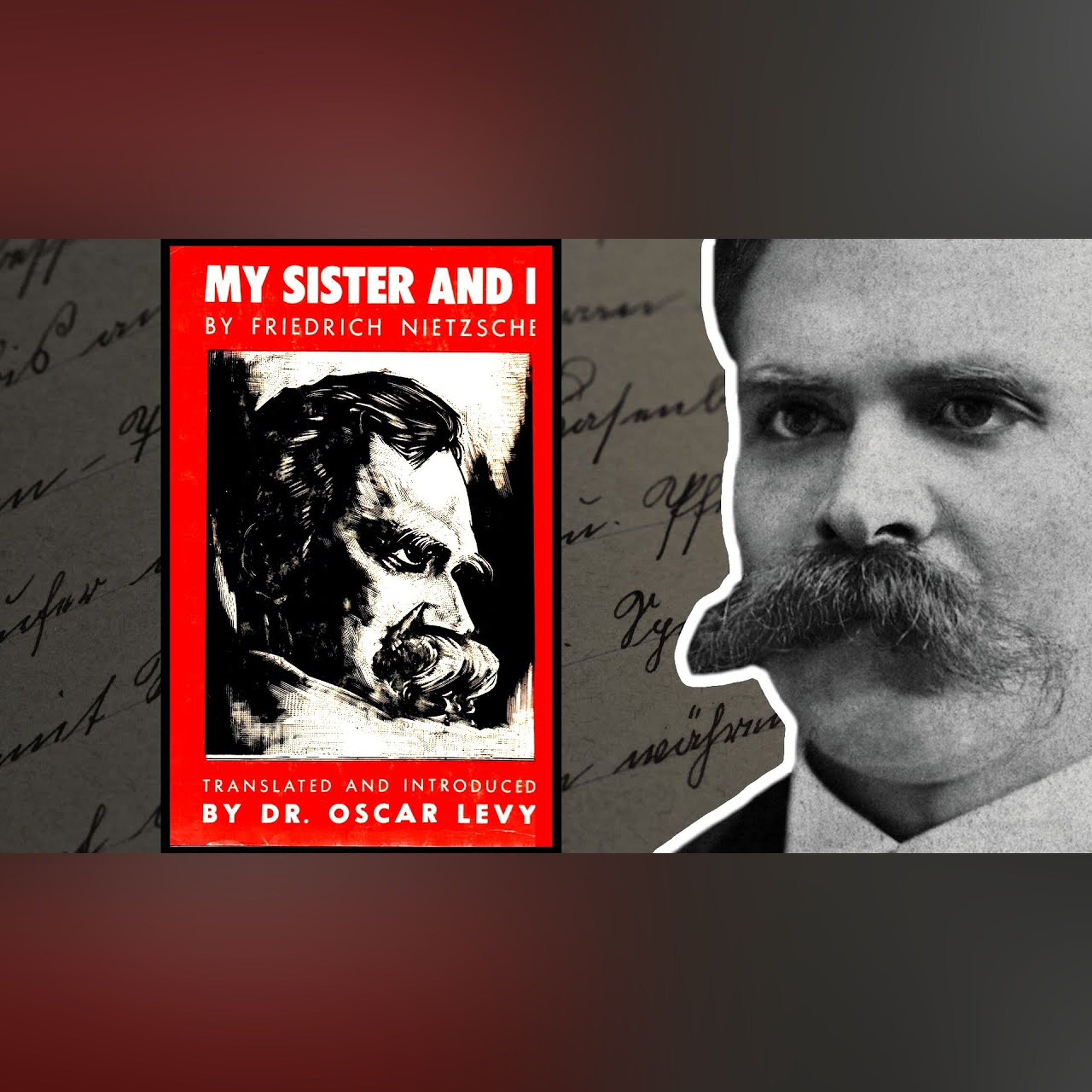
My Sister and I is an obscure book supposedly written by Nietzsche, published in 1951. So half a century after Nietzsche's death. Still, it caused quite a stir, with heated debates going back & forth over whether or not this book is authentic.

This video explores the crazy story of the manuscript, and how it ended up from a mental asylum in New York City.

The book is a counterpoint to Ecce Homo, Nietzsche's other work of biography. But here, the style is much more toned down. Nietzsche comes across as weak, a man completely exhausted by life, no power left, except to find rare moments of lucidity and write this book. Featuring thoughts on mortality, the afterlife, and shocking biographical revelations.

It also dabbles in Nietzschean philosophy. He claims he was wrong about Tolstoy and Schopenhauer, and above all, Jesus Christ. The book hints at a possible conversion of Nietzsche.

As a mirror-image of Ecce Homo, the book has some philosophical points to make. Mainly on the nature of good and evil, and the Christian faith. There is some critique of Karl Marx here as well (which is suspect, as Marx never appears directly by name in other writings by Nietzsche.) Other passages betray a Freudian influence.

A curious little work well worth reading for any Nietzsche enthusiast.

With music from Kevin MacLeod
http://incompetech.com

This video was sponsored by NordPass.

Learn more about your ad choices. Visit megaphone.fm/adchoices
links12