Skip to content
Artwork for Web3 Tech Brief By HackerNoon
Web3 Tech Brief By HackerNoon · Yesterday · 8 min

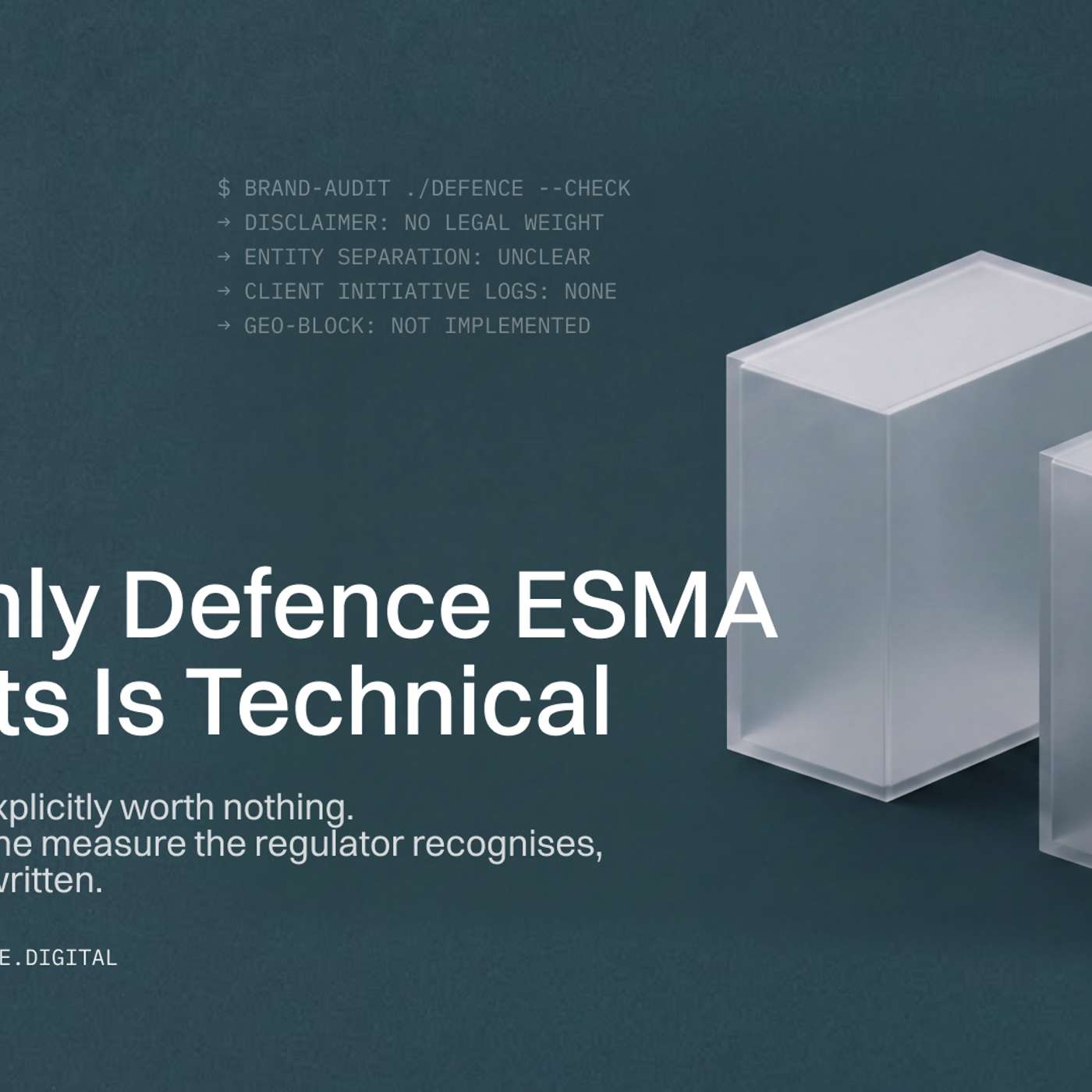
The Only Defence ESMA Accepts Is Technical

This story was originally published on HackerNoon at: https://hackernoon.com/the-only-defence-esma-accepts-is-technical. ESMA says disclaimers cannot override facts. The one measure it recognises is technical, and the rest lands on brand architecture and product decisions. Check more stories related to web3 at: https://hackernoon.com/c/web3. You can also check exclusive content about #crypto, #mica, #regulation, #web3, #branding, #compliance, #fintech, #design, and more. This story was written by: @m1ke. Learn more about this writer by checking @m1ke's about page, and for more stories, please visit hackernoon.com. After the previous issue, the obvious question is what actually works. The usual answer is a banner saying the firm does not serve EU residents, and that is the one answer the ESMA guidelines rule out by name: the assessment is factual, and disclaimers cannot override facts to the contrary. The only measure ESMA puts forward is technical, either not onboarding new EU clients or a real geo-block. The rest lands on design: whether a client can tell which entity of a group they are dealing with, and whether the product records who took the initiative.


0:00-8:17

transcript

No transcript — this publisher did not publish one.

show notes

This story was originally published on HackerNoon at: https://hackernoon.com/the-only-defence-esma-accepts-is-technical.
ESMA says disclaimers cannot override facts. The one measure it recognises is technical, and the rest lands on brand architecture and product decisions.
Check more stories related to web3 at: https://hackernoon.com/c/web3. You can also check exclusive content about #crypto, #mica, #regulation, #web3, #branding, #compliance, #fintech, #design, and more.

This story was written by: @m1ke. Learn more about this writer by checking @m1ke's about page, and for more stories, please visit hackernoon.com.

After the previous issue, the obvious question is what actually works. The usual answer is a banner saying the firm does not serve EU residents, and that is the one answer the ESMA guidelines rule out by name: the assessment is factual, and disclaimers cannot override facts to the contrary. The only measure ESMA puts forward is technical, either not onboarding new EU clients or a real geo-block. The rest lands on design: whether a client can tell which entity of a group they are dealing with, and whether the product records who took the initiative.

links13