
Streams straight from the publisher. podnod never proxies or re-hosts episode audio.
In the spring of 1954, a Japanese fishing vessel called the Lucky Dragon No. 5 sailed into the fallout zone of an American hydrogen bomb test at Bikini Atoll. Its crew came home irradiated, and Japan, a nation still raw from Hiroshima and Nagasaki less than a decade earlier, found itself confronting nuclear terror all over again.
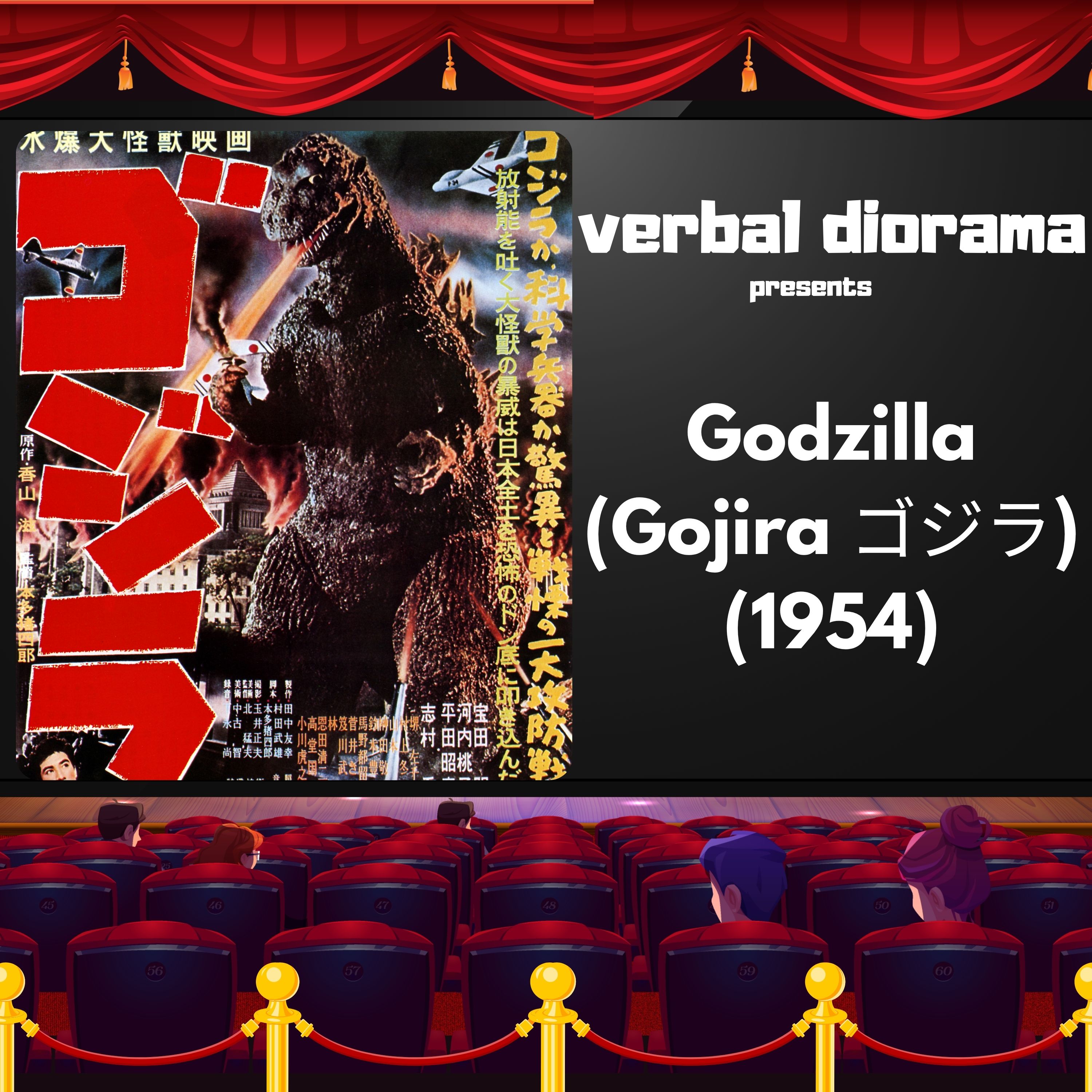
Within months, Toho producer Tomoyuki Tanaka, with a collapsed co-production and an empty budget to fill, conceived a monster movie. What emerged from that collision of commercial necessity and national grief was Gojira (aka Godzilla); a film in which director Ishirō Honda, effects genius Eiji Tsuburaya, and a nation's unspoken anguish combined to create something cinema had never quite seen before. The character of Godzilla has evolved over 70 years, embodying contemporary fears and anxieties in a uniquely artistic way.
Godzilla was never simply a creature feature. Honda had walked through the ruins of Hiroshima after the war. When his monster surfaced from the Pacific, awakened and mutated by nuclear testing, and reduced Tokyo to ash and radiation, Japanese audiences weren't watching spectacle. They were watching their own grief and trauma on screen. The hospital scenes, the Geiger counters, the dying children: all of it was modelled on the aftermath of atomic destruction. Even the film's resolution; Dr Serizawa destroying his world-ending weapon and himself along with it, posed a moral question about nuclear responsibility that no Western movie of the era came close to asking.
As long as countries continue to test and threat with nuclear weapons, as long as that threat persists, so does Godzilla, as a warning to humanity.
Support Verbal Diorama
Loved this episode? Here's how you can help:
⭐ Leave a 5-star review on your podcast app
💰 Join the Patreon for bonus content and early access
☕ Send a tip to support the show
📱 Share this episode with fellow film lovers
Get In Touch
I would love to hear your thoughts on Godzilla (Gojira ゴジラ) (1954)
- Twitter: @verbaldiorama
- Instagram: @verbaldiorama
- Facebook: @verbaldiorama
- Letterboxd: @verbaldiorama
- Email: verbaldiorama [at] gmail [dot] com
- Website: verbaldiorama.com
About Verbal Diorama
Ear Worthy 2024 Best Movie Podcast Winner | Golden Lobes 2025 Earworm Award Nominee | Ear Worthy 2025 Best Movie Podcast Nominee | Golden Lobes 2025 Earworm Award Nominee
Verbal Diorama is hosted, produced, edited, researched, recorded and marketed by me, Em.
Theme Music: Verbal Diorama Theme Song
Music by Chloe Enticott - Compositions by Chloe
Lyrics by Chloe Enticott (and me!)
Production by Ellis Powell-Bevan of Ewenique Studio
Thank You to Our Patreon Supporters
Current Patrons: Simon, Laurel, Derek, Cat, Andy, Mike, Luke, Michael, Scott, Brendan, Ian, Lisa, Sam, Jack, Stuart, Nicholas, Zo, Kev, Danny, Stu, Brett, Xenos, Sean, Ryno, Philip, Adam, Elaine, Aaron and Steve.
Thank you for supporting Verbal Diorama.
Mentioned in this episode:
Please consider supporting this podcast on Patreon
This podcast uses the following third-party services for analysis:
Podscribe - https://podscribe.com/privacy
OP3 - https://op3.dev/privacy
Leave a 5-star review
verbaldiorama.comJoin the Patreon
verbaldiorama.comSend a tip
verbaldiorama.com@verbaldiorama
twitter.com@verbaldiorama
instagram.com@verbaldiorama
facebook.com@verbaldiorama
letterboxd.comverbaldiorama.com
verbaldiorama.comCompositions by Chloe
facebook.com

- 0:00Chapter 1
- 1:25Introducing Godzilla: A New Era
- 13:45The Birth of Godzilla: Cultural Context and Influences
- 22:37The Creation of Godzilla: From Concept to Icon
- 41:47The Evolution of Godzilla: From 1954 to Today
- 49:00The Legacy of Godzilla and Its Cultural Impact