What We Lose When a Language Dies
transcript
show notes
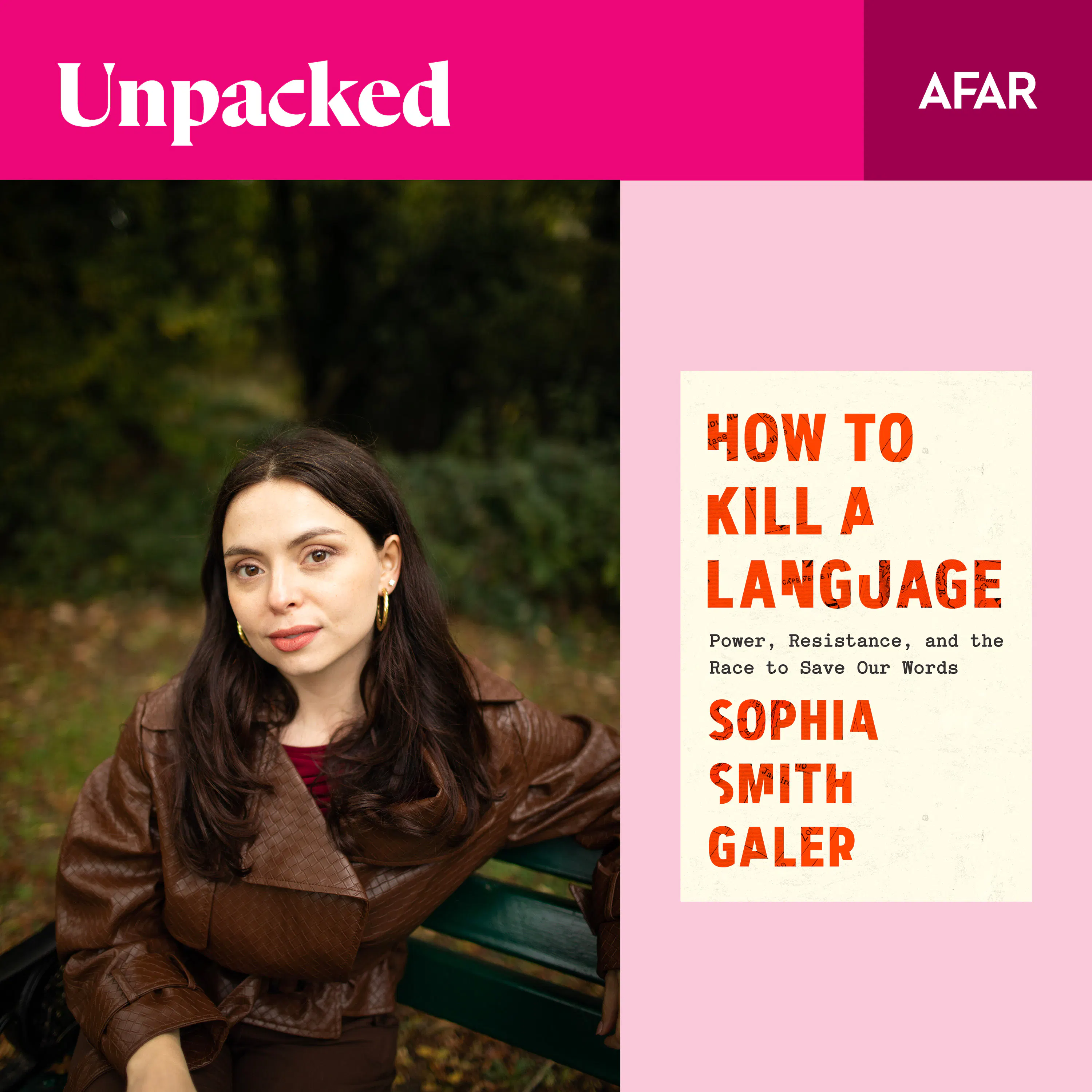
By the end of this century, half of the world's 7,000 languages could be gone. On this episode of Unpacked, host Aislyn Greene hands the mic to travel writer Lucy Kehoe for a conversation about saving language with journalist Sophia Smith Galer, author of the new book How to Kill a Language.
For Sophia, saving language is personal: her Italian grandmother spoke Emilian, one of Italy's Indigenous tongues, and it's quietly slipping away. To understand what we lose when a language dies, Sophia traveled from the mountains of Oman to the hills of California, seeking out endangered languages and the communities fighting—or grieving—for them.
She and Lucy get into why these languages matter to every traveler, how language and landscape are woven together, and what it means to travel thoughtfully to a place whose language is at risk—beyond learning a few phrases. It's a conversation about treating language as part of the culture we come to experience, and about meeting it with curiosity and respect rather than as something quaint.
THIS WEEK'S GUESTS
Sophia Smith Galer is an award-winning journalist and author whose new book, How to Kill a Language, traces the forces—colonialism, globalization, migration, and war—pushing thousands of the world's languages toward extinction. Multilingual in English, Spanish, Italian, and Arabic, she reported it across California, Oman, Ghana, Ecuador, Italy, and Greece, meeting speakers of critically endangered languages in person to capture not only their words but their connection to a place.
Lucy Kehoe is a London-based journalist who covers travel, food, and the environment, with a particular interest in how people relate to landscape and place.
IN THIS EPISODE
The statistic that stopped us cold: by 2100, up to half of the world's 7,000 languages could vanish, and the rate of loss is expected to triple over the next 40 years
Why a language is far more than a way to order coffee—Sophia's case that it holds the past, present, and future of a people connected to a place, from Oman's Jibbali (with distinct words for animal versus human shelter) to a California tribe down to 12 adult speakers
What it really asks of travelers: not memorizing phrases, but bringing respect and dignity to an endangered language, and asking who profits from "language tourism" and whether speaker communities are truly part of it
Where to find language on the road—Planet Word in Washington, D.C., the Armenian alphabet monument outside Yerevan, a Ukrainian language tour in Kyiv, and Oman's frankincense heritage experience
The range of feelings Sophia found among speakers themselves—pride, determination, and quiet resignation—and why she believes the fate of each endangered language belongs to its own community to decide
00:00:00 A Grandmother's Vanishing Tongue
00:04:00 Why Endangered Languages Matters
00:06:00 Words Shaped by Place
00:10:00 Tourism Done Respectfully
00:16:00 California's Last Speakers
00:24:00 Ladino, Museums, and Hope
LINKS & RESOURCES
How to Kill a Language by Sophia Smith Galer — buy on Bookshop
Planet Word, the language museum in Washington, D.C.
Armenian Alphabet Monument, outside Yerevan
Stay connected
Be sure to subscribe to the show and sign up for our podcast newsletter, Behind the Mic, where we share upcoming news and behind-the-scenes details of each episode.
And explore our second podcast, Travel Tales, which celebrates first-person narratives about the way travel changes us, and View From Afar, where we spotlight the people and ideas shaping the future of travel.
Unpacked by Afar is part of Airwave Media's podcast network. Please contact advertising@airwavemedia.com if you would like to advertise on our podcast.
Learn more about your ad choices. Visit megaphone.fm/adchoices