Artwork for Under The Hood: Automotive Storytelling
Business

Under The Hood: Automotive Storytelling

Stephane Lagresle

Behind every automotive innovation lies a human story. Hosted by Stéphane Lagresle, founder of The Storytelling Tribe, this podcast reveals how industry leaders translate complex technologies into compelling narratives. Through conversations with automotive executives, discover practical frameworks for making automotive innovations relatable and meaningful. For executives, product leaders, and marketers transforming mobility through better communication. 

  • 20 episodes
  • Updated Friday

Episodes20

  • Friday · 30 min

    Automotive Chiplets: Inside the AEK 2026 Silicon Shift - S2E15

    🎙️ THE SILICON SHIFT, DECODED At AEK 2026, one theme ran through every hallway and keynote: automotive chiplets, and the deeper shift they signal. In this special edition of Automotive Storytelling, I sat down on the floor of the Automobil-Elektronik Kongress with six people shaping the industry's next decade, from semiconductor CTOs to a Microsoft engineer to the congress chairman himself, to unpack what is actually changing under the car. 🎯 KEY INSIGHTS Silicon vendors have become tier ones for real The old OEM to tier-1 to tier-2 chain has reorganized into a value network, where automakers now go straight to the chipmaker to secure innovation early. The differentiator is not raw performance, it is the tool chain built around it. Power is the ceiling, and chiplets are the answer Compute got cheap; moving data did not. With power and memory proximity emerging as the true limits, the industry is betting on chiplets, packaging specialised pieces so the fast-moving AI parts can evolve without dragging the rest along. The car is becoming the blueprint for physical AI Get the hardest machine right, and you unlock robotics at large. As coding agents mature, code turns into a commodity and high-quality specifications become the advantage, which reframes automotive's mountain of standards from burden to asset. 💡 KEY TAKEAWAYS Map your silicon relationships early: The chipmaker you choose shapes your architecture, so treat SoC selection as a strategic, upstream decision rather than a procurement step. Budget for data movement, not just compute: Power draw and memory proximity are becoming the real constraints, so design and message around them. Turn your spec libraries into an asset: As AI writes more code, rigorous specifications and standards become the differentiator, not the paperwork. 🌟 THE VOICES IN THIS EPISODE Lars Reger, CTO of NXP Semiconductors. Aish Dubey, VP at Renesas on the SoC side. Martin Spiegel of HARMAN Automotive, working on IVI and cockpit domain controller systems. Dominik Wee, Corporate VP of Forward Deployed Engineering at Microsoft. Alfred Vollmer, newly appointed Chairman of the Automobil-Elektronik Kongress and a journalist with roughly forty years covering the industry. And Roger Lanctot, one of the sharpest analysts in mobility. Ready to hear where the industry is really heading? "Under the Hood: Automotive Storytelling" uncovers the human narratives driving innovation in an industry that impacts lives worldwide. Hosted by Stéphane Lagresle, this podcast explores how the power of storytelling ultimately connects technology to humans.

  • July 17 · 21 min

    Chiplets, Trust, AI and Robots - Lars Reger, EVP and CTO at NXP Semiconductors - S2E14

    Recorded on the floor of the Automobil Elektronik Kongress 2026 in Ludwigsburg, this conversation with Lars Reger, EVP and CTO of NXP Semiconductors, tracks how automotive silicon is reshaping who gets a seat at the table, and how much trust a car actually needs before it can drive itself. Key insights From value chain to value network: Lars explains why semiconductor makers now shape OEM decisions earlier than ever, as the industry moves away from a strict OEM to Tier 1 to Tier 2 order. Trust before intelligence: Lars revisits his own line that a car is as much a brain on wheels as a human is a brain on shoes, and uses it to explain why autonomous systems need layered, real-time architecture rather than one giant AI brain. Chiplets, decoded: Lars breaks down what a chiplet actually is, and argues that speed and flexibility, not cost, are the real force behind the trend, as chip design cycles that used to take years get compressed into weeks. Key takeaways Loop in silicon partners earlier. As architecture centralizes, the semiconductor choice increasingly shapes what an OEM can build, not the reverse. Separate real-time control from AI decision-making. Reger's layered model treats safety-critical reflexes and creative AI reasoning as different systems that should not depend on each other. Watch for chiplet interface standards. The next unresolved question in the industry is who defines the standard that lets chiplets from different vendors talk to each other. A grounded look at where automotive silicon is headed, from someone building it. "Under the Hood: Automotive Storytelling" uncovers the human narratives driving innovation in an industry that impacts lives worldwide. Hosted by Stéphane Lagresle, this podcast explores how the power of storytelling ultimately connects technology to humans.

  • July 3 · 47 min

    The Data Center on Wheels - Jeff Chou, CEO & Co-Founder of Sonatus - S2E13

    🎙 WHEN SILICON VALLEY MEETS THE VEHICLE In this episode of Automotive Storytelling, Stéphane Lagresle sits down with Jeff Chou, the CEO and co-founder of Sonatus, to trace one of the more deliberate bets in automotive software: the thesis that the car would eventually become a data center on wheels, and that everything the IT industry had already learned about networking, orchestration, and AI could be translated to the vehicle. Today, Sonatus technology is deployed in more than 7 million production vehicles. Their whole product portfolio is now leveraging AI. This conversation covers how it got there. 🎯 KEY INSIGHTS Infrastructure Always Comes First Before social media, there was the internet. Before cloud applications, there was networking. Before AI in vehicles, there was the software-defined vehicle. Jeff Chou draws a consistent thread from his data center years through to the automotive present: hardware infrastructure creates the conditions for software infrastructure, which creates the conditions for applications and AI. The SDV was not the destination. It was the foundation. The SDV Trough Was Real. AI Is What Got OEMs Out. Jeff speaks candidly about the "trough of disillusionment" on software-defined vehicles. OEMs had invested thousands of engineers and more lines of code than anticipated, but the promised revenue streams and cost savings didn't materialise as expected. AI changed calculus. Where SDV value was difficult to quantify, AI collapses to two metrics that every OEM understands: time and cost. Sonatus's AI Technician tool is a working example — cutting vehicle diagnostic cycles from weeks to days on the Nissan programme. The Connective Tissue Between Human and Machine Cars don't speak English. Vehicles generate data that engineers, developers, and eventually drivers can't easily interpret without translation. Jeff describes the role Sonatus plays as the connective tissue between the human and the machine: enabling an engineer to interrogate a vehicle in natural language, from anywhere in the world, and get a structured diagnostic response. LLMs, he argues, are what make this human relationship with technology finally possible. China Is Running a Different Race Jeff's account of how Chinese OEMs and tier ones adopt new technology is unusually direct for a CEO speaking on record. The adoption speed is staggering, he says, and the work culture behind it runs on what he calls "007" — midnight to midnight, seven days a week. His assessment: incumbent Western OEMs still have the brand equity, the distribution, and the customer base. It is their race to lose, but they need to act. 💡 PRACTICAL TAKEAWAYS Frame AI value to OEMs around time and cost, not capability. SDV failed to deliver on the revenue promise partly because the value proposition was framed around potential, not measurement. AI tools that demonstrably reduce diagnostic cycles or compress time-to-SOP speak a language finance leadership understands. Build your team's cultural DNA before your customer relationships. Sonatus explicitly built a mixed team of Silicon Valley technologists and automotive industry veterans before approaching OEMs. The cultural bridge has to exist internally before it can exist externally. Do not position China as a competitor to dismiss. Jeff's observation is that Western OEMs should treat the pace of Chinese adoption as a signal, not a threat to minimise. What ships there first, is often a preview of where the industry is heading. Treat SDV infrastructure as the prerequisite, not the product. The SDV is what makes AI in vehicles possible. Companies and OEMs that frame it as an end destination misunderstand its role in the technology stack. 🌟 ABOUT YOUR GUIDE Jeff Chou is CEO and co-founder of Sonatus, a Silicon Valley software company specialising in in-vehicle network management, data collection, and AI-driven diagnostics. Before founding Sonatus in 2018, he built his career in the data center industry at companies later acquired by Cisco and Brocade. He holds engineering degrees from UT Austin and Stanford. Sonatus technology is deployed in more than 7 million production vehicles, with Hyundai Motor Group as a flagship customer and partner. Automotive Storytelling is an independent editorial platform. "Under the Hood: Automotive Storytelling" uncovers the human narratives driving innovation in an industry that impacts lives worldwide. Hosted by Stéphane Lagresle, this podcast explores how the power of storytelling ultimately connects technology to humans.
  • June 19 · 27 min

    The Island That Changed Connectivity Twice - Stacuity - S2E12

    🎙️ WHEN THE RACE CIRCUIT BECOMES THE NETWORK In this episode of Automotive Storytelling, Stéphane Lagresle travels to the Isle of Man during TT Race Week to examine one of the most structurally underexplored problems in connected vehicles: what actually happens to a car's data between the antenna and the application. Filmed on location with the founders of Stacuity, a software-defined connectivity company, this conversation moves from a 37-mile racing circuit to the engineering reality beneath the SDV transition. 🎯 KEY INSIGHTS The Tromboning Problem A Latency Risk Built Into Most Connected Vehicle Architectures Today A car in Australia connects to a mobile network. The data leaves the country, routes to Europe, and comes back. That round trip adds hundreds of milliseconds to every session. Brazil has already legislated against it. India is moving in the same direction. More markets are following faster than vehicle programmes can respond. And the cars already in the field cannot be recalled to fit new SIMs. Fleet Retrofits Without Hardware Changes What APN Repointing Actually Means The most commercially significant detail in this episode is also the least intuitive. Existing fleets can be redirected to in-country infrastructure without touching a single vehicle. No SIM swap, no over-the-air update to the device itself. John Freeman walks through the mechanism: you repoint an Access Point Name inside the network, and every existing subscriber follows. For OEMs facing sovereignty regulation in markets they are already operating in, this changes the nature of the problem entirely. Software-Defined Connectivity Compresses Market Entry From Months to Weeks A partner approached Stacuity with a test request: half a million subscribers, edge connectivity validation for a Chinese customer. Traditional infrastructure: six to nine months. With Stacuity's software-defined layer, the APN was configured and traffic routed in four minutes. The full live solution went live four and a half weeks after the request arrived. John Freeman's framing: the connectivity layer should never be the variable that slows an OEM's market entry. The Marshals as a Network Architecture Model Laura Sawyer describes how more than five hundred marshals manage a 37-mile public road circuit with no single point of failure. Each node passes information forward, flags anomalies, and routes around failure. The episode uses this as its central analogy: handover, edge intelligence, and redundancy, running as a human distributed network since 1907, long before anyone gave it a technical name. It is the clearest non-specialist explanation of what software-defined connectivity is actually trying to replicate. 💡 PRACTICAL TAKEAWAYS Audit your data routing paths before regulation arrives. If your vehicles route connectivity data through servers outside the country of use, the legal exposure is already building. Brazil and India have acted. More markets are moving. The audit is easier than the retrofit. Do not assume hardware changes are required for sovereignty compliance. If your fleet uses traditional SIM-based routing, an APN-level redirect may resolve the regulatory exposure without vehicle recall. Understand the mechanism before scoping a programme. Evaluate connectivity infrastructure against deployment speed, not feature parity alone. A six-to-nine-month connectivity deployment timeline is not a technical constraint. It is an architecture choice. Software-defined alternatives exist and are in production. Treat connectivity as a core SDV design variable, not a commodity. The software-defined vehicle requires a software-defined network layer. Connectivity decisions made at programme start will determine what is achievable at launch and in the field. 🌟 ABOUT YOUR GUIDES Chris Hall is Chairman of Stacuity. In 2001, he was part of the team who secured Europe's first 3G licence and launched the Western Hemisphere's first 3G network from the Isle of Man, competing directly with Japan's DoCoMo. His route to the licence: a letter, a 19-pence stamp, and a week's wait. John Freeman is CEO of Stacuity. He leads commercial strategy and partnership development for a platform designed to give OEMs and operators the network-layer flexibility that traditional mobile infrastructure cannot provide. Mike Bromwich is CTO and co-founder of Stacuity. During lockdown, he built a complete mobile core network from first principles, software-only and without proprietary hardware, because the existing architecture could not answer the questions the industry was beginning to ask. His explanation of what software-defined connectivity means in engineering terms is the clearest in this episode. Laura Sawyer is Director of Marshals for the Isle of Man TT, responsible for more than five hundred volunteer officials across a 37-mile public road circuit. Her description of how the marshal network operates provides the episode's central analogy, and the reason this conversation was filmed here and nowhere else. "Under the Hood: Automotive Storytelling" uncovers the human narratives driving innovation in an industry that impacts lives worldwide. Hosted by Stéphane Lagresle, this podcast explores how the power of storytelling ultimately connects technology to humans.

  • May 29 · 54 min

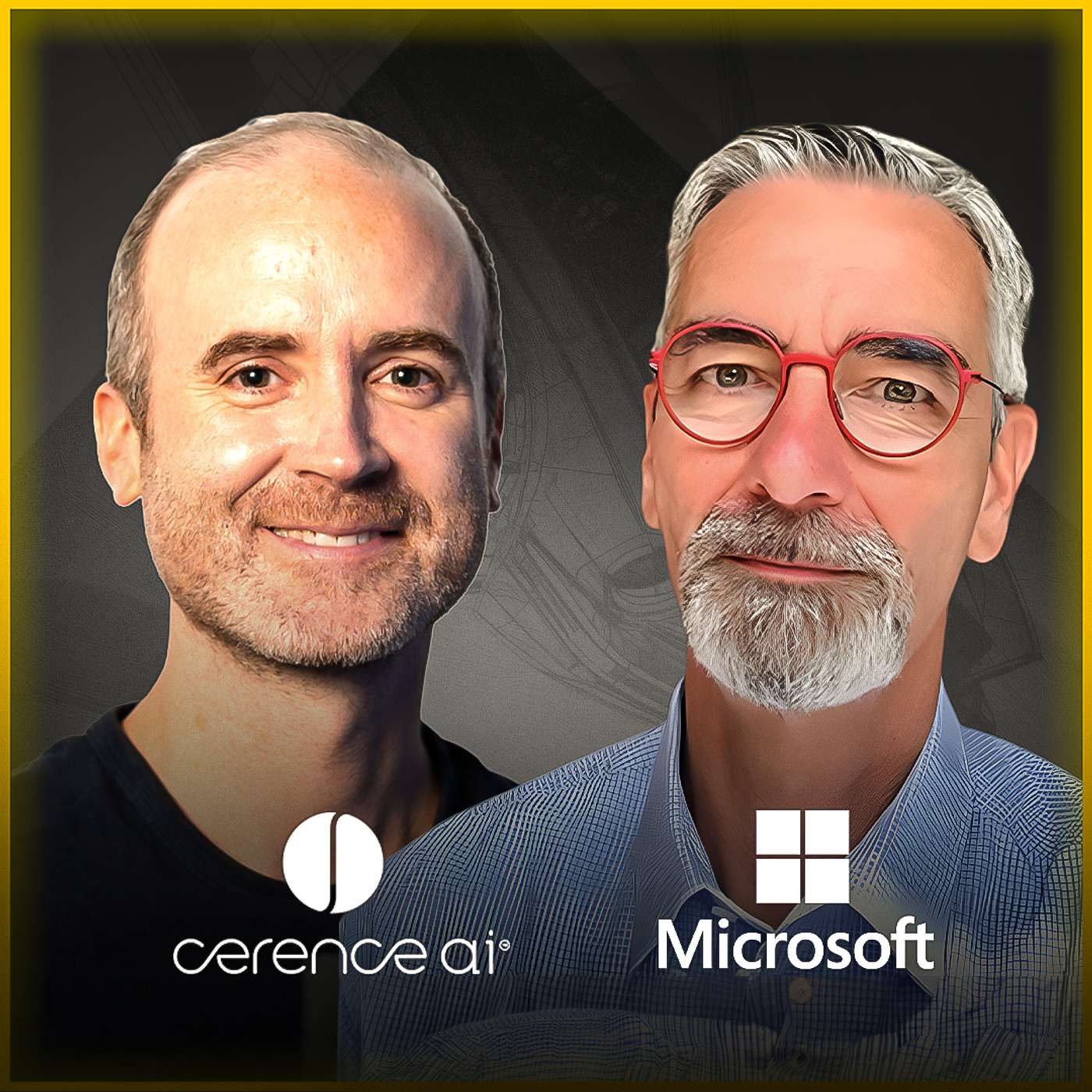
    Beyond Commands: When Your Car Learns to Listen - Cerence AI & Microsoft - S2E11

    with Jan Wehmeyer (Cerence AI) & Frank Kaleck (Microsoft) 🎙️ THE CONVERSATIONAL COCKPIT DECODED In this new episode of "Under the Hood: Automotive Storytelling", brought to you by The Storytelling Tribe, we sit down with Jan Wehmeyer, VP Account & Business Lead Europe at Cerence AI, and Frank Kaleck, Director Industry Advisory Automotive at Microsoft, inside a prototype car to explore how voice AI is turning the vehicle into an intelligent partner, and the dashboard into a boardroom. 🎯 KEY INSIGHTS Native Voice AI vs. CarPlay: The Data Advantage OEMs Can't Ignore Frank Kaleck reveals why automakers are moving beyond Apple CarPlay and Android Auto for their primary voice layer. It’s because a native assistant gives them something a smartphone mirror never can: real insight into what their customers actually want. That data flywheel is becoming a core competitive asset. The Hybrid AI Architecture Running Inside Your Next Car Jan Wehmeyer unpacks how Cerence AI pairs a Large Language Model (LLM) in the cloud with a Small Language Model (SLM) on-device, creating a system that handles free-form, multi-intent commands without structured syntax and routes sensitive data locally to protect driver privacy, even without connectivity. From One-Size-Fits-All to Market-Specific AI Agents Learn how the combination of Microsoft Azure's regional data center infrastructure and Cerence AI’s dedicated local teams makes it possible to serve fundamentally different user expectations — China's high-context, continuous conversation style versus Europe's preference for brevity — without multiplying vehicle variants or technical complexity. 💡 PRACTICAL TAKEAWAYS Lead with use cases, not technology: Before presenting any new capability, anchor it in a specific driver scenario. The technology earns its place once the human problem is clearly visible. Embed cross-partner teams early in the project: Rather than working in sequential handoffs between OEM, Tier 1, and technology vendors, co-locate dedicated agile teams from day one. The speed and alignment gains are substantial. Leverage regional teams early: Cultural differences in how people interact with technology are as significant as regulatory ones. Build regional UX adaptation into the project plan from day one, not as a retrofit. Tailor your AI architecture to your privacy constraints: Not every function needs the cloud. Identifying which capabilities can run on-device reduces data exposure and builds driver trust. 🌟 ABOUT YOUR GUIDES Jan Wehmeyer brings nearly a decade of experience building Cerence AI's commercial presence across Europe, having joined the company through its Nuance Communications Automotive roots in 2015. He is currently VP Account & Business Lead Europe, a role focused on translating voice AI capability into OEM partnerships at scale. Frank Kaleck has spent fifteen years at Microsoft watching the company transform from a Windows and Office provider into the cloud backbone of the automotive industry. As Director Industry Advisory Automotive, he works directly with OEMs and Tier 1 suppliers to build vehicle experiences and enterprise-grade in-car productivity on top of Microsoft Azure. Ready to hear what the car of tomorrow actually sounds like? "Under the Hood: Automotive Storytelling" uncovers the human narratives driving innovation in an industry that impacts lives worldwide. Hosted by Stéphane Lagresle, this podcast explores how the power of storytelling ultimately connects technology to humans.

  • May 15 · 52 min

    Wiring the Future: Inside Valeo's Electrification Revolution - Claudine Rochette S2E10

    THE EV REVOLUTION DECODED In this new episode of "Automotive Storytelling", brought to you by The Storytelling Tribe, we sit down with Claudine Rochette, VP of Strategy and Communication at Valeo's Power Division, bringing over 20 years of experience at the heart of automotive electrification. From relaunching France's first EV ecosystem project in 2009, to leading global strategy across motors, power electronics, and thermal management, Claudine unpacks what the electric revolution truly looks like from the inside, and why she has always believed the shift is irreversible. Key insights Valeo's answer to the hidden range killer Claudine reveals how winter heating can cut an EV's range in half, and how Valeo's heat pump technology recovers over 25% of that lost range by managing electrical, mechanical, and thermal energy as one integrated system. The rare earth problem nobody is talking about Over 90% of today's electric motors depend on rare earth magnets sourced predominantly from China. Valeo's collaboration with Mahle on a brushless, inductively excited motor cuts the motor's carbon footprint by 40% while breaking the supply chain dependency. Software never stops: the SDV lifecycle revolution The software-defined vehicle has fundamentally changed development timelines. Valeo now maintains and upgrades motor software up to 15 years post-start of production, enabling OTA performance gains long after the car leaves the factory. Practical takeaways Reframe range anxiety: The biggest EV performance gap is the energy management across electrical, mechanical, and thermal vectors combined. Follow the TCO story: Valeo's data shows EVs already outperform ICE on total cost of ownership. That’s a narrative the industry still hasn't pushed loudly enough, especially in commercial vehicles and trucks. Think B2B2C: Winning EV adoption means teaching dealers how to teach customers. The technology story only lands when the full chain understands it. Stay agile: That’s Claudine's #1 storytelling advice. In a market shaped by geopolitical shocks, regulation U-turns, and technology disruption, adaptability is the only constant. About Claudine Rochette Claudine brings over 20 years of dedicated automotive experience, starting as an engineer at Johnson Controls on engine management systems before joining Valeo in 2005. She led the relaunch of France's national EV ecosystem in 2009 and has held senior leadership positions across electrification strategy ever since. As VP of Strategy and Communication for Valeo's Power Division — the company's flagship entity combining powertrain and thermal systems — she sits at the intersection of technology, sustainability, and market narrative. "Under the Hood: Automotive Storytelling" uncovers the human narratives driving innovation in an industry that impacts lives worldwide. Hosted by Stéphane Lagresle, this podcast explores how the power of storytelling ultimately connects technology to humans.

  • April 30 · 53 min

    From Seatbelts to Robotaxis: Europe's Autonomous Awakening - Charlotte Eisner, Bolt - S2E09

    THE LUCKY CLOVER DECODED In this captivating episode of "Automotive Storytelling" brought to you by The Storytelling Tribe, we sit down with Charlotte Eisner, Head of Strategic Partnerships at Bolt, co-chair of ECAVA (EU Commission), and strategic advisor on automated transportation to the NATO Science & Technology Organization, to explore how Europe is building its own autonomous mobility future, and on its own terms. 🎯 KEY INSIGHTS Europe vs. the World: Slow Is Not Behind Charlotte reveals why Europe's rigorous three-layer approval approach (product safety + process safety + operational safety) is not a weakness, and why nobody, including Waymo, has actually cracked commercial-scale deployment yet. The "Blank Paper" Imperative Discover why retrofitting Level 2 ADAS vehicles for Level 4 autonomy is a dead end, and how the engineering lesson from Bolt's Zicur experience demands starting from scratch to build vehicles that truly support autonomous drive systems. The Lucky Clover Strategy Learn how Bolt's four-leaf framework — private ride-hailing, B2G municipality services (hospital rides, disabled transport, late-night safety), B2B partnerships, and public transport integration — is designed to make robotaxis a civic asset, not just a tech product. 💡 PRACTICAL TAKEAWAYS Anchor your story in the past: Tailor your narrative to the lived experience of each audience — cities, OEMs, municipalities — before introducing disruption. Know your "two-brain" problem: When bridging legacy automotive and new autonomy systems, recognize that evolution alone will not get you to Level 4. Rethink from zero. Reframe "behind" as "rigorous": Europe's approval requirements create a defensible moat — the first player to clear them will have a durable European-scale advantage. Design for the streaming generation: Today's riders don't want to own. Build services, not products — and price against the true cost of car ownership (100% cost, 2–5% utilization). 🌟 ABOUT YOUR GUIDE Charlotte Eisner brings over 15 years of experience at the intersection of electrification, autonomy, and European mobility strategy. Born into a family of automotive engineers in Gothenburg — her grandfather co-developed the Volvo three-point seatbelt — she brings a rare legacy of safety-first innovation to the frontlines of Level 4 deployment. After roles at Scandinavian Airlines, management consulting, and co-founding ventures, she re-entered automotive via the EV wave, led business development at Zicur, and now drives strategic partnerships at Bolt, where she is building Europe's answer to Waymo. "Under the Hood: Automotive Storytelling" uncovers the human narratives driving innovation in an industry that impacts lives worldwide. Hosted by Stéphane Lagresle, this podcast explores how the power of storytelling ultimately connects technology to humans.

  • April 24 · 24 min

    I talk to 5 AV Experts at Tech.AD 2026: GenAI, Homologation, and much more - S2E08

    Autonomous systems work, but proving they function safely across thousands of edge cases has become the defining challenge of our time. Instead of celebrating software milestones, the industry is slamming into a homologation wall, realizing that legal liability and digital validation are the true bottlenecks preventing autonomous deployment. Coming to you from the floor of Tech.AD Berlin 2026, this special dispatch brings together five engineering and strategic leaders: Pierre Vincent and Emmanuel Follin (ANSYS/Synopsys), Gordon Köfner (Cadence/VTD), José Rui Simões (Critical Software), and Khaled Alomari (MHP). With these experts, we talk about the increasing complexity that automated and autonomous driving bring to an already complex SDV world, and how homologation and testing are at the center stage. 🔍 In this episode, you will: ▶ Discover how generative AI shrinks complex test scenario creation from three weeks down to minutes. ▶ Navigate the radical shift from traditional Tier 1 waterfall dynamics to a smartphone-like partnership model. ▶ Understand why digital homologation and unresolved legal liability remain the ultimate autonomous deployment gatekeepers. ▶ Learn how to avoid brute-force validation by targeting only the meaningful scenarios that add true engineering value. This expert panel features technical leaders who have successfully architected advanced simulation toolchains, deployed safety-critical embedded systems, and structured complex OEM partnerships globally. Together, they are building the critical infrastructure required to test physical AI and bring certified autonomous vehicles onto public roads. "Under the Hood: Automotive Storytelling" uncovers the human narratives driving innovation in an industry that impacts lives worldwide. Hosted by Stéphane Lagresle, this podcast explores how the power of storytelling ultimately connects technology to humans.

  • April 10 · 50 min

    The Foundation Layer: John Wall, President of QNX - S2E07

    THE INVISIBLE ENGINE DECODED In this new episode of Automotive Storytelling, brought to you by The Storytelling Tribe, Stéphane Lagresle sits down with John Wall, President of QNX, the safety-critical operating system running silently inside over 275 million vehicles worldwide. From a one-click download for students to the beating heart of BMW's Neue Klasse, John reveals how the most important software in your car might be invisible - for now. KEY INSIGHTS The "Rounding Error" Paradox: working in the shadows can be an advantage John Wall reveals how QNX grew its global automotive business while BlackBerry wasn't watching, operating as a "rounding error". It gave Wall the autonomy to work with his team tirelessly on his vision. The "Free Puppy" Fallacy: Rethinking the Open Source vs. Commercial Debate Discover how QNX is threading the needle between open-source accessibility and commercial accountability with its QNX Everywhere initiative. Hear Wall’s position on this topic and what “free” really means. Physical AI and the Next Frontier: From Tip of the Spear to Platform of the Future Learn why Wall sees automotive as the proving ground for every other mission-critical industry, and how QNX is positioning its deterministic, safety-certified RTOS as the foundational layer for the physical AI revolution in robotics and industrial automation. PRACTICAL TAKEAWAYS Listen to customers: After COVID, Wall personally travelled the world to talk to customers. "We can't find engineers who know QNX." That listening tour created QNX Everywhere. Measure yourself against the best: QNX benchmarks every performance metric against Linux, not other RTOSes — always calibrate ambition to the market leader, not your nearest competitor. Name the integration tax: Wall's breakthrough with Vector on Alloy Kore came from naming what OEMs were silently bleeding — identifying the hidden cost your customer can't articulate is the foundation of a winning partnership narrative. Stability enables innovation: As Wall frames it, the reason Apple's app ecosystem thrives is that iOS isn't rewritten every year. The same logic applies to automotive software — OEMs can't differentiate on top of a foundation that keeps shifting. ABOUT YOUR GUIDE John Wall brings over 32 years of experience at QNX, where he has held virtually every engineering role before rising to President in November 2025. A Carleton University electrical engineer who turned down multiple exits to stay the course, he led QNX's automotive pivot through the Harman and BlackBerry eras, championed the hypervisor and QNX Everywhere against internal resistance, and secured the landmark BMW Neue Klasse partnership. BlackBerry's chief legal officer has called him "the real heart and soul of the QNX business". "Under the Hood: Automotive Storytelling" uncovers the human narratives driving innovation in an industry that impacts lives worldwide. Hosted by Stéphane Lagresle, this podcast explores how the power of storytelling ultimately connects technology to humans.

  • March 27 · 49 min

    How Dolby and HARMAN Engineer the Soul of Your Car - S2E06

    In this captivating episode of "Automotive Storytelling", we sit down with two of the most influential figures in automotive audio: Andreas Ehret, Sr. Director Automotive at Dolby Laboratories, and Greg Sikora, Executive Director of Acoustic Systems and HALOsonic Engineering at HARMAN International. Together, they pull back the curtain on how sound becomes a core dimension of the driving experience. KEY INSIGHTS The Five-Year Integration Challenge: Early Involvement is Everything: Discover why premium audio systems require involvement as early as the body-in-white stage, sometimes 3-5 years before production. Branding through sound: Greg uncovers how HARMAN engineers a distinct sonic identity for each luxury brand — from Bang & Olufsen in Audi to Mark Levinson in Lexus — with a global team of 120 acoustic specialists. The future of in-car audio: Both guests explore how software-defined vehicles, personalization, and spatial audio are converging to make the car the world's most intimate listening space. PRACTICAL TAKEAWAYS Know your acoustic canvas: Understand that every car model is a unique acoustic environment demanding bespoke tuning, not off-the-shelf solutions. Bridge format and experience: Immersive audio formats only deliver value when the underlying hardware and tuning are aligned from the start of a program. Leverage brand sound as a differentiator: OEMs that invest in a consistent sonic identity build stronger emotional loyalty among drivers. Equip for Software-Defined Evolution: Design audio systems with over-the-air update capability to enable tuning refinements, new features, and continuous value creation post-purchase. ABOUT YOUR GUIDES Andreas Ehret brings 18+ years at Dolby Laboratories, with roots in audio coding research at Fraunhofer IIS — the birthplace of MP3. He now leads Dolby's automotive push, championing Dolby Atmos Music as the definitive in-car listening format. Greg Sikora has spent 20 years shaping how the world's finest cars sound, leading acoustic engineering for brands including B&W, Bang & Olufsen, JBL, and Harman/Kardon across customers from BMW to Ferrari. He is also an active PhD researcher at McGill University. "Under the Hood: Automotive Storytelling" uncovers the human narratives driving innovation in an industry that impacts lives worldwide. Hosted by Stéphane Lagresle, this podcast explores how the power of storytelling ultimately connects technology to humans.

  • March 19 · 6 min

    MWC 2026 Bonus Episode - Trustonic interview with Andrew Till

    🎙️ Bonus | MWC 2026 – Andrew Till, Trustonic Recorded live at Mobile World Congress 2026, this bonus episode features Andrew Till, General Manager of the Secure Platform Division at Trustonic — a company that has been quietly powering automotive security for years, and is now stepping into a new role: trusted advisor to OEMs navigating an increasingly complex landscape. Andrew makes a small but telling observation early in the conversation: the industry stopped talking about supply chains and started talking about ecosystems. That shift, he argues, changes everything: from how security is architected, to how fast a vehicle can go from concept to launch, to why Chinese automakers are moving at a speed that's forcing the rest of the world to pay attention. A grounded, big-picture conversation on where the automotive industry's mindset is actually headed. "Under the Hood: Automotive Storytelling" uncovers the human narratives driving innovation in an industry that impacts lives worldwide. Hosted by Stéphane Lagresle, this podcast explores how the power of storytelling ultimately connects technology to humans.

  • March 18 · 7 min

    MWC 2026 Bonus Episode - SoundHound AI interview with Andrew Richards

    🎙️ Bonus | MWC 2026 – Andrew Richards, SoundHound AI Recorded live at Mobile World Congress 2026, this bonus episode gives you the full conversation with Andrew Richards, VP at SoundHound AI — one of the most advanced voice AI platforms deployed in production vehicles today. In just a few minutes on the show floor, Andrew unpacks a lot: the debut of SoundHound's Vision AI in Europe (yes, your car can now answer "what's that building?"), the real-world mechanics of Edge vs. Cloud arbitration, and why the future of in-car AI isn't about beating Apple or Google — it's about orchestrating alongside them. He also reflects on something every driver has felt: the frustration of a car that just didn't understand you. That era, he says, is over. What's next is far more interesting. A sharp, honest conversation from the heart of MWC 2026. "Under the Hood: Automotive Storytelling" uncovers the human narratives driving innovation in an industry that impacts lives worldwide. Hosted by Stéphane Lagresle, this podcast explores how the power of storytelling ultimately connects technology to humans.

  • March 13 · 25 min

    MWC 2026: Barcelona Calling - When Satellites Met Ecosystems - S2E05

    In this special edition of "Automotive Storytelling" — the only podcast examining mobility through storytelling — we take you inside Mobile World Congress 2026 in Barcelona for seven conversations with the people shaping automotive's next chapter. From semiconductor executives to voice AI pioneers, from security architects to standards leaders, this episode captures the two forces that dominated the show floor: connectivity from space, and the end of the supply chain as we knew it. KEY INSIGHTS From Buzzword to Business Reality: The NTN Breakthrough. Maxime Flament (5GAA) and Firasat Siddiqui (Harman) reveal how non-terrestrial networks went from skeptical OEM reception in 2021 to working satellite SOS demos and BMW roadmaps in 2026, driven by trust-building. The Ecosystem Rewrite: Why the Old Waterfall Is Over. Tanjeff Schadt (PwC/Strategy&) lays out four scenarios for the automotive value chain — from OEM-led partnering to full tech disruption — while Weizhi Yu (MediaTek) and Andrew Till (Trustonic) explain why silicon suppliers and security providers now sit directly at the OEM table. The Rise of the Orchestrators. Charlie Isaacs (Salesforce) and Andrew Richards (SoundHound AI) describe a converging future where AI agents in the cloud and voice assistants in the car form an orchestration layer, and how value flows to whoever connects the dots across the ecosystem. PRACTICAL TAKEAWAYS Plan for service continuity, not backward compatibility: Design your connectivity roadmap so safety-critical services can transition across radio generations without freezing your architecture. The distinction unlocks innovation. Build the capability to operate in ecosystems now: The window is 12–24 months. Companies that still rely on traditional procurement behavior and rigid OEM-supplier hierarchies will find themselves driven rather than driving. Treat AI orchestration as infrastructure: Whether it's agentic enterprise platforms or in-vehicle voice AI, the ability to register, connect, and coordinate agents across companies is becoming as foundational as the connectivity layer itself. FEATURED GUESTS Tanjeff Schadt — Partner, Strategy& (PwC), EMEA Leader Semiconductors Maxime Flament — CTO, 5G Automotive Association (5GAA) Firasat Siddiqui — Sr. Director Global Portfolio PMO Lead, Harman International Weizhi Yu — VP Automotive Product Marketing, MediaTek Andrew Richards — VP Business Development, SoundHound AI Andrew Till — General Manager Secure Platform, Trustonic Charlie Isaacs — CTO for Customer Connection, Salesforce Ready to discover the stories behind the steering wheel? "Under the Hood: Automotive Storytelling" uncovers the human narratives driving innovation in an industry that impacts lives worldwide. Hosted by Stéphane Lagresle, this podcast explores how the power of storytelling ultimately connects technology to humans.

  • February 27 · 36 min

    When Technology Saves Lives: Joe Custer, CEO at Intrado - S2E04

    🚨 THE COLLISION-TO-CARE REVOLUTION In this compelling episode of "Automotive Storytelling" – the only podcast examining mobility through storytelling, brought to you by The Storytelling Tribe – we connect with Joe Custer, CEO of Intrado, the company that invented modern 9-1-1, to explore how data-rich vehicle communications can save over 2000 lives annually. From two Boulder County sheriff's deputies who solved a location problem ~50 years ago to the forefront of Next Generation 9-1-1 and emergency response, Joe reveals why every second after a crash is a battle between technology and time. 🎯 KEY INSIGHTS The 12-Minute Problem: When Call Centers Cost Lives Joe reveals how current crash notifications route through OEM concierge call centers, creating 12+ minute delays that increase mortality by 46% compared to a 5-minute intervention. Next Generation AACN can cut response times by nearly 70%. The Severity Score Standard: One Language for Every Brand Discover how GM, Ford, Toyota, and Honda are collaborating with NENA and APCO to create a unified crash severity calculation, so that a "7 out of 10" means the same thing regardless of which vehicle model you drive. The Autonomous Trust Factor: No Driver, No Problem Learn why automated emergency response becomes even more critical in the autonomous era, where driverless vehicles must communicate crashes directly to first responders through the dedicated, public-safety-grade ESInet network. 💡 PRACTICAL TAKEAWAYS Standardize the Severity Score: Adopt the updated VEDS 3.1 standard so every brand communicates crash data in a consistent, actionable format Lead with the Consumer Mandate: 94% of drivers support sharing vehicle data for safety; 70% say AACN would influence their next vehicle purchase — use this in your messaging Follow the European Playbook: Europe's eCall mandate reduced emergency response times by 40–50% and saves an estimated 2,500 lives annually — the proof of concept already exists 🌟 ABOUT YOUR GUIDE Joe Custer brings nearly 30 years of leadership in finance, strategy, and corporate development to his role as CEO of Intrado — the company that handles roughly 90% of all U.S. 9-1-1 requests. Having served as CFO and SVP of Operations, Joe led the strategic transformation of emergency services infrastructure and now champions the modernization of the 9-1-1 ecosystem through Advanced Automatic Collision Notification (AACN). Ready to discover the stories behind the steering wheel? https://www.intrado.com/ https://www.intrado.com/news-releases/intrado-and-sbd-automotive-demonstrate-how-advanced-automatic-collision-notification-aacn-could-save-more-than-2000-lives-annually "Under the Hood: Automotive Storytelling" uncovers the human narratives driving innovation in an industry that impacts lives worldwide. Hosted by Stéphane Lagresle, this podcast explores how the power of storytelling ultimately connects technology to humans.

  • February 13 · 11 min

    Storytelling Tips: Your Booth is a Story: 5 Lessons from Walking CES for Years - S2E03

    🎪 YOUR BOOTH IS A STORY — OR IT'S NOISE In this solo episode of Automotive Storytelling, the only podcast examining mobility through storytelling, Stéphane Lagresle, founder of The Storytelling Tribe, draws on years of CES experience, including his most recent visit in January 2026, to break down the five principles that turn a trade show booth from a product catalog into a story visitors will remember and retell. From IKEA-inspired visitor flows to the art of making your team speak the same language, this episode delivers a practical framework for anyone preparing for CES, IAA, MWC, or any major industry event. 🎯 KEY INSIGHTS The IKEA Blueprint: Designing Visitor Journeys, Not Floor Plans Most trade show booths are open spaces where visitors wander aimlessly. Stéphane reveals how applying IKEA's guided flow principle — and a 3-zone model (Attraction → Engagement → Conversion) — creates a narrative arc that builds understanding step by step. The Building Block Strategy: From Chapters to a Complete Story Discover why leading with your flagship demo is like showing a movie's final scene first, and how structuring demos as progressive building blocks creates an unforgettable "aha" moment — with real examples from HARMAN and CES 2026. The Ambassador Effect: Storytelling That Multiplies Learn why the 20 people visiting your booth actually represent hundreds back at their offices, why 88% of B2B buyers trust personal recommendations above all else, and how to craft a story simple enough to survive the "Monday Morning Test." 💡 PRACTICAL TAKEAWAYS Design the journey first: Sketch your visitor path on a whiteboard before touching booth layouts — Entry → Station 1 → Station 2 → Station 3 → Exit. If you can't draw a clear line, neither can your visitors. Apply the half-and-half rule: Write down everything you want to communicate. Cross out half. Then cross out half again. What's left is your story. Everything else is noise. Run the "What do you do?" drill: Before the show, ask every team member that question and record the answers. The number of different answers is the size of your problem. Arm your ambassadors: Give visitors a takeaway tool — a one-pager, a QR code to a 60-second video, a shareable link — so they can retell your story with backup. 🌟 ABOUT YOUR HOST Stéphane Lagresle brings 15+ years of experience in automotive technology communication. Having worked with Samsung, Harman, and TomTom, and walked countless CES floors, he developed the Automotive-Grade Storytelling™ methodology that bridges engineering excellence with market relevance. CROSS-REFERENCES 🔗 Quick Fix #1: "The Dinner Party Test" — the foundational principle behind making stories retellable (Season 1, Episode 17) 🔗 Quick Fix #2: "Escaping the PowerPoint Jail" — the 18-Minute Rule and why less is more (Season 1, Episode 23) Ready to turn your next trade show booth into a story your visitors will retell? "Under the Hood: Automotive Storytelling" uncovers the human narratives driving innovation in an industry that impacts lives worldwide. Hosted by Stéphane Lagresle, this podcast explores how the power of storytelling ultimately connects technology to humans.

  • January 30 · 16 min

    The Evergreen Framework: How Positioning-First Thinking Rebuilt a Founder's Story S2E02 Analysis

    ⚡ THE PITCH DECK PROBLEM In this focused case study from "Under the Hood: Automotive Storytelling," host Stéphane Lagresle reveals what happened when Stef Balkowiec, Co-Founder of GraphDome and former Managing Director at Cosworth Electronics, put his company presentation through the Evergreen process. This shows how strategic feedback transforms technology-focused decks into positioning-driven narratives that actually land with decision-makers. 🎯 KEY INSIGHTS The Trust Trap: Why Credibility Can't Be an Afterthought Most founders bury their strongest asset—experience—at the end of their decks. Stef and his co-founder have 60 years of combined expertise that should have opened his presentation, not closed it. Learn why trust must be established in the first 90 seconds, not earned after 20 slides. From Features to Feelings: The Transformation Question Stef discovered that his original deck answered "what does GraphDome do?" when decision-makers needed to know "how will I be better off?" The breakthrough came from one question: "How are they going to feel?" This single insight triggered a complete rebuild. Your Deck Is the Output, Not the Input Stef spent a full week reconstructing his presentation after gaining positioning clarity. The result? Technology moved to the appendix, the story led with human impact, and every slide answered: Why do we exist? Why should you care? What makes us different? 💡 PRACTICAL TAKEAWAYS Audit your first three slides today: If they don't establish credibility, articulate customer pain, or promise transformation, you're leading with the wrong story Apply the Evergreen three-step process: (1) Live presentation to target persona, (2) In-depth analysis on feedback board, (3) Strategic repositioning session. Test the "feel" versus "feature" ratio: For every technical capability you mention, articulate one emotional or business outcome your audience will experience Seek outside feedback before investor meetings: Founders can't see their own blind spots after internal iterations—strategic critique reveals gaps you've stopped noticing 🌟 ABOUT YOUR GUIDE Stef Balkowiec brings over 30 years of experience at the intersection of motorsport technology and automotive innovation. As former Managing Director of Cosworth Electronics, he helped pioneer software-defined vehicle approaches in high-performance racing environments. Now as Co-Founder of GraphDome, he's scaling real-time digital twin technology for manufacturing productivity. His journey from technology-first pitch decks to positioning-driven narratives exemplifies the transformation every technical founder must make to succeed. Is your foundation solid? This episode strips away the theory and shows you exactly what positioning-first storytelling looks like in practice. Hear the actual clips from Stef's Evergreen journey, understand the framework behind the transformation, and walk away with actions you can take Monday morning. Want to go deeper? Listen to the full 45-minute conversation for the complete behind-the-scenes journey, including Stef's naming process and strategic positioning decisions. #UnderTheHood #AutomotiveStorytelling #Evergreen #Positioning #PitchDeck #FounderJourney "Under the Hood: Automotive Storytelling" – Where technology meets narrative, and mobility's future is told through visionary voices. "Under the Hood: Automotive Storytelling" uncovers the human narratives driving innovation in an industry that impacts lives worldwide. Hosted by Stéphane Lagresle, this podcast explores how the power of storytelling ultimately connects technology to humans.

  • January 30 · 45 min

    Behind the Rebuild: How the Evergreen Process Transformed a Founder's Presentation - Stef Balkowiec S2E02 Conversation

    🔧 THE FOUNDATION TRANSFORMATION In this compelling episode of "Under the Hood: Automotive Storytelling"—the only podcast examining mobility through the lens of storytelling—we sit down with Stef Balkowiec, Co-Founder of GraphDome and former Managing Director at Cosworth Electronics, to uncover what happens when a technical founder puts their company presentation through real scrutiny. This isn't a theoretical discussion about pitch decks—it's the actual behind-the-scenes journey of transforming a technology-heavy presentation into a positioning-driven story that opens doors. 🎯 KEY INSIGHTS Technology vs. Trust: The Founder's Blind Spot Stef reveals how his 60 years of combined expertise was buried at the end of his deck—and why technical founders consistently prioritize what they find interesting over what audiences need first. Discover why credibility must lead, not follow. The "How Does It Make You Feel?" Framework Learn how Stef rebuilt his entire deck from scratch by focusing on audience transformation rather than technical features. From vector databases and graph ontology to productivity gains and cost reduction—same technology, completely different story. Positioning: The Product Behind Your Presentation Stef spent weeks—not hours—repositioning GraphDome, ultimately realizing that the company presentation isn't just slides. It's the output of a rigorous positioning process that defines why you exist, who should care, and what differentiates you from both competitors and apathy. 💡 PRACTICAL TAKEAWAYS Front-load credibility within the first 2 minutes: Move your experience and track record to the opening slides so decision-makers trust you before evaluating your technology Apply the Red Bull test to your value proposition: If you're describing features instead of transformation (wings, not thirst-quenching), your positioning needs work Budget one full week to rebuild your deck after positioning clarity: Stef's transformation required complete reconstruction, pushing all technical schematics to the appendix Seek safe-environment feedback before high-stakes presentations: The Evergreen process revealed blind spots Stef couldn't see after months of internal iterations 🌟 ABOUT YOUR GUIDE Stef Balkowiec brings over 30 years of experience bridging motorsport and automotive technology innovation. As former Managing Director of Cosworth Electronics, he was instrumental in advancing software-defined vehicle architectures in high-performance environments. Now as Co-Founder of GraphDome, Stef is building real-time digital twin platforms that help manufacturing leaders drive productivity through smart data analytics. His unique perspective combines deep technical expertise with hard-won lessons about translating complex innovation into compelling business narratives. Ready to discover how positioning transforms presentation? This is the most transparent, process-focused episode we've ever recorded. You'll hear the actual feedback sessions, the strategic pivots, and even the naming struggles that come with getting your foundation right. #UnderTheHood #AutomotiveStorytelling #Positioning #TechFounders #CompanyStory #StartupStrategy "Under the Hood: Automotive Storytelling" – Where technology meets narrative, and mobility's future is told through visionary voices. "Under the Hood: Automotive Storytelling" uncovers the human narratives driving innovation in an industry that impacts lives worldwide. Hosted by Stéphane Lagresle, this podcast explores how the power of storytelling ultimately connects technology to humans.

  • January 16 · 46 min

    CES 2026: The Reality Check - When SDV Became Real, AI Moved to the Edge, and the Industry Converged - S2E01

    🎙️ THE REALITY CHECK: When Hype Becomes Hardware For three years at CES, we've heard the same promises: SDVs are coming, AI will transform mobility, the industry is converging. But at CES 2026, something changed. The buzzwords became bill of materials. The roadmaps became production deployments. The future tense became present reality. In this special Season 2 premiere, host Stéphane Lagresle brings you insights from seven conversations with executives at QNX, Qualcomm, Sonatus, Cerence AI, Amazon, Valeo, and VicOne, revealing three seismic shifts reshaping automotive innovation. 🚗 FROM BUZZWORD TO BILL OF MATERIALS Discover why SDV is no longer hype: $22-98 cost savings per vehicle, $6-12M development efficiencies, and 6-month deployment cycles. QNX shows the hard numbers. Sonatus demonstrates production systems. Valeo confirms we're "only at the beginning." 🤖 THE INTELLIGENCE REVOLUTION The industry has been talking for years about "software-defined" anymore. Now, it's "AI-defined" vehicles. Learn why edge-first orchestration is replacing cloud-first architecture, how operational costs and sustainability are driving AI to the edge, and why agentic AI creates experiences that evolve with customers across car, office, and home. 🔄 THE GREAT CONVERGENCE Technical boundaries are dissolving. Industry walls are falling. Your car is becoming a node in computing and energy grids. From Valeo's computing power lending concept to Amazon's ecosystem approach, see how vehicles are transforming into network infrastructure. 🎤 FEATURING INSIGHTS FROM: John Pelliccio (QNX) - Software-defined audio with measurable ROI Alexandre Corjon (Sonatus) - Intelligence-driven SDV deployment Rajat Sagar (Qualcomm) - AI-defined vehicles and Snapdragon Digital Chassis Raja Bose (Cerence AI) - Edge-first orchestration and seamless life experiences Stefano Marzani (Amazon/AWS) - Cloud-native development democratization François Marion (Valeo) - Cars as computing resources William Dalton (VicOne) - AI security in an expanding attack surface 💡 KEY TAKEAWAYS: ✓ Why edge computing is becoming "first-class citizen" instead of fallback option ✓ How cloud inference costs are driving architectural changes ✓ What "agentic AI" actually means for user experiences ✓ Why vehicles will lend computing power to the cloud when idle ✓ How OEMs can deploy AI without "gold-plated hardware" ✓ Where the real security threats lie in intelligence-defined vehicles This isn't another CES recap. This is a reality check on where automotive innovation actually stands. And where it's heading next. Keywords: CES 2026, software-defined vehicles, SDV, automotive AI, edge computing, agentic AI, Qualcomm Snapdragon, autonomous driving, automotive cybersecurity, vehicle-to-grid, cloud computing, automotive innovation, mobility technology, QNX, Sonatus, Cerence, Amazon automotive, Valeo, VicOne, edge-first orchestration, AI-defined vehicles, automotive storytelling, tech podcast, automotive podcast "Under the Hood: Automotive Storytelling" uncovers the human narratives driving innovation in an industry that impacts lives worldwide. Hosted by Stéphane Lagresle, this podcast explores how the power of storytelling ultimately connects technology to humans.

  • Dec 20, 2025 · 35 min

    Behind the Microphone: How 30 Episodes Get Made - Frantz Lohier Interviews Stephane Lagresle EP30 | Season Finale

    For the season finale of "Under the Hood: Automotive Storytelling," we're going behind the scenes. Frantz Lohier, the first guest of Season 1, reverses roles to interview Stéphane Lagresle about how 30 episodes with automotive executives actually get made. This isn't about interviewing techniques or podcast equipment. It's about the systematic approach to understanding what makes great conversations work in a technical industry. What You'll Learn: The Four-Hour Formula How to prepare for high-stakes conversations with executives you've never met, using AI tools, pre-interview calls, and strategic research to create authentic dialogue regardless of topic complexity. The Validation Discovery Why the podcast's original hypothesis was wrong: Stéphane assumed automotive executives were skeptical about storytelling. Every single guest proved otherwise, confirming that narrative is now critical for cutting through technical noise and winning business. The Machinery Behind Authenticity From Google Notebook LM for research synthesis to the intentional structure that balances technical credibility with human connection, here's the process that makes preparation look effortless. The Honest Part Stéphane also shares something uncomfortable: he almost didn't start this podcast. An inner voice (he calls it "Alfred") kept him from posting on LinkedIn for years. This episode is about what happened when he decided to ignore that voice, and what months of systematic content creation actually produces. Why This Episode Matters: If you're preparing for CES presentations, investor pitches, or OEM meetings in 2025, this episode offers a blueprint for the kind of preparation that creates memorable conversations. If you're a tier-one supplier wondering why OEMs can't remember your presentation, ask yourself if you have a story that will resonate with your audience. Your technology might be brilliant. Your storytelling is what makes it memorable. 🎧 Season 1 complete. Season 2 coming soon. #UnderTheHood #AutomotiveStorytelling #B2BMarketing #PodcastProduction "Under the Hood: Automotive Storytelling" uncovers the human narratives driving innovation in an industry that impacts lives worldwide. Hosted by Stéphane Lagresle, this podcast explores how the power of storytelling ultimately connects technology to humans.

  • Dec 9, 2025 · 33 min

    Software Defined Vehicles (SDV) in 2026: 7 Expert Insights - EP29

    The debate is over. 2026 is SDV execution year. At We.Conect's SDV Europe 2025 in Berlin, seven industry experts revealed a fundamental shift: the companies that win won't have the most features—they'll tell the most honest stories about strategic focus, security vigilance, and what software-defined vehicles really mean for drivers. THE THREE SHIFTS DEFINING 2026: 🎯 From "More" to Strategic Focus After years of feature accumulation, complexity has become unsustainable. Ola Svensson (Knowit): "Complexity must be reduced. Functionality is being taken away." Success in 2026 means mastering "subtractive storytelling": choosing 10 features that work flawlessly over 50 that create chaos. This is the differentiation customers will finally experience. 🤝 From Handoffs to Co-Integration The relationship between OEMs and Tier1s keeps evolving. Michael Niklas (Aumovio) identified the real challenge: "fragmented tools, data inconsistencies, unclear ownership." Felix Pretscheck (Bosch) presented three collaboration scenarios, with "Co-Integrate" as the breakthrough: OEMs and suppliers integrating continuously through shared pipelines, compressing feedback from months to days. 🔒 From Building to Securing Every connection you market is also a vulnerability. Gregor Knappik (VicOne): "So everything gets even more interconnected. And these are basically the biggest threats upcoming that we see and needs to be solved now." With vehicles connecting to smart homes and third-party services, security isn't a feature to hide—it's a trust-builder requiring radical transparency. GPS spoofing threats, public hacking competitions, and the convergence of safety (ISO 26262) with security (ISO 21434) demand a new narrative: continuous vigilance as strength, not admission of weakness. PRACTICAL TAKEAWAYS: Reframe subtraction as vision: "We chose these 10 features because they matter" beats "We offer 50 because we can" Translate engineer-speak to human language: Replace "flexible feature deployment architecture" with "Your car gets better every month, like your phone" Launch co-integration partnerships now: Move beyond quarterly supplier deliveries to shared development infrastructure Build security transparency within 6 months: Proactive bug bounty programs before incidents force reactive crisis management FEATURED EXPERTS: Stefan Marxreiter (Avenga) • Ola Svensson (Knowit) • Mikhail Vink (JetBrains) • Michael Niklas (Aumovio) • Khaled Alomari (MHP) • Hans-Martin Ritt (MathWorks) • Gregor Knappik (VicOne) The companies that master honest narratives—ambitious yet credible, innovative yet trustworthy—won't just win in 2026. They'll define automotive storytelling for the next decade. "Under the Hood: Automotive Storytelling" uncovers the human narratives driving innovation in an industry that impacts lives worldwide. Hosted by Stéphane Lagresle, this podcast explores how the power of storytelling ultimately connects technology to humans.