Artwork for Truth From The Stand Deer Hunting Podcast
Sports

Truth From The Stand Deer Hunting Podcast

Clint Campbell

Truth From The Stand is a weekly whitetail deer hunting podcast built for serious DIY hunters. For 10 years, we've been covering the tactics, strategies, and real stories that help hunters consistently kill mature bucks. From early season scouting and food plots to scrape hunting, rut tactics, and late season pressure, we cover it all. Each week we sit down with experienced whitetail hunters, bowhunters, and public land hunters to break down what's actually working in the field. Whether you're chasing bucks on public land or private ground, managing a property, or just trying to punch your tag on a mature deer, this is your podcast. New episodes every Wednesday. Follow the show so you never miss one

  • 21 episodes
  • Updated Today

Episodes21

  • Today · 17 min

    Trail Cam University: Information vs. Understanding | The Decision That Changes Everything

    I've been staring at trail camera photos for longer than I care to admit. Thousands of them. Maybe tens of thousands. And for a long time, I thought that was the job — collect enough pictures, find enough patterns, and the deer would basically tell me where to stand. They didn't. What I've learned, slowly and sometimes painfully, is that there's a canyon-wide difference between information and understanding. You can have a card full of pictures and still have no idea what's actually happening in that timber. The data doesn't think for you. It doesn't filter. It just sits there, and if you're not careful, it buries you. We're living in the golden age of trail camera technology. Cellular cameras, high-res video, time-stamps down to the second — it's all incredible, and I mean that. But I've watched guys drown in it. They've got spreadsheets, they've got apps, they've got more buck sightings than they know what to do with. And come November, they're still sitting on the wrong ridge, second-guessing every move. Information without interpretation is just noise. That's what this episode is really about. The gap between knowing something and understanding it. Because those aren't the same thing, and the hunters who figure that out — the ones who can sit with uncertainty, resist the urge to over-analyze, and actually read what the woods are telling them — those are the hunters who make good decisions when it counts. Patience is part of it. So is humility. You have to be willing to say, "I don't know what this buck is doing yet," and mean it. Not as an excuse to do nothing, but as an honest starting point. The hunters who've been at this for thirty years aren't necessarily smarter than you. They've just been wrong enough times to stop trusting data at face value. Deer don't live in spreadsheets. They live in the timber, in the wind, in the terrain features you walked past without thinking twice. Your cameras can point you in a direction, but you still have to think your way to the stand. This episode is for every hunter who's ever felt more confused after pulling cards than before. You're not doing it wrong. You're just missing the step between data and decision. That step is understanding. And it changes everything. SHOW NOTES AND LINKS: —Truth From The Stand Merch —Check out Tactacam Reveal cell cameras — Save 15% on Hawke Optics code TFTS15 —Save 20% on ASIO GEAR code TRUTH20 —Check out Spartan Forge to map your hunt —Save on Lathrop And Sons non-typical insoles code TRUTH10 —Check out Faceoff E-Bikes —Waypoint TV Learn more about your ad choices. Visit megaphone.fm/adchoices
  • Wednesday · 1 hr 43 min

    EP. 503: The Discomfort Threshold | Cody D'Acquisto

    I've said it before, but every season I get a little more convinced that the best hunters aren't the ones with the fanciest gear closet — they're the ones who actually understand what they're chasing. That's the thread running through this whole conversation with Cody, and it went a lot deeper than I expected going in. We start with journaling, which sounds like a soft topic for a hunting podcast until you realize Cody uses the exact same habit for jiu-jitsu that he does for whitetails. Write down what happened, write down what you got wrong, come back to it later. Failure isn't the opposite of getting better — it's the raw material. That mindset carries through everything else we talk about, and honestly, it's the part of this episode I keep thinking about. From there we get into deer scent — and how much of what hunters think they know about it is built on assumption instead of observation. Every deer has a different threshold for what spooks it and what it just shrugs off, and understanding that spectrum changes how you think about wind, entry routes, and how much risk you're actually taking every time you climb into a stand. That naturally rolls into a conversation I've wanted to have for a while: the difference between gear that actually makes you a better, more efficient hunter and gear that's just marketed like it does. We name names, we draw the line, and we talk about why simplifying your kit usually beats stacking it with gadgets. Boots come up here too — because apparently neither of us has found the perfect pair yet, and if you have, we want to hear about it. We also get into the Ranger stand setup, quartering shots with a bow and the technique adjustments that actually help, why leaving your phone in the truck changes the entire texture of a sit, and how we both manage nagging injuries and stay in shape when we're living out of a duffel bag half the season. This one's got a little bit of everything — mindset, mechanics, gear philosophy, and the stuff that actually keeps you hunting hard into November. Give it a listen. SHOW NOTES AND LINKS: —Truth From The Stand Merch —Check out Tactacam Reveal cell cameras — Save 15% on Hawke Optics code TFTS15 —Save 20% on ASIO GEAR code TRUTH20 —Check out Spartan Forge to map your hunt —Save on Lathrop And Sons non-typical insoles code TRUTH10 —Check out Faceoff E-Bikes —Waypoint TV Learn more about your ad choices. Visit megaphone.fm/adchoices

  • July 22 · 1 hr 38 min

    EP. 502: What Ten Years Of Deer Hunting Mistakes Taught Me

    I sat down with DJ Riley for this one, and it turned into one of those conversations that started in one place and ended up somewhere I didn't expect — which, if you've been listening long enough, you know is usually when the good stuff happens. We kicked things off talking about summer. Not the fun part. The part where you're scouting in ninety-degree heat, dragging cameras through timber that feels more like a sauna, and trying to convince yourself that recovery matters as much as effort. It does. I've learned that the hard way more than once — pushing too hard in July and paying for it come November. From there we got into something I think about every single season: the clean slate. Every year I try to walk into the woods like I don't know anything. Not because I don't — but because the deer I'm hunting this year aren't the same deer, and the pressure map isn't the same map. Holding onto last year's plan too tightly is how you miss what's actually happening in front of you. That led us into deer behavior — specifically curiosity. DJ and I talked at length about how a buck's curiosity is one of the most useful and most underrated tools in your kit. It's why the bump and dump works when you do it right. You're not trying to avoid every interaction with a deer. You're trying to control how that interaction ends, so the information you leave behind works for you instead of against you. Trail cameras play into this too — not just as a way to inventory deer, but as a way to read how curious, cautious, or comfortable a specific deer is being on a specific piece of ground. We closed the conversation on something less about tactics and more about who we are as hunters. Every mistake I've made in the woods has taught me something, but only if I actually slowed down enough to notice it. DJ said something that stuck with me — that the moments right before a shot, the ones where everything speeds up, are exactly when you need to slow down the most. That's not just a hunting lesson. That's a life lesson wearing camo. If you've ever wondered why the same techniques don't work the same way twice, or why some hunters seem to "read" deer better than others, this episode is for you. Learn more about your ad choices. Visit megaphone.fm/adchoices

  • July 15 · 19 min

    EP. 501: Why Your Worst Hunt Last Season Was Actually Decided In July | HOS

    I'll pick this up right where I left off in episode four. I told you to sit down and run four honest questions on your worst hunt of last season. No sugarcoating, no "I need to be more patient." Find the actual decision that broke things. If you did the homework, you've got something with edges now, a real turning point you can point to. So now what? It's July. There's nothing to hunt. You've got a diagnosis and no patient to test it on. This is where I borrowed an idea straight from jiu jitsu, a sport I've spent a fair amount of time getting choked out in over the last few years. There's a difference between rolling and drilling. Rolling is live sparring, full resistance, real stakes. Drilling is the boring part. The same move, fifty times, nobody fighting back, until your body just does it without asking your brain for permission. Hunters only roll. We show up in October with nothing behind us except the last October. No off-season reps. Just waiting around and hoping we remember how to be good at this. I got into Angela Duckworth's research on this for the episode. She splits practice into naive (logging hours, shooting shots you can already make) and deliberate (finding the exact thing you're bad at and grinding on it while it's uncomfortable). Most of us practice naive. We scout the ground we already know. We shoot the yardage we're already good at. Then October shows up and the same gap is sitting there waiting. I break down three ways to actually drill in the off-season. Running high pressure scenarios in your head until the right call has a groove worn into it. Physical reps on your shot sequence, including the part where I talk myself through mine out loud like a crazy person, and it works. And catching the pattern that keeps costing you, then building the habit that interrupts it before it happens again. Right now, we're in the building phase. August and September, you tighten up. Once the season opens, the drilling's done. You're just trusting the work. Duckworth has a line I can't shake. One season of learning is a paragraph. Ten seasons of deliberate work is a book. Most of us are out here collecting paragraphs and wondering why we never get anywhere. Hunt like you train. SHOW NOTES AND LINKS: —Truth From The Stand Merch —Check out Tactacam Reveal cell cameras — Save 15% on Hawke Optics code TFTS15 —Save 20% on ASIO GEAR code TRUTH20 —Check out Spartan Forge to map your hunt —Save on Lathrop And Sons non-typical insoles code TRUTH10 —Check out Faceoff E-Bikes —Waypoint TV Learn more about your ad choices. Visit megaphone.fm/adchoices

  • July 8 · 1 hr 31 min

    EP. 500: The Hunt Was Never The Point

    I hadn't sat down with Josh in a while. Not because we fell out or drifted on purpose, just life did what life does. Kids, seasons, work, all of it stacking up until you look up and realize it's been way too long. So when we finally got together to record this one, it felt like picking up a conversation we'd never really finished. A lot of this episode is about parenting through the years nobody prepares you for. Josh and I are both staring down empty nesting, watching kids pull away into their own lives, and figuring out what that means for how we spend our time now, hunting or otherwise. There's grief in that transition, but there's also freedom, and we don't pretend it's simple. From there we got into hunting, which for us has never really been separate from parenting anyway. We talked about what success actually means once you've been doing this long enough. Filling a tag used to feel like the whole point. It isn't anymore. What matters now is who you're with, what you're teaching your kids, and whether you're building memories that outlast you. We got honest about the risks of hunting alone. Not in a preachy way, just real talk about what you lose when there's nobody there to help you make a decision or get you out of a bad spot. Companionship on the hunt isn't just nice to have. It's part of what makes this whole thing worth doing. We also talked about the fear that comes with getting older. Losing hunting partners, losing time, losing the version of this sport you grew up loving as the landscape shifts around you. That's a heavy subject, but we didn't want to dance around it. By the end we landed on gratitude. For the friendships, for the stories our kids will tell someday about us, for the fact that we still get to do this at all. The hunt was never really the point. This one is about why we keep coming back to the woods anyway. If you've got a hunting partner you haven't talked to in a while, this episode might be the nudge to call them. Learn more about your ad choices. Visit megaphone.fm/adchoices

  • July 1 · 1 hr 50 min

    EP. 499: Stop Waiting for Perfect | Hunting Aggressive When Time Is Short

    There are seasons in life that don't care about your hunting plans. They hit hard, rearrange your priorities, and force you to figure out what you're actually doing out there and why. That's what this conversation with Justin was really about. Justin lost his nephew before the season started. I'm not going to gloss over that. It shaped everything about how he approached the woods this year, and honestly, it made for one of the more real conversations we've had on this show. Grief has a way of stripping away the noise. You stop worrying about inches and start thinking about what the time actually means. We got into a lot on this one. Fitness, aging, managing injuries that aren't going away as fast as they used to. If you've been hunting for more than a decade, you know exactly what we're talking about. The body starts sending signals you can't ignore, and the question becomes whether you adapt or make excuses. One of the things Justin kept coming back to was trusting his instincts. Not the overcomplicated, over-researched, app-dependent version of hunting that we've all been seduced into at some point, but the raw gut feeling you develop after years of watching deer move. That instinct doesn't show up on a map layer. You earn it. We also spent a good chunk of time on ground hunting, and that's where things got fun. Close encounters from the ground are a different category of experience. The margin for error disappears. You feel the hunt instead of observing it. Justin had some stories from this season that reminded me why I fell in love with this in the first place. But here's the thread that tied all of it together: time. When you're balancing a family, a job, real life, every sit matters more. That pressure can work for you if you let it. We talked about hunting aggressively when you only have one or two windows in a week, about not burning a stand waiting for perfect conditions that might never come, and about letting experience teach you faster than any piece of technology can. The role of tech came up too, and not in a flattering light. We've all leaned on it as a crutch. Sometimes the best thing you can do is put the phone down, trust what you know, and go. This one hit different for me. I hope it does for you too. New episodes every week. Subscribe wherever you listen. SHOW NOTES AND LINKS: —Truth From The Stand Merch —Check out Tactacam Reveal cell cameras — Save 15% on Hawke Optics code TFTS15 —Save 20% on ASIO GEAR code TRUTH20 —Check out Spartan Forge to map your hunt —Save on Lathrop And Sons non-typical insoles code TRUTH10 —Check out Faceoff E-Bikes —Waypoint TV Learn more about your ad choices. Visit megaphone.fm/adchoices

  • June 24 · 1 hr 3 min

    EP. 498: The Truck Broke Down & The Hunt Got Real

    There's a version of hunting where everything goes according to plan. The rig starts, the weather cooperates, your deer or elk are exactly where you left them. That version of hunting isn't what Blake Ledger and I talked about on this week's episode. Blake's a guy who hunts with traditional archery equipment, chases deer and elk in country that earns every inch of access, and has a relationship with hunting that goes a lot deeper than punching tags. When we sat down together, I wasn't expecting the conversation to go where it did -- but that's the thing about talking to people who actually hunt hard. The real stories always surface. Blake told me about a breakdown that happened mid-trip in the middle of nowhere. Not a dead battery, not a flat tire -- a full vehicle failure at the worst possible time, in the kind of country where that actually matters. What unfolded after that wasn't a disaster story. It was a testament to what hunting communities actually are when things go sideways. People showed up. Problems got solved. The hunt continued. We also spent a serious chunk of time talking about time. Not time management in the corporate-seminar sense -- actual hours in the field, boots on the ground, eyes on animals. Blake's a believer, like I am, that you cannot shortcut your way to understanding a piece of ground. Trail cameras help. Scouting helps. But there's a kind of knowledge that only accumulates when you've watched a particular drainage long enough to know what it does in a particular wind. That doesn't come from an app. The conversation shifted into the mental side of hunting -- the anticipation that builds before a season, the way a hunter's mindset evolves after years of close calls and missed shots. Blake's had both. He talked about visual confirmation and how trail cameras changed -- and didn't change -- how he thinks about hunting. There's a version of the scouting game where cameras become a crutch, and a version where they sharpen your decisions. The difference is the hunter using them. This is the kind of episode I started this podcast to make. Two guys who love the woods, talking honestly about what it actually takes. No shortcuts, no highlight reel -- just the real thing. Listen in. You'll leave with something useful. Learn more about your ad choices. Visit megaphone.fm/adchoices

  • June 17 · 22 min

    EP. 497: Why Most Hunters Never Learn From Their Failures | HOS

    Failure hits different in hunting. When a quarterback throws an interception, there's film. A coach. A coordinator breaking down every footstep and finger placement. The feedback loop is immediate, structured, and relentless. When you blow a shot at a giant buck, you drive home alone with your thoughts and a pile of questions that don't have easy answers. That's the part nobody really talks about. Not the failure itself, but what comes after. The silence of it. I've watched hunters handle blown opportunities in two ways. Some bury it. They chalk it up to bad luck, move on, and repeat the same mistakes the next time a buck steps into the wrong lane. Others spiral. They replay the moment so many times it becomes more about self-punishment than actual learning. Neither one makes you better. What actually moves the needle is treating a failed hunt the way an athlete treats film study. Structured. Intentional. Without ego. That's what this episode is about. I wanted to pull apart the process of reviewing a hunt, not just emotionally processing it, and give you something practical you can use when things go sideways. Because they will go sideways. That's hunting. The question is what you do with it when they do. I work through four questions that I think every hunter should be asking after a failure, whether that's a missed shot, a bad stand decision, or a deer that just evaporated before you could close the deal. These questions aren't about making yourself feel better. They're about pulling real information out of a frustrating experience so it actually means something next season. The hardest part of all of this is that hunting doesn't give you instant feedback. There's no referee. No stat line. No slow-motion replay from three angles. You have to build your own system for reviewing what happened, and most hunters never do that. They just wait for the next opportunity and hope the outcome is different. Hope isn't a strategy. If you want to grow as a hunter, you have to get honest about where things broke down. That means getting past the emotional weight of a failure fast enough to actually examine it. Not dismiss it. Not wallow in it. Examine it. This episode is for the hunters who want to get better every single year, not just the ones who get lucky. SHOW NOTES AND LINKS: —Truth From The Stand Merch —Check out Tactacam Reveal cell cameras — Save 15% on Hawke Optics code TFTS15 —Save 20% on ASIO GEAR code TRUTH20 —Check out Spartan Forge to map your hunt —Save on Lathrop And Sons non-typical insoles code TRUTH10 —Check out Faceoff E-Bikes —Waypoint TV Learn more about your ad choices. Visit megaphone.fm/adchoices

  • June 10 · 1 hr 8 min

    EP. 496: One Thing The Best Hunters Do

    There's a version of deer hunting where you show up every fall, do roughly what you did last year, and hope things go differently. A lot of hunters live there. I've lived there. And for a long time I didn't even realize it was a choice. That's really what this conversation came down to. Chad and I kept circling back to this idea of hunting as a craft versus hunting as a habit. And the more we talked, the more I realized how easy it is to confuse the two. You can put in a lot of hours and still not be getting better. Hours aren't the same as learning. The hunters who actually improve year over year aren't necessarily the ones hunting more. They're the ones who are honest with themselves about what went wrong. Not in a self-critical spiral, but in a practical, diagnostic way. What did I do? What did the deer do? What does that tell me? Most of us are pretty good at remembering our kills. We're not nearly as good at sitting with our failures long enough to learn something from them. We talked a lot about fundamentals, and I think that word gets watered down. Fundamentals aren't just "play the wind." They're the boring, repeatable decisions you make whether you feel like it or not. Entry routes. Timing. Pressure management. Knowing when to sit and when to stay home. None of it is complicated. It just requires discipline on days when discipline is inconvenient. Versatility came up too. There's a tendency to find something that worked once and lean on it forever. A stand location, a hunting style, a strategy. But the conditions change. The deer change. The hunters who keep filling tags are the ones willing to adapt, not the ones most loyal to what used to work. What I kept coming back to after this conversation was how much of consistent success is just self-awareness. Knowing your tendencies. Recognizing when you're making a decision out of impatience versus out of sound reasoning. That's not a hunting skill exactly. But it might be the skill that unlocks all the others. SHOW NOTES AND LINKS: —Truth From The Stand Merch —Check out Tactacam Reveal cell cameras — Save 15% on Hawke Optics code TFTS15 —Save 20% on ASIO GEAR code TRUTH20 —Check out Spartan Forge to map your hunt —Save on Lathrop And Sons non-typical insoles code TRUTH10 —Check out Faceoff E-Bikes —Waypoint TV Learn more about your ad choices. Visit megaphone.fm/adchoices

  • June 3 · 1 hr 21 min

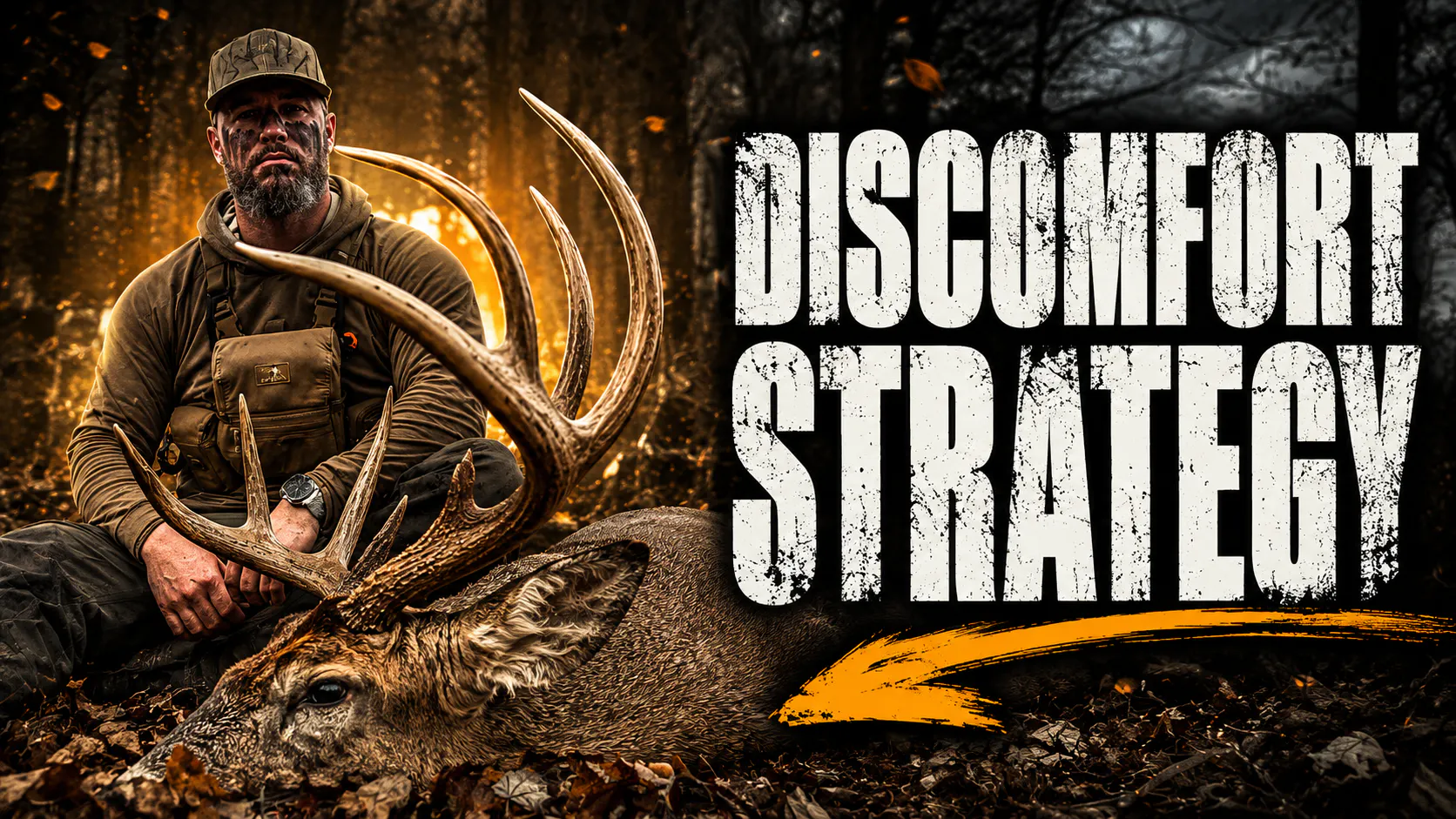
    EP. 495: The Hunt That Broke Everything He Thought He Knew | Ty Jennings | Discomfort Is The Strategy

    There's a version of every hunter that gets comfortable. You find a stand you like, a pattern that's worked before, and you ride it. You tell yourself it's strategy. Most of the time, it's just fear dressed up as confidence. Ty Jennings knows that feeling well, and he blew past it. In this episode, Ty sits down with me to dig into the kind of hunting conversation I live for: not the highlight reel stuff, but the honest reckoning with what it actually takes to grow as a hunter. Ty's journey from tree stand hunter to dedicated ground hunter isn't just a tactical story. It's a mindset story. And if you've ever felt stuck in the way you do things, this one's going to hit. We talk about what it looks like to build a real foundation of hunting knowledge. Not the stuff you pick up from watching YouTube clips, but the hard-earned understanding that only comes from reps in the field, from mistakes you actually had to live with. Ty's got that kind of experience, and he's generous enough to share where it came from. The shift to ground hunting didn't happen because it was trendy. It happened because one specific hunt cracked something open for him. It forced him to be creative, to be present, to stop relying on elevation as a crutch. He made a decision in the field that most guys wouldn't have made, and it worked. But more importantly, it changed the way he sees hunting entirely. We also get into something I think doesn't get talked about enough in hunting media: the home front. You're not hunting well if things aren't right at home. Full stop. The guys who try to compartmentalize that, who keep the stand life and the real life in separate boxes, they burn out or they lose one or the other. Ty gets that. He talks about how harmony at home isn't a soft topic. It's a prerequisite for being the hunter you want to be. By the end we're talking about where deer hunting culture is headed. Lower barriers to entry, the trophy conversation, what it means to measure success when everyone's got a trail cam and a mapping app. Good stuff. Honest stuff. Come for the ground hunting breakdown. Stay for everything else. WHAT TO EXPECT FROM PODCAST 495 Hard-won experience quiets the noise. Trust it. Creativity isn't a plan. It's a response to what's in front of you. Discomfort is the curriculum. Lean into it. You have to be willing to fail. The deer will teach you if you let them. Balance at home makes you better in the woods. Hunt for the experience. Nobody else cares about your scorecard anyway. SHOW NOTES AND LINKS: —Truth From The Stand Merch —Check out Tactacam Reveal cell cameras — Save 15% on Hawke Optics code TFTS15 —Save 20% on ASIO GEAR code TRUTH20 —Check out Spartan Forge to map your hunt —Save on Lathrop And Sons non-typical insoles code TRUTH10 —Check out Faceoff E-Bikes —Waypoint TV Learn more about your ad choices. Visit megaphone.fm/adchoices

  • May 27 · 1 hr 16 min

    EP. 494: Hunting Dead Ground | The Mental Game of Finding Whitetails

    There's a particular kind of restlessness that hits a hunter in the off-season. It's not impatience exactly. It's more like a low hum in the background of everything you do. You're mowing the lawn, you're half-present at dinner, but somewhere in the back of your mind you're replaying last season's misses and mentally walking new ground you haven't set foot on yet. That's where K.C. and I found ourselves in this episode, and honestly, it's where I think most serious hunters live from February through August. We got into the anticipation of a new season and that electric feeling of scouting fresh country you've never hunted before. There's something almost spiritual about standing in a new piece of woods with a stick bow on your shoulder and nothing but questions in front of you. Ground hunting with a trad setup doesn't leave you a lot of margin. It demands that you close the distance in a way that most hunters never have to think about, and that changes everything. How you move, how you think, how you manage the inevitable doubt that creeps in when the woods go quiet. Because here's what K.C. and I kept coming back to: doubt is part of the deal. Despair shows up on long trips. There are mornings you climb out of your sleeping bag wondering why you drove eight hours for this. The hunters who kill consistently aren't the ones who never feel that. They're the ones who've learned to respect the feeling, sit with it, and keep putting one boot in front of the other. We talked about the mental side of all of it. Confidence, visualization, the kind of self-awareness that only comes from time in the field and honest reflection. The best hunters I know treat the mental game the same way an athlete does. You prepare for failure as much as success, and you build systems that hold up when emotion wants to take the wheel. We also got into deer behavior, being in the right place at the right time, and how skills from completely different disciplines can transfer into better hunting. That last part is something I think gets overlooked constantly. If you've ever walked back to the truck empty-handed and wondered what you're missing, this one's for you. Pull it up on the drive to work. It might not give you all the answers, but it'll remind you you're asking the right questions. SHOW NOTES AND LINKS: —Truth From The Stand Merch —Check out Tactacam Reveal cell cameras — Save 15% on Hawke Optics code TFTS15 —Save 20% on ASIO GEAR code TRUTH20 —Check out Spartan Forge to map your hunt —Save on Lathrop And Sons non-typical insoles code TRUTH10 —Check out Faceoff E-Bikes —Waypoint TV Learn more about your ad choices. Visit megaphone.fm/adchoices

  • May 20 · 21 min

    EP. 493: Why Mature Bucks Live Where You Won't Go | HOS

    Most hunters spend their off-season trying to make things easier. Better gear. Warmer clothes. Closer access. And honestly? I get it. Comfort is seductive. Your brain is literally wired to chase it. But here's what nobody in the hunting industry wants to tell you: comfort might be the single biggest thing standing between you and consistently killing mature deer. In this episode, we're digging into something that underlies everything we've talked about in the Hunter's Operating System series. Discomfort. Not suffering for the sake of suffering, but deliberate exposure to hard things that builds the kind of conditioning most hunters never develop. Here's the reality. Mature bucks don't live in easy places. They live in the margins. The nasty, hard-to-reach terrain that most people look at and immediately write off. If your threshold for discomfort is low, you'll never consistently go where the deer actually are. Or you'll go once, decide it isn't worth it, and head back to the easy spots everyone else is hunting. I talk about what training jiu-jitsu taught me about this, because a hard round on the mat and a brutal November sit have more in common than you'd think. Both put you in a place where your body wants out and your brain starts building its case for quitting. The difference between hunters who punch tags and hunters who don't often comes down to whether they recognize that negotiation for what it is: a feeling, not a verdict. I also get into a two-week Midwest hunt that nearly broke me. Eight days in. Same buck. Two misses. Tag still in my pocket. I almost went home. I didn't. And in the last 30 minutes of the last day, everything came together. That's the hunt. Not the one on day one when you're fresh and fired up, but the one that happens when you're exhausted, beaten up, and your brain has assembled a genuinely reasonable argument for quitting. The hunters who separate themselves aren't the ones who never feel that pull. They feel it just as much. They've just built the capacity to stay anyway. Every hard thing you choose in the off-season is a decision you've already made before the season starts. SHOW NOTES AND LINKS: —Truth From The Stand Merch —Check out Tactacam Reveal cell cameras — Save 15% on Hawke Optics code TFTS15 —Save 20% on ASIO GEAR code TRUTH20 —Check out Spartan Forge to map your hunt —Save on Lathrop And Sons non-typical insoles code TRUTH10 —Check out Faceoff E-Bikes —Waypoint TV Learn more about your ad choices. Visit megaphone.fm/adchoices

  • May 13 · 1 hr 15 min

    EP. 492: Why Most Hunters Are Doing Too Much and Enjoying It Less

    There's a version of hunting that looks great on the outside. Big buck, good photos, done by noon. Then there's the version most of us actually live, which is messy and complicated and tied up in kids and jobs and the slow realization that your priorities don't stay the same forever. That's what Greg Litzinger and I got into on this one, and I'll be honest, it's one of those conversations that kept going in my head long after we stopped recording. Greg isn't out here pretending that hunting exists in a vacuum. He talks openly about what it means to chase deer when you've got a family counting on you, and how the calculus of a day in the woods changes completely once other people are in the equation. That's not a complaint. It's just the truth, and it's the kind of truth that doesn't get said enough in hunting media. We spent a good chunk of time on burnout, and I think that part will hit home for a lot of people listening. It's easy to grind yourself down chasing something that's supposed to bring you joy. Too many sits, too much pressure, not enough honesty with yourself about why you're out there. The fix isn't complicated, but it requires admitting something most hunters resist: that more time in the field isn't always better, and that scouting smarter beats sitting longer almost every time. We also got into location and intel, which Greg treats as the serious discipline it is. Knowing where deer want to be before you ever climb a tree is the whole game. That part of the conversation is worth a relisten if you're building a strategy for the fall. But what stuck with me most was Greg talking about fitness and time. He's not dramatic about it. He just lays it out plainly: the physical demands of hunting don't get easier, ignoring that is a mistake, and the window you have to bring your kids into this thing is shorter than you think. The memories made in the field are the ones that last, not the antlers on the wall. Whether your kid is old enough to run a treestand or just old enough to tag along and ask a hundred questions, don't wait for the perfect season. Lead by example and enjoy the process. Hope you get as much out of this one as I did. WHAT TO EXPECT FROM PODCAST 492 Scouting and historical sign tell you more about a buck's potential than any single trail cam photo ever will. Don't chase scrapes. They're exciting, but they'll burn you. Focus on the habitat instead. Knowing where a deer isn't is just as valuable as knowing where he is. Eliminating country keeps you from burning good setups at the wrong time. Mature bucks will humble you. Missed opportunities and close calls aren't failures, they're information. The shot is just one moment in a very long process. The anticipation, the tracking, the recovery, the emotional weight of it all. None of it is clean or simple. When you've chased a specific animal for years, every decision carries real weight. This episode gets into that honestly. SHOW NOTES AND LINKS: —Truth From The Stand Merch —Check out Tactacam Reveal cell cameras — Save 15% on Hawke Optics code TFTS15 —Save 20% on ASIO GEAR code TRUTH20 —Check out Spartan Forge to map your hunt —Save on Lathrop And Sons non-typical insoles code TRUTH10 —Check out Faceoff E-Bikes —Waypoint TV Learn more about your ad choices. Visit megaphone.fm/adchoices

  • May 6 · 1 hr 15 min

    EP. 491: What Years of Hunting One Buck Actually Teaches You

    Tom Murphy and I have had a lot of conversations about deer hunting, but this one felt different. We got into the kind of detail that most hunters never talk about out loud, specifically what it actually takes to hunt a mature buck over multiple seasons without losing your mind or your confidence. Tom's account of finally closing the deal on a deer he'd been after for years is worth the listen on its own. The shot, the tracking, the emotional weight of the whole thing. He doesn't sugarcoat any of it. We also dig into scouting, historical sign, habitat quality, and why knowing where a deer isn't can be just as valuable as knowing where he is. Simple idea. Hard to actually put into practice. If you've ever locked onto a specific animal and let the whole thing consume a few years of your life, this episode will feel familiar. If you haven't, consider this a fair warning. WHAT TO EXPECT FROM PODCAST 491 Scouting and historical sign tell you more about a buck's potential than any single trail cam photo ever will. Don't chase scrapes. They're exciting, but they'll burn you. Focus on the habitat instead. Knowing where a deer isn't is just as valuable as knowing where he is. Eliminating country keeps you from burning good setups at the wrong time. Mature bucks will humble you. Missed opportunities and close calls aren't failures, they're information. The shot is just one moment in a very long process. The anticipation, the tracking, the recovery, the emotional weight of it all. None of it is clean or simple. When you've chased a specific animal for years, every decision carries real weight. This episode gets into that honestly. SHOW NOTES AND LINKS: —Truth From The Stand Merch —Check out Tactacam Reveal cell cameras — Save 15% on Hawke Optics code TFTS15 —Save 20% on ASIO GEAR code TRUTH20 —Check out Spartan Forge to map your hunt —Save on Lathrop And Sons non-typical insoles code TRUTH10 —Check out Faceoff E-Bikes —Waypoint TV Learn more about your ad choices. Visit megaphone.fm/adchoices

  • April 29 · 22 min

    EP. 490: Why You Blow It When It Finally Happens | HOS

    There’s a moment in every hunt that matters more than all the scouting, all the prep, all the miles you put in. It’s the one where the deer finally shows up. And if you’ve done this long enough, you know it doesn’t always go the way you thought it would. Your heart rate jumps, your breathing changes, and all of a sudden you’re not thinking as clearly as you were ten minutes before. You rush something, force something, or just come unglued for a second. I’ve been there more times than I’d like to admit. This episode is about that moment—what actually happens when pressure hits, and why most of us aren’t as prepared for it as we think we are. Not from a gear or setup standpoint, but mentally. Being present, staying composed, and letting the moment play out instead of trying to control it. A lot of it connects back to things I’ve learned on the jiu-jitsu mat. Same kind of pressure, just in a different setting. When things tighten up, your instinct is to react fast, to get out of it. But the guys who are good at it don’t panic. They slow down, breathe, and make better decisions because of it. Hunting’s no different. If you can learn to recognize that feeling when it shows up—and not fight it, but work through it—you give yourself a better chance when it actually counts. Because in the end, that one moment is usually what it all comes down to. WHAT TO EXPECT FROM PODCAST 490 Most hunting mistakes happen under pressure, not from lack of skill. If you don’t train for pressure, you’ll default to panic when it matters. Presence and patience are what separate clean execution from rushed decisions. Pressure doesn’t create problems, it exposes them. The best hunters slow down when things speed up. Learning to sit in discomfort leads to better decisions. Consistency comes from managing the moment, not forcing it. SHOW NOTES AND LINKS: —Truth From The Stand Merch —Check out Tactacam Reveal cell cameras — Save 15% on Hawke Optics code TFTS15 —Save 20% on ASIO GEAR code TRUTH20 —Check out Spartan Forge to map your hunt —Save on Lathrop And Sons non-typical insoles code TRUTH10 —Check out Faceoff E-Bikes —Waypoint TV Learn more about your ad choices. Visit megaphone.fm/adchoices

  • April 22 · 1 hr 13 min

    EP. 489: Why I Chose the Harder Way to Hunt

    This week I’m joined by Kolton Schenker, and we spend some time talking through what it looks like when hunting starts to shift from something you do… to something you really commit to. We get into his background—years behind a compound bow, time spent out West, and what came with finally stepping into land ownership. But where the conversation really settles in is around his move to traditional gear. What that transition felt like, the frustration that comes with starting over, and why he stuck with it anyway. He shares a few stories along the way—close encounters, missed chances, and the one that finally came together with a stick bow. And like most guys who make that switch, it wasn’t about making things easier. It was about slowing things down and paying attention in a different way. A lot of it comes back to the same idea: the longer you do this, the more you realize it’s less about the outcome and more about how you go about it. The work, the reps, the time in the woods—and the people you get to share it with along the way. WHAT TO EXPECT FROM PODCAST 489 Long-term reps build intuition 19 years in, Kolton still finds new ways to learn. Trail cams show you what’s there, but observation sets teach you how they move. Getting lower, tighter, and uncomfortable often leads to more real encounters. Switching to traditional gear forces you to slow down and truly focus. Misses aren’t failures, they’re part of the process that makes you better. The reward isn’t just the shot, it’s the encounters, the moments, the grind. Hunting becomes more meaningful when it’s shared, with land, with family, with purpose. SHOW NOTES AND LINKS: —Truth From The Stand Merch —Check out Tactacam Reveal cell cameras — Save 15% on Hawke Optics code TFTS15 —Save 20% on ASIO GEAR code TRUTH20 —Check out Spartan Forge to map your hunt —Save on Lathrop And Sons non-typical insoles code TRUTH10 —Check out Faceoff E-Bikes —Waypoint TV Learn more about your ad choices. Visit megaphone.fm/adchoices

  • April 15 · 1 hr 16 min

    EP. 488: The Longer You Do This, The More It Gives Back | Find Your Tribe

    This week I’m joined by Will Coggin, and it’s one of those conversations where you realize pretty quick how many parallels there are between the things we spend our time on. We talk about how hunting and jiu-jitsu have a way of bringing people together fast, and how a lot of what Will learned in the military—discipline, structure, adaptability—shows up again in the woods. Not in some forced way, just in how you approach problems, deal with failure, and keep getting better over time. We also get into hunting in the Blue Ridge Mountains—what that terrain demands from you, how it forces you to adjust, and why the process ends up mattering more than the outcome. And somewhere along the way, it turns into a conversation about community too—why having the right people around you matters, and how things like the Veterans Mat Collective are giving guys a place to keep growing, both on and off the mat. Like most of these conversations, it comes back to a simple idea: if you stick with something long enough, stay open to learning, and surround yourself with good people, you’re probably going to get more out of it than you expected. WHAT TO EXPECT FROM PODCAST 488 Shared challenges and interests create fast, meaningful connections. Discipline and structure carry over from the military into hunting and everyday life. Hunting and jiu-jitsu both reward attention to detail and the ability to stay present. Mastery comes from learning how to learn, not just repeating the same actions. Adaptability is critical—both in the woods and in life transitions. Challenging environments like the Blue Ridge Mountains demand patience, strategy, and persistence. Community and brotherhood—are essential for growth and purpose. SHOW NOTES AND LINKS: —Truth From The Stand Merch —Check out Tactacam Reveal cell cameras — Save 15% on Hawke Optics code TFTS15 —Save 20% on ASIO GEAR code TRUTH20 —Check out Spartan Forge to map your hunt —Save on Lathrop And Sons non-typical insoles code TRUTH10 —Check out Faceoff E-Bikes —Waypoint TV Learn more about your ad choices. Visit megaphone.fm/adchoices

  • April 8 · 1 hr 12 min

    EP. 487: Big Buck Hunting on Public Land | The Reality vs. Expectations

    This week I’m joined by Vince Battiata, and we spend a lot of time talking about what it really takes to hunt public land the way most guys say they want to—but don’t always follow through on. We get into the reality of balancing time, making decisions when things aren’t clear, and what it actually looks like to chase big deer that don’t give you many chances. Vince shares some stories from past seasons—some that worked out, some that didn’t—and what those experiences taught him about timing, access, and trusting your gut when it matters. A lot of this conversation comes back to putting in the work—scouting, learning from past hunts, and staying committed even when things aren’t going your way. And like most good hunting conversations, it ends up in a familiar place: the guys who stick with it, pay attention, and keep showing up are usually the ones who figure it out over time. WHAT TO EXPECT FROM PODCAST 487 Limited time forces better decisions and sharper focus in the woods. Confidence and timing matter more than perfect information. Chasing big deer is a long game built on failure, adjustment, and persistence. Access and mobility often determine opportunity more than anything else. Historical sign and past experiences shape better decisions moving forward. The best lessons come from hunts that don’t go your way. The reward is in the process—earning it, not just killing one. SHOW NOTES AND LINKS: —Truth From The Stand Merch —Check out Tactacam Reveal cell cameras — Save 15% on Hawke Optics code TFTS15 —Save 20% on ASIO GEAR code TRUTH20 —Check out Spartan Forge to map your hunt —Save on Lathrop And Sons non-typical insoles code TRUTH10 —Check out Faceoff E-Bikes —Waypoint TV Learn more about your ad choices. Visit megaphone.fm/adchoices

  • April 1 · 1 hr 12 min

    EP. 486: The Most Beneficial Part of Hunting People Avoid 

    This week Chad Sylvester is back on, and we get into some of the parts of hunting that most guys would rather avoid. Not tactics. Not setups. The stuff underneath that. We talk about taking an honest look at yourself as a hunter—where ego gets in the way, how identity can start driving decisions, and why sometimes the best thing you can do is put yourself in a place you’re not comfortable. New ground, unfamiliar terrain, situations where you don’t have all the answers. A lot of it comes back to letting go a little bit. Trusting your instincts, staying present, and not trying to control every outcome. Because the longer you do this, the more you realize the hunts that teach you the most are usually the ones that don’t go the way you planned. And like most good conversations, it lands on something simple—if you’re not willing to sit in discomfort, stick with it, and keep showing up, you’re probably not going to get what you’re after. Not in hunting, and not in much else either. WHAT TO EXPECT FROM PODCAST 486 Honest self-assessment is where real progress starts—most hunters avoid it. Ego gets in the way of learning more than lack of knowledge ever will. The best hunters rely on intuition built from reps, not constant second-guessing. Growth usually comes from putting yourself in uncomfortable, unfamiliar situations. You don’t control the outcome—you control your presence and decisions. Grit is built by doing hard things consistently, not occasionally. The experience—and what you learn from it—matters more than what you kill. SHOW NOTES AND LINKS: —Truth From The Stand Merch —Check out Tactacam Reveal cell cameras — Save 15% on Hawke Optics code TFTS15 —Save 20% on ASIO GEAR code TRUTH20 —Check out Spartan Forge to map your hunt —Save on Lathrop And Sons non-typical insoles code TRUTH10 —Check out Faceoff E-Bikes —Waypoint TV Learn more about your ad choices. Visit megaphone.fm/adchoices

  • March 25 · 22 min

    EP. 485: Why Most Hunters Quit Too Early | The Grit Formula | HOS

    I started thinking about something I’ve run into a lot lately—not just in the woods, but on a jiu-jitsu mat, and honestly even going back to my wrestling days. It’s that moment when things get hard and your brain starts trying to talk you out of it. Not because you’re in real trouble… just because you’re uncomfortable. I’ve felt it getting smashed by guys half my size, I’ve felt it sitting in a tree when nothing’s moving, and I’ve definitely felt it in a few other places along the way. And the more I’ve paid attention to it, the more I’ve realized that moment—right there—is usually where things start to go one way or the other. So this episode is really about that. About staying composed when it would be easier not to. About figuring out how to keep going without panicking or making a bad decision just to feel better. Because whether it’s hunting, jiu-jitsu, or anything else, the people who stick with it a little longer tend to be the ones who end up where they want to go. WHAT TO EXPECT FROM PODCAST 485 The role of grit in hunting and life Lessons from Brazilian Jiu Jitsu and wrestling Angela Duckworth's research on grit and success Practical ways to develop mental toughness The importance of a clear top-level goal SHOW NOTES AND LINKS: —Truth From The Stand Merch —Check out Tactacam Reveal cell cameras — Save 15% on Hawke Optics code TFTS15 —Save 20% on ASIO GEAR code TRUTH20 —Check out Spartan Forge to map your hunt —Save on Lathrop And Sons non-typical insoles code TRUTH10 —Check out Faceoff E-Bikes —Waypoint TV Learn more about your ad choices. Visit megaphone.fm/adchoices