Skip to content
Artwork for Threat & Theory
Threat & Theory · Thursday · 9 min

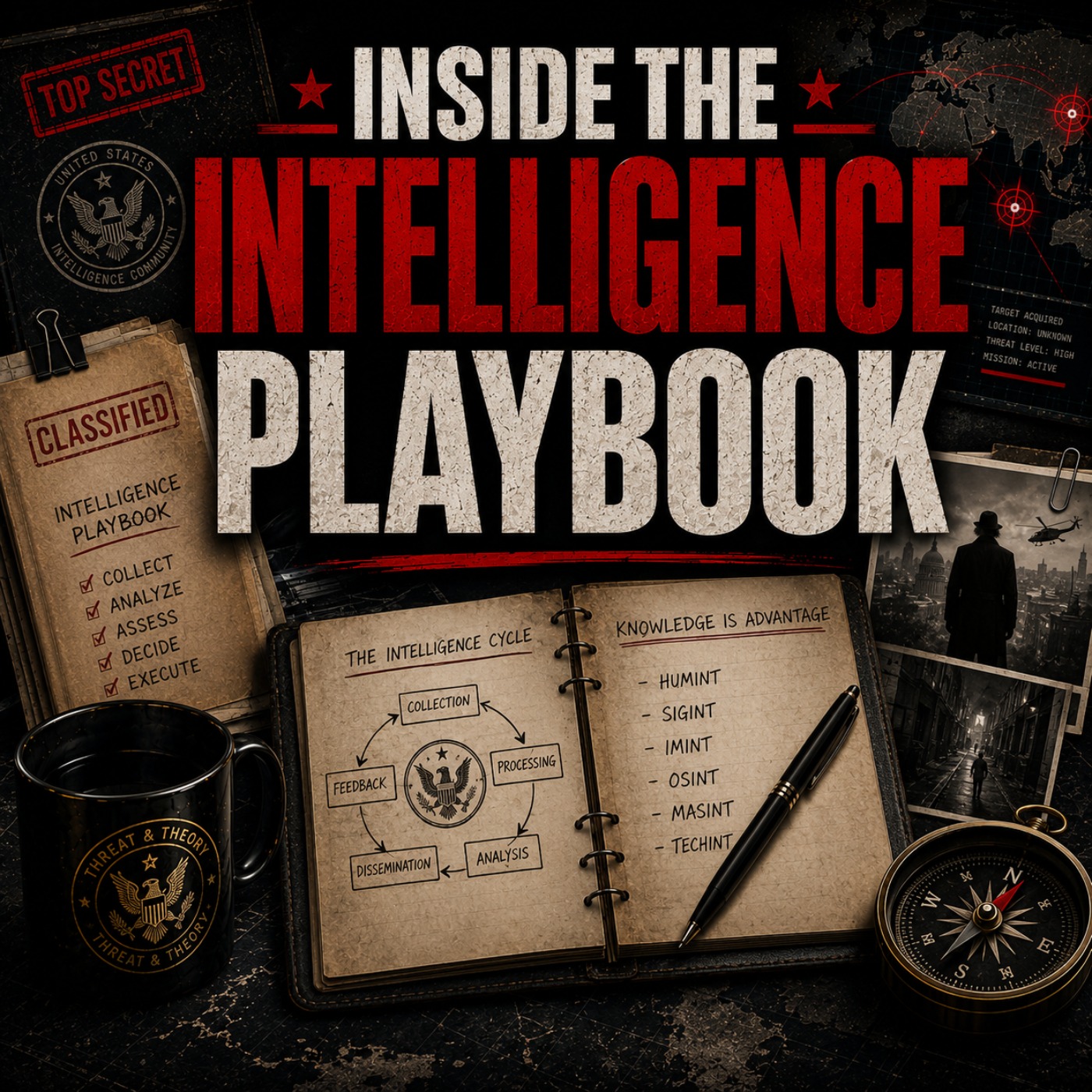
Inside the Intelligence Playbook

Why do intelligence professionals seem to see the world differently? In this episode of Threat & Theory, Howard Hart breaks down two of the most important frameworks used throughout the intelligence and national security community: DIME and PMESII-PT. Forget the intimidating acronyms. These aren't military buzzwords—they're practical thinking tools that help analysts understand how nations use power, predict consequences, and avoid dangerous blind spots. Using real-world examples like Iran and the Strait of Hormuz, Howard explains how intelligence professionals separate actions from effects, identify second-order consequences, and make sense of increasingly complex geopolitical crises. If you've ever wondered how intelligence officers actually think, this episode gives you a rare look inside the analytical process. In this episode: What DIME actually stands for How PMESII-PT maps complex systems Why intelligence relies on structured thinking How analysts predict second- and third-order effects A real-world case study using Iran and the Strait of Hormuz Subscribe for weekly conversations that cut through headlines and explain the world through the lens of intelligence, strategy, and geopolitics. Hosted on Acast. See acast.com/privacy for more information.
0:00-9:33

transcript

No transcript — this publisher did not publish one.

show notes

Why do intelligence professionals seem to see the world differently?

In this episode of Threat & Theory, Howard Hart breaks down two of the most important frameworks used throughout the intelligence and national security community: DIME and PMESII-PT.

Forget the intimidating acronyms. These aren't military buzzwords—they're practical thinking tools that help analysts understand how nations use power, predict consequences, and avoid dangerous blind spots.

Using real-world examples like Iran and the Strait of Hormuz, Howard explains how intelligence professionals separate actions from effects, identify second-order consequences, and make sense of increasingly complex geopolitical crises.

If you've ever wondered how intelligence officers actually think, this episode gives you a rare look inside the analytical process.

In this episode:


  • What DIME actually stands for
  • How PMESII-PT maps complex systems
  • Why intelligence relies on structured thinking
  • How analysts predict second- and third-order effects
  • A real-world case study using Iran and the Strait of Hormuz

Subscribe for weekly conversations that cut through headlines and explain the world through the lens of intelligence, strategy, and geopolitics.


Hosted on Acast. See acast.com/privacy for more information.
links1

more episodes

All episodes