Skip to content
Artwork for This Time Tomorrow
This Time Tomorrow · Yesterday · 1 hr 1 min

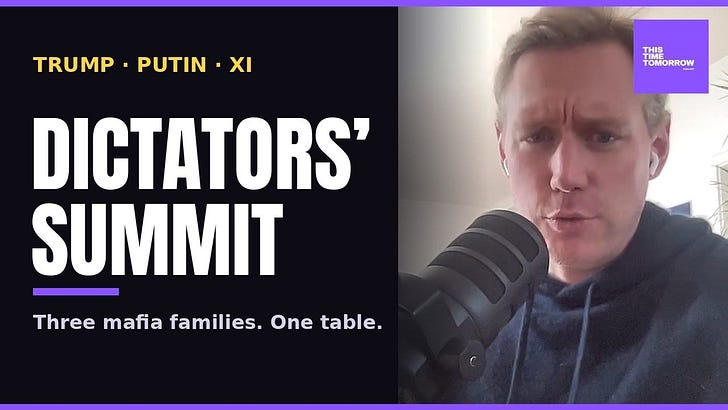
The Dictators’ Summit

Omri, Benni and Daniela on a week with dictators at one end and citizens at the other. Trump, Putin and Xi met in Shenzhen on 19 November. Most of the coverage asked what the summit achieved. Benni thinks that is the wrong question: three men who share nothing except contempt for democracy have no business meeting at all, and it looked less like diplomacy than the three families sitting down in a mafia film. Omri describes how Xi’s hosts went out of their way to make Putin look small. The old line says that if you are not at the table, you are on the menu. Benni’s answer is that this is a table you burn down, and that Europe’s job is to build something better with Canada, Australia and eventually India. Europe has its own summit on 26 and 27 November, on the next seven-year budget. António Costa’s compromise was rejected straight away, by France for cutting too much and by Germany for not cutting enough. Benni’s point is that “frugal” is the wrong word for a budget this small. At the other end of the scale, 150 randomly selected citizens handed the Commission 23 recommendations on democratic resilience at the weekend. Daniela followed the panel and picks out two: secure long-term funding for democracy and civil society, which is exactly what several governments want to cut, and paid “democracy leave” for taking part. All three think citizens’ panels are underrated, and all three think they have no teeth. The question is how to plug them into lawmaking early enough to matter. After the break: Israel. Netanyahu lost his majority on 27 October and has not stopped fighting the result. Omri goes through what has come out since: the arrest of three Ra’am activists hours before the polls opened, the tip that reportedly reached the police through the prime minister’s own office, and the officials who refused to go along with it. Gadi Eisenkot has until 6 December to form a government. Benni adds what the war has done to Jewish life in European cities, and Daniela closes with Serbia’s new parliament, where Aleksandar Vučić now leads the opposition and accountability, as she puts it, feels good. Chapters 00:00 Intro 02:55 How Xi made Putin look small 06:32 Three mafia families, not a summit 09:33 Orwell’s map of the world 11:45 A lame duck, and what Europe should do 15:36 Europe’s own summit: the budget fight 18:32 150 citizens, 23 recommendations 20:52 Democracy leave 21:48 The most underrated tool in democracy 25:21 How to give the panels teeth 30:24 People trust the EU more than you think 36:59 Israel: the election grab that won’t stop 44:59 Netanyahu never gives up 48:02 Eisenkot’s deadline 52:51 What it means for Jews in Europe 56:32 Gaza aid, out of the headlines 58:12 Serbia: accountability feels good Recorded on 23 November 2026. This is a public episode. If you would like to discuss this with other subscribers or get access to bonus episodes, visit thistimetomorrowpod.substack.com

0:00-1:01:04

transcript

No transcript — this publisher did not publish one.

show notes

Omri, Benni and Daniela on a week with dictators at one end and citizens at the other.

Trump, Putin and Xi met in Shenzhen on 19 November. Most of the coverage asked what the summit achieved. Benni thinks that is the wrong question: three men who share nothing except contempt for democracy have no business meeting at all, and it looked less like diplomacy than the three families sitting down in a mafia film. Omri describes how Xi’s hosts went out of their way to make Putin look small. The old line says that if you are not at the table, you are on the menu. Benni’s answer is that this is a table you burn down, and that Europe’s job is to build something better with Canada, Australia and eventually India.

Europe has its own summit on 26 and 27 November, on the next seven-year budget. António Costa’s compromise was rejected straight away, by France for cutting too much and by Germany for not cutting enough. Benni’s point is that “frugal” is the wrong word for a budget this small.

At the other end of the scale, 150 randomly selected citizens handed the Commission 23 recommendations on democratic resilience at the weekend. Daniela followed the panel and picks out two: secure long-term funding for democracy and civil society, which is exactly what several governments want to cut, and paid “democracy leave” for taking part. All three think citizens’ panels are underrated, and all three think they have no teeth. The question is how to plug them into lawmaking early enough to matter.

After the break: Israel. Netanyahu lost his majority on 27 October and has not stopped fighting the result. Omri goes through what has come out since: the arrest of three Ra’am activists hours before the polls opened, the tip that reportedly reached the police through the prime minister’s own office, and the officials who refused to go along with it. Gadi Eisenkot has until 6 December to form a government. Benni adds what the war has done to Jewish life in European cities, and Daniela closes with Serbia’s new parliament, where Aleksandar Vučić now leads the opposition and accountability, as she puts it, feels good.

Chapters

00:00 Intro

02:55 How Xi made Putin look small

06:32 Three mafia families, not a summit

09:33 Orwell’s map of the world

11:45 A lame duck, and what Europe should do

15:36 Europe’s own summit: the budget fight

18:32 150 citizens, 23 recommendations

20:52 Democracy leave

21:48 The most underrated tool in democracy

25:21 How to give the panels teeth

30:24 People trust the EU more than you think

36:59 Israel: the election grab that won’t stop

44:59 Netanyahu never gives up

48:02 Eisenkot’s deadline

52:51 What it means for Jews in Europe

56:32 Gaza aid, out of the headlines

58:12 Serbia: accountability feels good

Recorded on 23 November 2026.


This is a public episode. If you would like to discuss this with other subscribers or get access to bonus episodes, visit thistimetomorrowpod.substack.com

links1