Skip to content
Artwork for The Substack Podcast
The Substack Podcast · October 22 · 31 min

Model Behavior: Rick Rubin

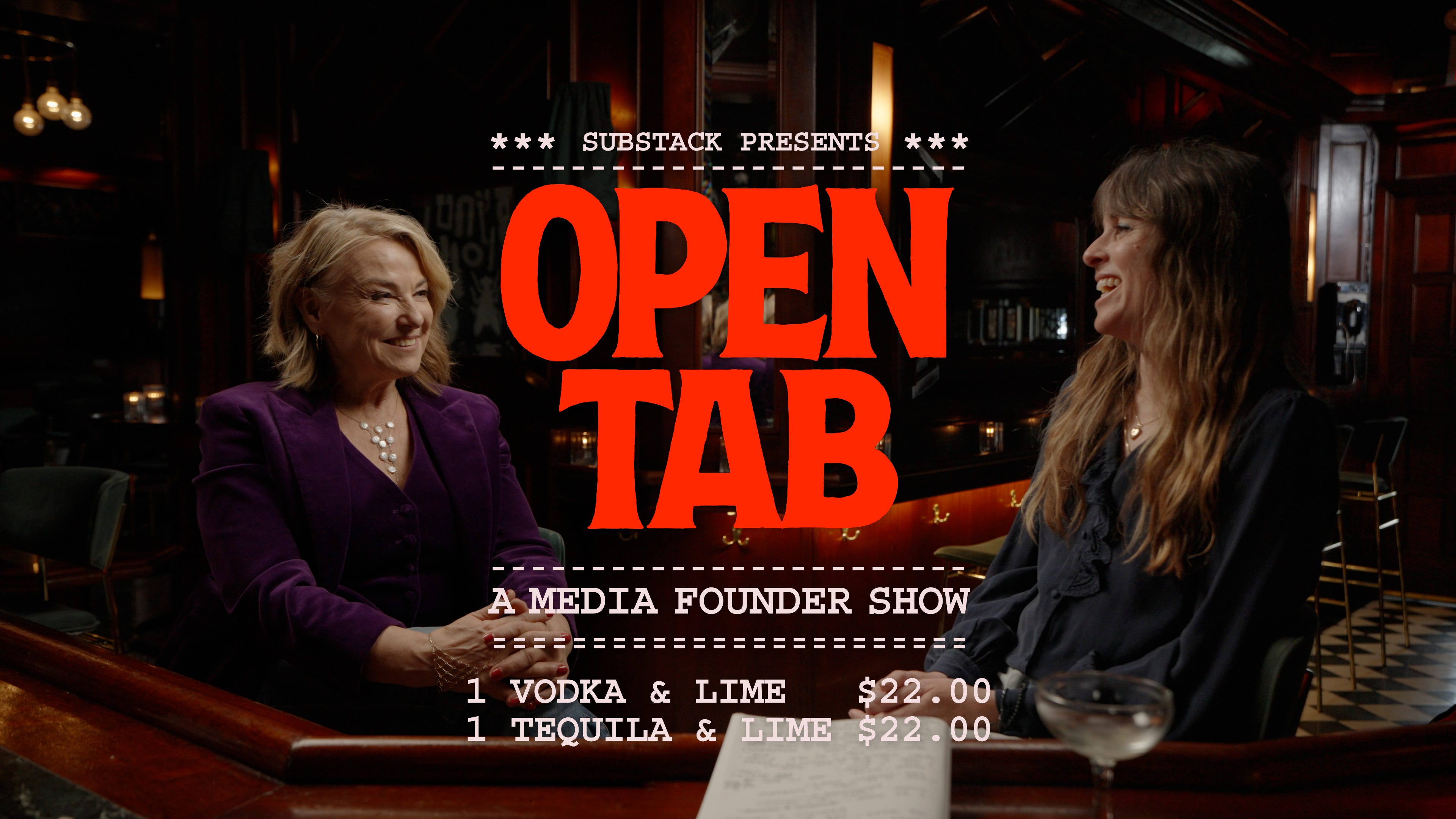
In this special edition of Model Behavior—our series that asks top thinkers, writers, and creatives how they consider and use AI—Substack founder Chris Best speaks with legendary music producer Rick Rubin. Rick writes The Creative Act: Thoughtforms & Innerworks on Substack, where he shares reflective insights and practical creative exercises drawn from his approach to art and awareness. Rick had questions for Chris about Substack’s decision to introduce the Pangram integration, a tool that lets readers check whether text was likely written by hand or with AI assistance. Chris, in turn, took the opportunity to ask Rick where he lands on AI in his own creative life, from writing to music. Along the way, they get into which genres AI music might be most successful in, the story of the discarded wah-wah pedal that helped define Jimi Hendrix’s sound, Rick’s slow conversion to Nine Inch Nails, and a sci-fi scenario where every album and film could be made for an audience of one. What follows is a lightly edited version of their conversation. Chris Best: I’ll be honest about where I am on AI writing, AI generation, and AI creative assistance: I don’t know what any of the answers are yet. This stuff is hitting the world like a tidal wave, and I don’t think anybody knows exactly what to think. There’s such a wide range of perspectives. And I’m building a platform, so I don’t want to wait until every answer is figured out before we make it good. I’d love to hear where your head is at. Rick Rubin: It’s so early. We have no idea how AI will influence writing, or whether it will ever be good, or what its strengths and weaknesses will be. It’s a brand-new tool, like fire for the first time. Fire is dangerous and can burn down your house, but do we pretend it doesn’t exist, or make it illegal? I don’t know. It’s very powerful, and it can do a lot of things. I’m curious about it, and I’m interested in interacting with it to understand it. But I don’t have a good grasp of how it works or where it’s strong or weak. Most of the time, the results I get back aren’t satisfactory. Even for something as simple as a Google search, I don’t feel great about what I’m getting. That said, it’s a cool new tool that keeps getting better, and I believe at some point we’ll find a really good use for it. Chris: In the software industry, we’re already there. My co-founder and CTO Jai [Jairaj Sethi] has gone from sitting at a screen typing all day to managing a fleet of robots. He says, “Hey, fix this. Hey, make this good” and gets back a video of the thing working. It’s transformational in software, which is different from creative work. Rick: If there were a machine that could tell how much of your coding was done with AI’s assistance and that were somehow vilified, what would you do? Chris: I see two perspectives developing very loudly online. One is a shrieking anti-AI view: this is the devil, and anybody who so much as touches it is ritually impure. The other is that AI can do no wrong, it’s already the greatest, it should do everything, and if I send you a message that’s AI-generated and you have complaints, it’s because you’re a Luddite who just doesn’t believe hard enough. I know people I love and respect in both camps. But I think a lot of people are in the middle, working to figure it out, grateful that we’re trying something. If I use your fire analogy, we’ve got a powerful new tool that gives people incredible superpowers. It lets you do things you never could have done before, and things you could have done before much more easily, which makes new things possible with fewer people. It also gives you amazing new ways to be annoying on the internet. The overwhelming feeling, for me and I think for others, is that we’ve created an avalanche of stuff that isn’t coming from any particular perspective. It’s not that those people shouldn’t be allowed to do that. The question is what I want as a reader, or as someone trying to find good things, and what expectations I should have. Rick: But isn’t finding good things a human reaction? If an AI tells me something was made using AI but I like what I read, what does that mean? Does it matter? The reason I like the artists I like is that I’m interested in their point of view. It’s not because they sound a certain way. It’s because they see the world a certain way. AI doesn’t have a point of view, so it can’t show me one. It can make something sound like something else, but it can’t give me a point of view, and in music that’s what I’m always looking for. Chris: Something has been happening to me online, and to a lot of people I know who are discerning readers and are very pro-AI. I’ll start reading something, and a few paragraphs in, it seems interesting. Then I realize, with no Pangram and no tool of any kind, that it’s another one of these. There’s a bit of an Invasion of the Body Snatchers feeling. I think, why am I spending my time on this? I signed up to get somebody’s perspective, and now that I realize it’s fully generated, something in my reaction switches. It discourages me from reading that piece, and it discourages me from fishing in that same pond. Rick: That’s good information, and you got it without the device. What you learned is that this writer writes in a way that seems like it’s using AI, and whether it is or not, it’s not for me, so I’ll look elsewhere. That sounds healthy. The bigger issue is when there’s a rating system, and how that changes the way we interact with the material. When you first told me you were bringing on this service, I thought you’d see a rating at the top of each article telling you the percentage. I thought you might even up-regulate things made without AI and throttle things made with it, even if they were good. That raised all these questions about what we’re trying to get to. If the reader gets to choose whether they see a score, that seems okay to me. I’m less offended by that than by a rating on every article, which is what I thought it was going to be. Chris: We definitely wouldn’t do that by default. That’s how the Pangram browser extension works for people who use it. I have zero interest in telling people what they can and can’t write or what tools they can and can’t use. That’s central to Substack’s philosophy. It’s up to the reader to decide what they value and what they want to spend time with. We can add some value by helping readers make that choice in a more informed way. We would never say, “You’re not allowed to write about politics,” but I would absolutely give readers a filter that says, “Today I don’t want to read about politics.” Maybe it’s an imperfect automatic politics detector. If I’m subscribed to what I’m subscribed to, that’s great, but when I’m out browsing and foraging, I have my own biases and desires, and I should be allowed to use my own agency to choose what to spend my attention on. That feels important to me. Rick: If the reader could select a button that says, “I only want to see non-AI material,” that seems okay. It has to do with the reader having the choice. Chris: We’re not stapling anything onto anything you don’t want. As a writer, you can opt out. As a reader, you can go and find out, and maybe if you’re browsing and discovering, you can choose to see less AI-generated work and prefer human work. Or you might do the reverse and say, “I love this AI stuff. Show me the best of it.” Rick: All slop all the time. Chris: Or maybe, to your point, it’s not slop. The most important limitation of Pangram and all AI detectors isn’t false positives. It’s that the thing they’re detecting isn’t whether something is slop or good or has a human perspective in it. They only detect the last mile: did the final form of this text come out of the machine or not? There’s a feature of the modern internet, and you see it on LinkedIn, where most of the content that’s completely generated isn’t deep, thoughtful work crafted with care. It’s somebody saying, “Toss something off for me” or “Write 10,000 viral posts and make my thing go.” I think people are d… This is a public episode. If you would like to discuss this with other subscribers or get access to bonus episodes, visit on.substack.com

0:00-31:24

transcript

No transcript — this publisher did not publish one.

show notes

In this special edition of Model Behavior—our series that asks top thinkers, writers, and creatives how they consider and use AI—Substack founder Chris Best speaks with legendary music producer Rick Rubin. Rick writes The Creative Act: Thoughtforms & Innerworks on Substack, where he shares reflective insights and practical creative exercises drawn from his approach to art and awareness.

Rick had questions for Chris about Substack’s decision to introduce the Pangram integration, a tool that lets readers check whether text was likely written by hand or with AI assistance. Chris, in turn, took the opportunity to ask Rick where he lands on AI in his own creative life, from writing to music. Along the way, they get into which genres AI music might be most successful in, the story of the discarded wah-wah pedal that helped define Jimi Hendrix’s sound, Rick’s slow conversion to Nine Inch Nails, and a sci-fi scenario where every album and film could be made for an audience of one.

What follows is a lightly edited version of their conversation.

Chris Best: I’ll be honest about where I am on AI writing, AI generation, and AI creative assistance: I don’t know what any of the answers are yet. This stuff is hitting the world like a tidal wave, and I don’t think anybody knows exactly what to think. There’s such a wide range of perspectives. And I’m building a platform, so I don’t want to wait until every answer is figured out before we make it good. I’d love to hear where your head is at.

Rick Rubin: It’s so early. We have no idea how AI will influence writing, or whether it will ever be good, or what its strengths and weaknesses will be. It’s a brand-new tool, like fire for the first time. Fire is dangerous and can burn down your house, but do we pretend it doesn’t exist, or make it illegal? I don’t know. It’s very powerful, and it can do a lot of things.

I’m curious about it, and I’m interested in interacting with it to understand it. But I don’t have a good grasp of how it works or where it’s strong or weak. Most of the time, the results I get back aren’t satisfactory. Even for something as simple as a Google search, I don’t feel great about what I’m getting. That said, it’s a cool new tool that keeps getting better, and I believe at some point we’ll find a really good use for it.

Chris: In the software industry, we’re already there. My co-founder and CTO Jai [Jairaj Sethi] has gone from sitting at a screen typing all day to managing a fleet of robots. He says, “Hey, fix this. Hey, make this good” and gets back a video of the thing working. It’s transformational in software, which is different from creative work.

Rick: If there were a machine that could tell how much of your coding was done with AI’s assistance and that were somehow vilified, what would you do?

Chris: I see two perspectives developing very loudly online. One is a shrieking anti-AI view: this is the devil, and anybody who so much as touches it is ritually impure. The other is that AI can do no wrong, it’s already the greatest, it should do everything, and if I send you a message that’s AI-generated and you have complaints, it’s because you’re a Luddite who just doesn’t believe hard enough. I know people I love and respect in both camps. But I think a lot of people are in the middle, working to figure it out, grateful that we’re trying something.

If I use your fire analogy, we’ve got a powerful new tool that gives people incredible superpowers. It lets you do things you never could have done before, and things you could have done before much more easily, which makes new things possible with fewer people. It also gives you amazing new ways to be annoying on the internet. The overwhelming feeling, for me and I think for others, is that we’ve created an avalanche of stuff that isn’t coming from any particular perspective. It’s not that those people shouldn’t be allowed to do that. The question is what I want as a reader, or as someone trying to find good things, and what expectations I should have.

Rick: But isn’t finding good things a human reaction? If an AI tells me something was made using AI but I like what I read, what does that mean? Does it matter?

The reason I like the artists I like is that I’m interested in their point of view. It’s not because they sound a certain way. It’s because they see the world a certain way. AI doesn’t have a point of view, so it can’t show me one. It can make something sound like something else, but it can’t give me a point of view, and in music that’s what I’m always looking for.

Chris: Something has been happening to me online, and to a lot of people I know who are discerning readers and are very pro-AI. I’ll start reading something, and a few paragraphs in, it seems interesting. Then I realize, with no Pangram and no tool of any kind, that it’s another one of these. There’s a bit of an Invasion of the Body Snatchers feeling. I think, why am I spending my time on this? I signed up to get somebody’s perspective, and now that I realize it’s fully generated, something in my reaction switches. It discourages me from reading that piece, and it discourages me from fishing in that same pond.

Rick: That’s good information, and you got it without the device. What you learned is that this writer writes in a way that seems like it’s using AI, and whether it is or not, it’s not for me, so I’ll look elsewhere. That sounds healthy. The bigger issue is when there’s a rating system, and how that changes the way we interact with the material.

When you first told me you were bringing on this service, I thought you’d see a rating at the top of each article telling you the percentage. I thought you might even up-regulate things made without AI and throttle things made with it, even if they were good. That raised all these questions about what we’re trying to get to.

If the reader gets to choose whether they see a score, that seems okay to me. I’m less offended by that than by a rating on every article, which is what I thought it was going to be.

Chris: We definitely wouldn’t do that by default. That’s how the Pangram browser extension works for people who use it. I have zero interest in telling people what they can and can’t write or what tools they can and can’t use. That’s central to Substack’s philosophy. It’s up to the reader to decide what they value and what they want to spend time with. We can add some value by helping readers make that choice in a more informed way. We would never say, “You’re not allowed to write about politics,” but I would absolutely give readers a filter that says, “Today I don’t want to read about politics.” Maybe it’s an imperfect automatic politics detector. If I’m subscribed to what I’m subscribed to, that’s great, but when I’m out browsing and foraging, I have my own biases and desires, and I should be allowed to use my own agency to choose what to spend my attention on. That feels important to me.

Rick: If the reader could select a button that says, “I only want to see non-AI material,” that seems okay. It has to do with the reader having the choice.

Chris: We’re not stapling anything onto anything you don’t want. As a writer, you can opt out. As a reader, you can go and find out, and maybe if you’re browsing and discovering, you can choose to see less AI-generated work and prefer human work. Or you might do the reverse and say, “I love this AI stuff. Show me the best of it.”

Rick: All slop all the time.

Chris: Or maybe, to your point, it’s not slop. The most important limitation of Pangram and all AI detectors isn’t false positives. It’s that the thing they’re detecting isn’t whether something is slop or good or has a human perspective in it. They only detect the last mile: did the final form of this text come out of the machine or not?

There’s a feature of the modern internet, and you see it on LinkedIn, where most of the content that’s completely generated isn’t deep, thoughtful work crafted with care. It’s somebody saying, “Toss something off for me” or “Write 10,000 viral posts and make my thing go.” I think people are d…


This is a public episode. If you would like to discuss this with other subscribers or get access to bonus episodes, visit on.substack.com

links5

more episodes

All episodes