Skip to content
Artwork for The Steady State Sentinel
The Steady State Sentinel · July 21 · 49 min

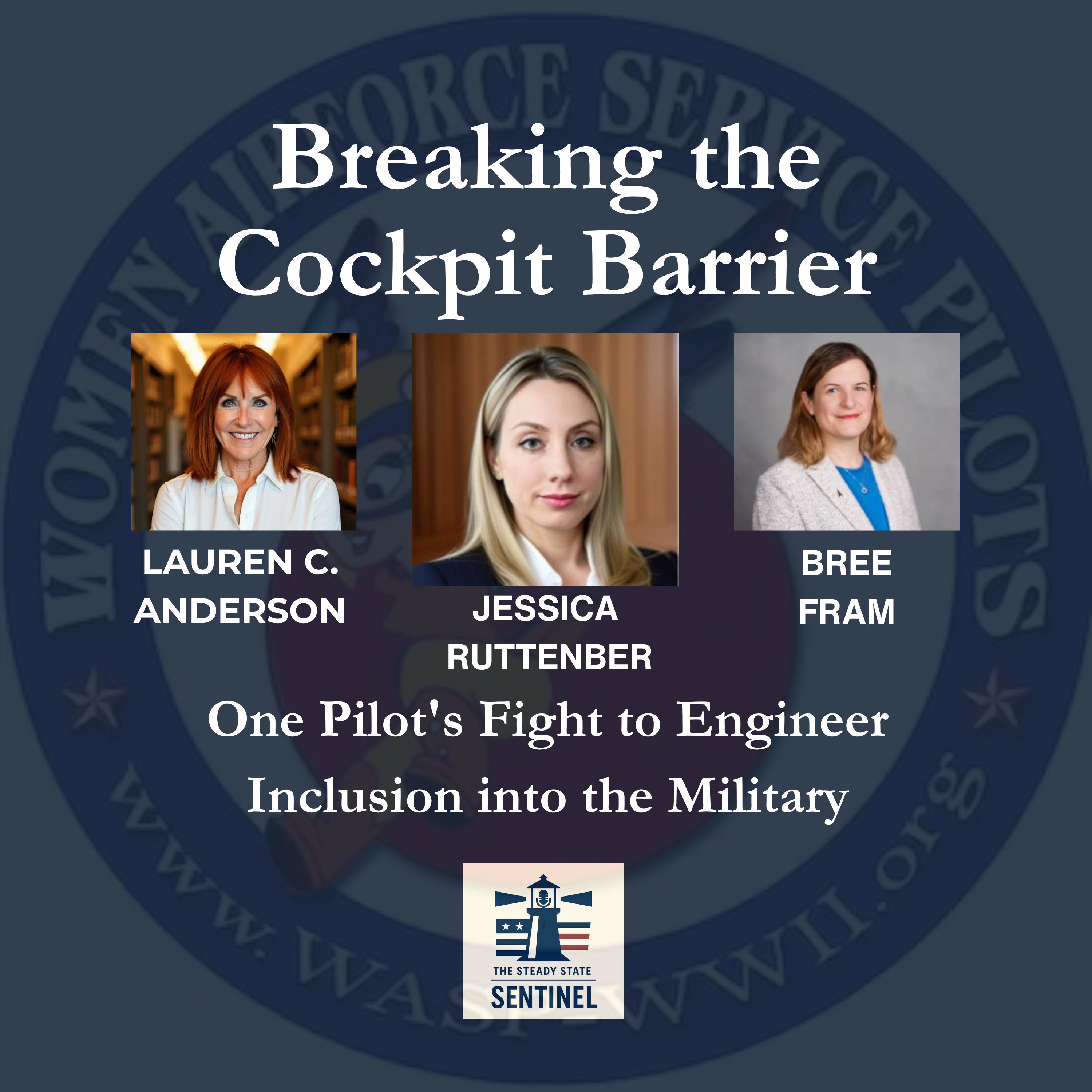
Breaking the Cockpit Barrier: One Pilot's Fight to Engineer Inclusion into the Military

A retired Air Force lieutenant colonel on height requirements that excluded 44% of women, the first maternity flight suit, and why "truth isn't afraid of transparency." In her debut as a co-host of the Steady State Sentinel, retired Space Force Colonel Bree Fram joins Lauren Anderson to interview retired Lieutenant Colonel Jessica Ruttenber, a senior pilot with over 3,000 flight hours. Their conversation explores the effects on combat readiness of hidden barriers, the importance of data over anecdotes, the chilling effect of censorship and erasure of military history (including the Tuskegee Airmen and The Women Airforce Service Pilots (WASPs) and why veterans have a duty to speak out. Lt. Col. Ruttenber shares her journey from being told she was "too short" to fly to becoming a driving force behind the Department of Defense's first maternity flight suit and the Equality for Military Mothers Amendment. She reveals how an outdated 1960s anthropometric study based on the "average male" excluded 44% of women from aviation — and 74% of Black women. She explains how changing a single policy gave the Air Force "30 instant pilots" worth of man-hours. She closes with a powerful message: sometimes "surviving is the ultimate rebellion" when the system wasn't designed for you. Episode Transcript

0:00-49:16

transcript

No transcript — this publisher did not publish one.

show notes

A retired Air Force lieutenant colonel on height requirements that excluded 44% of women, the first maternity flight suit, and why "truth isn't afraid of transparency."

In her debut as a co-host of the Steady State Sentinel, retired Space Force Colonel Bree Fram joins Lauren Anderson to interview retired Lieutenant Colonel Jessica Ruttenber, a senior pilot with over 3,000 flight hours.

Their conversation explores the effects on combat readiness of hidden barriers, the importance of data over anecdotes, the chilling effect of censorship and erasure of military history (including the Tuskegee Airmen and The Women Airforce Service Pilots (WASPs) and why veterans have a duty to speak out.

Lt. Col. Ruttenber shares her journey from being told she was "too short" to fly to becoming a driving force behind the Department of Defense's first maternity flight suit and the Equality for Military Mothers Amendment. She reveals how an outdated 1960s anthropometric study based on the "average male" excluded 44% of women from aviation — and 74% of Black women. She explains how changing a single policy gave the Air Force "30 instant pilots" worth of man-hours.

She closes with a powerful message: sometimes "surviving is the ultimate rebellion" when the system wasn't designed for you.

Episode Transcript

links1