Skip to content
Artwork for The Signal
The Signal · June 19 · 31 min

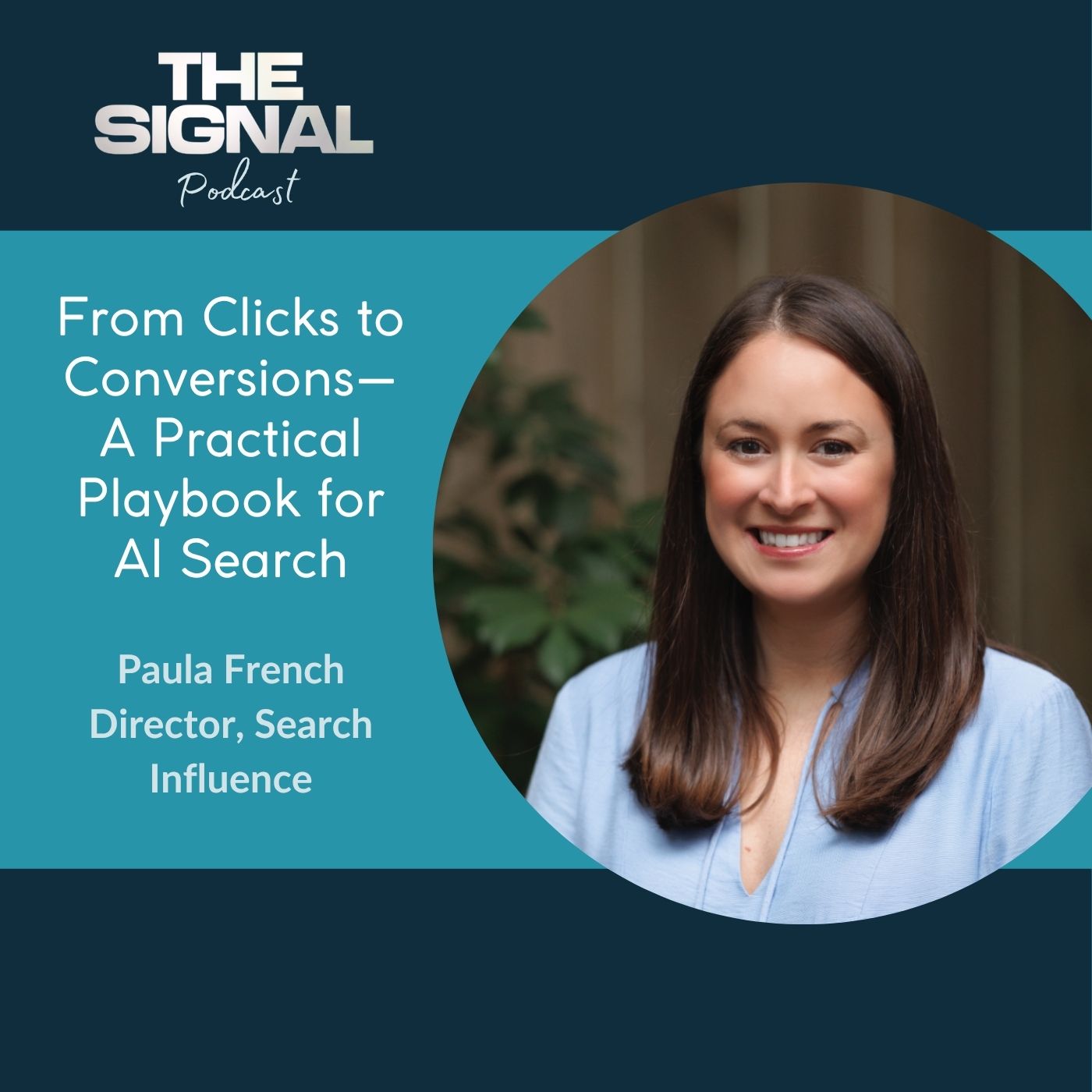
Ep. 92 - Paula French: From Clicks to Conversions—A Practical Playbook for AI Search

Your traffic is down. Your inquiries are flattening. But your applications haven't dropped. What's happening? The front door just moved—and most higher ed marketers haven't noticed. In this episode, Jeff Dillon welcomes Paula French, Director of Sales and Marketing at Search Influence, a digital marketing agency with more than 16 years of experience helping institutions stay visible online. Paula co-authored a groundbreaking study with UPCEA titled AI Search in Higher Education: How Prospects Search in 2025, and the findings are reshaping how colleges should think about discovery, trust, and ROI. Paula shares the data: one in three prospects now trusts AI tools for program search, 79% are reading Google's AI overviews, and more than half say they trust institutions cited there. But here's the catch—those prospects are showing up to your website already informed, which means they never registered as a click or an inquiry. The metrics marketers have relied on for two decades are breaking down. The good news? AI has the power to connect students with niche programs in ways Google never could. Paula walks through real examples—including how Tufts University recovered lost traffic by optimizing for AI—and offers a practical six-month playbook for institutions with limited budgets. She also tackles the hard questions: Where should you focus when you're spread thin? How do you measure success when the funnel is no longer a funnel? And why Q&A sections might be the "easy button" for AI visibility. For any enrollment marketer, digital strategist, or institutional leader trying to make sense of a post-AI search landscape, this episode is required listening. Key Takeaways AI Search Is Mainstream, Not Fringe: One in three prospects now trusts AI tools for program search, and 50% are using AI as part of their search process. This isn't early adoption anymore—it's the new normal. 79% of Prospects Are Reading Google's AI Overviews: And more than half say they trust institutions cited in those overviews. If your institution isn't being cited, you're not even in the consideration set. Your Traffic Will Drop—But That Doesn't Mean Interest Dropped: Prospects are showing up to your website already informed. They never registered as a click or an inquiry. Marketers who rely on top-of-funnel metrics alone will panic unnecessarily. AI Search Is SEO Plus, Not a Replacement: Everything you're doing for organic search helps AI visibility, and everything you do for AI helps organic rankings. It's a layering effect, not a channel shift. Focus on 1–5 Programs: Spreading yourself thin across dozens of programs is a losing strategy. Institutions that focus on a small set of programs, build a repeatable playbook, and execute consistently will see movement much faster. Consistency Across Channels Creates Patterns AI Can Read: If you talk about a program four different ways across your website, LinkedIn, and YouTube, AI will have a blurry picture. If you say the same thing consistently, AI learns to repeat it back to users. The Tufts Example: Recovering Traffic Through AI Optimization: Tufts recovered lost traffic by (1) writing content more directly for AI with clear program descriptions at the top of the page, and (2) adding detailed Q&A sections that answered the nuanced questions prospects are asking AI engines. Q&A Is the "Easy Button" for AI Visibility: When you write in Q&A format, you're forced to get detailed about what prospects are actually asking. AI engines expect that level of detail now—high-level content won't cut it. AI Can Connect Niche Programs That Google Never Could: People are now having highly specific, conversational searches with AI ("I'm Paula, I work in marketing, I want to grow my career in X way"). This is an opportunity to surface niche programs that would never have been searched for as keywords. You Can Measure AI Visibility: There are tools to track how your institution shows up in AI search. Search Influence maintains an updated blog on AI tracking tools—it's one of their most visited pages. Redefine Success or Get Left Behind: Lower-funnel metrics (applications, enrollments, registrations) matter more than ever. Create dashboards that track both top-of-funnel and bottom-of-funnel metrics together. Be okay with declining traffic and inquiries as long as conversions hold steady. The Signal Newsletter: https://edtechconnect.com/newsletter Find Paula French: LinkedIn https://www.linkedin.com/in/paula-keller-french/ Search Influence http://searchinfluence.com/ And find EdTech Connect here: Web: https://edtechconnect.com/
0:00 · The Signal: How AI Is Affecting Colleges and Universities-31:37

transcript

No transcript — this publisher did not publish one.

show notes

Your traffic is down. Your inquiries are flattening. But your applications haven't dropped. What's happening? The front door just moved—and most higher ed marketers haven't noticed.

In this episode, Jeff Dillon welcomes Paula French, Director of Sales and Marketing at Search Influence, a digital marketing agency with more than 16 years of experience helping institutions stay visible online. Paula co-authored a groundbreaking study with UPCEA titled AI Search in Higher Education: How Prospects Search in 2025, and the findings are reshaping how colleges should think about discovery, trust, and ROI.

Paula shares the data: one in three prospects now trusts AI tools for program search, 79% are reading Google's AI overviews, and more than half say they trust institutions cited there. But here's the catch—those prospects are showing up to your website already informed, which means they never registered as a click or an inquiry. The metrics marketers have relied on for two decades are breaking down.

The good news? AI has the power to connect students with niche programs in ways Google never could. Paula walks through real examples—including how Tufts University recovered lost traffic by optimizing for AI—and offers a practical six-month playbook for institutions with limited budgets. She also tackles the hard questions: Where should you focus when you're spread thin? How do you measure success when the funnel is no longer a funnel? And why Q&A sections might be the "easy button" for AI visibility.

For any enrollment marketer, digital strategist, or institutional leader trying to make sense of a post-AI search landscape, this episode is required listening.

Key Takeaways

  • AI Search Is Mainstream, Not Fringe: One in three prospects now trusts AI tools for program search, and 50% are using AI as part of their search process. This isn't early adoption anymore—it's the new normal.
  • 79% of Prospects Are Reading Google's AI Overviews: And more than half say they trust institutions cited in those overviews. If your institution isn't being cited, you're not even in the consideration set.
  • Your Traffic Will Drop—But That Doesn't Mean Interest Dropped: Prospects are showing up to your website already informed. They never registered as a click or an inquiry. Marketers who rely on top-of-funnel metrics alone will panic unnecessarily.
  • AI Search Is SEO Plus, Not a Replacement: Everything you're doing for organic search helps AI visibility, and everything you do for AI helps organic rankings. It's a layering effect, not a channel shift.
  • Focus on 1–5 Programs: Spreading yourself thin across dozens of programs is a losing strategy. Institutions that focus on a small set of programs, build a repeatable playbook, and execute consistently will see movement much faster.
  • Consistency Across Channels Creates Patterns AI Can Read: If you talk about a program four different ways across your website, LinkedIn, and YouTube, AI will have a blurry picture. If you say the same thing consistently, AI learns to repeat it back to users.
  • The Tufts Example: Recovering Traffic Through AI Optimization: Tufts recovered lost traffic by (1) writing content more directly for AI with clear program descriptions at the top of the page, and (2) adding detailed Q&A sections that answered the nuanced questions prospects are asking AI engines.
  • Q&A Is the "Easy Button" for AI Visibility: When you write in Q&A format, you're forced to get detailed about what prospects are actually asking. AI engines expect that level of detail now—high-level content won't cut it.
  • AI Can Connect Niche Programs That Google Never Could: People are now having highly specific, conversational searches with AI ("I'm Paula, I work in marketing, I want to grow my career in X way"). This is an opportunity to surface niche programs that would never have been searched for as keywords.
  • You Can Measure AI Visibility: There are tools to track how your institution shows up in AI search. Search Influence maintains an updated blog on AI tracking tools—it's one of their most visited pages.
  • Redefine Success or Get Left Behind: Lower-funnel metrics (applications, enrollments, registrations) matter more than ever. Create dashboards that track both top-of-funnel and bottom-of-funnel metrics together. Be okay with declining traffic and inquiries as long as conversions hold steady.


The Signal Newsletter:
https://edtechconnect.com/newsletter


Find Paula French:

LinkedIn                              

https://www.linkedin.com/in/paula-keller-french/

Search Influence

http://searchinfluence.com/


And find EdTech Connect here:

Web: https://edtechconnect.com/
 

links4

chapters

9 chapters