Skip to content
Artwork for The Signal
The Signal · Friday · 28 min

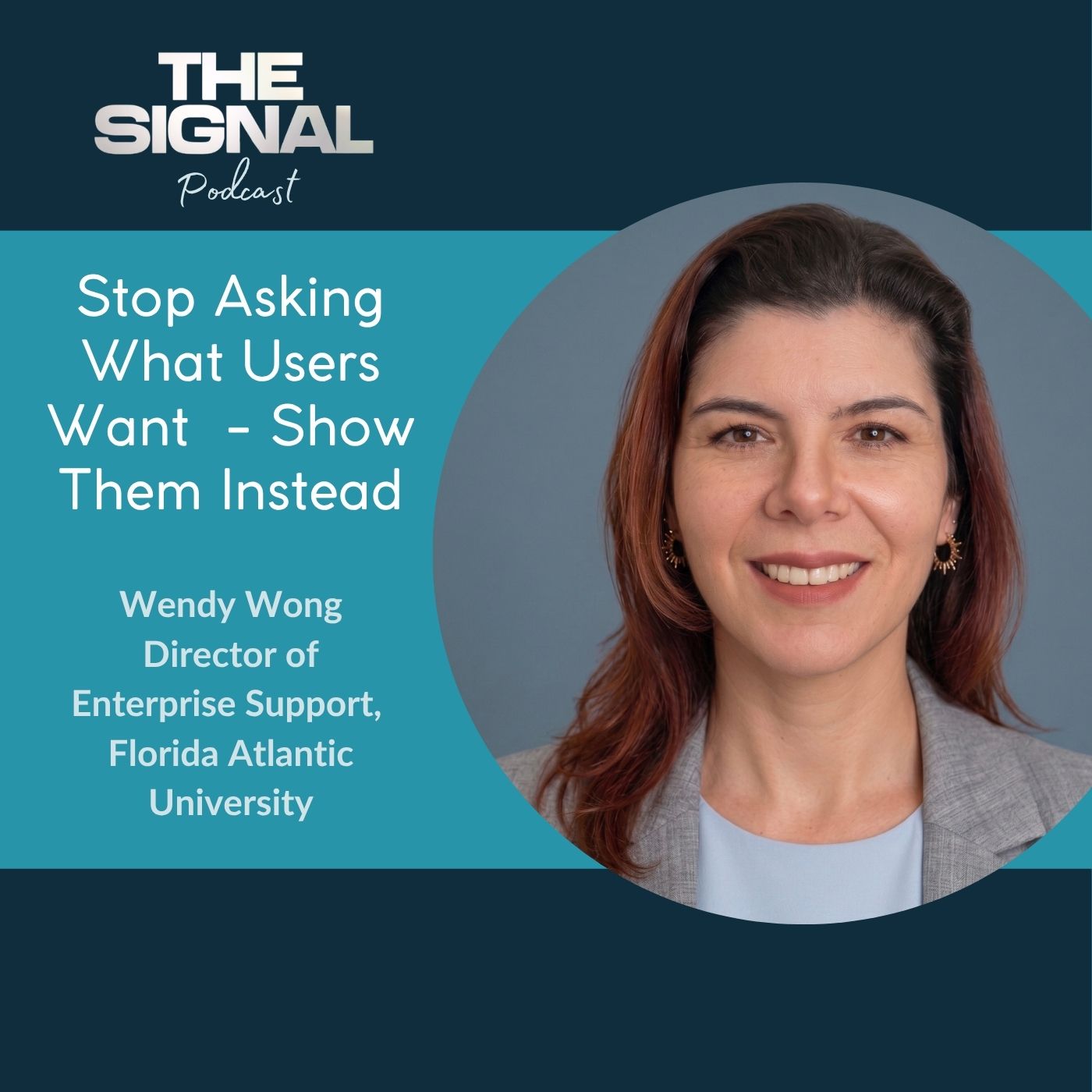
Ep. 100 - Wendy Wong: Stop Asking What Users Want - Show Them Instead

In this episode—the 100th recording of The Signal—host Jeff Dillon sits down with Wendy Wong, Director of Enterprise Support and Client Engagement at Florida Atlantic University, who has spent 24 years transforming IT from a back‑office function into a driver of student and employee experience. Wendy shares the story behind OwlOne (FAU's branded version of Nebula One), a no‑code AI agent platform that sits in FAU's Azure infrastructure, giving the university complete control while avoiding the security risks of public AI tools. Wendy reveals the secret to driving adoption: don't ask users what they want—show them what's possible. She walked into offices with use cases tailored to their actual work (residency forms, graduation ceremonies) and even shared personal examples like planning a trip to Japan. She also explains why strong change management—communication, expectation-setting, and grassroots efforts—was the real driver of success, not the technology itself. For any CIO, IT director, or campus leader trying to figure out where to start with AI, Wendy offers practical advice: don't buy an AI point solution that will be obsolete in 18 months, and don't chase hype. Build a foundational platform that can evolve. Key Takeaways Build a Foundational Platform, Don't Buy a Point Solution: Wendy advises against purchasing a standalone AI tool that will be obsolete in 18 months. Instead, build or adopt a platform that can evolve with the technology and the institution's needs. Don't Ask Users What They Want—Show Them What's Possible: Most people suffer from "blank page syndrome." Wendy showed faculty and staff tailored use cases (organizing a graduation ceremony, filling out residency forms) rather than asking open-ended questions. This approach unlocked adoption. Normalize AI by Showing Personal Use Cases: Wendy shared how she used AI to plan travel to Japan and translate for her Spanish-speaking family. When users see AI as a life tool rather than just a "student cheating tool," their mindset shifts. Strong Change Management Is the Real Driver: Communication, expectation-setting, grassroots efforts, and meeting people where they are were more important than the technology itself. The Cloud Force Frontier Award for AI Advocacy recognized FAU's change management efforts, not just the tech. Adoption Comes from Making AI Approachable: Wendy avoided tech‑intimidating language and made AI feel accessible to non‑technical users. The result: a 50x increase in adoption and nearly one billion tokens processed. Look for Partners Who Bring Expertise, Not Just a Product: The best technology partners challenge you, offer honest feedback, and help you succeed even if it means recommending something that doesn't directly benefit them. Use the "How Are You Using AI?" Question as a Screening Tool: When evaluating partners, ask them how they use AI internally. If they can't give a compelling answer, they likely don't understand how to help you use it effectively. Start Small, Build Momentum, and Let Successes Scale: Wendy's approach was iterative—launch with a few early adopters, capture their wins, and use those stories to bring in the next wave of users. This grassroots approach built credibility and momentum organically. The Signal Newsletter: https://edtechconnect.com/newsletter Find Wendy Wong: LinkedIn https://www.linkedin.com/in/wendylwong/ Florida Atlantic University http://www.fau.edu/ And find EdTech Connect here: Web: https://edtechconnect.com/

0:00 · How Microsoft's AI Agents Became Popular-28:28

transcript

No transcript — this publisher did not publish one.

show notes

In this episode—the 100th recording of The Signal—host Jeff Dillon sits down with Wendy Wong, Director of Enterprise Support and Client Engagement at Florida Atlantic University, who has spent 24 years transforming IT from a back‑office function into a driver of student and employee experience. Wendy shares the story behind OwlOne (FAU's branded version of Nebula One), a no‑code AI agent platform that sits in FAU's Azure infrastructure, giving the university complete control while avoiding the security risks of public AI tools.

Wendy reveals the secret to driving adoption: don't ask users what they want—show them what's possible. She walked into offices with use cases tailored to their actual work (residency forms, graduation ceremonies) and even shared personal examples like planning a trip to Japan. She also explains why strong change management—communication, expectation-setting, and grassroots efforts—was the real driver of success, not the technology itself.

For any CIO, IT director, or campus leader trying to figure out where to start with AI, Wendy offers practical advice: don't buy an AI point solution that will be obsolete in 18 months, and don't chase hype. Build a foundational platform that can evolve.


Key Takeaways 

  • Build a Foundational Platform, Don't Buy a Point Solution: Wendy advises against purchasing a standalone AI tool that will be obsolete in 18 months. Instead, build or adopt a platform that can evolve with the technology and the institution's needs. 
  • Don't Ask Users What They Want—Show Them What's Possible: Most people suffer from "blank page syndrome." Wendy showed faculty and staff tailored use cases (organizing a graduation ceremony, filling out residency forms) rather than asking open-ended questions. This approach unlocked adoption. 
  • Normalize AI by Showing Personal Use Cases: Wendy shared how she used AI to plan travel to Japan and translate for her Spanish-speaking family. When users see AI as a life tool rather than just a "student cheating tool," their mindset shifts. 
  • Strong Change Management Is the Real Driver: Communication, expectation-setting, grassroots efforts, and meeting people where they are were more important than the technology itself. The Cloud Force Frontier Award for AI Advocacy recognized FAU's change management efforts, not just the tech. 
  • Adoption Comes from Making AI Approachable: Wendy avoided tech‑intimidating language and made AI feel accessible to non‑technical users. The result: a 50x increase in adoption and nearly one billion tokens processed. 
  • Look for Partners Who Bring Expertise, Not Just a Product: The best technology partners challenge you, offer honest feedback, and help you succeed even if it means recommending something that doesn't directly benefit them. 
  • Use the "How Are You Using AI?" Question as a Screening Tool: When evaluating partners, ask them how they use AI internally. If they can't give a compelling answer, they likely don't understand how to help you use it effectively. 
  • Start Small, Build Momentum, and Let Successes Scale: Wendy's approach was iterative—launch with a few early adopters, capture their wins, and use those stories to bring in the next wave of users. This grassroots approach built credibility and momentum organically. 

The Signal Newsletter:
https://edtechconnect.com/newsletter


Find Wendy Wong:

LinkedIn                              

https://www.linkedin.com/in/wendylwong/

Florida Atlantic University

http://www.fau.edu/


And find EdTech Connect here:

Web: https://edtechconnect.com/

 

links4

chapters

12 chapters