Skip to content
Artwork for The Seven Lanterns
Kids & FamilyEducation for Kids

The Seven Lanterns

Fred Jalili

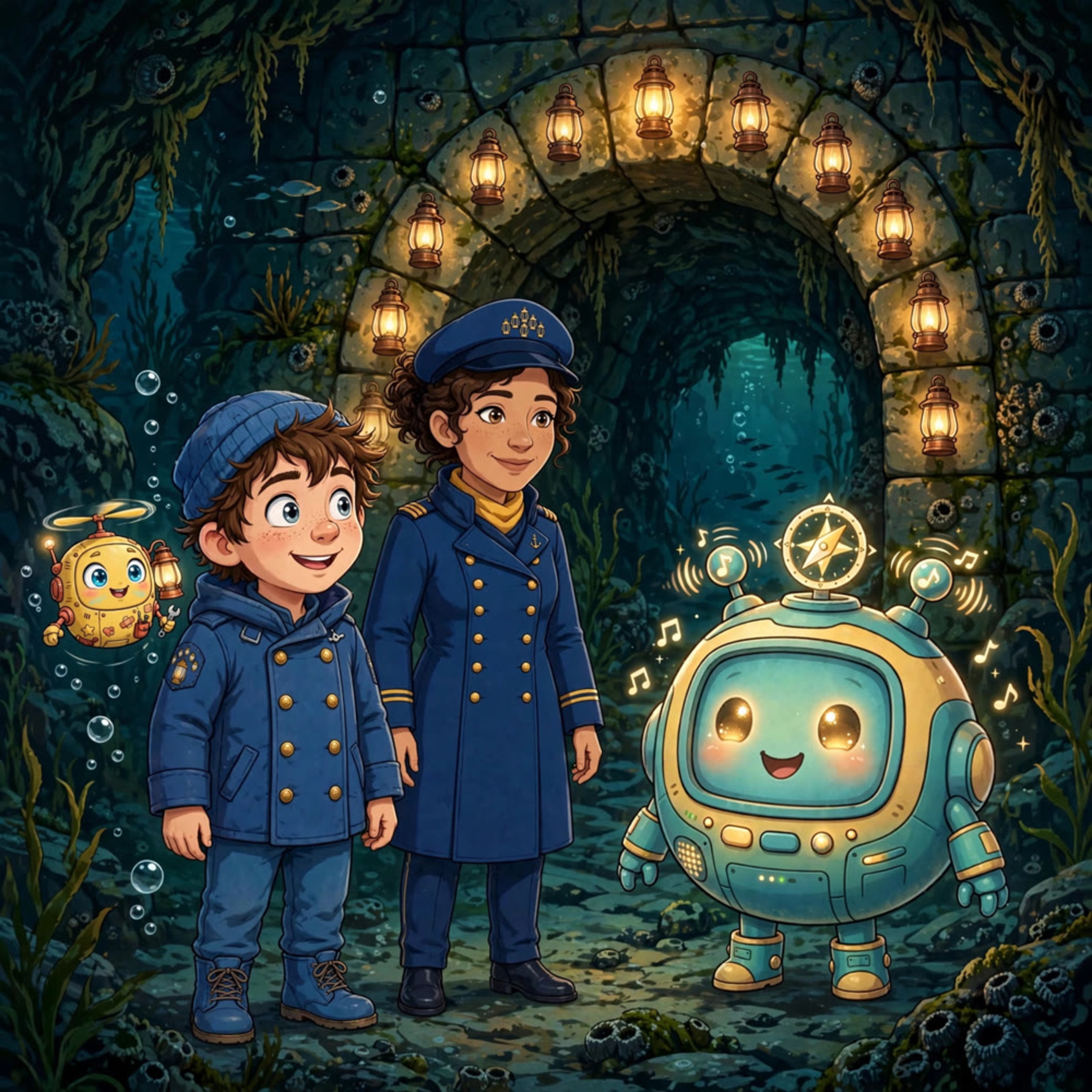
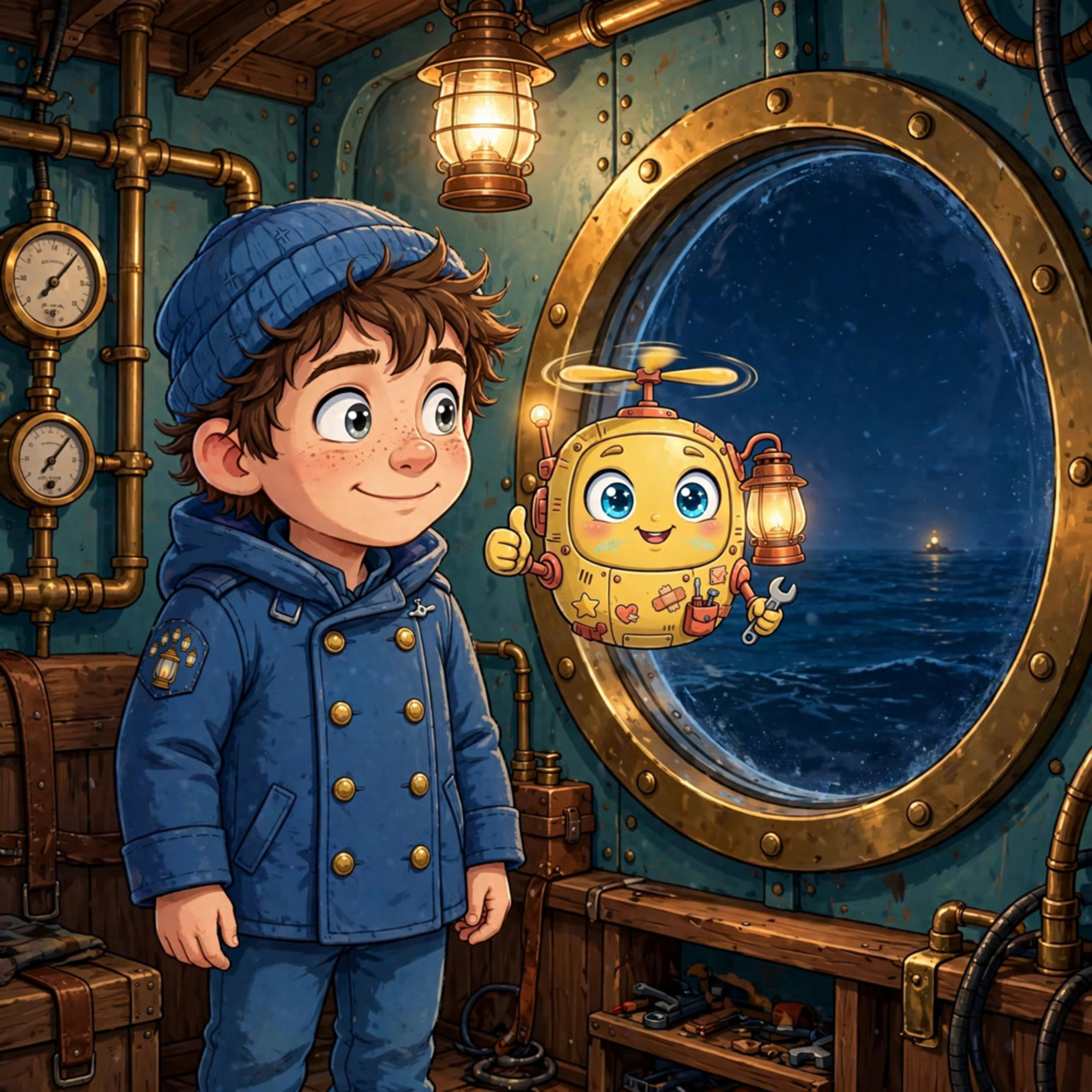
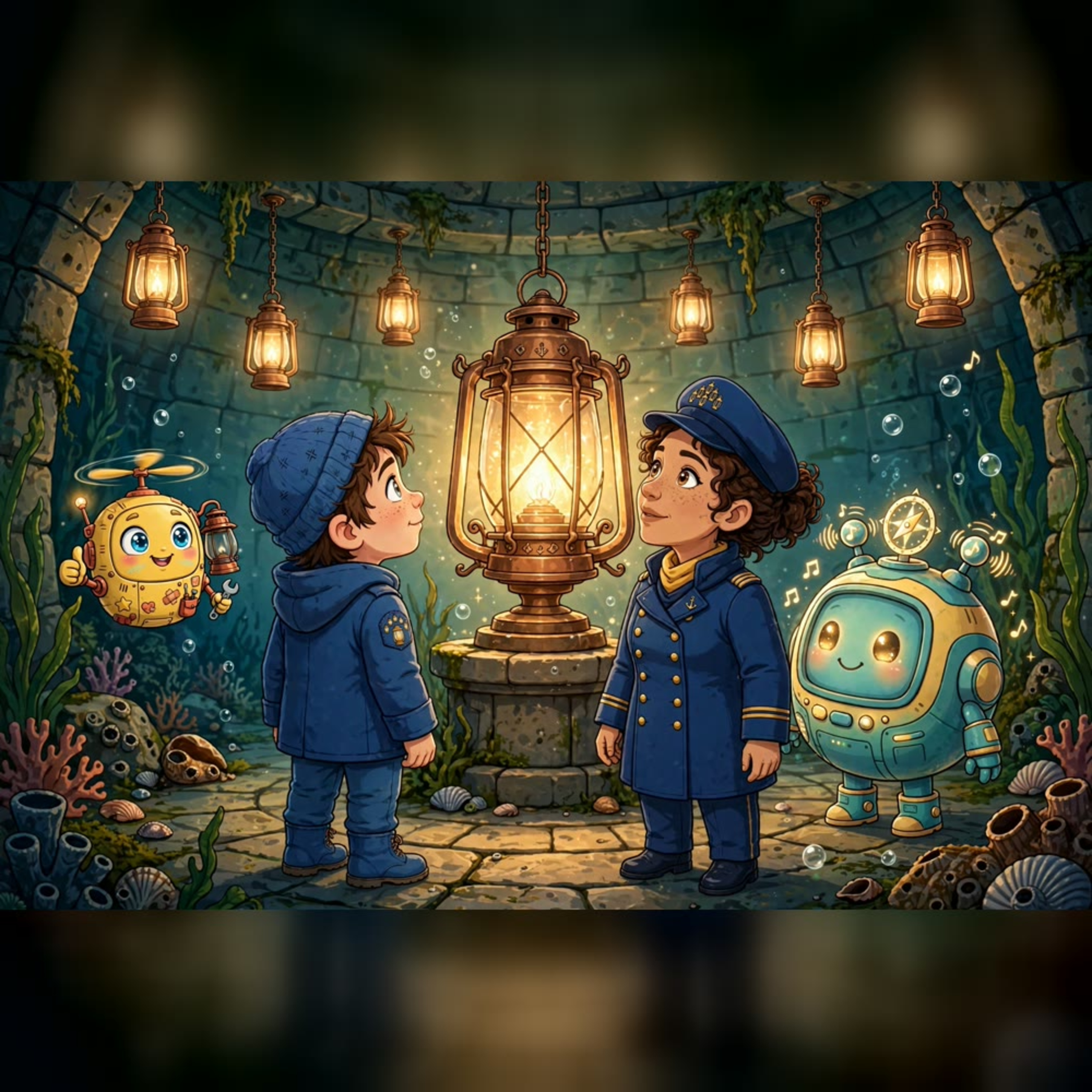
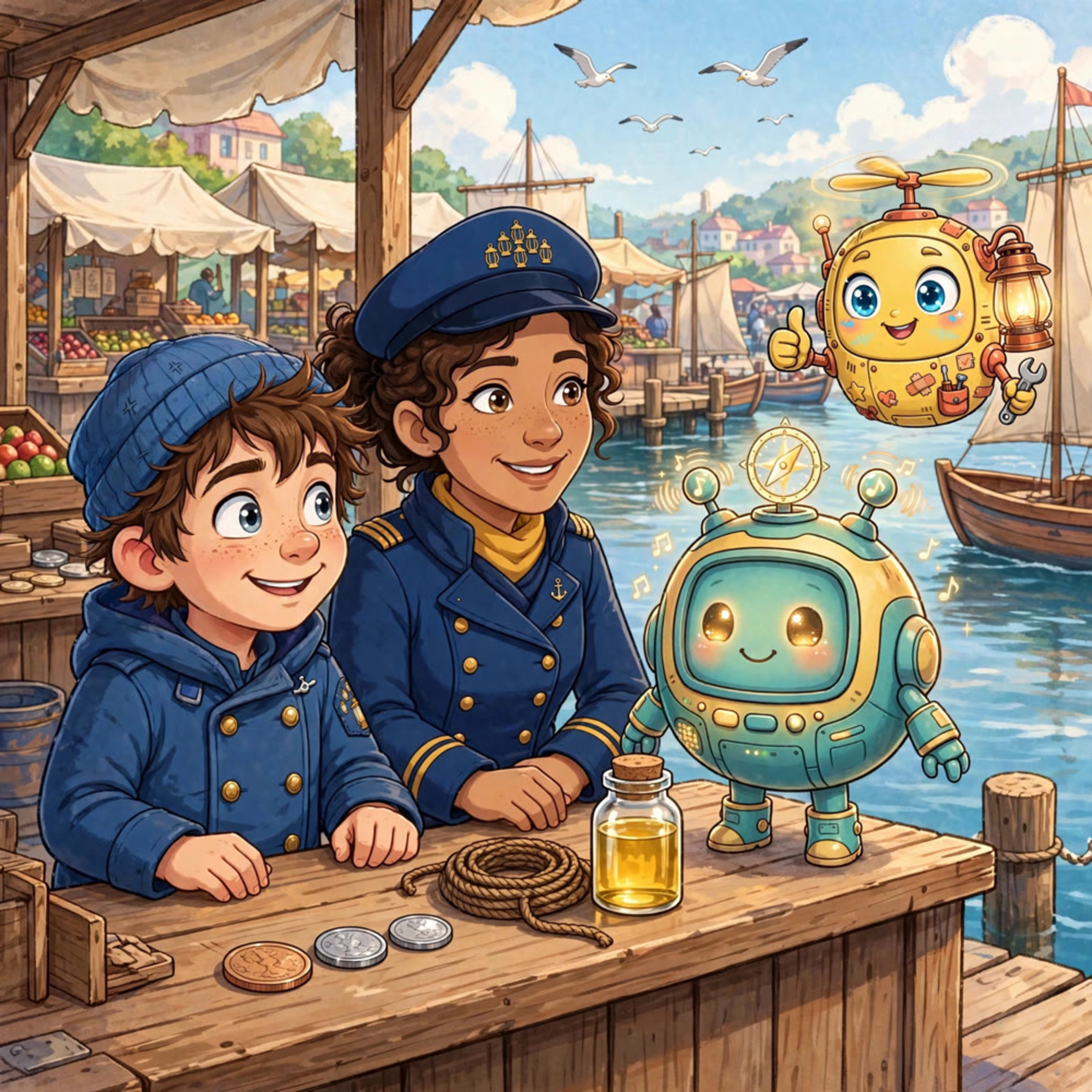
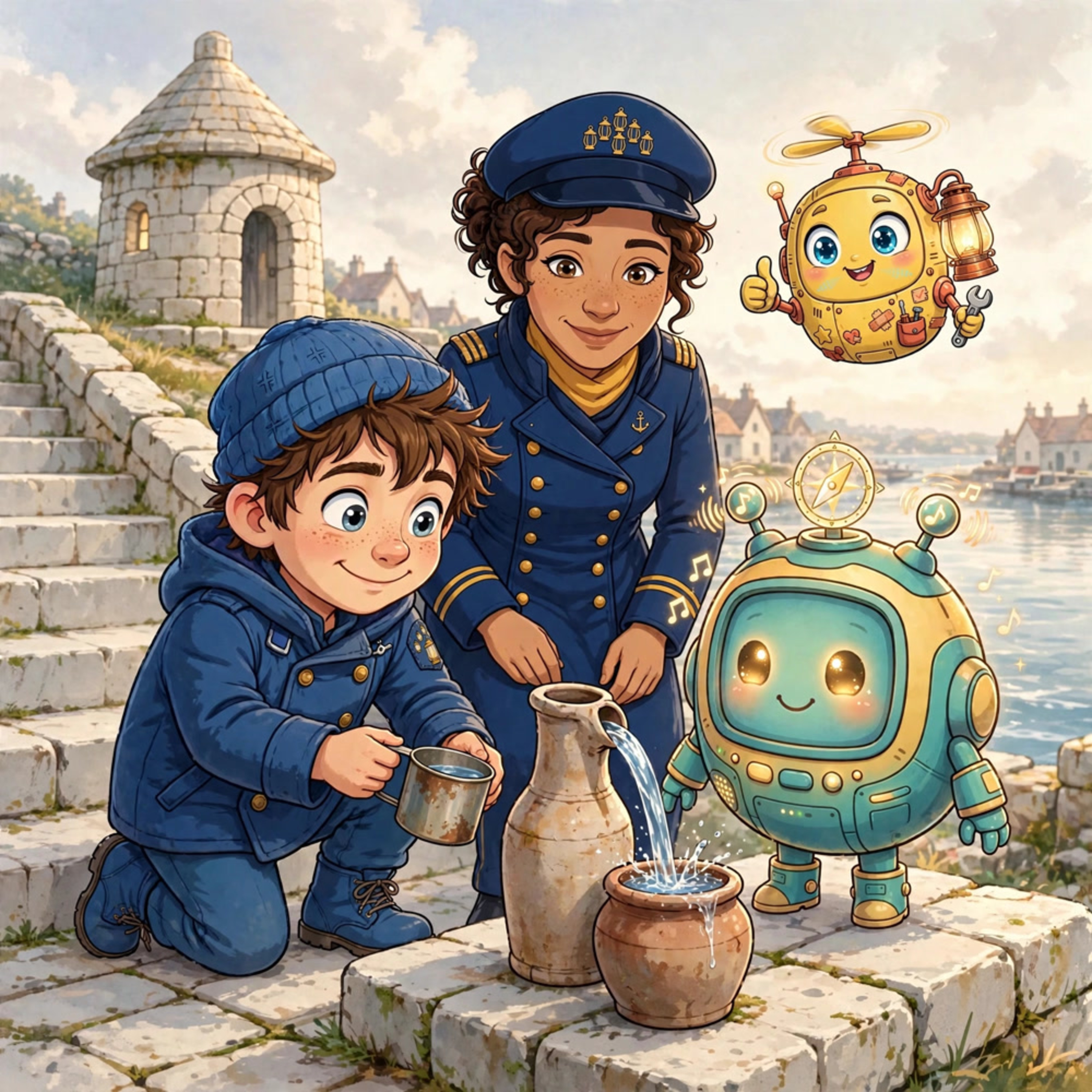
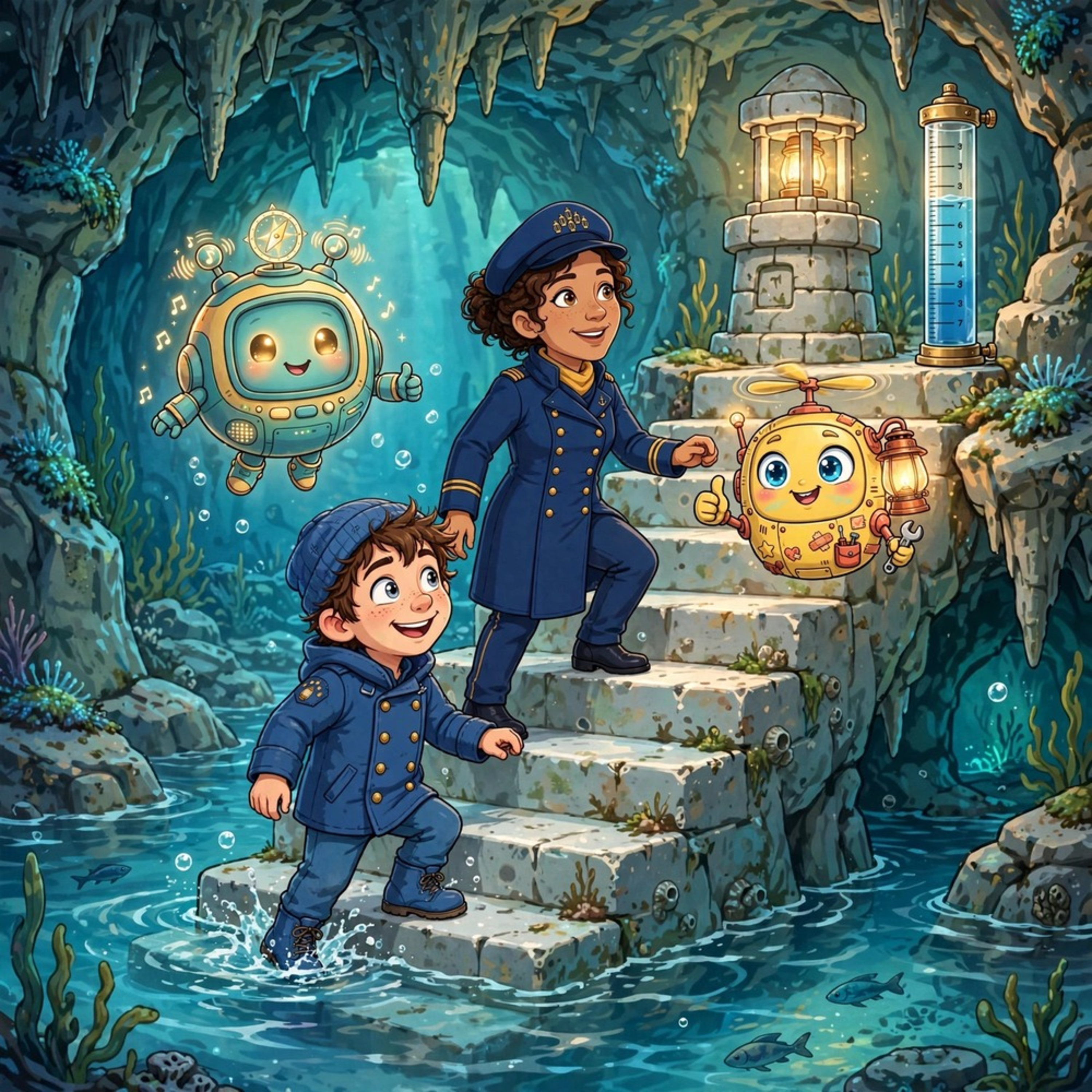
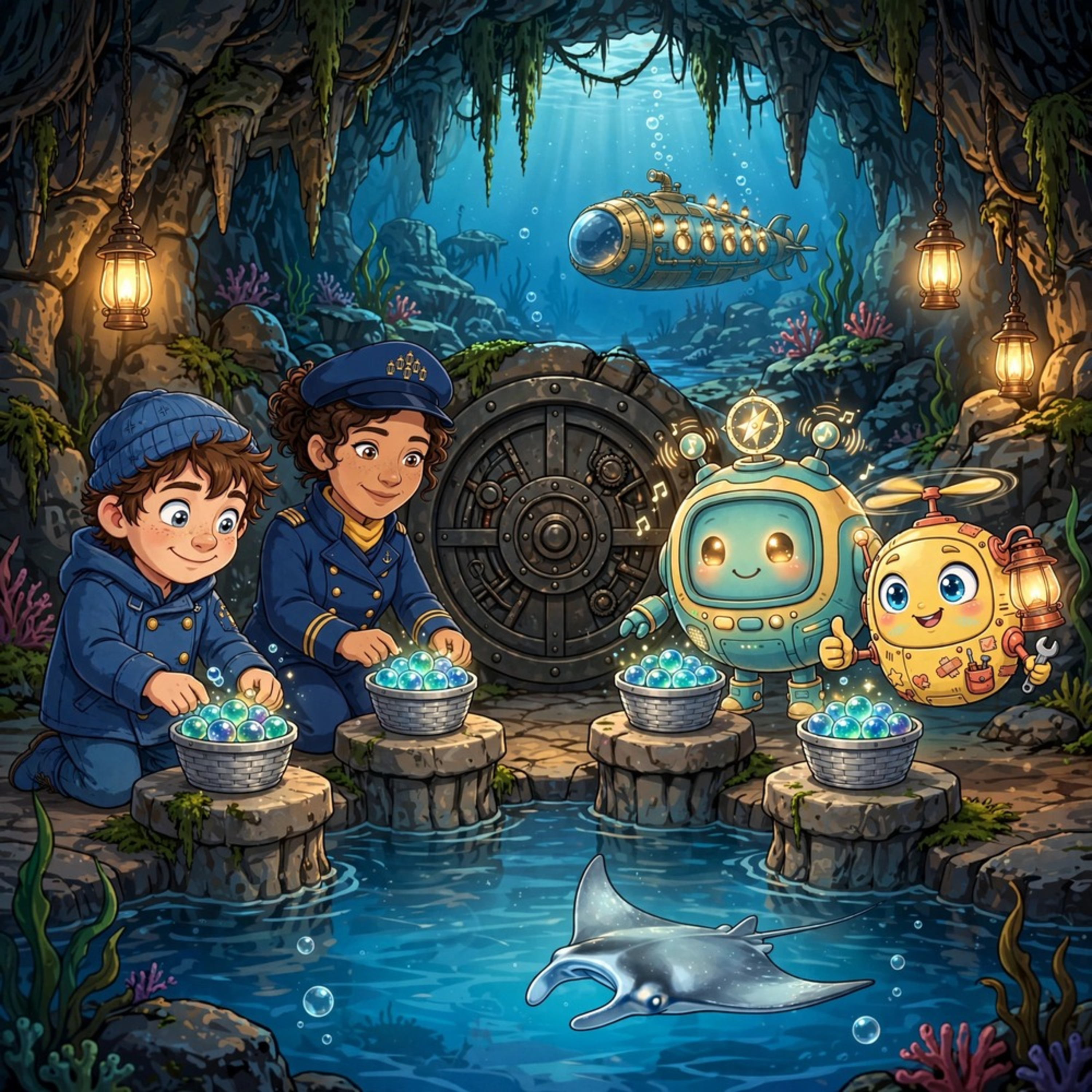
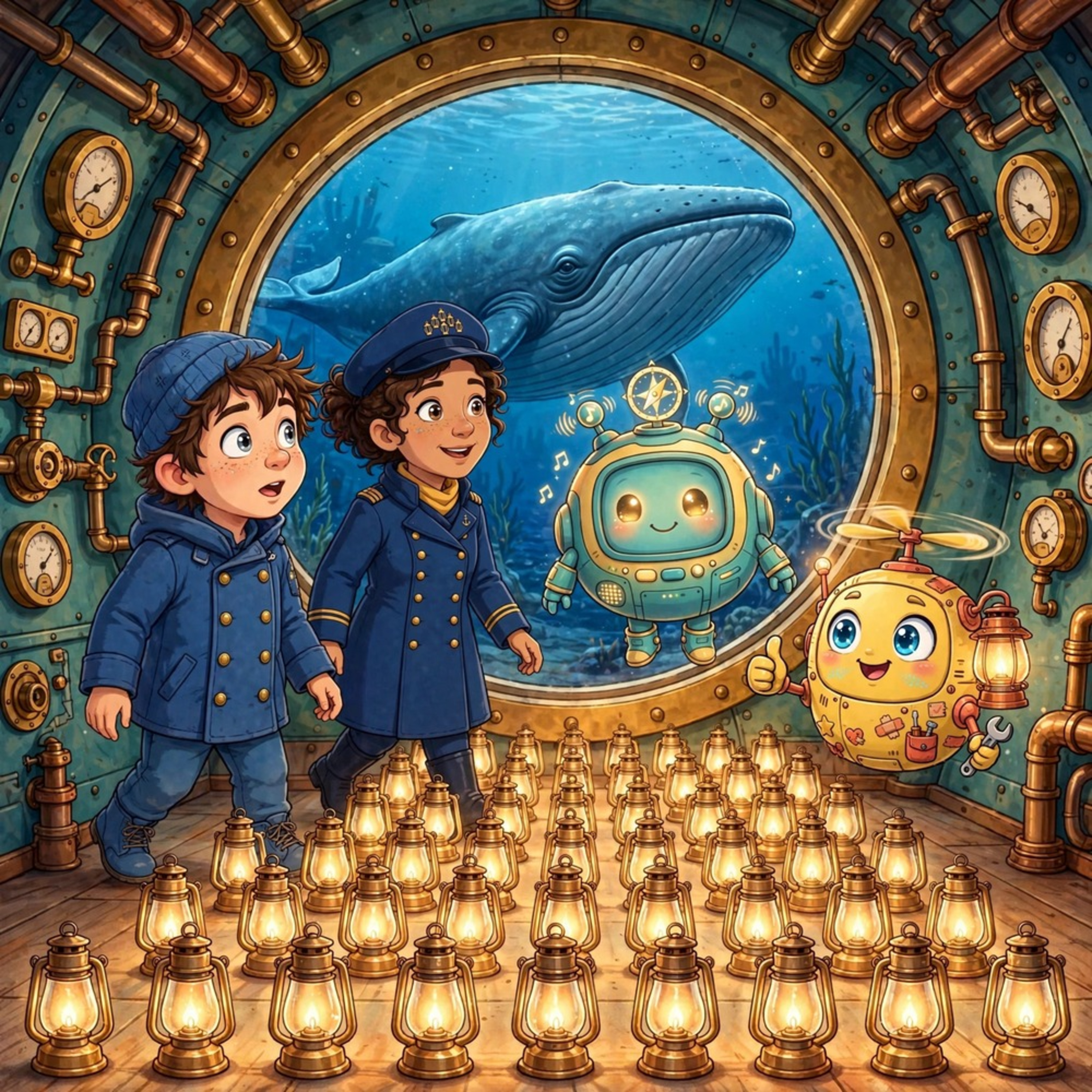
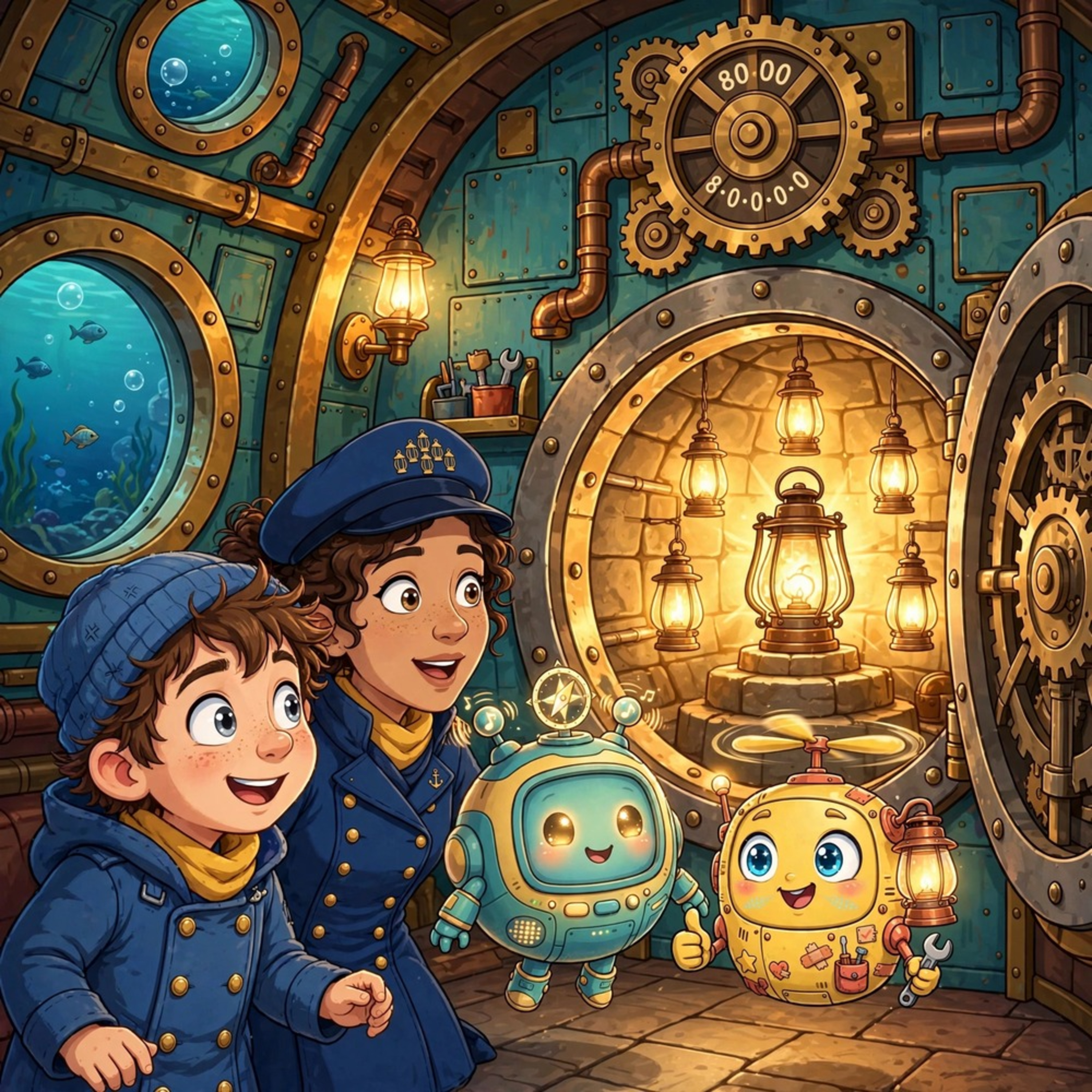
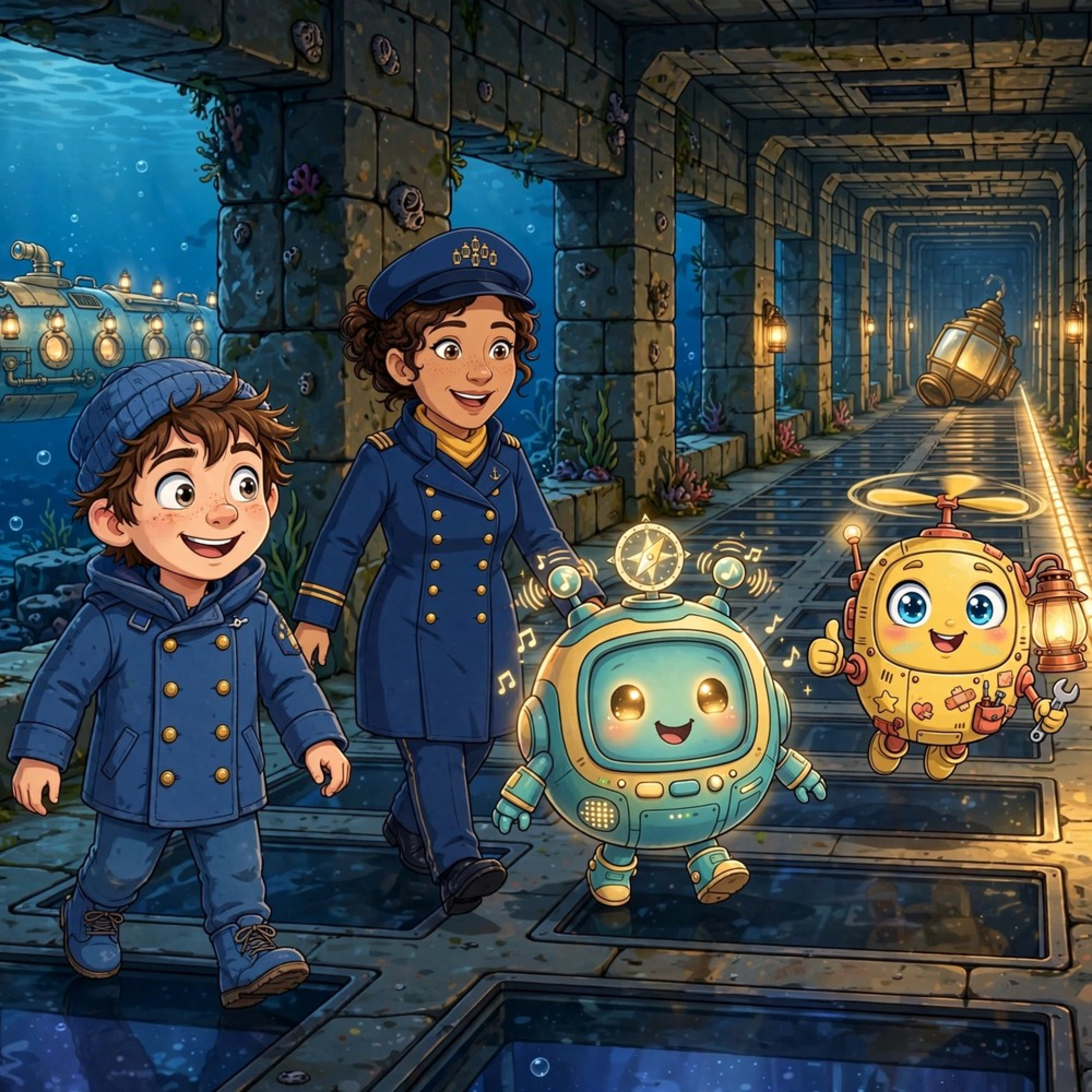
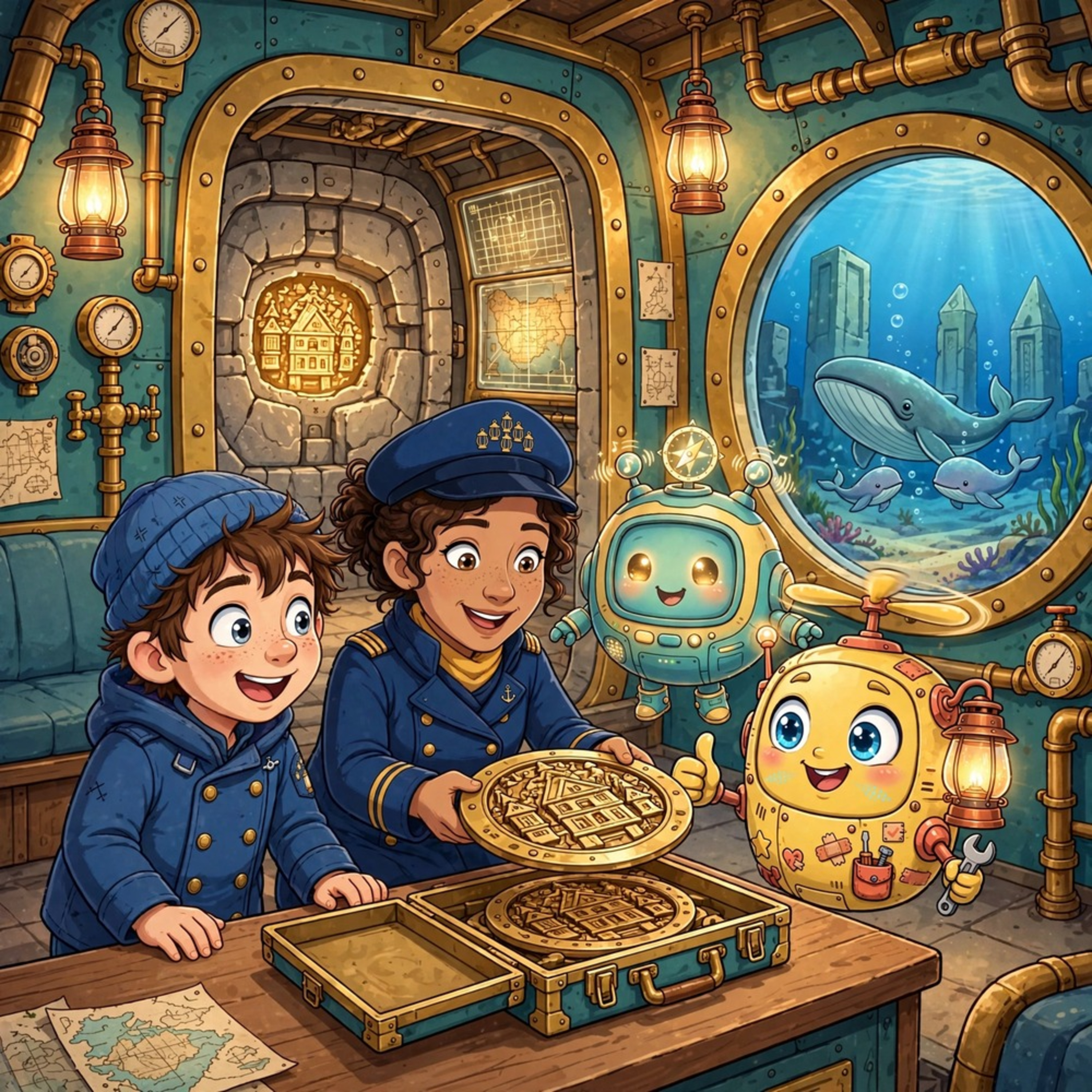
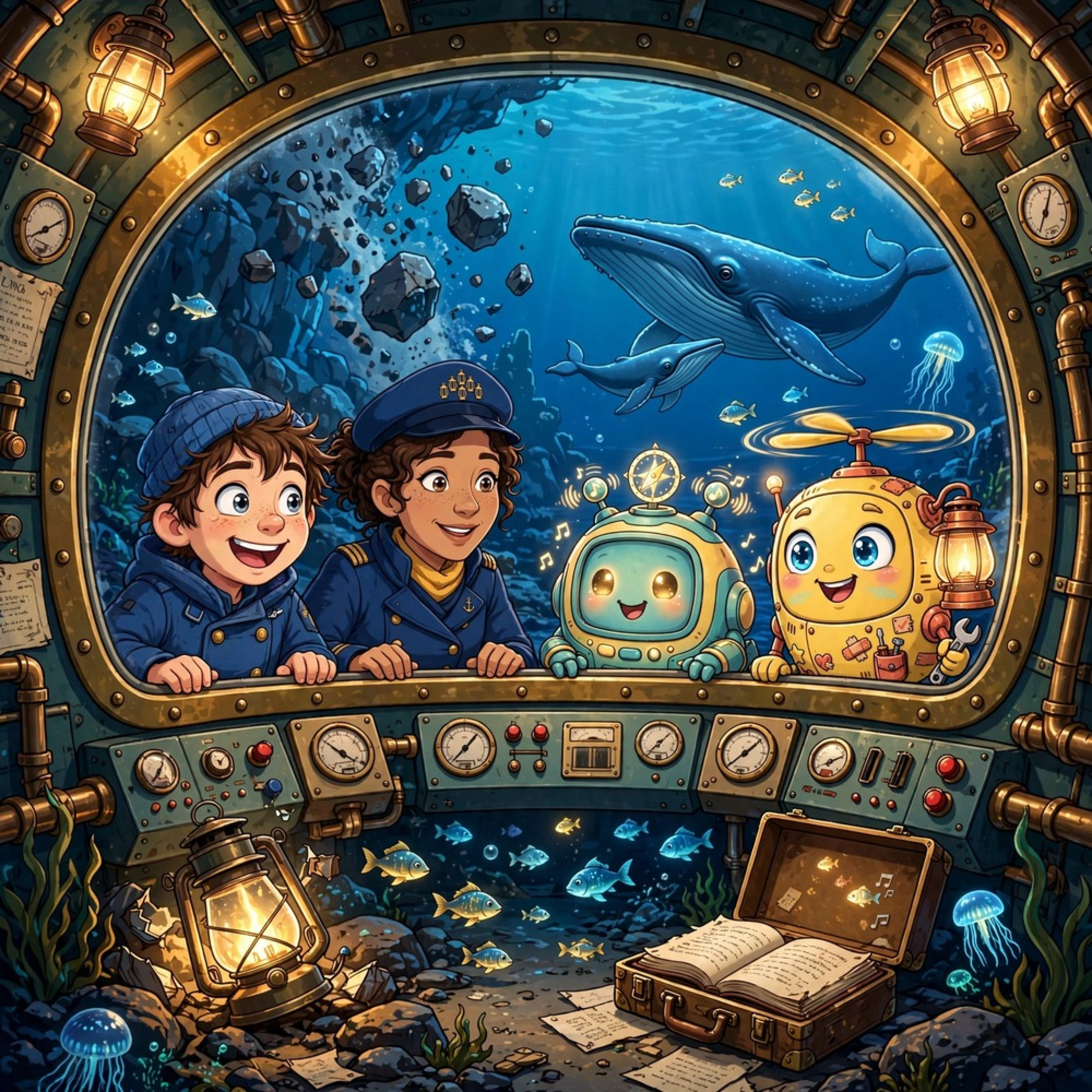
All aboard the Nereid, a brass and teal submarine with a curious crew! The Seven Lanterns is a deep sea audio adventure for children 8-11: Nilo, Captain Mara, musical Compass and tiny Pip hunt the lost Seven Lanterns, solving mysteries with real maths big numbers, multiplication, division, fractions, decimals, geometry, data and money, all worked out aloud inside the story. Funny, warm 30minute adventures with songs and rich underwater sound. New episodes dive regularly.
Created with the help of AI.

Play
  • 19 episodes
  • a few times a week
  • Avg 29 min
  • English
  • Yesterday · 30 min

    The Keeper's Cubes

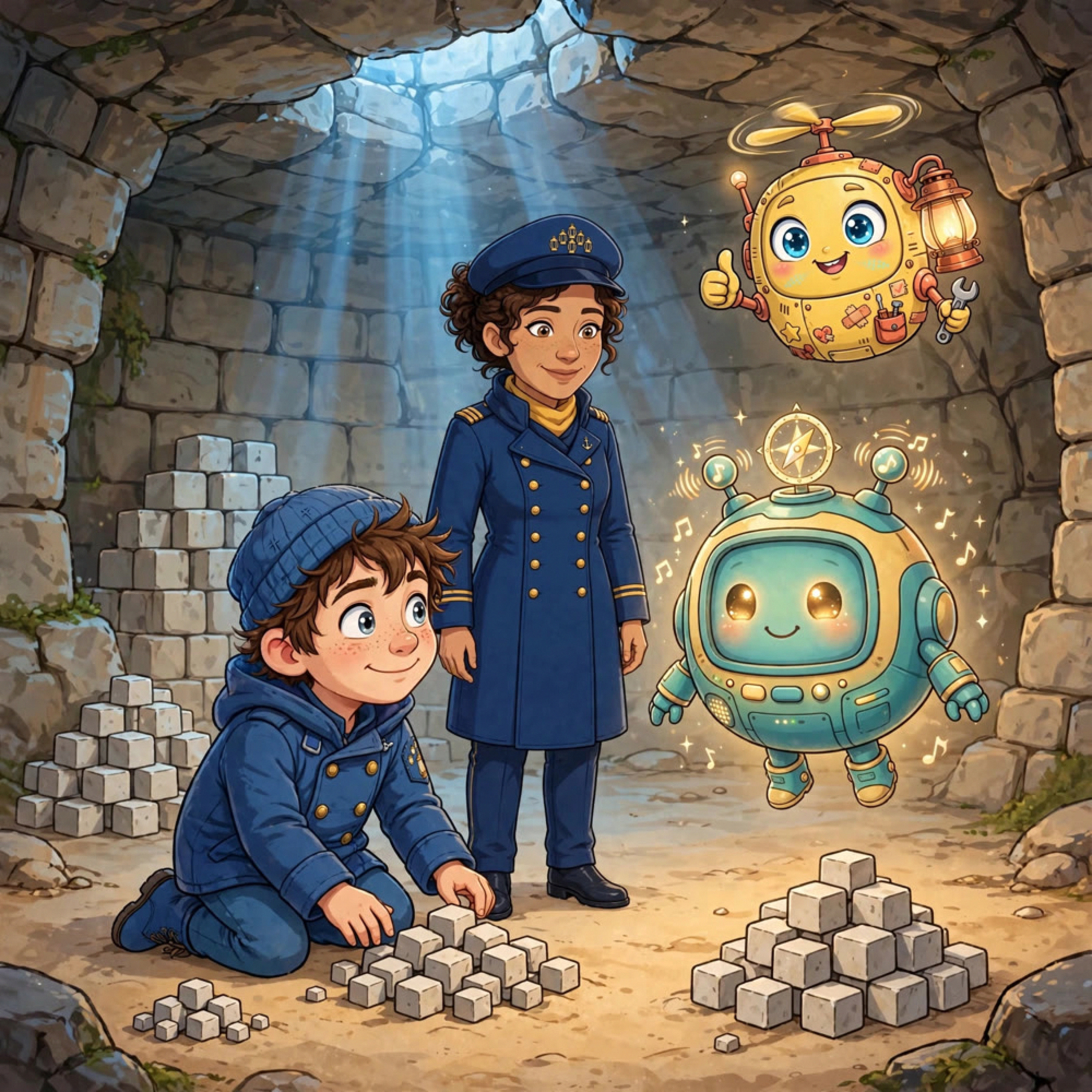
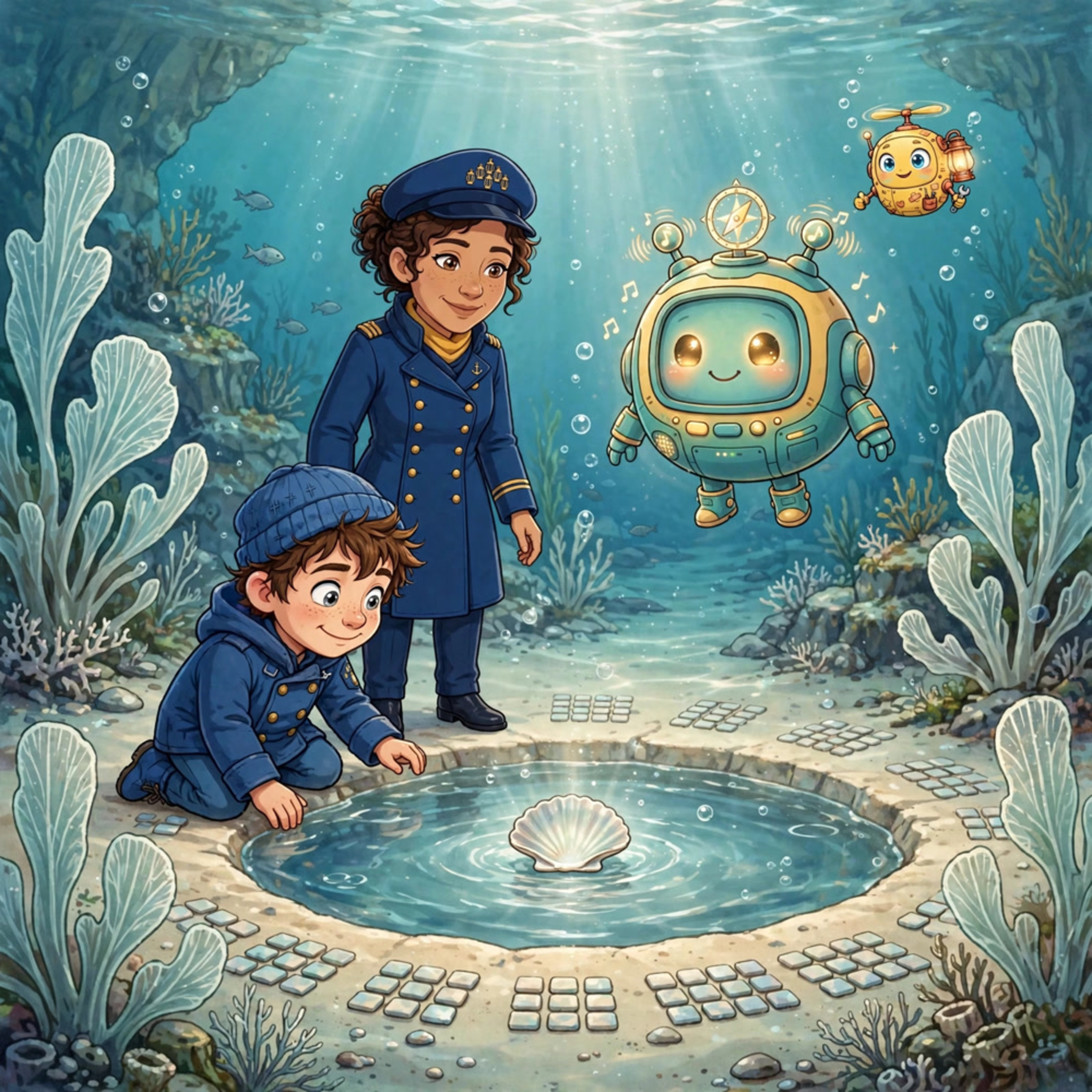
    The crew climbs down the narrow stair into a low warm keeper's store chamber, where pale cubes are stacked in neat piles of one, eight, twenty-seven, sixty-four and one hundred and twenty-five. Nilo sits on a cube chair, Pip builds a leaning tower, and Compass sings the cube song. And what number fits the small brass box, stamped with both a square and a cube? Learning topics: Cube numbers and cube roots: a cube grows from its side; the root of 1 is 1 (1x1x1=1), the root of 8 is 2 (2x2x2=8), the root of 27 is 3 (3x3x3=27), the root of 64 is 4 (4x4x4=64), the root of 125 is 5 (5x5x5=125); the whole family 1, 8, 27, 64, 125 with roots 1, 2, 3, 4, 5 Counting a cube layer by layer: the 4x4x4 cube is four layers of 16 cubes (16+16+16+16=64); the 5x5x5 cube is five layers of 25 cubes (25+25+25+25+25=125, counted up 25, 50, 75, 100, 125); checked the same way for the 3x3x3 cube (9+9+9=27) and the 2x2x2 cube (4+4=8) Checking both ways: the roots walked forwards (1, 8, 27, 64, 125) and backwards (5x5x5=125, 4x4x4=64, 3x3x3=27, 2x2x2=8, 1x1x1=1), and both roads agree #KidsPodcast #MathForKids #AudioAdventure #KidsStories #STEMKids #BedtimeStories
  • Friday · 30 min

    The Square's Root

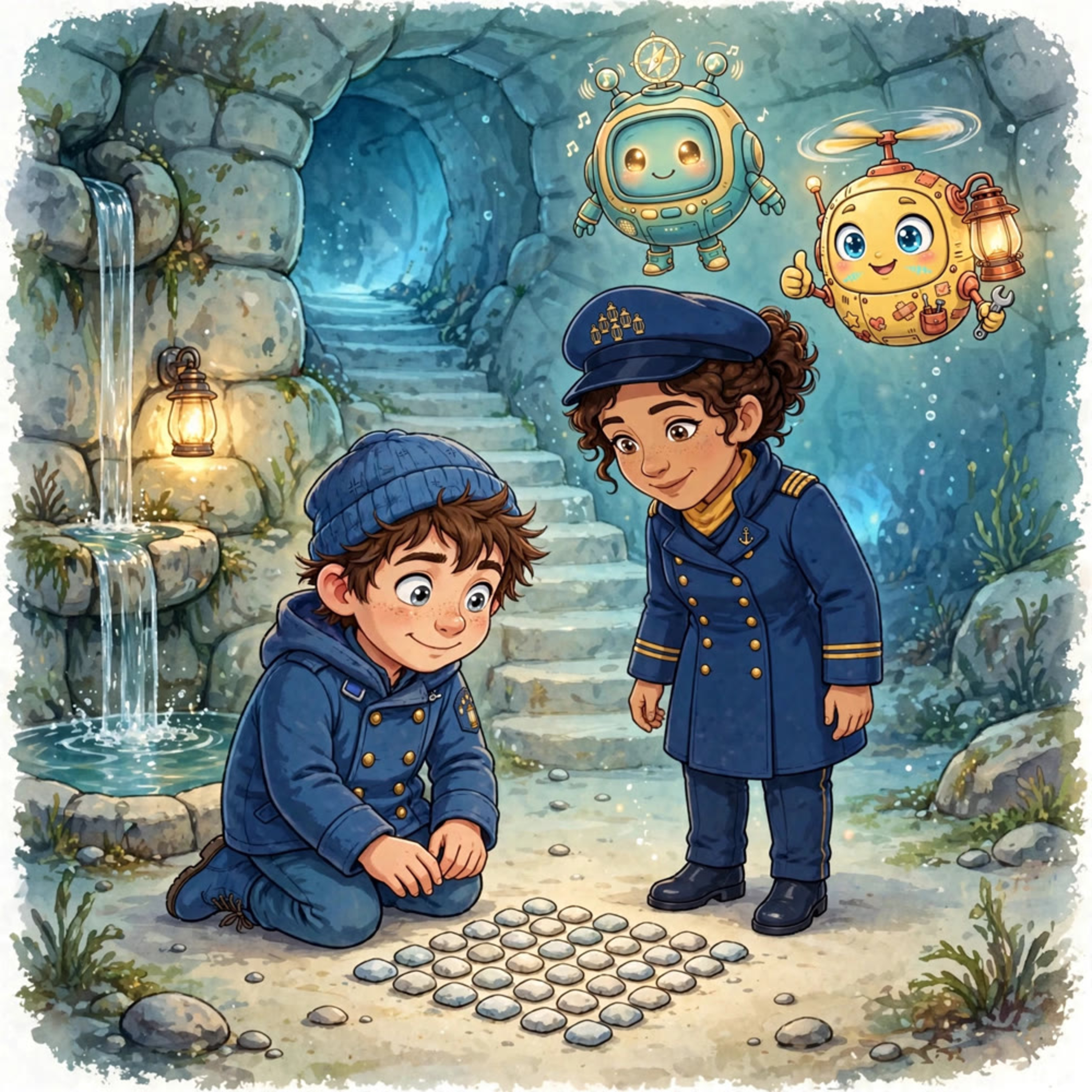
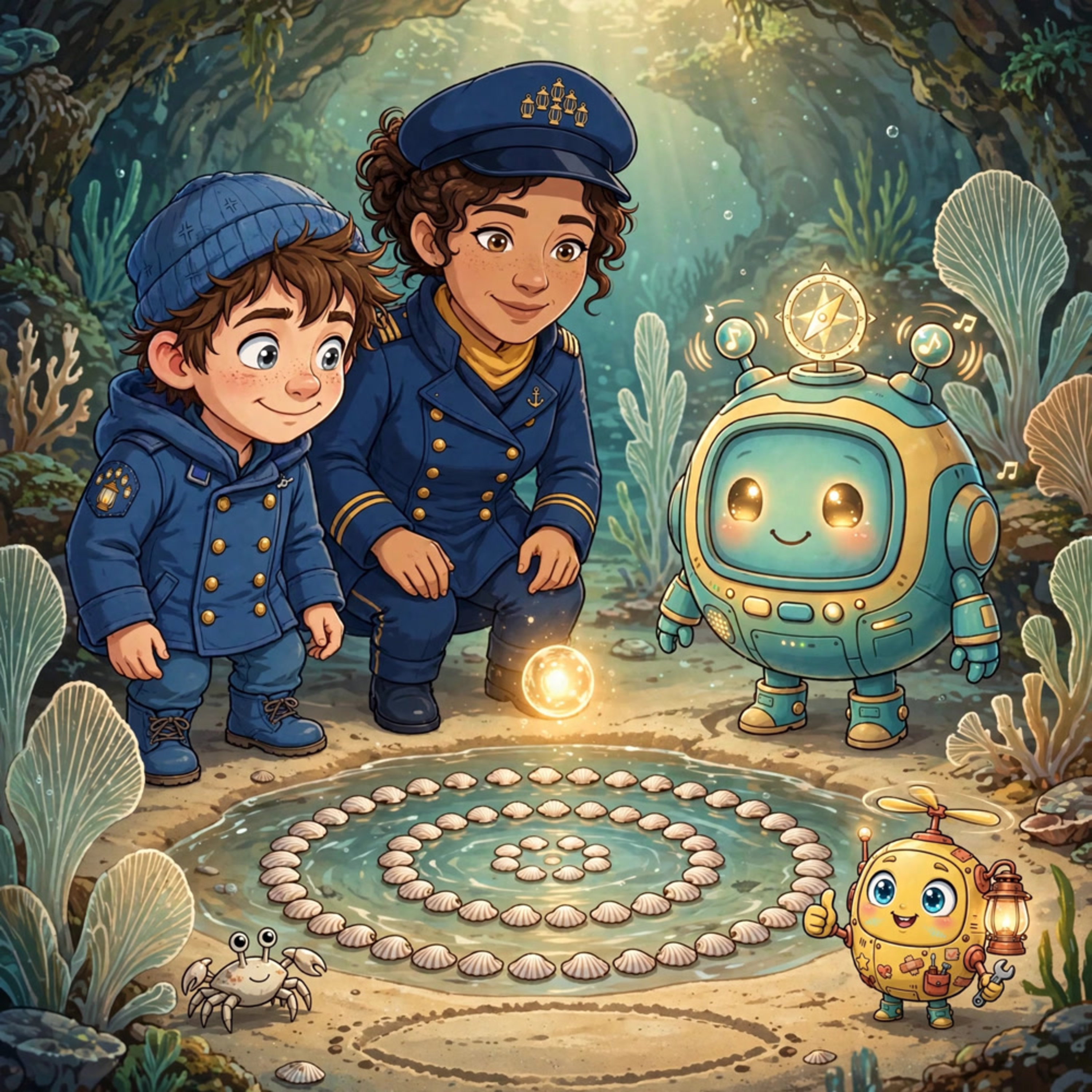
    The crew ducks through the low dark arch into a small round chamber, where a square of thirty-six pebbles is already laid and three more squares wait for their sides to be counted. Nilo plants a root, Pip waters it with one careful drop, and Compass sings the root song. And what waits at the bottom of the narrow stair? Learning topics: Square roots: finding the side a square grows from; the root of 36 is 6 (5x5=25 is eleven short, 6x6=36 just right), the root of 49 is 7, the root of 64 is 8, the root of 81 is 9; the whole family 1, 4, 9, 16, 25, 36, 49, 64, 81 with roots 1, 2, 3, 4, 5, 6, 7, 8, 9 Growing steps between squares: 25 to 36 is 11 more, 36 to 49 is 13 more, 49 to 64 is 15 more, 64 to 81 is 17 more; each step two bigger than the last, the same steps 3, 5, 7, 9, 11, 13, 15, 17 from the first square to the ninth Checking both ways: the whole road spoken forwards (1+3=4, 4+5=9, 9+7=16, 16+9=25, 25+11=36, 36+13=49, 49+15=64, 64+17=81) and backwards (9x9=81, 8x8=64, 7x7=49, 6x6=36, 5x5=25), and both roads agree #KidsPodcast #MathForKids #AudioAdventure #KidsStories #STEMKids #BedtimeStories
  • Thursday · 28 min

    The Cove of Square Shells

    The crew follows the path beyond the humming fan into a small sheltered cove, where a second, smaller pool holds a single pale shell that hums the same low note as the fan. Around the pool, pebbles lie in squares, and Nilo, Compass and the Captain build the square numbers one row at a time, forwards and backwards, until a neat path of pebbles leads them to a low dark arch at the back of the cove. Learning topics: - Square numbers: 1x1=1, 2x2=4, 3x3=9, 4x4=16, 5x5=25, built as equal rows with the same number of rows as pebbles in each row. - Squares by growing steps: 1+3=4, 4+5=9, 9+7=16, 16+9=25, with the steps growing by two each time (3, 5, 7, 9). - Checking backwards: 25-9=16, 16-7=9, 9-5=4, 4-3=1, walking the road back to the first shell. - Squares vs rectangles: the shell rings were rectangles (1x2, 2x3, 3x4, 4x5), but a square is equal both ways. #TheSevenLanterns #MathStories #KidsPodcast

  • S2 · E4
    November 7 · 32 min

    The Fifth Ring

    Learning topics: Growing steps: rings 2, 6, 12, 20; steps 6−2=4, 12−6=6, 20−12=8; each step two bigger than the last, so the next step is 10 and 20+10=30; checked backwards 30−10=20, 20−8=12, 12−6=6, 6−4=2 Rectangles: 1×2=2, 2×3=6, 3×4=12, 4×5=20, 5×6=30; counted row by row 6, 12, 18, 24, 30; steps and rectangles agree on 30

  • S2 · E3
    November 4 · 30 min

    The Morning the Rings Met

    Learning topics: Least common multiple of 6 and 8: multiples of 6 (6, 12, 18, 24, 30, 36, 42, 48) and of 8 (8, 16, 24, 32, 40, 48); 24 is first because 6, 12, 18 are six-only and 8, 16 are eight-only; 24 = 6×4 = 8×3 Shared numbers every twenty-four more: 48 (6×8 = 8×6) and 72 (6×12 = 8×9)

  • S2 · E2
    November 2 · 27 min

    The Number That Lives in Two Families

    Learning topics: Multiples of 3 and 4: the family of three (3, 6, 9, 12, 15, 18, 21, 24) and the family of four (4, 8, 12, 16, 20, 24), counted side by side First shared number: 12 is the first number that belongs to both families; nothing smaller does (3, 6, 9 are three-family only; 4, 8 are four-family only) Shared numbers continue every twelve: 24 (3×8 = 4×6) and 36 (3×12 = 4×9), all multiples of twelve

  • S2 · E1
    October 30 · 25 min

    The Light That Blinked in Fours

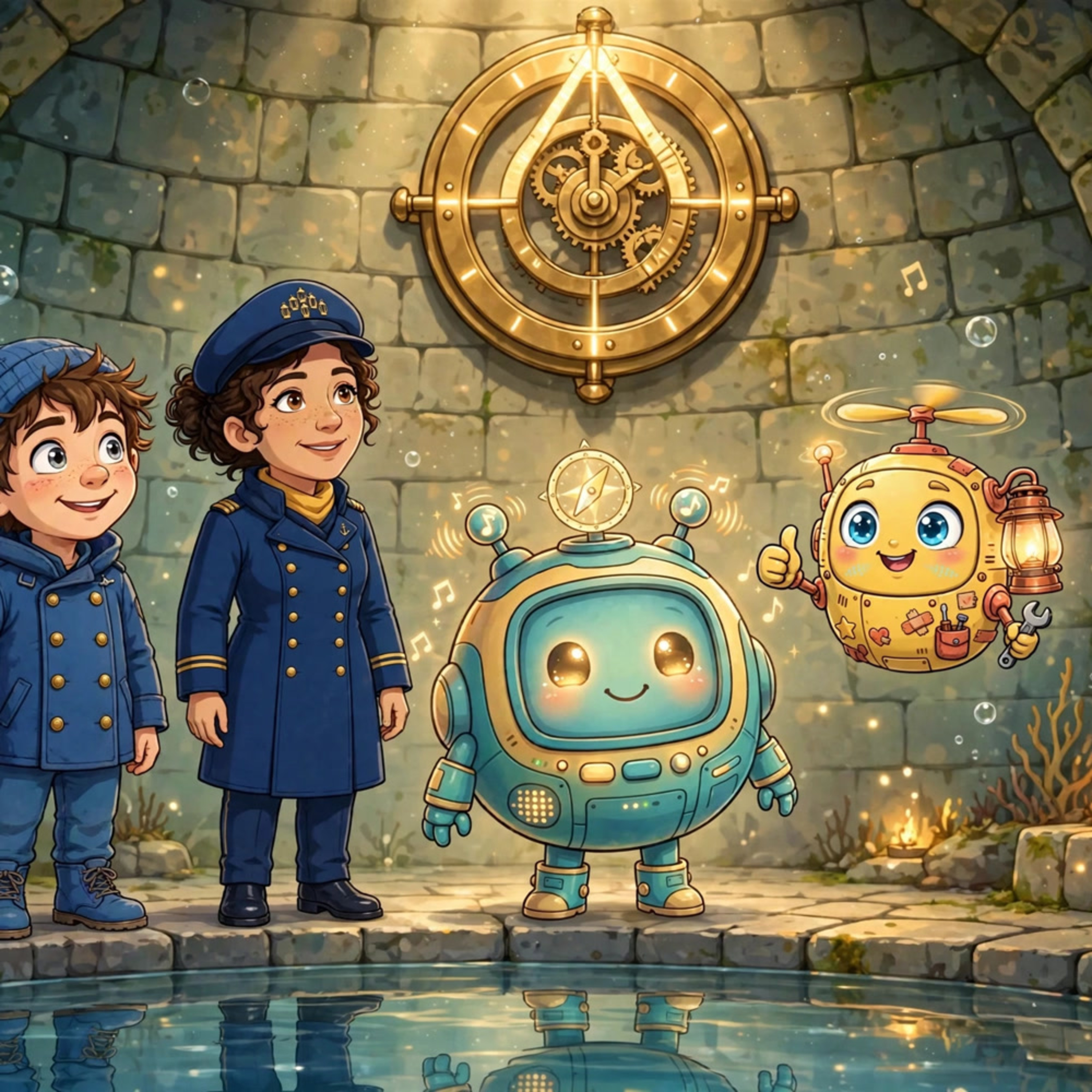
    Season 2, Episode 1: Nilo is on night watch when the Shy One returns: a small eighth light, far past every chart the harbour owns, blinking on every fourth count. The crew of the Nereid follows its patient road past the bay, the standing stones and the Trench, to a gate of twenty-four dark lamps that opens only in equal rows. And what waits behind the second, smaller gate? A warm deep-sea adventure with a counting song, fresh jokes and one very polite light. Learning topics: Multiples of 4: the Shy One blinks on every fourth count (4, 8, 12, 16, 20, 24, 28, 32, 36, 40, 44), and the crew predicts each blink before it lands Factors of 24: sharing twenty-four lamps into equal rows; rows of five leave four lamps over, rows of four make six rows and rows of three make eight rows, with nothing left over Factor pairs of 24: 1×24, 2×12, 3×8, 4×6; all the factors named: 1, 2, 3, 4, 6, 8, 12, 24 Counting road and gate together: six flashes × four counts = 24 counts, matching the twenty-four lamps on the gate #KidsPodcast #MathForKids #AudioAdventure #KidsStories #STEMKids #BedtimeStories
  • S1 · E12
    October 27 · 26 min

    The Night All Seven Lanterns Lit

    Learning topics: Counting what is already there: six of the seven lanterns already shining, named one by one Canadian money: paying an exact toll and working out what is left ($8.65 − $5 = $3.65) Tenths of a gauge: measuring lamp oil (from 0.2 up to 0.7 is five tenths; 0.8 − 0.5 = 0.3 left in the jar) The season's numbers gathered in one song (7 × 8 = 56, 14 + 6 + 14 + 6 = 40, 20 × 10 = 200, 8,000)

  • S1 · E11
    October 23 · 26 min

    The Harbour Market

    Learning topics: Coin and bill values: Canadian denominations (nickel 5¢, dime 10¢, quarter 25¢, loonie $1, toonie $2, $5 and $20 bills), taught through the animals on the coins Estimating a total cost: rope $6 + oil $4 + chart $3, "about thirteen", exact $13 Budgeting: the brass bell at $12 would take the total to $25, more than the $23.65 purse, so it cannot be bought; the $2 honey cakes fit Paying exactly and making change: the chart paid exactly with a toonie and a loonie; a $20 bill for $12 of goods, $8 change counted aloud

  • S1 · E10
    October 19 · 28 min

    How Heavy, How Full

    Learning topics: Capacity: measuring which jar holds more (short wide jar = 8 cupfuls beats tall thin jar = 6); "measuring beats guessing" Mass vs volume: two equal-size crates — cork floats (small mass) vs anchor chain (great mass) Time measured by counting: twenty cupfuls at ten counts each = 200 counts

  • S1 · E8
    October 17 · 26 min

    Tenths of the Sea

    Learning topics: Fractions to tenths: 3 of 10 steps under water = three tenths Fraction–decimal equivalence, said aloud: "three tenths, written 3 over 10, is the same as 0.3" Tenths as a measuring system: the beacon's glass gauge marked in ten parts, filled to seven tenths Comparing tenths: 0.6 beats 0.3; 5/10 = 0.5 is a half

  • S1 · E8
    October 11 · 25 min

    Sharing the Catch

    Learning topics: Division as fair sharing: 49 ÷ 4 = 12 with 1 left over Sharing in rounds (10 each, then 2 each) and checking by multiplication (4 × 12 + 1 = 49) Division as grouping: 12 full groups of 4 from 49, 1 left over Equal shares as a story condition (the door opens only for equal baskets)

  • S1 · E7
    October 8 · 28 min

    Rows of Light

    Episode 7 Learning topics: Multiplication as arrays: seven rows of eight Breaking multiplication apart: 5 × 8 = 40, 2 × 8 = 16, so 40 + 16 = 56 Checking an array from the other direction: eight rows of seven also make 56 Using multiplication inside an adventure problem without rote memorization

  • S1 · E6
    October 6 · 35 min

    The Vault of Big Numbers

    Episode 6 This episode is built around math topic: Whole numbers to 10,000 Place value: thousands, hundreds, tens, and ones Comparing and ordering large numbers Nearest thousand versus the next whole thousand Rounding to the nearest ten, hundred, and thousand in story context Addition and subtraction with large numbers

  • S1 · E5
    October 5 · 30 min

    The Longest Corridor

    Episode 5 This episode is built around math topic: measurement - length, the perimeter of a rectangle (14+6+14+6=40), and an introduction to area by counting rows.

  • S1 · E4
    October 5 · 30 min

    The Door Only One Shape Could Open

    Episode 4 This episode is built around math topic: geometry and spatial sense - symmetry and reflection, 3D shapes (prisms and pyramids), right angles, and grid location (three across, four down).

  • S1 · E3
    October 5 · 33 min

    The Logbook That Counted the Ocean

    Episode 3 This episode is built around math topic: data and probability - reading and comparing data (which night was brightest) and probability language (likely / unlikely / certain / impossible) for choosing a route.

  • S1 · E2
    October 5 · 37 min

    The Lantern That Blinked in Code

    Episode 2 This episode is built around math topic: patterns and algebra - repeating patterns, growing patterns, equality and the missing number, and step by step instructions.

Showing 1–19 of 19 episodes