Skip to content
Artwork for The Pragmatic Engineer
The Pragmatic Engineer · Thursday · 1 hr 40 min

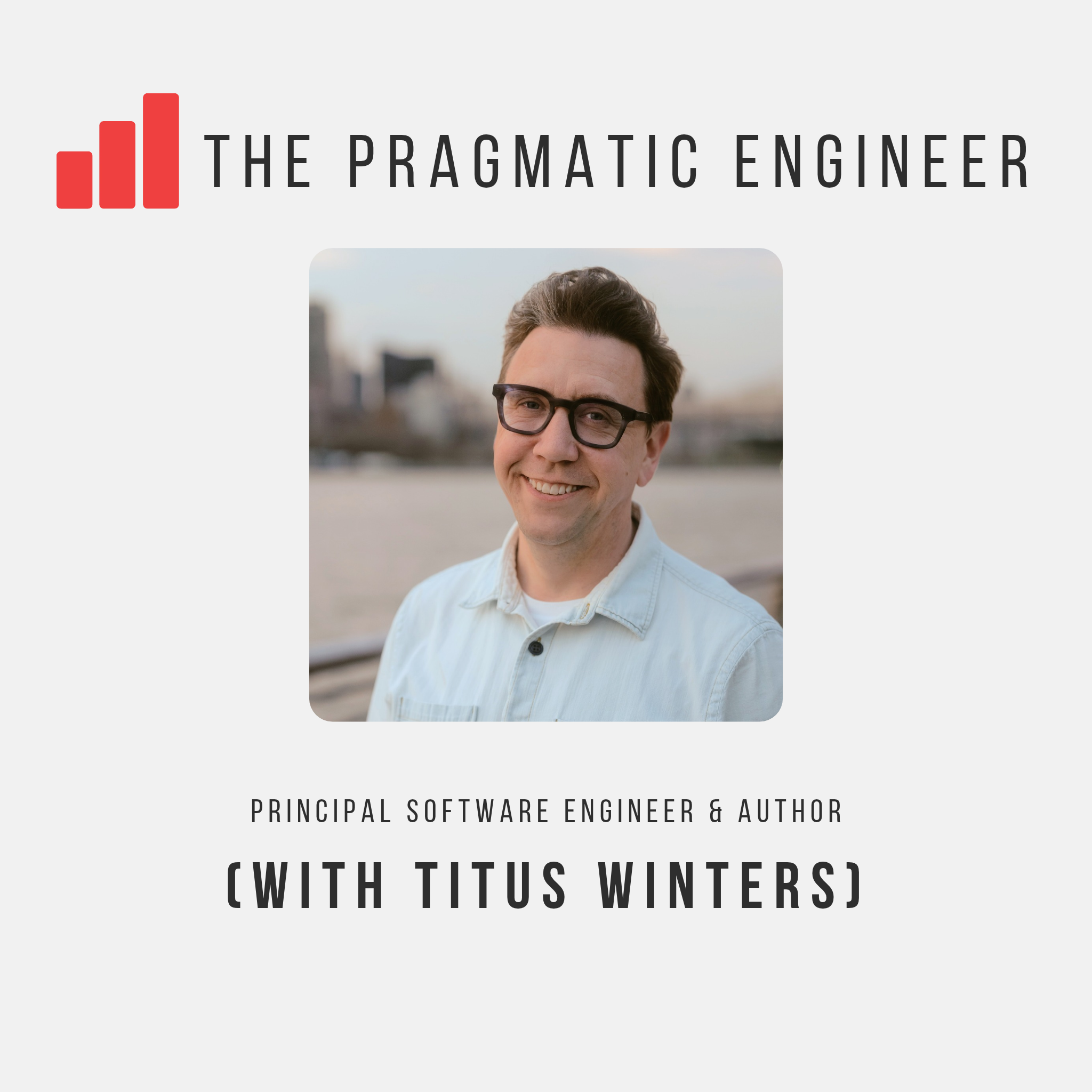
Software engineering at Google & CS education with Titus Winters

Brought to You By: • turbopuffer – a vector and full-text search engine built on object storage. It’s fast, cheap, and extremely scalable • Linear – the product development system for teams and agents • WorkOS – everything you need to make your app enterprise ready. — An engineer who helped create today’s software engineering curriculum now says to burn down almost all of it. What’s the cause of this contradiction? We find out from the lead author of Software Engineering at Google. Titus Winters spent more than a decade at Google, where he led its readability program and built Abseil, Google’s open-sourced foundational C++ libraries. He is currently a Senior Principal Scientist at Adobe, where he focuses on developer experience and productivity. In this episode of The Pragmatic Engineer podcast, Titus and I discuss how his team tackled a massive refactoring project across Google's 250-million-line C++ codebase, why Google made testing mandatory, and his work on updating the ACM/IEEE undergraduate computer science curriculum guidelines. We also explore why traditional productivity metrics miss some of AI’s biggest benefits, what needs to change in CS education, and how new engineers can stand out. Timestamps 00:00 Intro 07:01 Getting hired by Google 09:48 Finding his niche at Google 14:32 Why Google made testing mandatory 17:45 Why new engineers fear making mistakes 20:40 Abseil: C++ foundations at Google 23:09 Google’s massive C++ refactoring 30:48 AI for rewrites 39:07 Software Engineering at Google: the book 43:10 Google’s readability reviews 47:18 Why teams still matter 52:41 Psychological safety 58:17 Layoffs and culture 1:02:11 Measuring developer productivity 1:11:17 Rethinking CS education 1:22:56 What new grads should learn 1:32:08 Titus’s ideal software engineering curriculum 1:36:27 Advice for breaking into tech 1:38:35 Book recommendation — The Pragmatic Engineer deepdives relevant for this episode: • The state of the tech industry in 2026 • Inside Google's Engineering Culture • Slow down to speed up when working with AI agents • Measuring developer productivity? A response to McKinsey • How tech companies measure the impact of AI on software development • What is happening with code reviews? • When AI writes almost all code, what happens to software engineering? • Developer productivity with Dr. Nicole Forsgren (creator of DORA, co-creator of SPACE) • Measuring the impact of AI on software engineering – with Laura Tacho — Production and marketing by ⁠⁠⁠⁠⁠⁠⁠⁠https://penname.co/⁠⁠⁠⁠⁠⁠⁠⁠. For inquiries about sponsoring the podcast, email podcast@pragmaticengineer.com. Get full access to The Pragmatic Engineer at newsletter.pragmaticengineer.com/subscribe

0:00-1:40:12

transcript

No transcript — this publisher did not publish one.

show notes

Brought to You By:

• turbopuffer – a vector and full-text search engine built on object storage. It’s fast, cheap, and extremely scalable

• Linear – the product development system for teams and agents

• WorkOS – everything you need to make your app enterprise ready.

—

An engineer who helped create today’s software engineering curriculum now says to burn down almost all of it. What’s the cause of this contradiction? We find out from the lead author of Software Engineering at Google.

Titus Winters spent more than a decade at Google, where he led its readability program and built Abseil, Google’s open-sourced foundational C++ libraries. He is currently a Senior Principal Scientist at Adobe, where he focuses on developer experience and productivity.

In this episode of The Pragmatic Engineer podcast, Titus and I discuss how his team tackled a massive refactoring project across Google's 250-million-line C++ codebase, why Google made testing mandatory, and his work on updating the ACM/IEEE undergraduate computer science curriculum guidelines.

We also explore why traditional productivity metrics miss some of AI’s biggest benefits, what needs to change in CS education, and how new engineers can stand out.

Timestamps

00:00 Intro

07:01 Getting hired by Google

09:48 Finding his niche at Google

14:32 Why Google made testing mandatory

17:45 Why new engineers fear making mistakes

20:40 Abseil: C++ foundations at Google

23:09 Google’s massive C++ refactoring

30:48 AI for rewrites

39:07 Software Engineering at Google: the book

43:10 Google’s readability reviews

47:18 Why teams still matter

52:41 Psychological safety

58:17 Layoffs and culture

1:02:11 Measuring developer productivity

1:11:17 Rethinking CS education

1:22:56 What new grads should learn

1:32:08 Titus’s ideal software engineering curriculum

1:36:27 Advice for breaking into tech

1:38:35 Book recommendation

—

The Pragmatic Engineer deepdives relevant for this episode:

• The state of the tech industry in 2026

• Inside Google's Engineering Culture

• Slow down to speed up when working with AI agents

• Measuring developer productivity? A response to McKinsey

• How tech companies measure the impact of AI on software development

• What is happening with code reviews?

• When AI writes almost all code, what happens to software engineering?

• Developer productivity with Dr. Nicole Forsgren (creator of DORA, co-creator of SPACE) 

• Measuring the impact of AI on software engineering – with Laura Tacho

—

Production and marketing by ⁠⁠⁠⁠⁠⁠⁠⁠https://penname.co/⁠⁠⁠⁠⁠⁠⁠⁠. For inquiries about sponsoring the podcast, email podcast@pragmaticengineer.com.


Get full access to The Pragmatic Engineer at newsletter.pragmaticengineer.com/subscribe

links18

more episodes

All episodes