Skip to content
Artwork for The New Abnormal
Business

The New Abnormal

Sean Pillot de Chenecey

The New Abnormal podcast (which has over 250,000 downloads) focuses on 'Now / Next / Why'. My guests have include a wide variety of experts based in locations from Los Angeles to Shanghai, Rio to Beirut, and Helsinki to Melbourne. Those guests have included activists, creatives, writers, philosophers, strategists, psychologists, lecturers, futurists etc, and asking them to explain their views has led to some fascinating conversations. Re: my bio, I'm a futurist, public speaker, and author whose written two books - my first went to No1 in the business charts whilst my second was shortlisted for the 'Business Book of the Year' Awards. (I'll be writing a third as soon as time allows.) So, I hope you enjoy listening to the series - which was set up during the early days of Covid and is therefore divided into a series per year.  All rights reserved. #TheNewAbnormal podcast series © Sean Pillot de Chenecey 2020.


  • 20 episodes
  • Updated Yesterday

Episodes20

  • Yesterday · 45 min

    Clare Beaton-Wells "Using Foresight to Reimagine Australia’s Tomorrow"

    This episode of The New Abnormal podcast features Clare Beaton-Wells, based in Melbourne, who is a Strategic Policy Advisor and Future Generations Fellowship Lead at Foundations for Tomorrow. As a leader and specialist driving systems change, intergenerational collaboration, and policy innovation, she works across civil society, government & academia to drive impactful policy and projects that advance long-term thinking, sustainability and equity. With deep experience across government relations, policy leadership & advocacy, and cross-sectoral partnerships, Clare brings a dynamic approach to addressing complex global challenges. An accomplished public speaker, Clare has shared insights on long-term governance, sustainable development and future generations policy at high-level events, including internationally at the UN Summit of the Future. Clare is passionate about amplifying diverse voices, fostering intergenerational collaboration and driving long-term models of governance, and her work has been recognised with several awards. So, we discuss all of the above and more, in a dynamic conversation which I hope you’ll enjoy!

  • July 23 · 44 min

    Sabrina Sullivan "Unlocking What's Next"

    This episode of The New Abnormal podcast features the renowned strategist / futurist / facilitator, Sabrina Sullivan. In our conversation, she discusses her unconventional journey into foresight, the importance of imagination, and the leadership capabilities needed to thrive in an increasingly uncertain world. Sabrina traces her career from consulting and sustainability into strategic foresight, describing how graduate work on climate scenarios revealed that organisations often prefer comfortable summaries over genuinely provocative futures. This insight has shaped her career: helping leaders embrace uncertainty rather than avoid it. She discusses her work at Ford Motor Co, where foresight was embedded into strategic planning, innovation, product development and executive decision-making through scenarios, signals, and "orthodoxy flipping" to identify new opportunities. A major theme is the need to rethink leadership itself. She explains her ‘Leaders for Humanity’ game, which uses playful future scenarios to help leaders explore uncertainty, challenge assumptions and develop imagination rather than search for "correct" answers. The conversation also explores imagination as an increasingly vital capability. Sabrina argues that while organisations recognise its importance, few actively cultivate it. She highlights work with schools, executives and civic leaders to build futures literacy from an early age and create greater agency in shaping the future. Throughout the discussion, she emphasises that futures thinking is less about predicting tomorrow than developing the mindsets, relationships and confidence needed to navigate uncertainty. Sabrina concludes by encouraging individuals and organisations to become "future shapers" rather than passive "future takers"…

  • July 18 · 51 min

    Marie Stafford 'The Future 100, 2026'

    This episode of The New Abnormal podcast feature, Marie Stafford, Global Director, Intelligence at VML. In it, she spoke about the latest edition of VML’s Future 100 report and the broader forces shaping consumers, brands and culture. Unlike many annual trend reports, VML’s research is continuously updated, allowing the team to identify meaningful shifts rather than seasonal observations. The discussion centres on five macro themes underpinning this year’s report. The first, ‘Disoptimism’ captures a paradoxical mindset: people clearly recognise the political, economic and environmental challenges facing society, yet remain personally optimistic about their own futures. Closely connected is ‘Resilience Rising’ which argues that resilience has evolved from a reactive survival mechanism into an intentional life skill. The third theme ‘Metamorphic Lives’ reflects consumers’ growing desire for experiences that actively transform them. The fourth ‘Story Worlds’ explores the shift from passive media consumption towards immersive participation. The final macro theme ‘Future Archaeology’ examines how brands and consumers are rediscovering heritage, indigenous knowledge and craftsmanship as sources of innovation. The conversation then shifted to Marie’s observations from the latest Cannes Lions Festival. She identified several dominant themes emerging across the industry: first is a call to escape what she describes as the #AgeOfBeige. A second major theme focused on preserving uniquely human capabilities in the age of AI. Marie also highlights the growing strategic importance of creators. Another discussion centred on the value of ‘creative friction’. Finally, she illuminated how the debate around brand purpose has evolved. Throughout the discussion, Marie argues that while technology continues to transform every industry, the greatest opportunities lie in combining innovation with authentic human insight, creativity, resilience and cultural understanding. These qualities, she concludes, will define the brands best equipped to thrive amid continuing uncertainty… So, I hope you enjoyed listening to her as much as I did!

  • July 17 · 47 min

    Geci Karuri-Sebina ‘The African Foresight Network, Post-Activism, and Interconnected Capacities’

    This episode of The New Abnormal podcast features the Johannesburg-based ‘thinker, researcher, and sometimes do-er’ Geci Karuri-Sebina, who is an Assoc Professor at the WITS Southern Centre for Inequality Studies, Organiser at the Civic Tech Innovation Network, and Chair / Director of the Southern African Node of the Millennium Project. In what I hope you'll agree is a fascinating conversation, she discussed rethinking futures, activism, and development through more pluralistic and imaginative approaches. Drawing on her interdisciplinary background across technology, urban studies, and foresight, Geci explained her shift towards post-activism, arguing that conventional responses to crisis often reproduce the very systems they seek to change. Rather than prioritising action alone, she advocates deeper understanding, experimentation, and humility in the face of complexity. She also illuminated the emerging African Foresight Network, which seeks to cultivate futures thinking rooted in African and Global South perspectives, indigenous knowledge systems, and diverse conceptions of time. Geci discussed challenging linear, Western models of futures thinking and encouraging more culturally grounded approaches - she also critiques the dominance of reductionist foresight methods (e.g. the 2x2 scenario matrix) calling for richer, more inclusive epistemologies and methodologies. Turning to urban futures, Geci outlined her work on a decolonial critique of urban studies, arguing that African cities are often constrained by limiting narratives. She advocates moving beyond these imaginaries through experimentation and new narratives. The discussion concluded with her work on AI, development models, and an "Alt Lab" for social experimentation. Finally, she explained how creating better futures depends on strengthening imagination, inclusion, and institutional transformation...

  • July 16 · 50 min

    Julian Boulding 'The Cannes Review 2026'

    This episode of The New Abnormal podcast features Julian Boulding, Owner of TheNetworkOne. The organisation works with over 1000 agencies in over 100 countries, providing ‘open-source creativity’ and communications services from independent agencies for a growing number of leading international marketing companies. They also help independent agencies develop their own business internationally, through providing international partners, consulting resources and professional development programs. A renowned industry figure, each year Julian produces a much-quoted review of the annual Cannes Lions Festival, and this podcast was recorded on the day of its 2026 release. In it, Julian illuminates a range of the key talking points from the event, in what was a challenging year for the Lions… So, I hope you enjoy listening to him as much as I did, in what I hope you'll agree is a very insightful conversation!

  • July 1 · 45 min

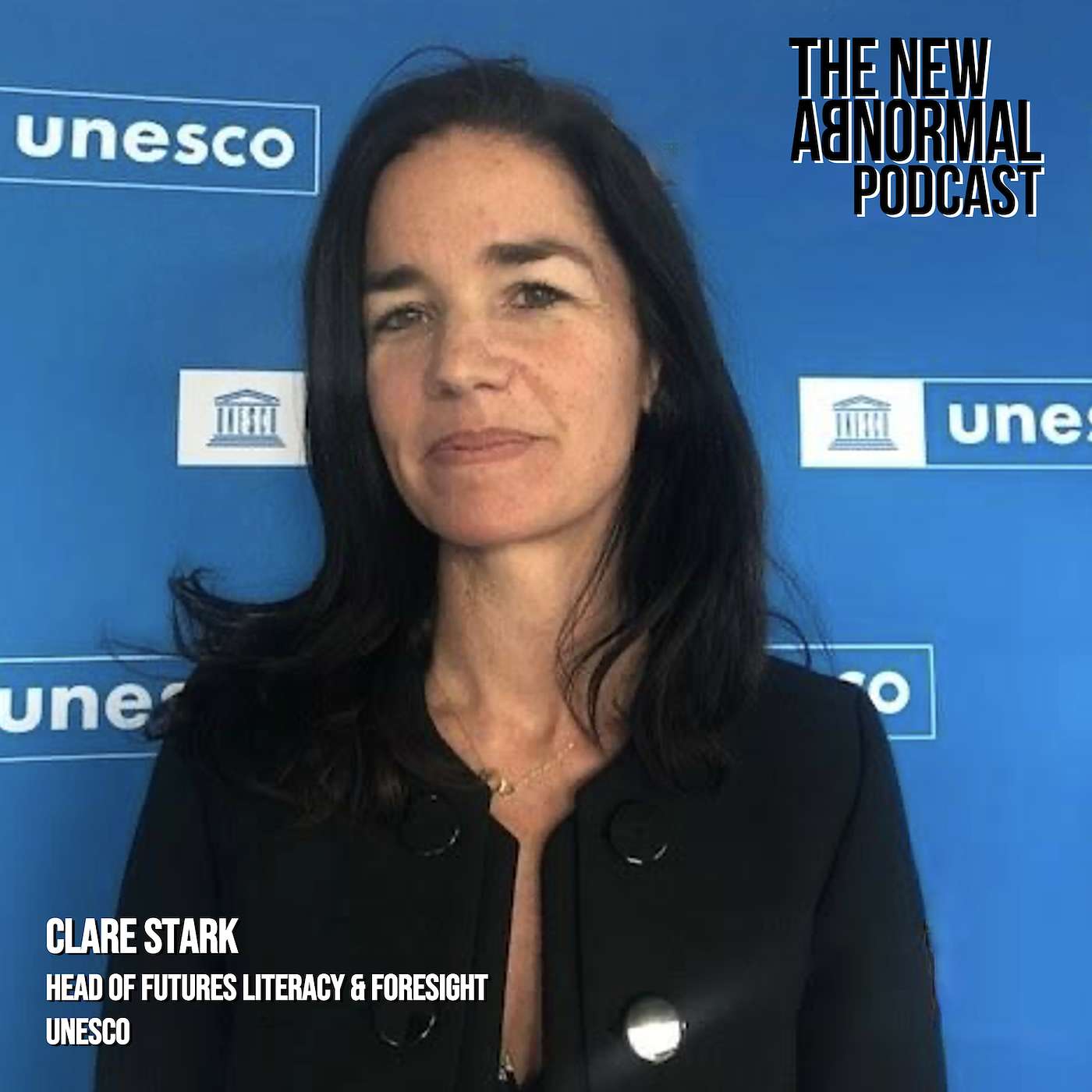
    Clare Stark 'Futures Literacy: Building Better Decisions for an Uncertain World'

    This episode of The New Abnormal podcast features Clare Stark, Head of Futures Literacy and Foresight at UNESCO - the United Nations Educational, Scientific and Cultural Organization. They’re a specialized UN agency dedicated to promoting world peace and security through international collaboration in education, arts, sciences, and culture. Headquartered in Paris, its mission spans 194 member states and encompasses several focus areas. Key Initiatives include World Heritage Sites, Global Education, Scientific & Ethical Standards, and Cultural Heritage Safeguarding. Clare is a dedicated professional with more than 20 years of experience in international development cooperation, she’s passionate about ensuring that technology leads to positive social transformations, and using futures literacy and foresight to inspire collective action to shape the futures we want, using evidence-based approaches to enhance anticipatory capacities. She covers a lot of ground in the podcast, including UNESCO's role in advancing futures literacy and anticipatory governance / Embedding foresight into national and int’l policymaking / The Global Anticipatory Policy Coalition / AI governance, AI readiness and responsible deployment / Climate anxiety & information anxiety / Trust, democracy and misinformation / Leadership through collective intelligence and collaboration / The importance of culture, history and indigenous knowledge in shaping future policy / Participatory foresight involving young people, educators and citizens / The future of education, creativity and public policy in an AI-enabled world. So, I hope you enjoy listening to her as much as I did, in what I hope you'll agree is a fascinating conversation re: the growing importance of anticipatory governance and futures thinking in addressing today's global challenges.

  • June 8 · 43 min

    Fatima-Zahra Ma-el-ainin 'Foresight, Social Transformation and Systemic Wellbeing'

    This episode of The New Abnormal podcast features Fatima-Zahra Ma-el-ainin, who is a psychologist, poet, and narrative architect reimagining how societies cultivate wellbeing. Her work sits at the intersection of systems work, knowledge design, and social transformation, informed by more than a decade of experience in systems mapping, programme design, and conversational leadership. Through global commissions, institutional partnerships, and field-building initiatives, she develops frameworks that elevate wellbeing from intervention to design principle. She currently serves on the Lancet-LSHTM Commission on the Emotional Determinants of Health, and co-leads the World Economic Forum’s Future50 Initiative. Previously, she co-founded a mental health social enterprise whose programs and curricula impacted seven million students in Morocco. A sought-after speaker, she has addressed audiences at the UK Parliament, the World Economic Forum’s Annual Meeting in Davos, the IAYMH Conference, and TEDx, among other platforms. So, I hope you enjoy listening to her as much as I did, in a dynamic conversation that takes in all of the above and more!

  • May 6 · 40 min

    Mark Bloomfield 'Making Sense of AI'

    This episode of The New Abnormal podcast features Dr Mark Bloomfield, who has leveraged AI and advanced technology for over fifteen years to drive innovation, transformation, and measurable impact across an array of businesses. Operating at the intersection of business, technology, and academia, he now works across multiple industries, advising organisations on how to apply AI and emerging technologies for real commercial impact with measurable results. As a Fellow at Cambridge Judge Business School, Mark teaches on executive education programmes. Hence, he's constantly immersed in the most cutting-edge thinking and practice, engaging with some of the brightest minds in academia and business. So, I hope you enjoy listening to him as much as I did, in what I hope you'll agree is a fascinating conversation.

  • April 30 · 45 min

    Tommaso Cesano 'The future role of design'

    This episode of The New Abnormal podcast features Tommaso Cesano, Founder of Osmo, a Strategy+Design studio focused on creating impactful products and experiences, aiming to build products for clients that can 'change their tomorrow'. Based in Italy, this award-winning studio works with ambitious companies who wish to be innovators in their industries. They believe in 'Curiosity, Adventurism, and Effort'. Along with their work for leading-edge companies, one of the many dynamic things they do is to oversee the visual identity of TEDx events in their beautiful home city of Brescia. We discuss Tommaso's design ethos, and along the way also cover the amazing bookzine that they publish (L'osmonauta), which has something of a cult following. So, if you're interested in hearing a detailed viewpoint on the issues impacting design agencies today, this one's for you!

  • April 20 · 33 min

    Jonas Drechsel ‘Futurist Archetypes and Futures Thinking’

    This episode of The New Abnormal podcast features the independent futurist Jonas Drechsel, who is also a member and co-initiator of the dynamic collective practice youngK Berlin; which is interdisciplinary, exploratory, and holistic. His mission as a solo freelance futurist is to make desirable futures more likely. As a critical futurist, he thinks about how the status quo works and what doesn't. As a real utopian, Jonas participates in the creation of exemplary projects that anticipate a better world. And thereby create spaces of possibility. We discuss those issues in this episode, where he explains why working with the youngK collective is so fun, as their culture, exchange, and collaboration contributes to shaping futures with joy and dedication. He also covers the leading-edge methodologies that he’s using, along with a piece he’s just written for the Journal for Futures Studies. And we cover the recent ‘Futurist Archetypes’ report that he produced, which has gained a lot of attention in the futurist-community. Whilst he insists that these archetypes are ironic and deliberately exaggerated, they’re also both funny and uncannily accurate. The crucial question for futurists is, of course, in which of them might you recognise yourself? So, I hope you enjoy the conversation!

  • April 15 · 31 min

    Alice Dimond 'Building Hopeful Futures'

    Series Six This episode of The New Abnormal features Alice Dimond, who leads Mō Āpōpō Future-Makers at Tokona te Raki, a project that equips young people to imagine and create better futures. This includes designing a toolkit grounded in Māori perspectives and stories, empowering young people to use these perspectives to navigate complexity and drive transformative change. In addition, she's a Fellow with Next Generation Foresight Practitioners, an Advisory Trustee at Ako Ōtautahi Learning City Trust and the National New Zealand Lead for the Futures Methods from Around the World project, where she explores how Māori worldviews, ways of thinking, organising, and acting can unlock new pathways to better futures. Alice has presented at global forums such as the Dubai Future Forum, World Futures Day, and the Building Hopeful Futures Festival. She's committed to using innovation to challenge dominant thinking, create new solutions, and drive change. So, we discuss all the above and I hope you enjoy the conversation!

  • April 8 · 40 min

    Marianna Maki-Teeri 'Futures Intelligence and AI-Native Foresight'

    This episode of The New Abnormal podcast features Marianna Maki-Teeri, Director of Foresight at Futures Platform. She’s an internationally recognized futurist with 15 years of experience in strategic foresight & futures studies, and helps organizations around the world make sense of change before it happens. At Futures Platform, Marianna leads an analysis team in translating emerging signals and “what ifs” into actionable insights, while advising clients on building and scaling their own foresight capabilities. Her work serves as a constant bridge between practice and theory. As a doctoral researcher at the Finland Futures Research Centre (FFRC), she investigates the synergy between human and machine intelligence in foresight work, exploring if and how AI can augment our capacity to reach more impactful outcomes. Marianna is driven by the conviction that foresight helps us become better architects of tomorrow. In an era of constant disruption, she works to ensure that systemic transformation is a deliberate choice rather than a passive drift. So, I hope you enjoy listening to Marianna as much as I did!

  • March 25 · 48 min

    Mikko Dufva 'Megatrends 2026 - towards a new social contract'

    This episode of The New Abnormal podcast features Mikko Dufva, the Leading Foresight Specialist at Sitra. Mikko works on projects across an array of areas including those related to the futures of synthetic biology, platform economies, forestry, mining and use of renewable energy. Sitra is a future-orientated organisation that promotes Finland’s competitiveness and the well-being of the Finnish people. They specialise in anticipating societal change, trying out new operating models and accelerating businesses aimed at creating sustainable well-being. In the interview, we discuss Sitra’s approach to examining trends, the tensions between them, and aligning with weak signals of change alongside mental images connected with the future, in order to make futures more approachable. We particularly focus on their ‘Megatrends 2026’ report which aims to strengthen Finns’ future-orientated thinking and their capacity for foresight in decision-making; but also discuss their newly released report the ‘Growth Atlas’ along with ‘IF magazine’ which focuses on weak signals. Finally, Mikko also illuminates a side project regarding the development of ways to explore futures through body and movement. So, I hope you enjoy listening to him as much as I did!

  • March 10 · 49 min

    Ramila Khafaji Zadeh 'The liberation of Imagination'

    This episode of the New Abnormal podcast features Ramila Khafaji Zadeh, who is a trainer and designer in Futures Literacy at Hanze University of Applied Sciences and part of the UNESCO Chair in Futures Literacy. She leads projects with governments, industry, higher education, and NGOs, and has previously worked with the UN on futures-oriented initiatives. With expertise in social innovation and governance, her current work focuses on transitions and how being futures-oriented, as a capability, helps navigate and shape these processes. In this episode we discuss all of the above, but do so by particularly focusing on her homeland of Iran. Thus she illuminates her views on why the freedom of imagination is so important regarding utilising plural perspectives to imagine plural futures. As she says "what happens next hasn't been written yet, and the next chapter cannot be written only by what we fear might return..."

  • February 27 · 39 min

    Warren Hatch 'Superforecasting - how to see the future first'

    This episode of The New Abnormal podcast features the renowned superforecaster Warren Hatch, CEO of Good Judgement Inc. He joined the organisation as a volunteer forecaster in a research project sponsored by the US government / funded by the intelligence community, where they emerged as the undisputed victor re: geopolitical forecasting. Warren then became a 'Superforecaster' and is now CEO of the commercial successor, Good Judgment Inc, a world leader in applying innovative probabilistic solutions to real-world decisions in order to forecast the future. He's assisted governments and private companies around the world to improve their foresight and quantify uncertainty. Warren's prior career was on Wall Street where he started at Morgan Stanley, and he earned his PhD from Oxford University. So, we discuss all of the above in what I hope you'll agree is a fascinating conversation, focusing around Warren's views on how to quantify subjective risks to deliver accurate and early foresight, thus enabling better decision making about the future.

  • February 26 · 37 min

    Maija Knutti 'Developing Futures-Orientated Policies'

    This episode of 'The New Abnormal' podcast features Maija Knutti, a Policy Analyst in the EU Policy Lab Foresight Team, which is part of the European Commission Joint Research Centre. As Maija explains, it's a collaborative place for innovative policymaking, which is intended to help policymakers think holistically and long-term. She goes into real detail in this episode about what her role entails, and in doing so explains the approaches taken and ranges of outputs delivered re: the ESPAS (European Strategy & Policy Analysis System), the ranges of foresight engagement tools & approaches that the teams utilise in the wide variety of reports they generate; along with highlighting the development of the Nordic Foresight Network, and an exciting forthcoming Polyfutures event. So, I hope you enjoy listening to her, as she covers the above dynamic issues!

  • February 16 · 44 min

    Muhammad Alaraby 'Futurists & Foresight in the Arab World'

    This episode of 'The New Abnormal' podcast features Muhammad Alaraby, an award-winning Arab futurist, policy analyst, and editor. He's also Head of Strategic Foresight at the independent think tank Future for Advanced Research and Studies (FARAS), which seeks to enrich public dialogue, support decision-making and enhance academic research pertaining to futures-issues that currently constitute a real problem in the Middle East region. In light of instability and unpredictability, the overarching goal of FARAS is to help ward off future shocks regarding these developments. So, we discuss the above, during a conversation in which Muhammad outlines his interest in 'the rugged terrain of futures, strategic foresight, geopolitics, geoeconomics and intelligence. Not forgetting history, literature, arts and philosophy...'

  • February 9 · 36 min

    Lisa Giuliani 'Teach the Future: a bridge to action'

    This episode of The New Abnormal podcast features Lisa Giuliani M.A., who is an experienced educator with over ten years of work in higher education, K-12, the private sector, and nonprofits. Dedicated to empowering young people and organizations through futures literacy, Lisa currently serves as the Director of the Young Voices Network at Teach the Future, which is based in the US but operates globally. Passionate about intergenerational equity, making futures thinking accessible, and inspiring youth leaders, she believes that collaboration across generations enhances organizations and communities. So, we discuss all of the above, along with the forthcoming World Futures Day, a 24hr global conversation about our common futures that brings together intergenerational voices from around the world to ensure youth perspectives are central to the global dialogue. In particular, regarding this conversation, Lisa explains how Teach the Future, in partnership with the Millennium Project, launched the Young Voices Edition. So, I hope you enjoy listening to her as much as did - and make sure you listen into World Futures Day on 1st March!

  • February 4 · 40 min

    Deborah Hayek 'An expert guide to Corporate Foresight'

    This episode of The New Abnormal podcast features Deborah Hayek, who leads Foresight & Innovation at Servus Credit Union, in Canada. She brings over a decade of experience integrating strategic foresight into business strategy within major financial institutions. Previously, at the forefront of Manulife's Global Innovation team, Deborah served as Head of Strategic Foresight, driving foresight initiatives across business lines and shaping innovation strategy through macro trend analysis and immersive engagement tools. Prior to that, she built and led the future-focused R&D team within Desjardins’s Innovation Lab. In parallel, Deborah designs and teaches executive education at HEC Montréal, equipping senior leaders with the methods and mindset to navigate uncertainty and seize future opportunities. Through bilingual instruction, she aims to make strategic foresight both practical and accessible to leaders shaping tomorrow’s economy. She discusses all of the above in our discussion, which I hope you find as interesting as I did. And you can read her newsletter on corporate foresight 'The Sparkline' on Substack...

  • January 30 · 52 min

    Kateryna Ostrovska 'Ukraine, strategic healthcare management, and anticipatory governance'

    This episode of #TheNewAbnormal podcast features Kateryna Ostrovska, who is a health policy and systems strategist with a background in family medicine and leadership experience across Ukraine’s public and private healthcare sectors. She's worked in conflict-affected regions of Ukraine as a Health Governance Specialist with the United Nations Development Programme, and as a consultant with Deloitte, contributing to the USAID Health Reform Support Project on health workforce policy. Her work focuses on strategic healthcare management, health systems strengthening, evidence-informed policymaking, and the use of foresight and anticipatory governance to navigate uncertainty. She’s a member of the Association of Professional Futurists, the Foresight Europe Network, and the European Health Futures Forum. So, we discuss the above in what I hope you’ll find is a fascinating conversation.