Skip to content
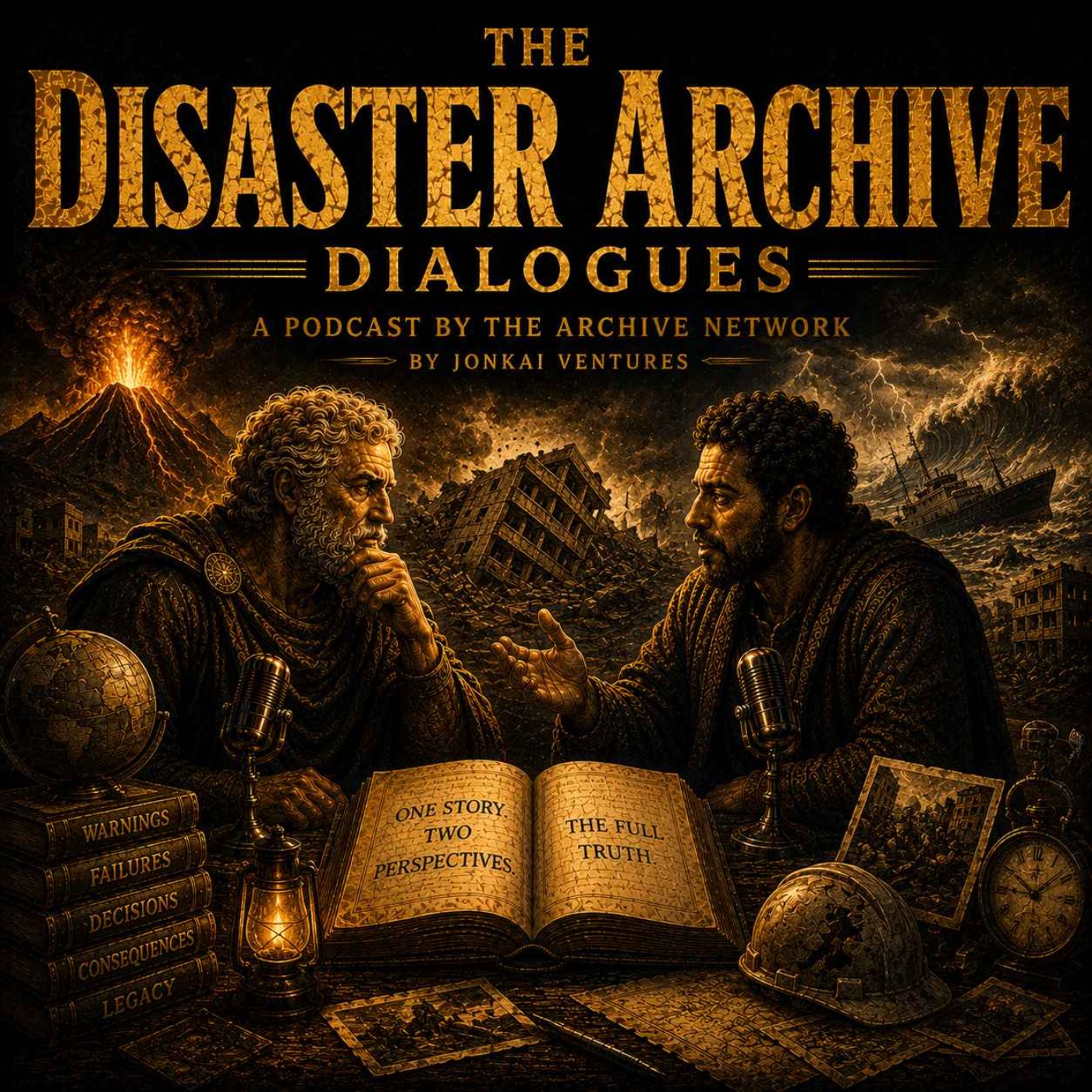
Artwork for The Disaster Archive Dialogues
The Disaster Archive Dialogues · Friday · 34 min

Ebola Outbreak

In the borderlands of Guinea, Liberia, and Sierra Leone, there was no alarm. No one expected the world to change because of a child’s fever. Yet, in these forests and villages, the ordinary would soon become unthinkable.In this corner of West Africa, daily survival was shaped by movement and kinship. Women crossed district lines to sell cassava. Children were carried from home to home, families gathering for funerals and weddings, with little regard for the borders drawn on a map. The world operated on the rhythm of markets and seasons, not the schedules of foreign health agencies. Villages were connected by footpaths and bush roads, and the sense of community extended beyond any official boundary. This was not isolation but a web of practical connections that kept everyone going. But beneath the surface, this mobility was both strength and risk.Aurelius and Malik take on this case in full — 5 chapters, 34 minutes, one complete story.Learn more at: https://thedisasterarchive.com/disaster/ebola-outbreak The Disaster Archive Dialogues is part of The Archive Network by Jonkai Ventures. In every episode, curators Aurelius and Malik take one catastrophe and work through it from the world before to the legacy after — one reconstructing the sequence, the other pressing on the human cost. The Archive Network is an independent, solo-run project. Everything is free, with no ads and no paywalls. Support doesn't unlock anything; it simply keeps the work going: https://thearchivenetwork.com/support Explore this archive: https://thedisasterarchive.com Discover more archives and stories: https://thearchivenetwork.com Hosted on Acast. See acast.com/privacy for more information.

0:00-34:21

transcript

No transcript — this publisher did not publish one.

show notes

In the borderlands of Guinea, Liberia, and Sierra Leone, there was no alarm. No one expected the world to change because of a child’s fever. Yet, in these forests and villages, the ordinary would soon become unthinkable.In this corner of West Africa, daily survival was shaped by movement and kinship. Women crossed district lines to sell cassava. Children were carried from home to home, families gathering for funerals and weddings, with little regard for the borders drawn on a map. The world operated on the rhythm of markets and seasons, not the schedules of foreign health agencies. Villages were connected by footpaths and bush roads, and the sense of community extended beyond any official boundary. This was not isolation but a web of practical connections that kept everyone going. But beneath the surface, this mobility was both strength and risk.Aurelius and Malik take on this case in full — 5 chapters, 34 minutes, one complete story.Learn more at: https://thedisasterarchive.com/disaster/ebola-outbreak

The Disaster Archive Dialogues is part of The Archive Network by Jonkai Ventures. In every episode, curators Aurelius and Malik take one catastrophe and work through it from the world before to the legacy after — one reconstructing the sequence, the other pressing on the human cost.

The Archive Network is an independent, solo-run project. Everything is free, with no ads and no paywalls. Support doesn't unlock anything; it simply keeps the work going:

https://thearchivenetwork.com/support

Explore this archive:

https://thedisasterarchive.com

Discover more archives and stories:

https://thearchivenetwork.com


Hosted on Acast. See acast.com/privacy for more information.

links1

more episodes

All episodes