Skip to content
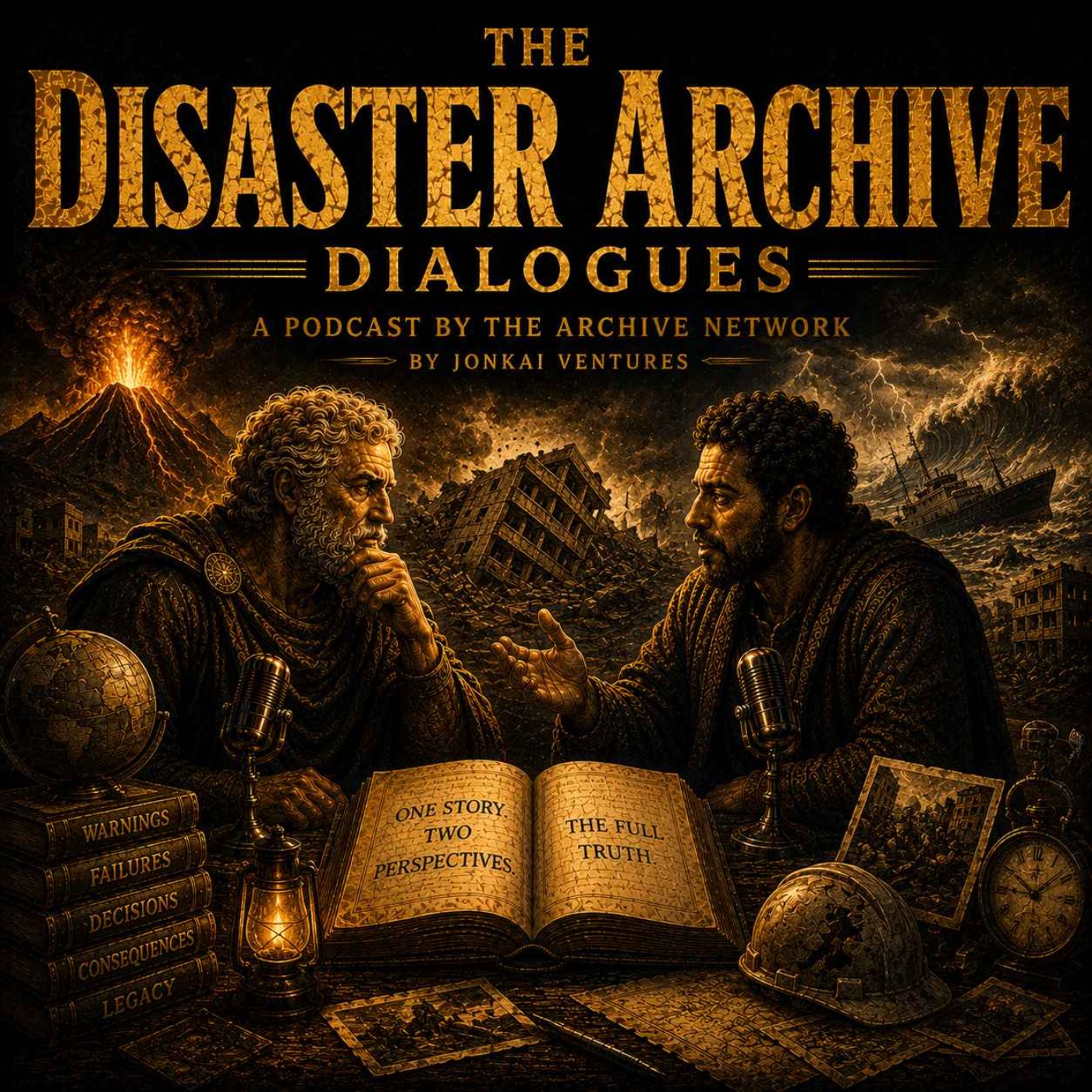
Artwork for The Disaster Archive Dialogues
The Disaster Archive Dialogues · Thursday · 33 min

Beirut Explosion

A city’s lifeline runs through its port, but sometimes the greatest threats linger not in open waters, but in the shadows of routine. In Beirut, safety was measured by the familiar hum of cranes, the shuffle of paperwork, and the locked doors of a warehouse hiding a silent, growing risk.Beirut’s port was the city’s beating heart—a place where commerce, history, and daily life converged in a tight space between the Mediterranean and the urban skyline. The port wasn’t distant from the city’s rhythm. It was woven into neighborhoods like Gemmayzeh and Mar Mikhaël, where people lived and worked with cranes and silos as part of their everyday view. This proximity blurred the line between industry and home, making the port both vital and vulnerable. On the surface, order seemed to rule. Containers moved. Forms were stamped. Cargo came and went. But beneath the routine, the machinery was fragile, and the sense of safety was more illusion than reality.Aurelius and Malik take on this case in full — 5 chapters, 33 minutes, one complete story.Learn more at: https://thedisasterarchive.com/disaster/beirut-explosion The Disaster Archive Dialogues is part of The Archive Network by Jonkai Ventures. In every episode, curators Aurelius and Malik take one catastrophe and work through it from the world before to the legacy after — one reconstructing the sequence, the other pressing on the human cost. The Archive Network is an independent, solo-run project. Everything is free, with no ads and no paywalls. Support doesn't unlock anything; it simply keeps the work going: https://thearchivenetwork.com/support Explore this archive: https://thedisasterarchive.com Discover more archives and stories: https://thearchivenetwork.com Hosted on Acast. See acast.com/privacy for more information.

0:00-33:03

transcript

No transcript — this publisher did not publish one.

show notes

A city’s lifeline runs through its port, but sometimes the greatest threats linger not in open waters, but in the shadows of routine. In Beirut, safety was measured by the familiar hum of cranes, the shuffle of paperwork, and the locked doors of a warehouse hiding a silent, growing risk.Beirut’s port was the city’s beating heart—a place where commerce, history, and daily life converged in a tight space between the Mediterranean and the urban skyline. The port wasn’t distant from the city’s rhythm. It was woven into neighborhoods like Gemmayzeh and Mar Mikhaël, where people lived and worked with cranes and silos as part of their everyday view. This proximity blurred the line between industry and home, making the port both vital and vulnerable. On the surface, order seemed to rule. Containers moved. Forms were stamped. Cargo came and went. But beneath the routine, the machinery was fragile, and the sense of safety was more illusion than reality.Aurelius and Malik take on this case in full — 5 chapters, 33 minutes, one complete story.Learn more at: https://thedisasterarchive.com/disaster/beirut-explosion

The Disaster Archive Dialogues is part of The Archive Network by Jonkai Ventures. In every episode, curators Aurelius and Malik take one catastrophe and work through it from the world before to the legacy after — one reconstructing the sequence, the other pressing on the human cost.

The Archive Network is an independent, solo-run project. Everything is free, with no ads and no paywalls. Support doesn't unlock anything; it simply keeps the work going:

https://thearchivenetwork.com/support

Explore this archive:

https://thedisasterarchive.com

Discover more archives and stories:

https://thearchivenetwork.com


Hosted on Acast. See acast.com/privacy for more information.

links1

more episodes

All episodes