Skip to content
Artwork for The Deep Dive Lab: Unraveling Materials Science
The Deep Dive Lab: Unraveling Materials Science · September 17 · 20 min

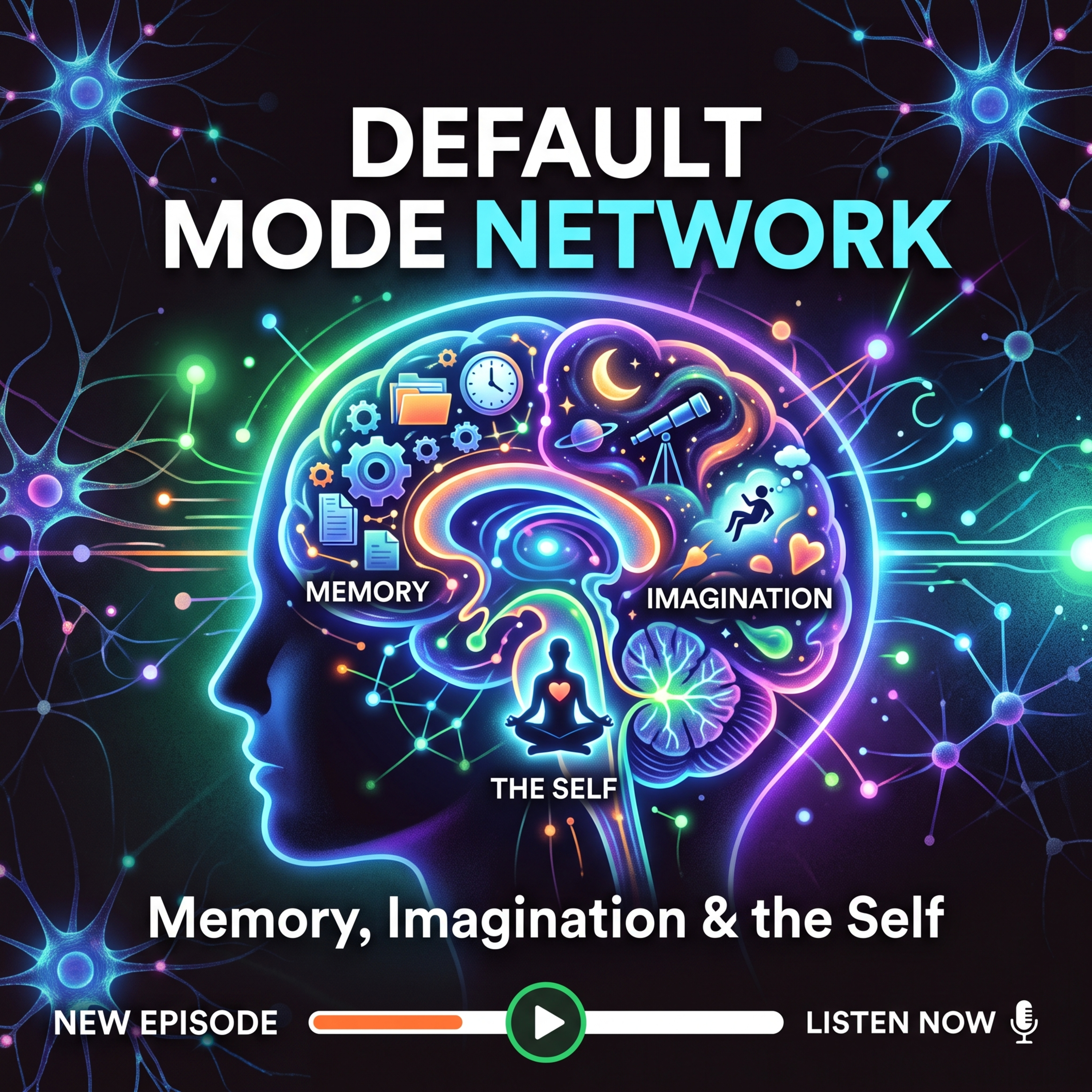
Default Mode Network: Memory, Imagination & the Self

You’re sitting still. No phone. No conversation. No task. So what is your brain doing? Quite a lot. 🧠 This episode dives into the Default Mode Network (DMN)—a large-scale brain network that becomes especially important when our attention turns inward. We’ll follow the surprising story of how neuroscientists discovered that the supposedly “resting” brain is anything but passive, then explore how the DMN contributes to memory, imagination, self-reflection, future thinking, and understanding other people. But there’s a bigger mystery: how does the brain switch between its inner world and the outside world? The salience network may help coordinate that transition. And when these network dynamics become disrupted, researchers have linked them to phenomena such as attention lapses in ADHD and altered connectivity in depression. 🔬 We’ll also examine what neuroscience actually tells us about mindfulness and meditation—and whether they can change activity within this remarkable network. 🧘‍♂️ #Neuroscience #DefaultModeNetwork #BrainScience #MindWandering #Meditation #ADHD #Depression Sources: Raichle et al., PNAS (2001); Greicius et al., PNAS (2003); Menon, Trends in Cognitive Sciences (2011); Fassbender et al., Brain Research (2009); Kaiser et al., JAMA Psychiatry (2015); Brewer et al., PNAS (2011).


0:00-20:59

transcript

No transcript — this publisher did not publish one.

show notes

You’re sitting still. No phone. No conversation. No task. So what is your brain doing?

Quite a lot. 🧠

This episode dives into the Default Mode Network (DMN)—a large-scale brain network that becomes especially important when our attention turns inward. We’ll follow the surprising story of how neuroscientists discovered that the supposedly “resting” brain is anything but passive, then explore how the DMN contributes to memory, imagination, self-reflection, future thinking, and understanding other people.

But there’s a bigger mystery: how does the brain switch between its inner world and the outside world? The salience network may help coordinate that transition. And when these network dynamics become disrupted, researchers have linked them to phenomena such as attention lapses in ADHD and altered connectivity in depression. 🔬

We’ll also examine what neuroscience actually tells us about mindfulness and meditation—and whether they can change activity within this remarkable network. 🧘‍♂️

#Neuroscience #DefaultModeNetwork #BrainScience #MindWandering #Meditation #ADHD #Depression

Sources: Raichle et al., PNAS (2001); Greicius et al., PNAS (2003); Menon, Trends in Cognitive Sciences (2011); Fassbender et al., Brain Research (2009); Kaiser et al., JAMA Psychiatry (2015); Brewer et al., PNAS (2011).