Skip to content
Artwork for The Deep Dive
The Deep Dive · June 10 · 21 min

We Have Genetically Engineered Live Humans For The First Time

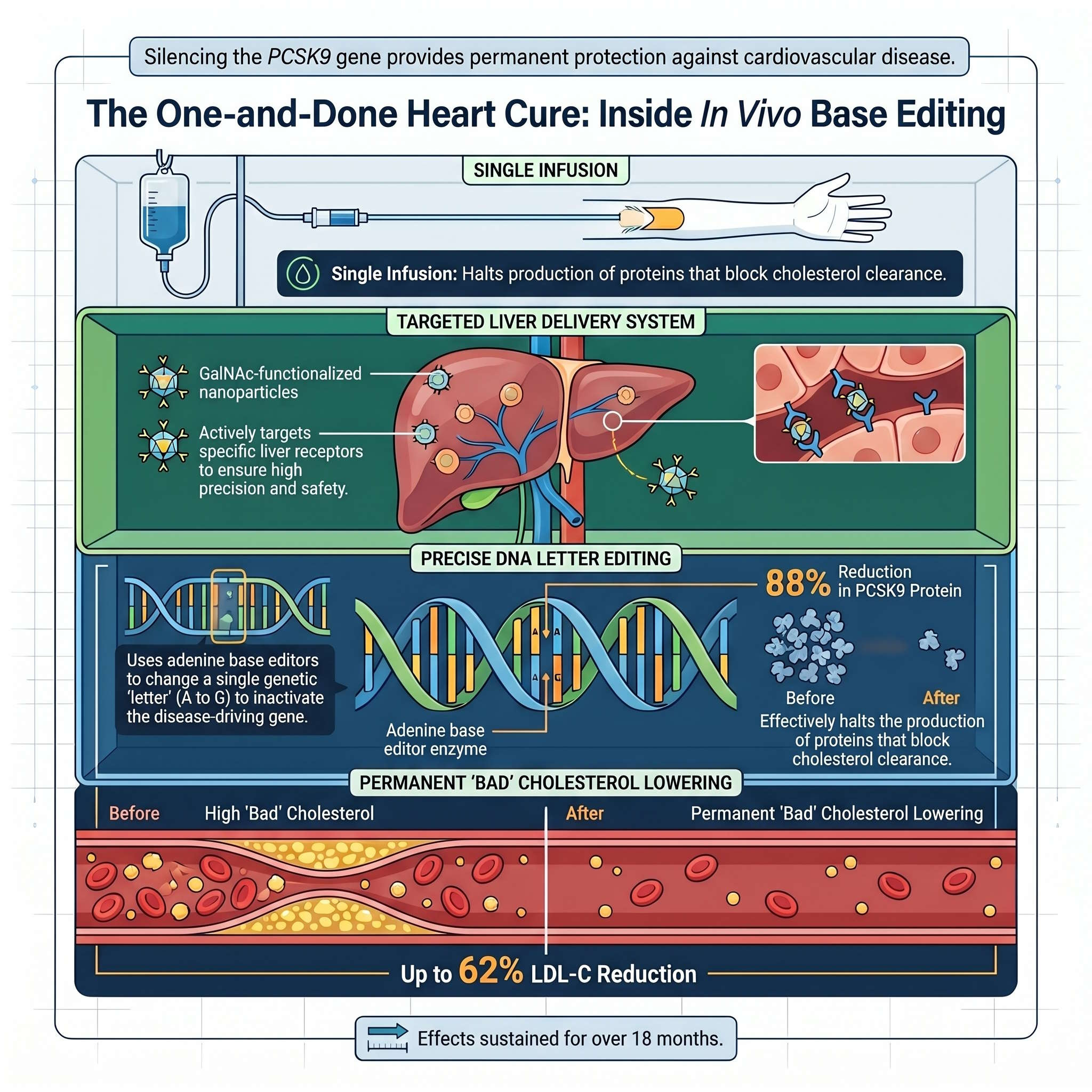
Recent clinical findings show that VERVE-102, an innovative in vivo base editing medication, successfully lowers LDL cholesterol by permanently deactivating the PCSK9 gene in the liver. Data from the Heart-2 trial indicates that a single infusion can reduce harmful cholesterol levels by as much as 62%, with results remaining stable for up to 18 months. This genetic medicine approach mimics naturally occurring protective mutations to offer a potential one-time treatment for patients with hypercholesterolemia who currently rely on chronic daily or monthly therapies. Additionally, the FDA has introduced a "plausible mechanism" regulatory pathway to expedite the approval of such ultra-rare disease and targeted genetic treatments. Beyond the liver, researchers are expanding base editing and epigenetic editing technologies to address diverse conditions like sickle cell disease and beta-thalassemia. These advancements signal a major transition in healthcare from managing symptoms to fixing the underlying molecular causes of disease.

0:00-21:04

transcript

No transcript — this publisher did not publish one.

show notes

Recent clinical findings show that VERVE-102, an innovative in vivo base editing medication, successfully lowers LDL cholesterol by permanently deactivating the PCSK9 gene in the liver. Data from the Heart-2 trial indicates that a single infusion can reduce harmful cholesterol levels by as much as 62%, with results remaining stable for up to 18 months. This genetic medicine approach mimics naturally occurring protective mutations to offer a potential one-time treatment for patients with hypercholesterolemia who currently rely on chronic daily or monthly therapies. Additionally, the FDA has introduced a "plausible mechanism" regulatory pathway to expedite the approval of such ultra-rare disease and targeted genetic treatments. Beyond the liver, researchers are expanding base editing and epigenetic editing technologies to address diverse conditions like sickle cell disease and beta-thalassemia. These advancements signal a major transition in healthcare from managing symptoms to fixing the underlying molecular causes of disease.

more episodes

All episodes