The Neuroscience of Grief and God’s Comfort
transcript
show notes
The Neuroscience of Grief and God's Comfort
SHOW NOTES
Grief is one of the most universal human experiences, yet it is never experienced exactly the same way twice.
Most people think of grief as something that follows death, but grief can emerge after any significant loss. We may grieve the loss of a loved one, a marriage, a dream, our health, financial security, a relationship, or even the life we thought we would be living by now.
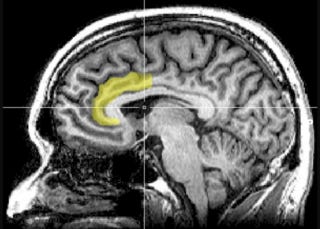
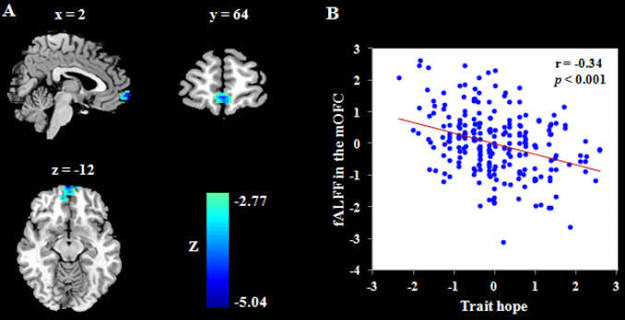
As both a mental health professional and a student of neuroscience, I am continually amazed by how deeply grief affects the human mind and body. Research shows that grief impacts brain regions involved in attachment, memory, emotion, and even physical pain. In many ways, grief reflects the brain's attempt to adapt to a reality it never wanted to face.
The challenge is that our minds do not update overnight.
Our heads may know what has happened, but our hearts, our habits, and our expectations often take much longer to catch up. This is one reason grief can feel confusing, exhausting, and unpredictable. It is also why grief can resurface months or even years later.
In today's episode, we explore grief through the lens of Scripture, psychology, and neuroscience. We'll look at Psalm 34, Psalm 40, and the story of Nehemiah rebuilding the walls of Jerusalem.
Nehemiah's story reminds us that rebuilding is rarely neat or easy. The people worked with a tool in one hand and a weapon in the other. The enemies had not disappeared. Some of the older men wept because the new temple did not look like the one they remembered. Yet God was still present in the process.
Many of us find ourselves in a similar season.
Sometimes we are grieving what was lost.
Sometimes we are grieving what never happened.
Sometimes we are grieving the life we imagined but never received.
Yet God is not intimidated by broken places. He is not discouraged by the rubble. He is not surprised by the detours. The same God who helped Nehemiah rebuild one stone at a time is still restoring lives today.
Healing does not always mean returning to what once was. Often, it means allowing God to build something new while carrying the memory of what has been lost.
If you are walking through grief today, my prayer is that this episode reminds you that God has not abandoned you in the rebuilding. He is near to the brokenhearted. He is faithful in the waiting. And He who began a good work in you will be faithful to complete it.
Scriptures Referenced
Psalm 34:18Psalm 40:1–3Nehemiah 4:17–18Philippians 1:6
Connect with Dr. April Joy:
Connect with Dr. April Joy:
Substack: The Christian Mind Reset
Follow along for daily encouragement, biblical meditation, neuroscience insights, and practical tools for renewing your mind.
If you liked today’s episode, please subscribe, leave a review, follow, like, or share. You can find me on Instagram at @thechristianpsychnp and also on Instagram and Substack at The Christian Mind Reset for more Scripture, neuroscience, and practical tips for renewing your mind.
My eBook, The Christian Mind Reset: A 28-Day Psalms Guide to Biblical Meditation, Neuroscience, and Renewing Your Mind, is available in my Stan Store at https://stan.store/thechristianpsychnp
Instagram: https://www.instagram.com/THECHRISTIANPSYCHNP
Disclaimer: This podcast is for educational and informational purposes only. It contains general information and is not medical, mental health, therapy, or healthcare advice. Listening to this podcast does not establish a provider-patient relationship. Always consult your qualified healthcare provider regarding medical or mental health concerns and before making changes to your healthcare routine.
If you are experiencing significant emotional distress, please seek support from a qualified healthcare professional, licensed Christian counselor, or pastor.
Comments, emails, and messages are not monitored for emergencies and cannot be used to obtain medical or mental health advice. If you are experiencing a medical, psychiatric, or safety emergency, call 911, contact your local emergency services, or go to the nearest emergency department immediately.
APA REFERENCES
American Psychiatric Association. (2022). Diagnostic and statistical manual of mental disorders (5th ed.). https://doi.org/10.1176/appi.books.9780890425596
Bonanno, G. A. (2004). Loss, trauma, and human resilience: Have we underestimated the human capacity to thrive after extremely aversive events? American Psychologist, 59(1), 20–28.
Kübler-Ross, E. (1969). On death and dying. New York, NY: Macmillan.
O’Connor, M. F. (2022). The grieving brain: The surprising science of how we learn from love and loss. New York, NY: HarperOne.
Shear, M. K. (2015). Complicated grief. New England Journal of Medicine, 372(2), 153–160.
Stroebe, M., & Schut, H. (1999). The dual process model of coping with bereavement: Rationale and description. Death Studies, 23(3), 197–224.
Stroebe, M., & Schut, H. (2010). The dual process model of coping with bereavement: A decade on. Omega: Journal of Death and Dying, 61(4), 273–289.
This is a public episode. If you would like to discuss this with other subscribers or get access to bonus episodes, visit thechristianmindreset.substack.com