Skip to content
Artwork for The AWS Developers Podcast
The AWS Developers Podcast · Wednesday · 51 min

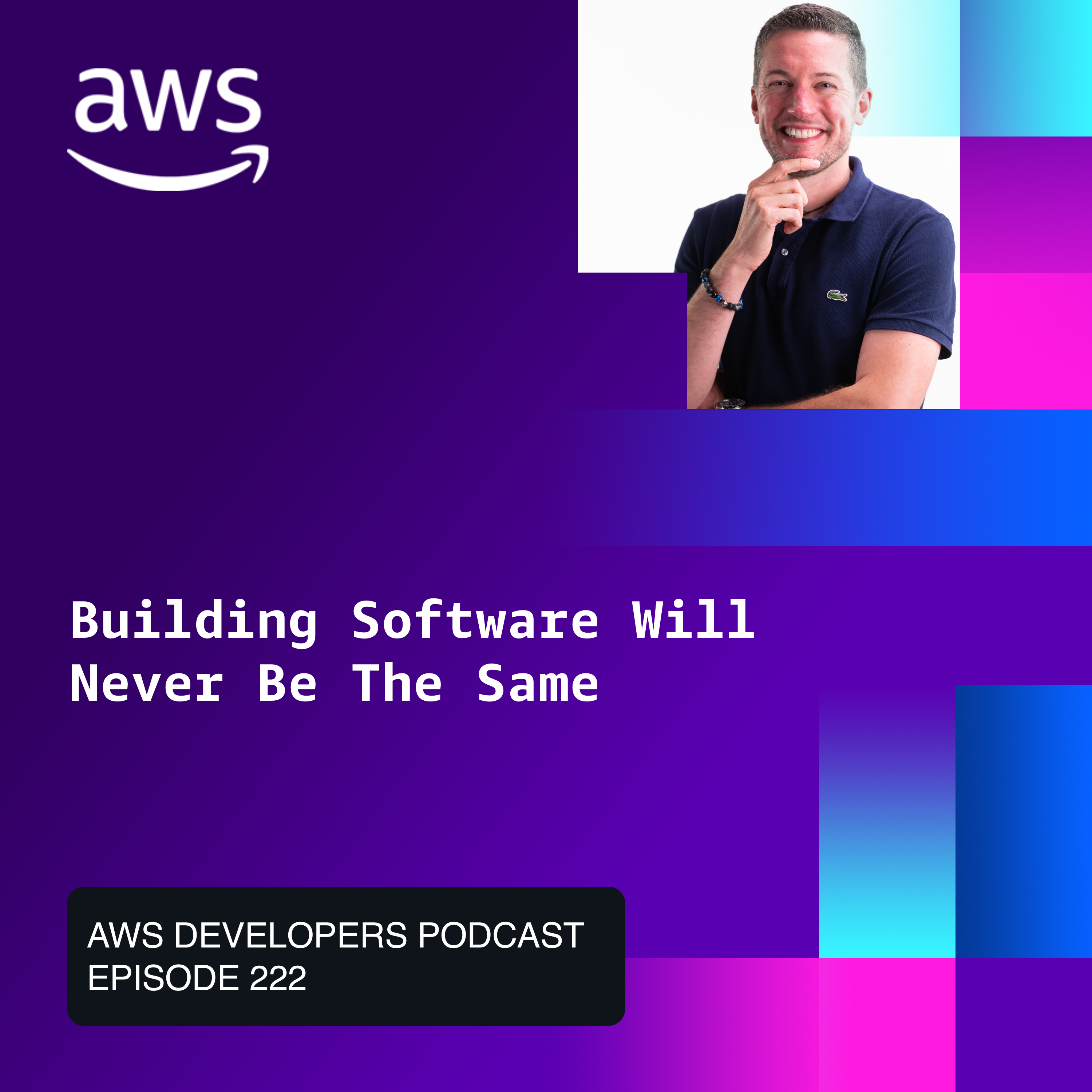
Building Software Will Never Be The Same

Most developers say AI makes them more productive. Most companies say their teams aren't shipping faster. What's going on? In this special solo episode, Romain unpacks the data behind the "acceleration whiplash," walks through a four-level AI maturity framework built from hundreds of customer conversations, and shares the practical lessons that separate teams getting incremental gains from those achieving 10x outcomes. This is a recording of his AI-DLC presentation, delivered at the AWS Summit in Zurich and iterated based on feedback from startups, enterprises, and digital-native companies across Europe. Key topics covered: • The adoption paradox: individual productivity up, team delivery flat • Why vibe coding is a mirage for production systems • Theory of constraints applied to AI-era software development • The four-level AI maturity framework: Traditional, AI-Assisted, AI-Augmented, and AI-Native • From prompt engineering to context engineering to loop engineering • Cross-functional teams and the evolution of Amazon's two-pizza teams • AI-DLC workshops: mob elaboration, construction bolts, and continuous delivery • Building AI fluency across your organization • The technology stack for AI-native development • Werner Vogels' Renaissance Developer and T-shaped engineers Chapters: 00:00 Introduction and why this episode exists 01:28 The evolution of coding assistants (2004–2026) 05:01 Systems of agents and software factories 06:27 The adoption paradox: faster developers, slower teams 09:05 Vibe coding is a mirage 10:12 Theory of constraints and The Phoenix Project 12:17 You can't bolt AI on existing workflows 13:03 Start with why: what are you optimizing for? 15:33 The four-level AI maturity framework 24:30 Level 3 and 4: loop engineering and frontier teams 26:57 People, process, and technology transformation 37:56 The AI-DLC technology stack 41:09 Mindset: the Renaissance Developer 43:24 Practical lessons learned at every level Faros AI Engineering Report 2026 — The Acceleration Whiplash Amazon's Cost-to-Serve Software Metric Amazon Science — Measuring Software Development Effectiveness Werner Vogels' re:Invent 2025 Keynote — The Renaissance Developer Boris Cherny on Loop Engineering Netflix CPTO Elizabeth Stone — Systems Thinkers in the AI Era Strands Agents — Open-Source Agentic Framework Kiro — Spec-Driven Development Amazon Bedrock AgentCore The Phoenix Project — Gene Kim, Kevin Behr, and George Spafford Start with Why — Simon Sinek Team Topologies — Matthew Skelton and Manuel Pais

0:00-51:13

transcript

No transcript — this publisher did not publish one.

show notes

Most developers say AI makes them more productive. Most companies say their teams aren't shipping faster. What's going on? In this special solo episode, Romain unpacks the data behind the "acceleration whiplash," walks through a four-level AI maturity framework built from hundreds of customer conversations, and shares the practical lessons that separate teams getting incremental gains from those achieving 10x outcomes. This is a recording of his AI-DLC presentation, delivered at the AWS Summit in Zurich and iterated based on feedback from startups, enterprises, and digital-native companies across Europe. Key topics covered: • The adoption paradox: individual productivity up, team delivery flat • Why vibe coding is a mirage for production systems • Theory of constraints applied to AI-era software development • The four-level AI maturity framework: Traditional, AI-Assisted, AI-Augmented, and AI-Native • From prompt engineering to context engineering to loop engineering • Cross-functional teams and the evolution of Amazon's two-pizza teams • AI-DLC workshops: mob elaboration, construction bolts, and continuous delivery • Building AI fluency across your organization • The technology stack for AI-native development • Werner Vogels' Renaissance Developer and T-shaped engineers Chapters: 00:00 Introduction and why this episode exists 01:28 The evolution of coding assistants (2004–2026) 05:01 Systems of agents and software factories 06:27 The adoption paradox: faster developers, slower teams 09:05 Vibe coding is a mirage 10:12 Theory of constraints and The Phoenix Project 12:17 You can't bolt AI on existing workflows 13:03 Start with why: what are you optimizing for? 15:33 The four-level AI maturity framework 24:30 Level 3 and 4: loop engineering and frontier teams 26:57 People, process, and technology transformation 37:56 The AI-DLC technology stack 41:09 Mindset: the Renaissance Developer 43:24 Practical lessons learned at every level

  • links12