transcript
show notes
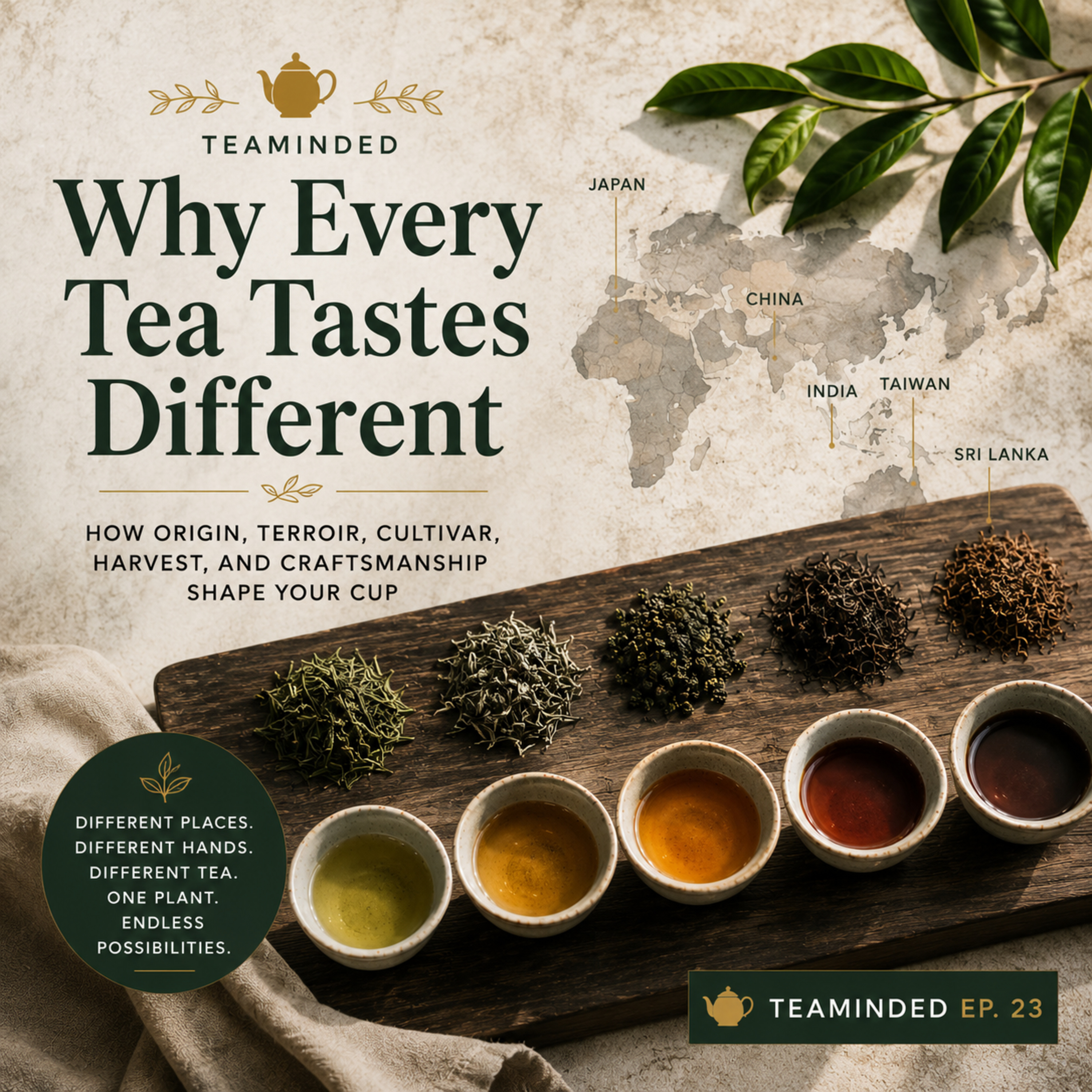
How can a fresh Japanese sencha, a malty Assam, a floral Taiwanese oolong, and a complex Darjeeling all come from essentially the same plant—and taste completely different?
In this episode of TeaMinded, we explore the fascinating reasons every tea develops its own character.
From origin and terroir to cultivar, harvest season, processing, and craftsmanship, every cup tells the story of where the tea was grown and how it was made.
In this episode:
- Why most traditional teas come from Camellia sinensis
- What terroir means in the world of tea
- How climate, soil, elevation, and rainfall influence flavor
- Why tea cultivars matter
- How harvest seasons can change the character of a tea
- Why first-flush and second-flush teas can taste so different
- Steaming vs. pan-firing green tea
- How oxidation and roasting shape oolong and black tea
- The role of the tea maker and traditional craftsmanship
- How water temperature and steeping time affect flavor
- Why two people can taste the same tea differently
- How to begin developing your own tea palate
You don't need to become a tea expert to appreciate these differences.
Start with curiosity.
Try two teas side by side. Smell the leaves. Notice the aroma, sweetness, bitterness, texture, and finish.
Don't worry about finding the "correct" tasting notes.
Just notice.
Because every tea has traveled a different path before reaching your cup:
- A particular plant.
- Growing in a particular place.
- During a particular season.
- Picked at a particular moment.
- Processed by particular hands.
- Then brewed by you.
TeaMinded explores tea culture, loose leaf tea, Japanese tea, craftsmanship, tea rituals, mindfulness, slow living, and intentional living through the lens of tea.
Put the kettle on, notice what's in the cup, and stay TeaMinded.
#TeaMinded #LooseLeafTea #TeaTasting #TeaCulture #SpecialtyTea #GreenTea #OolongTea #BlackTea