Skip to content
Artwork for Talking ELT
Talking ELT · September 8 · 1 hr 3 min

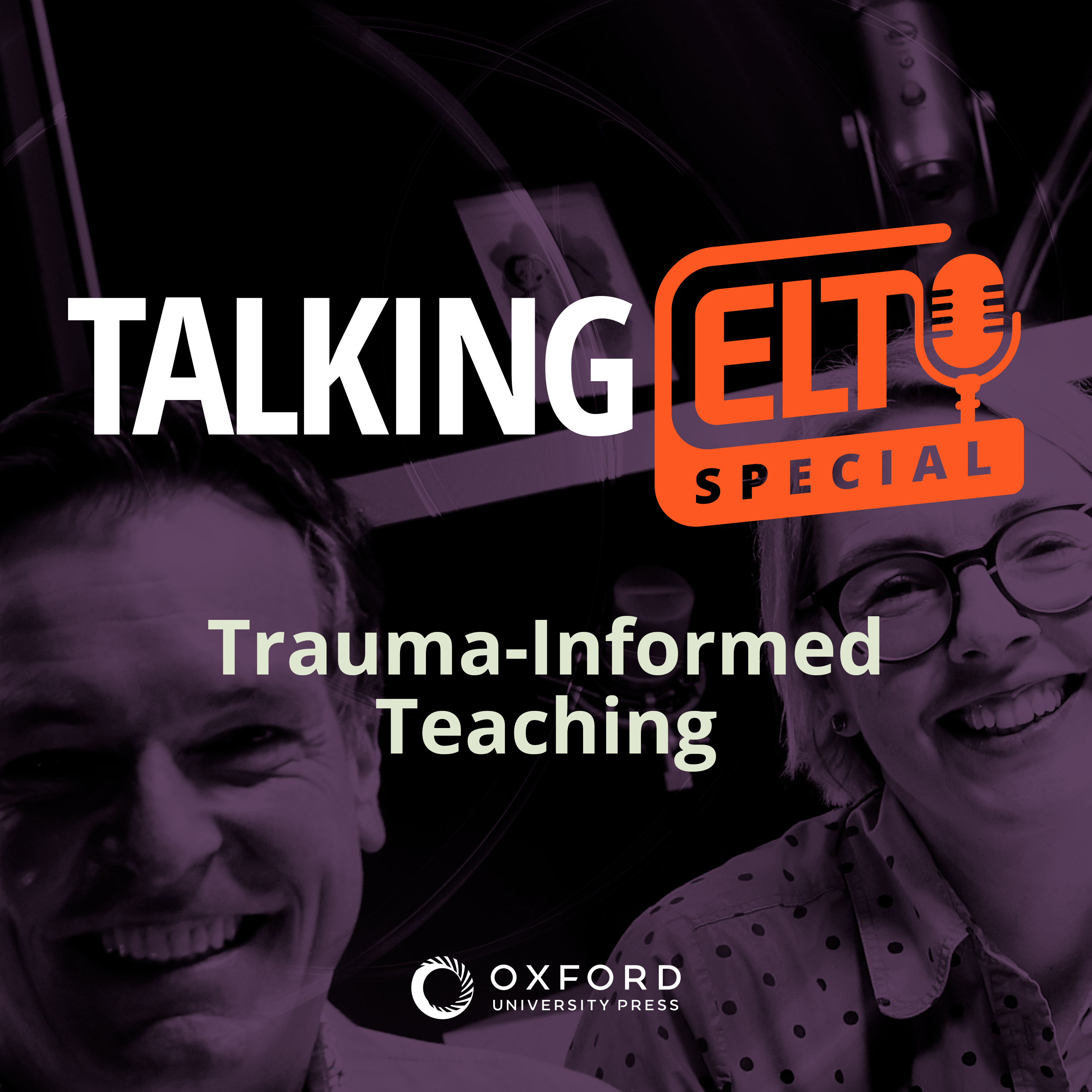
Trauma-Informed Teaching (Talking ELT Special #6)

What does trauma-informed teaching actually look like in practice, and why is it relevant to every classroom? In this special episode of Talking ELT, Hayo Reinders and Orsolya Dunn explore how trauma can shape learners’ experiences, relationships and capacity to learn. Drawing on research and their own classroom experiences, they discuss how trauma-informed practice can help teachers and institutions better support all students. The conversation explores how trauma can affect learning and classroom participation, and why psychological safety, learner agency and belonging matter for all learners. It also examines what trauma-informed practice looks like in language education, and how teachers can build more supportive classrooms. Packed with practical insights and thoughtful reflection, this episode offers valuable guidance for ELT teachers, teacher educators, school leaders and anyone interested in creating more inclusive, human-centred learning experiences. Additional Resources If this conversation has sparked your interest, download Hayo Reinders' Oxford University Press focus paper, Supporting Refugees: A Primer for Language Teachers. The paper explores how trauma-informed approaches can support refugee learners and offers practical advice for teachers, schools, and educational organisations - > https://oxelt.gl/4c5Pbat References: Canagarajah, S., & Hensman, C. A. (2026). Post‐Traumatic Growth in the Global South: Possibilities in Relational Ethics from Communities to Classrooms. TESOL Quarterly. Cook, S.R. and Dewaele, J.M. (2026), “I Own My Life Now”: Implications of Trauma Survivors' Language Acquisition for a Pedagogy of Empowerment in TESOL. TESOL J, 60: S26-S52. https://doi.org/10.1002/tesq.70068 González, J. (2025). Trauma-informed methodologies: advancing educator professional learning through international collaboration. Qualitative Research Journal, 25(4), 416-433. Langer, E. J. (2016). The power of mindful learning. Hachette+ ORM.
0:00 · Introduction-1:03:40

transcript

No transcript — this publisher did not publish one.

show notes

What does trauma-informed teaching actually look like in practice, and why is it relevant to every classroom?

In this special episode of Talking ELT, Hayo Reinders and Orsolya Dunn explore how trauma can shape learners’ experiences, relationships and capacity to learn. Drawing on research and their own classroom experiences, they discuss how trauma-informed practice can help teachers and institutions better support all students.

The conversation explores how trauma can affect learning and classroom participation, and why psychological safety, learner agency and belonging matter for all learners. It also examines what trauma-informed practice looks like in language education, and how teachers can build more supportive classrooms.

Packed with practical insights and thoughtful reflection, this episode offers valuable guidance for ELT teachers, teacher educators, school leaders and anyone interested in creating more inclusive, human-centred learning experiences.

Additional Resources If this conversation has sparked your interest, download Hayo Reinders' Oxford University Press focus paper, Supporting Refugees: A Primer for Language Teachers. The paper explores how trauma-informed approaches can support refugee learners and offers practical advice for teachers, schools, and educational organisations - > https://oxelt.gl/4c5Pbat

References:

Canagarajah, S., & Hensman, C. A. (2026). Post‐Traumatic Growth in the Global South: Possibilities in Relational Ethics from Communities to Classrooms. TESOL Quarterly.

Cook, S.R. and Dewaele, J.M. (2026), “I Own My Life Now”: Implications of Trauma Survivors' Language Acquisition for a Pedagogy of Empowerment in TESOL. TESOL J, 60: S26-S52. https://doi.org/10.1002/tesq.70068 González, J. (2025).

Trauma-informed methodologies: advancing educator professional learning through international collaboration. Qualitative Research Journal, 25(4), 416-433. Langer, E. J. (2016). The power of mindful learning. Hachette+ ORM.
links2

chapters

11 chapters