Skip to content
Artwork for Supply Chain Superintelligence
Supply Chain Superintelligence · Thursday · 28 min

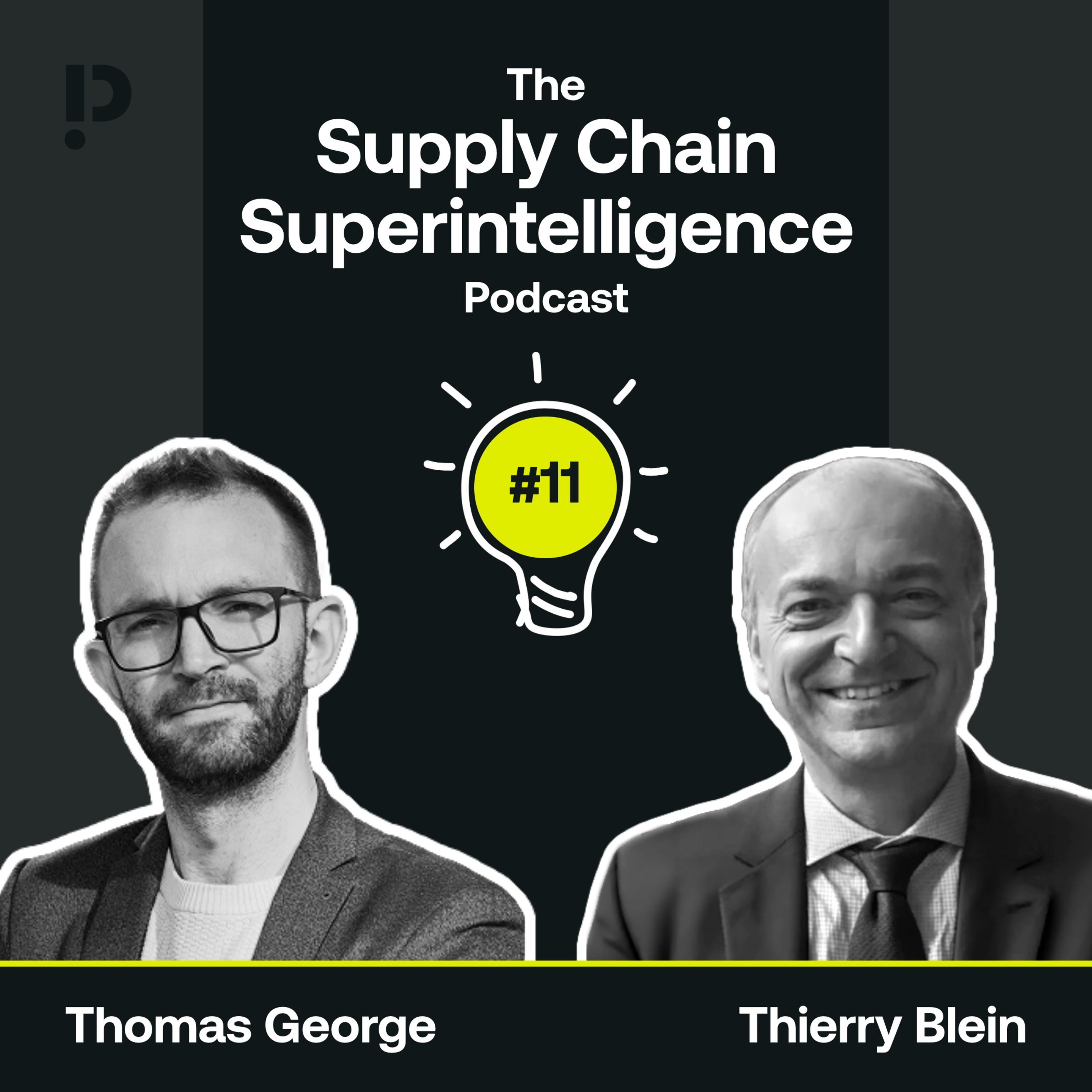
Ground Control: Building the Supply Chain Control Tower

“A control tower is not a product, and it’s not a dashboard. It is a multi-year journey of digital transformation.” A part that costs a few cents can stop production for a car worth thirty thousand euros. So how do you find it before it finds you? In this episode of Supply Chain Superintelligence, host Thomas George speaks with Thierry Blein, former Head of Supply Chain Risk Management and Business Continuity at Renault Group, about what it really takes to build a supply chain control tower, and why most people misunderstand what one is. Thierry’s role at Renault did not exist until 2023. It was created after a run of mega-crises (Covid, the war in Ukraine, the semiconductor shortage, the Suez Canal blockage) forced the industry to stop lurching from one emergency to the next. His answer was to hold prevention and reaction in a centralised Control Tower, bringing all the affected teams onto the same page with the same data. He walks through the four layers of a control tower in practice: reliable data that stays reliable, a digital twin of every supplier, plant, truck and container, a detection layer fed by internal and external signals – including Prewave’s – and finally an intelligence layer where information becomes decision. Along the way, he shares two stories that make the stakes concrete: a part costing a few cents, made in a non-compliant building in a Turkish earthquake zone, that could have halted up to 90% of production; and a chemical plant explosion in Pennsylvania where Renault traced the impact, found the affected supplier and secured an alternative source in under two weeks, while others in the industry only discovered the problem two months later. The conversation closes on where control towers go next: AI agents that triage alerts, run supplier investigations and draft the action plan, leaving humans to decide and manage exceptions. Key insights: Resilience rests on two pillars, prevention and reaction, and fails if either one is missing The most dangerous vulnerabilities are often cheap, simple parts used across many vehicles A control tower is built in layers, and sustaining data quality over time is the hardest of them AI shifts teams from analysing alerts to deciding on them, but adoption is a change management challenge, not a technical one About Thierry Blein Thierry Blein spent 30 years at Renault Group. From 2023, he served as the Director of Supply Chain Risk Management and Business continuity. Since founding Blein Consulting Partners, he now works as an independent advisor, helping companies build strategic resilience plans, and teaching supply chain resilience at university level in France. About Thomas George Thomas George, host of the Supply Chain Superintelligence Podcast, is Prewave’s Lead Risk Editor and co-author of The Taiwan Complex, Magnetic West, and many more. His focus on the intersection of geopolitics, supply chains, and strategic risk brings niche supply chain topics to the public eye. Resources & Links Visit Prewave: https://www.prewave.com/ Don’t Miss Out Follow the Supply Chain Superintelligence Podcast for more expert conversations on geopolitics, resilience, and the forces shaping the future of global supply chains.
0:00-28:04

transcript

No transcript — this publisher did not publish one.

show notes

“A control tower is not a product, and it’s not a dashboard. It is a multi-year journey of digital transformation.”

A part that costs a few cents can stop production for a car worth thirty thousand euros. So how do you find it before it finds you?

In this episode of Supply Chain Superintelligence, host Thomas George speaks with Thierry Blein, former Head of Supply Chain Risk Management and Business Continuity at Renault Group, about what it really takes to build a supply chain control tower, and why most people misunderstand what one is.

Thierry’s role at Renault did not exist until 2023. It was created after a run of mega-crises (Covid, the war in Ukraine, the semiconductor shortage, the Suez Canal blockage) forced the industry to stop lurching from one emergency to the next. His answer was to hold prevention and reaction in a centralised Control Tower, bringing all the affected teams onto the same page with the same data.

He walks through the four layers of a control tower in practice: reliable data that stays reliable, a digital twin of every supplier, plant, truck and container, a detection layer fed by internal and external signals – including Prewave’s – and finally an intelligence layer where information becomes decision.

 Along the way, he shares two stories that make the stakes concrete: a part costing a few cents, made in a non-compliant building in a Turkish earthquake zone, that could have halted up to 90% of production; and a chemical plant explosion in Pennsylvania where Renault traced the impact, found the affected supplier and secured an alternative source in under two weeks, while others in the industry only discovered the problem two months later.

The conversation closes on where control towers go next: AI agents that triage alerts, run supplier investigations and draft the action plan, leaving humans to decide and manage exceptions.


Key insights:

  • Resilience rests on two pillars, prevention and reaction, and fails if either one is missing

  • The most dangerous vulnerabilities are often cheap, simple parts used across many vehicles

  • A control tower is built in layers, and sustaining data quality over time is the hardest of them

  • AI shifts teams from analysing alerts to deciding on them, but adoption is a change management challenge, not a technical one


About Thierry Blein

Thierry Blein spent 30 years at Renault Group. From 2023, he served as the Director of Supply Chain Risk Management and Business continuity. Since founding Blein Consulting Partners, he now works as an independent advisor, helping companies build strategic resilience plans, and teaching supply chain resilience at university level in France.

About Thomas George

Thomas George, host of the Supply Chain Superintelligence Podcast, is Prewave’s Lead Risk Editor and co-author of The Taiwan Complex, Magnetic West, and many more. His focus on the intersection of geopolitics, supply chains, and strategic risk brings niche supply chain topics to the public eye.


Resources & Links

Visit Prewave: https://www.prewave.com/


Don’t Miss Out

Follow the Supply Chain Superintelligence Podcast for more expert conversations on geopolitics, resilience, and the forces shaping the future of global supply chains.
links1