Skip to content
Artwork for Strange Bites
Strange Bites · October 26 · 12 min

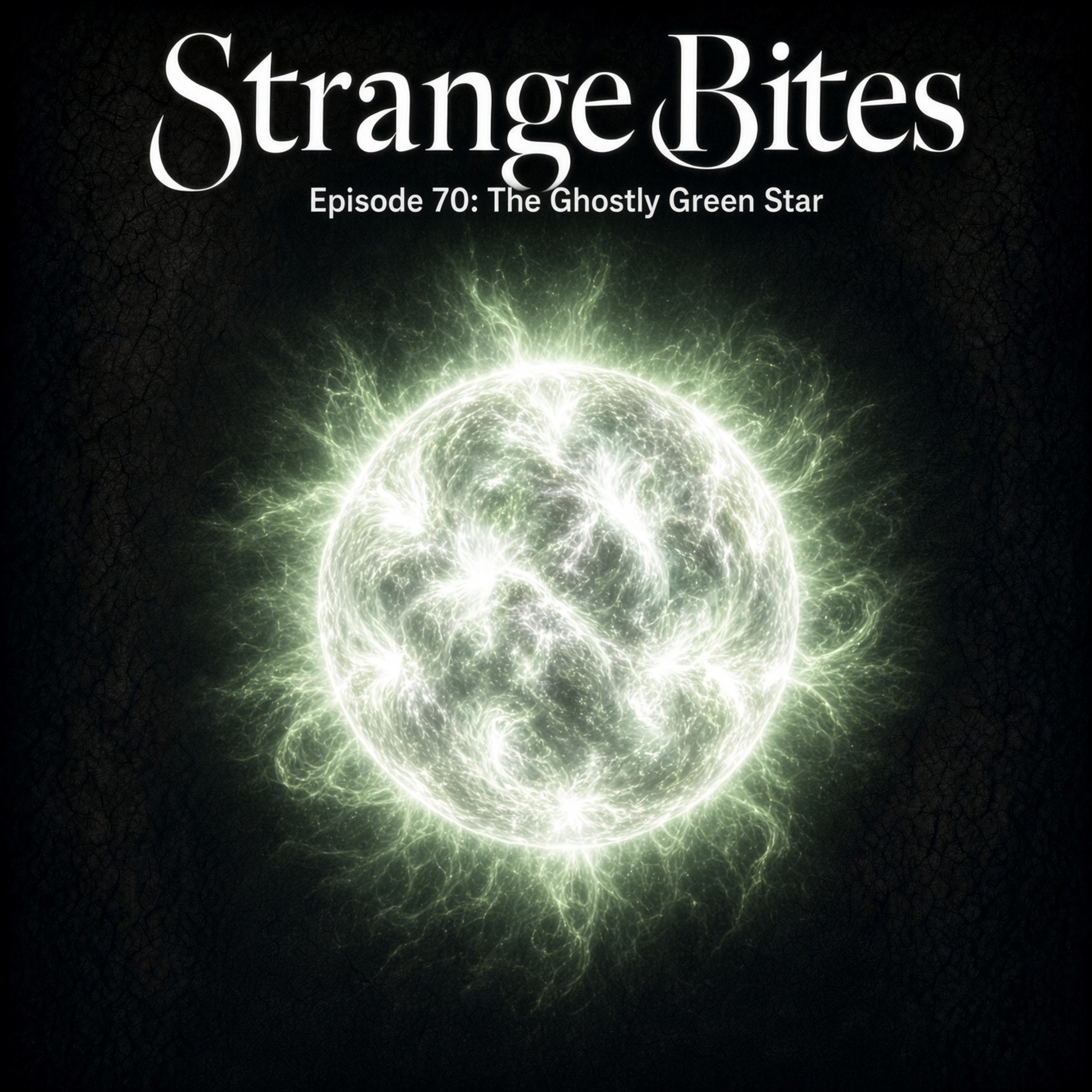
Episode 70: The Ghostly Green Star

Most stars cannot be green. That has been the rule for as long as anyone has thought carefully about the colors of the sky. Temperature sets the color. Cool stars lean orange. Stars like the Sun are white or pale yellow. The hottest are blue-white. Green sits in a gap that ordinary stellar physics does not fill. A star that looked green would have to be doing something temperature alone cannot do. Astronomers at the University of Warwick have now found one. It is not a living star. It is a white dwarf, the dense remnant of a sun-like star that has already died, catalogued as WD J1330+6435. It sits about 280 light-years away in the constellation Draco. Models of human color vision, applied to its spectrum, say that if you could stand close enough to see its disk, it would glow chartreuse green. Sodium in its atmosphere is swallowing the orange and red light. What is left is green. This is Strange Bites episode 70, and tonight the story is about a color that was not supposed to exist on a star, and about the dead planetary system that painted it. SOURCES https://www.eurekalert.org/news-releases/1147389 https://www.reuters.com/science/newly-identified-green-star-leaves-astronomers-amazed-2026-10-16/ https://www.skyatnightmagazine.com/news/green-star-white-dwarf-discovery https://www.sciencedaily.com/releases/2026/10/261015120000.htm Paper: Hollands and colleagues. Any colour you like: The diverse chromaticities of white dwarfs. RAS Techniques and Instruments, 2026.

0:00-12:31

transcript

No transcript — this publisher did not publish one.

show notes

Most stars cannot be green. That has been the rule for as long as anyone has thought carefully about the colors of the sky. Temperature sets the color. Cool stars lean orange. Stars like the Sun are white or pale yellow. The hottest are blue-white. Green sits in a gap that ordinary stellar physics does not fill. A star that looked green would have to be doing something temperature alone cannot do.


Astronomers at the University of Warwick have now found one. It is not a living star. It is a white dwarf, the dense remnant of a sun-like star that has already died, catalogued as WD J1330+6435. It sits about 280 light-years away in the constellation Draco. Models of human color vision, applied to its spectrum, say that if you could stand close enough to see its disk, it would glow chartreuse green. Sodium in its atmosphere is swallowing the orange and red light. What is left is green.


This is Strange Bites episode 70, and tonight the story is about a color that was not supposed to exist on a star, and about the dead planetary system that painted it.


SOURCES

https://www.eurekalert.org/news-releases/1147389


https://www.reuters.com/science/newly-identified-green-star-leaves-astronomers-amazed-2026-10-16/


https://www.skyatnightmagazine.com/news/green-star-white-dwarf-discovery


https://www.sciencedaily.com/releases/2026/10/261015120000.htm


Paper: Hollands and colleagues. Any colour you like: The diverse chromaticities of white dwarfs. RAS Techniques and Instruments, 2026.