Skip to content
Artwork for Strange Animals Podcast
Strange Animals Podcast · Today · 7 min

Episode 497 Megarachne

Megarachne as we know it now: Show transcript: Welcome to Strange Animals Podcast. I’m your host, Kate Shaw. Megarachne is only known from two specimens, neither of which is complete, which adds to the confusion. It lived around 300 million years ago in what is now South America. It was described in 1980 from the first specimen discovered and was named Megarachne, which means big spider. The scientist who described it thought it was a type of primitive spider related to modern tarantulas, but much bigger. He estimated its legspan was 20 inches, or 50 cm, with a body length of just over 13 inches, or 34 cm. That made it the largest spider ever known by a lot. Other palaeontologists, especially arachnologists who specialize in spiders and their relations, weren’t convinced Megarachne was a spider. But it wasn’t until 2005 when a more complete specimen was discovered that anyone could say for sure what it was. The second specimen made it clear that it wasn’t a spider at all but a sea scorpion, or eurypterid, and not an especially large one compared to some. It probably grew to 21 inches long, or 54 cm. But by then, Megarachne had gotten really popular as a giant spider. It was in the BBC documentary Walking with Monsters, although the producers changed its name to Mesothelae right before it aired, which was just after the new findings about Megarachne came out. Mesothelae is a suborder of big spiders from parts of Asia that retain many traits of ancestral spiders. It was a valiant attempt by the BBC to make the documentary less incorrect, but of course the spider they were talking about still wasn’t a spider and no spider known has ever grown that large. But while Megarachne isn’t a giant spider, and isn’t even a very big eurypterid, it is important since not very many eurypterids are known from South America. It also appears to be closely related to Mycterops and Woodwardopterus, similar-looking euripterids from North America and Europe. But some researchers think it’s not as cut and dried as it sounds. Instead of three similar creatures living in different areas, they think there’s something else going on. Eurypterids were arthropods, the phylum that includes insects, arachnids, and crustaceans, among others. Arthropods have an exoskeleton that they molt periodically as they grow, and many arthropods have complicated life stages compared to other animals. When a shark hatches, it looks like a miniature adult and just grows larger as it gets older, but when an arthropod hatches, it usually doesn’t look anything like its adult form. Some arthropods go through many stages of life before reaching the adult body plan. Crustaceans have numerous larval stages, for instance, that often look very different from the adult. Some researchers think that Megarachne, Mycterops, and Woodwardopterus were all the same animal, and that the differences are due to it being in three different stages of development when it died and was preserved. We don’t have any way to know if this was correct, of course, not until we hopefully find more fossil remains. Other eurypterids did appear to go through some physical changes during maturation, as far as researchers can tell with the remains we have, but Megarachne, Mycterops, and Woodwardopterus belonged to a different family from other eurypterids and are much rarer. They might have been quite different developmentally. We can also look at the living relations to see how likely it is that eurypterids had different larval stages where they looked different from the adult form. Eurypterids were probably most closely related to horseshoe crabs, although not everyone agrees. Horseshoe crabs have been around for 445 million years and are really neat animals that we’re lucky to still have in the world. The horseshoe crab hatches into a larva that looks a lot like a trilobite. It does indeed go through physical changes as it grows and molts over the course of three years, so it’s reasonable to assume that eurypterids did too. On the other hand, some researchers think eurypterids were more closely related to modern scorpions. Scorpions actually give birth to live babies instead of laying eggs, and the female carries the babies on her back for several days up to several weeks, depending on the species. Once the babies have their first molt they look a lot more like miniature adults and pretty soon are able to leave their mother and hunt on their own. So again, it’s possible that eurypterids had a system more like this instead of like the horseshoe crab’s. While we’re talking about scorpions, did you know that scorpions glow blue-green in ultraviolet light? The scorpion’s exoskeleton contains fluorescent chemicals, but we’re not sure why. Scorpions do have incredibly light sensitive eyes, and can navigate at night using only starlight. Their eyes can’t form sharp images like ours can, though. And scorpions have a lot of eyes. Spiders have four pairs of eyes, but some scorpions have more than that. All species have a pair on top of the cephalothorax, which corresponds to the head, and more on the sides of the cephalothorax. Some species have up to five pairs of eyes in addition to the ones on top of the head. Twelve eyes seems like overkill but it works for the scorpion. Eurypterids had both compound eyes and simple eyes. That’s all we know about Megarachne right now, at least until we find more fossilized specimens. Let’s hope we do, and while we’re at it, let’s hope we find some more fossilized giant spiders because that would be cool. Thanks for your support, and thanks for listening!

0:00-7:32

transcript

No transcript — this publisher did not publish one.

show notes

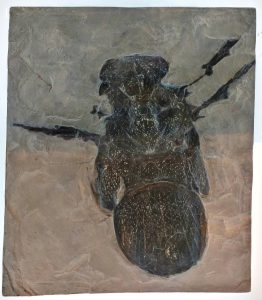
Megarachne as we know it now:
Show transcript:

Welcome to Strange Animals Podcast. I’m your host, Kate Shaw.

Megarachne is only known from two specimens, neither of which is complete, which adds to the confusion. It lived around 300 million years ago in what is now South America. It was described in 1980 from the first specimen discovered and was named Megarachne, which means big spider. The scientist who described it thought it was a type of primitive spider related to modern tarantulas, but much bigger. He estimated its legspan was 20 inches, or 50 cm, with a body length of just over 13 inches, or 34 cm. That made it the largest spider ever known by a lot.

Other palaeontologists, especially arachnologists who specialize in spiders and their relations, weren’t convinced Megarachne was a spider. But it wasn’t until 2005 when a more complete specimen was discovered that anyone could say for sure what it was. The second specimen made it clear that it wasn’t a spider at all but a sea scorpion, or eurypterid, and not an especially large one compared to some. It probably grew to 21 inches long, or 54 cm.

But by then, Megarachne had gotten really popular as a giant spider. It was in the BBC documentary Walking with Monsters, although the producers changed its name to Mesothelae right before it aired, which was just after the new findings about Megarachne came out. Mesothelae is a suborder of big spiders from parts of Asia that retain many traits of ancestral spiders. It was a valiant attempt by the BBC to make the documentary less incorrect, but of course the spider they were talking about still wasn’t a spider and no spider known has ever grown that large.

But while Megarachne isn’t a giant spider, and isn’t even a very big eurypterid, it is important since not very many eurypterids are known from South America. It also appears to be closely related to Mycterops and Woodwardopterus, similar-looking euripterids from North America and Europe. But some researchers think it’s not as cut and dried as it sounds. Instead of three similar creatures living in different areas, they think there’s something else going on.

Eurypterids were arthropods, the phylum that includes insects, arachnids, and crustaceans, among others. Arthropods have an exoskeleton that they molt periodically as they grow, and many arthropods have complicated life stages compared to other animals. When a shark hatches, it looks like a miniature adult and just grows larger as it gets older, but when an arthropod hatches, it usually doesn’t look anything like its adult form. Some arthropods go through many stages of life before reaching the adult body plan. Crustaceans have numerous larval stages, for instance, that often look very different from the adult. Some researchers think that Megarachne, Mycterops, and Woodwardopterus were all the same animal, and that the differences are due to it being in three different stages of development when it died and was preserved.

We don’t have any way to know if this was correct, of course, not until we hopefully find more fossil remains. Other eurypterids did appear to go through some physical changes during maturation, as far as researchers can tell with the remains we have, but Megarachne, Mycterops, and Woodwardopterus belonged to a different family from other eurypterids and are much rarer. They might have been quite different developmentally.

We can also look at the living relations to see how likely it is that eurypterids had different larval stages where they looked different from the adult form. Eurypterids were probably most closely related to horseshoe crabs, although not everyone agrees. Horseshoe crabs have been around for 445 million years and are really neat animals that we’re lucky to still have in the world. The horseshoe crab hatches into a larva that looks a lot like a trilobite. It does indeed go through physical changes as it grows and molts over the course of three years, so it’s reasonable to assume that eurypterids did too.

On the other hand, some researchers think eurypterids were more closely related to modern scorpions. Scorpions actually give birth to live babies instead of laying eggs, and the female carries the babies on her back for several days up to several weeks, depending on the species. Once the babies have their first molt they look a lot more like miniature adults and pretty soon are able to leave their mother and hunt on their own. So again, it’s possible that eurypterids had a system more like this instead of like the horseshoe crab’s.

While we’re talking about scorpions, did you know that scorpions glow blue-green in ultraviolet light? The scorpion’s exoskeleton contains fluorescent chemicals, but we’re not sure why. Scorpions do have incredibly light sensitive eyes, and can navigate at night using only starlight. Their eyes can’t form sharp images like ours can, though. And scorpions have a lot of eyes. Spiders have four pairs of eyes, but some scorpions have more than that. All species have a pair on top of the cephalothorax, which corresponds to the head, and more on the sides of the cephalothorax. Some species have up to five pairs of eyes in addition to the ones on top of the head. Twelve eyes seems like overkill but it works for the scorpion. Eurypterids had both compound eyes and simple eyes.

That’s all we know about Megarachne right now, at least until we find more fossilized specimens. Let’s hope we do, and while we’re at it, let’s hope we find some more fossilized giant spiders because that would be cool.

Thanks for your support, and thanks for listening!