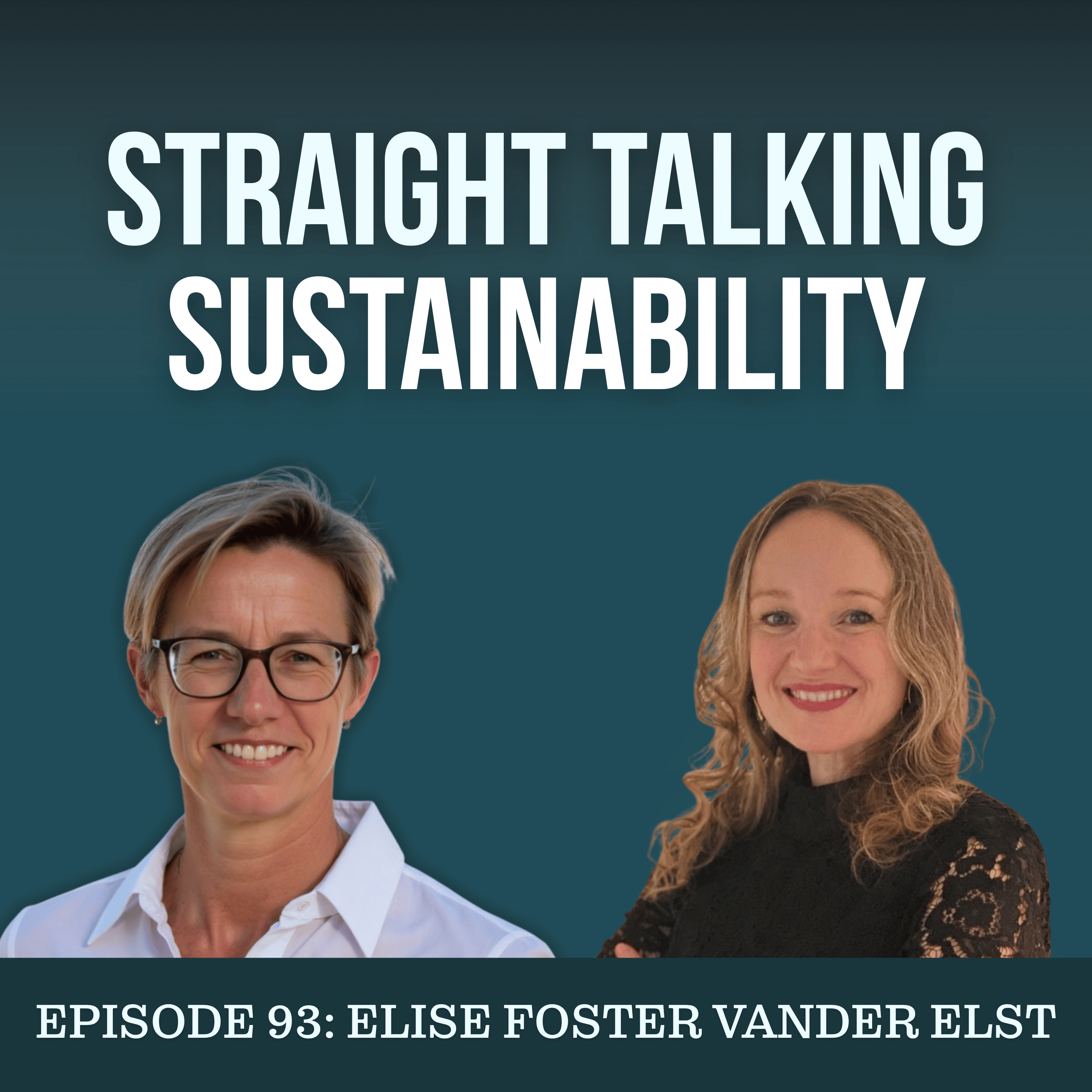
Change is the only constant with Elise Foster Vander Elst, The Design Museum
transcript
show notes
In this episode, Emma sits down with Elise Foster Vander Elst from the Design Museum to discuss the significant role museums can play in driving sustainability and tackling the climate emergency. The conversation reveals how museums leverage their trusted status, how collective action sparks innovation, and how every job can contribute to meaningful environmental change.
Key Topics & Highlights
Role of Environmental Impact Lead
- Elise Foster Vander Elst shares her dual role at the Design Museum, overseeing exhibitions and leading sustainability practices from material reduction to influencing departmental decarbonisation 01:14.
Staff Numbers & Agility
- The Design Museum, with around 100 staff and many volunteers, is described as a “mini speedboat” able to act swiftly, unlike larger institutions 01:51.
Public Expectations vs. Awareness
- Insights from the Act Green Survey: 77% of respondents think museums should influence on climate, but only 17% believe museums are prioritising it—highlighting a disconnect 02:58.
Museums as Trusted Messengers
- Museums (and curators) are amongst the UK’s most trusted professions, behind only nurses, librarians, doctors, and teachers (05:40).
The Power of Community and Networks
- Elise Foster Vander Elst describes collaborative initiatives among museums and cultural institutions, such as the South Ken Zen Network and shared sustainability programmes 08:11.
Local and Sector-wide Collective Action
- Discussion about how locality and sector-specific approaches can accelerate change and foster information sharing 10:09.
Design’s Critical Role in Climate Action
- Examples of museum exhibitions (e.g., Waste Age, How to Build a Low Carbon Home) and research programmes (e.g., Future Observatory, projects on eliminating single-use plastics in the NHS) 13:40.
Change as a Constant
- Both speakers challenge the narrative that “people don’t like change” and instead frame historical and societal progress as evidence that humans continuously adapt 20:21.
Addressing Imperfection and Green Hushing
- Elise Foster-Van der Elst introduces the concept of “green hushing,” the danger of staying silent about progress for fear of criticism, and the value of sharing both successes and mistakes for collective learning 35:12.
Empowering Staff and Sharing Tools
- Highlights from carbon literacy training at the museum, empowering every department to engage in sustainability efforts (33:29), and the use of carbon calculators to inform decision-making 31:23.
- Design Museum: designmuseum.org
- Gallery Climate Coalition: galleryclimatecoalition.org
- Future Observatory programme: (via Design Museum)
- Carbon Literacy Project: carbonliteracy.com
Connect & Continue the Conversation
- Visit the Design Museum and explore their exhibitions.
- Engage with your local museum on sustainability programming and events.
- Reach out to Emma Burlow and Elise Foster Vander Elst on LinkedIn.
- Share your questions and ideas for future episodes.
For more insights and upcoming episodes, subscribe to Straight Talking Sustainability and sign up for the Lighthouse Sustainability newsletter, The Beacon.
Book a Power Hour with Emma
https://calendly.com/emma-lighthouse/power-hour
Connect with Emma