
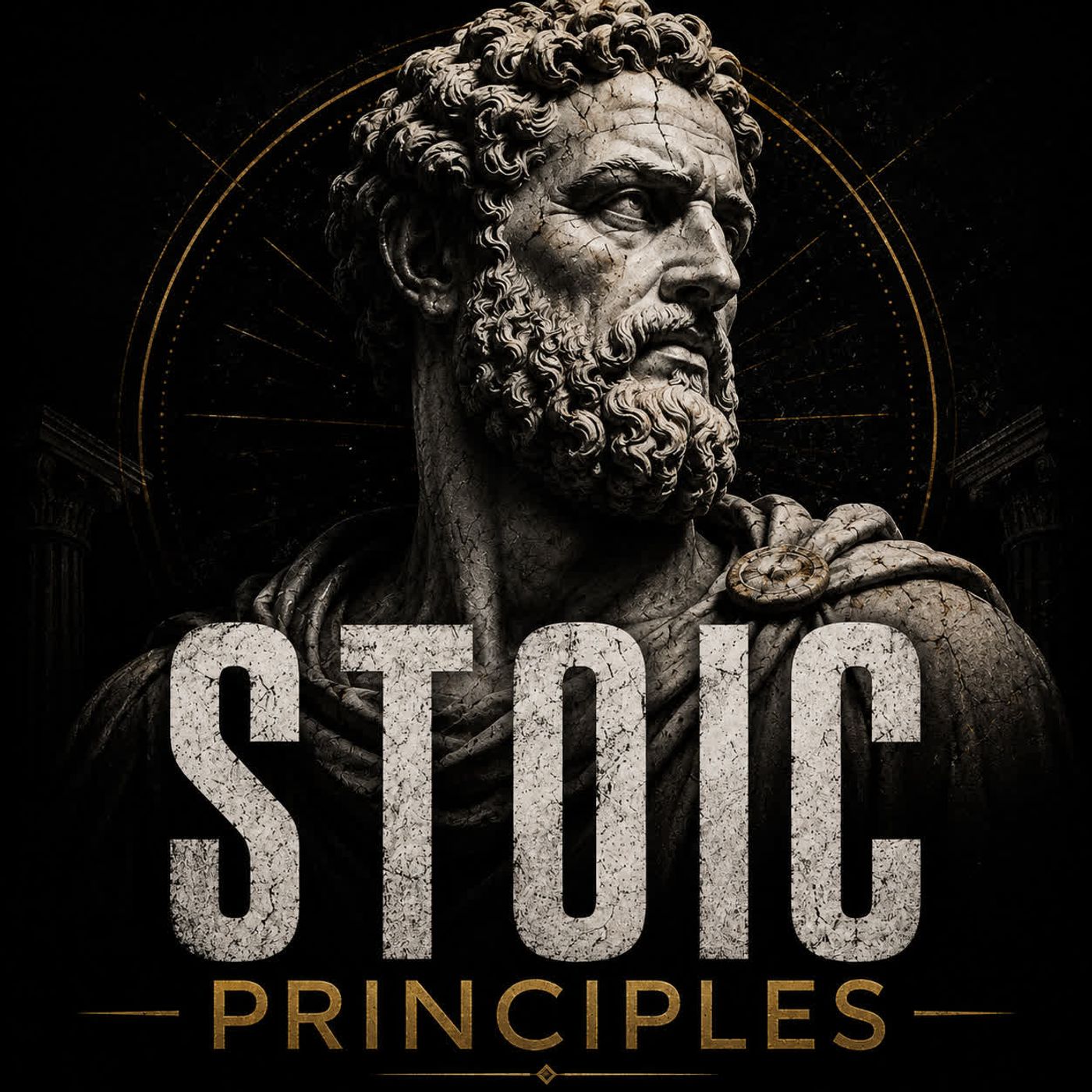
Stoic Principles · September 13 · 27 min
What Depends On You? Rebuild Strength When Everything Breaks
0:00-27:09
transcript
show notes
Why You Keep Failing Mornings - The Two-Minute Stoic Rule
The sting of a breakup or betrayal often feels like proof you're broken, but the real wound is structural: you built your identity on something outside yourself. Marcus Aurelius asked one morning question that rewires that pain into a path for rebuilding - what depends on me today? How do you start again when everything you trusted collapses?
In this episode, we follow a lesson carried from Marcus Aurelius to Epictetus and Seneca about where stability truly lives, and how reassigning what depends on you changes suffering into testing. What would shift if you treated your thoughts, choices, and reactions as the only things that truly belong to you?
Person: Marcus Aurelius
Person: Epictetus
Person: Seneca
Topic: Stoic distinction between what depends on you and what does not
Event: Emotional collapse after loss reframed as architectural failure
- Marcus Aurelius practiced a daily question: "What depends on me today?"
- Epictetus defined two categories: things that depend on you and things that do not.
- The transcript states external fixes give relief that lasts about three weeks before the hollow returns.
- Seneca wrote "Fire tests gold" to illustrate that adversity tests people, not damages them.
- The transcript identifies thoughts, choices, reactions, and effort as items that "belong to you completely."
To listen to this podcast ad-free and access premium episodes, try our subscription with a 30-day free trial at obomedia.com.
© 2026 OBOMEDIA. All rights reserved.
This episode and its content (audio, text, and related materials) are the exclusive property of OBOMEDIA and are protected by applicable copyright laws. Reproduction, distribution, editing, or commercial use, in whole or in part, without prior written permission from OBOMEDIA is prohibited. For permissions, licensing, and business inquiries: business@obomedia.com.
links1
