
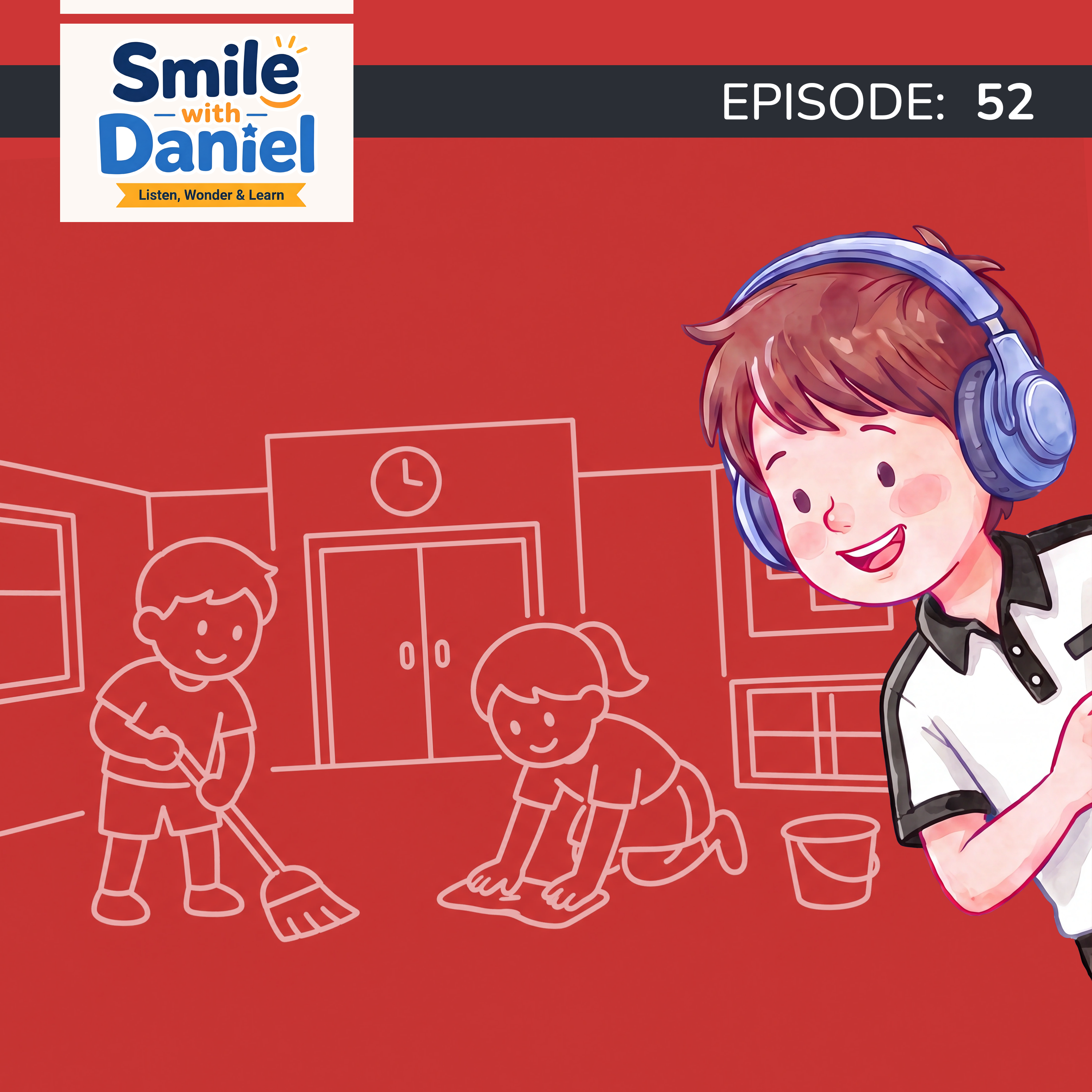
Why Do Japanese Kids Clean Their Own Schools?
Streams straight from the publisher. podnod never proxies or re-hosts episode audio.
Mom asks Daniel what he would think if students cleaned their own school every day. Classrooms, hallways, toilets -- all of it.
He says that sounds like a punishment.
He is almost exactly wrong.
In Japan, school cleaning -- o-soji -- is an established part of school life, not an optional activity and not a punishment. At a scheduled time each day, the whole school stops. In many schools, a short piece of music plays over the speakers to signal cleaning time. Every student, from first grade through high school, starts cleaning. Their own classroom, the hallway outside it, and other assigned areas around the school.
Teachers clean alongside them. There is no hierarchy in the cleaning. A teacher might be scrubbing a toilet next to a first grader. The point is that everyone shares in the care of the space everyone shares.
The reasoning goes back centuries. Zen Buddhist temples have long treated cleaning as a form of practice -- sweeping and scrubbing were not considered distractions from learning or meditation but part of them. Keeping the space was keeping the mind. As Japan's modern education system developed, that philosophy became woven into everyday school life.
The Japanese phrase gakko soji simply means school cleaning. But it represents much more than hygiene. It is part of an educational philosophy that treats how you care for shared spaces as part of how you learn to be a member of a community. Students who clean their own spaces tend to be more careful about them. If you know you will have to sweep it tomorrow, you think twice about dropping something today.
And the idea travels. Japan has an educational package called tokkatsu that includes cleaning time, lunch serving, and group activities. In 2016 Egypt began introducing elements of it into its public schools. By 2026, more than eighteen thousand Egyptian schools had adopted it -- and educators reported students taking more pride in their schools and a shift in how young people related to their shared environments.
Daniel's realization about what the cleaning is actually teaching -- and Mom's closing line -- are the last two exchanges worth staying for.
What you will find in this episode:
- What o-soji is and how it works in Japanese schools every day
- Why teachers clean alongside students -- and what that communicates
- The Zen Buddhist philosophy behind treating cleaning as practice
- What gakko soji means literally -- and what it represents
- How Japan's tokkatsu system spread to Egypt and beyond
- Daniel's realization: it is not about cleaning at all
- Mom's closing line about respect
Warm, surprising, and the kind of episode that makes you think differently about every shared space you have ever walked through.
Listen, wonder, and learn.
Find us @smilewithDaniel everywhere.
No links were found in this episode’s notes.