transcript
show notes
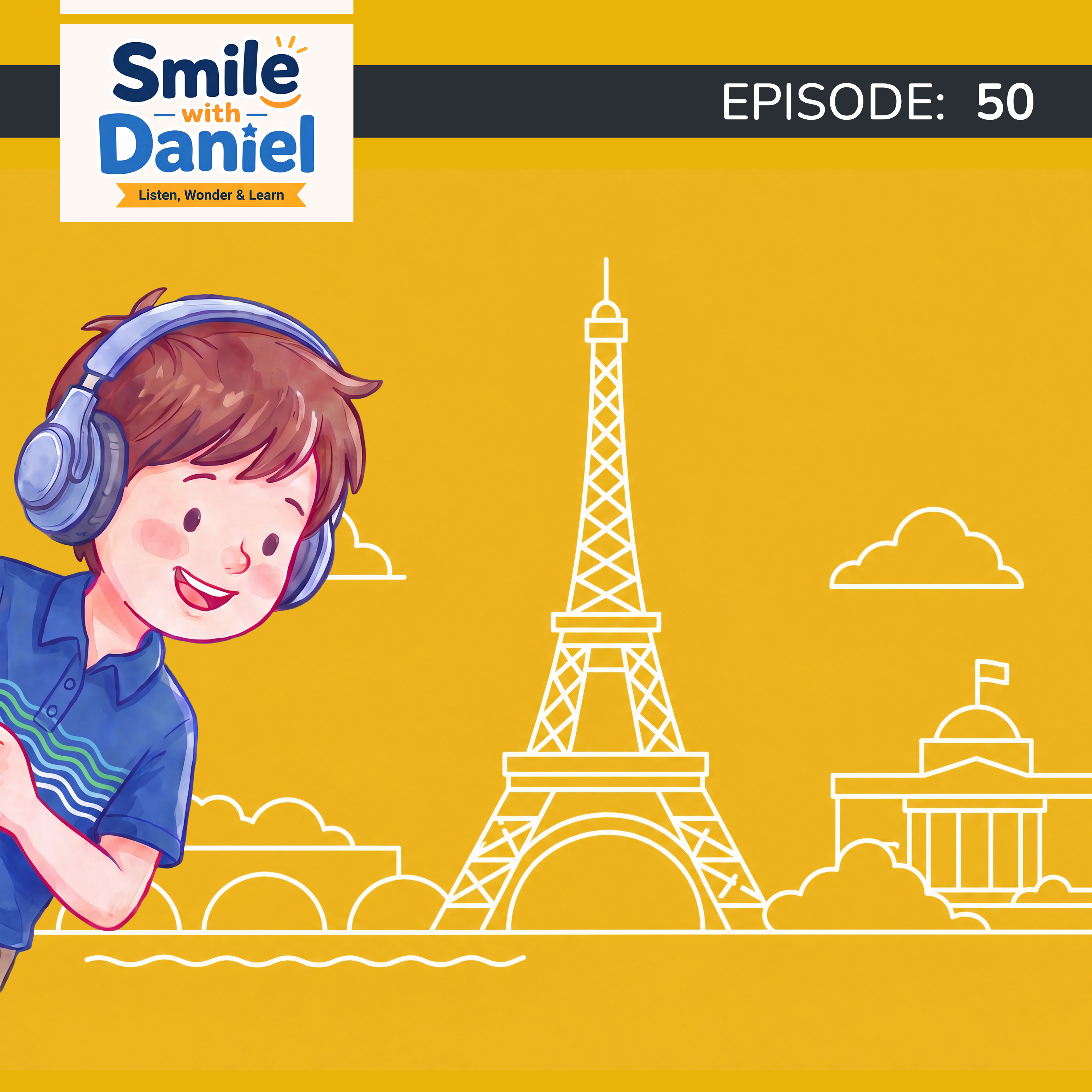
Daniel looks at a photo of Paris and says he cannot imagine the city without the Eiffel Tower.
Mom tells him it almost wasn't there.
When Gustave Eiffel announced plans for his iron tower in 1887, some of the most celebrated writers, artists, and architects in France were furious. They published a letter in a major Paris newspaper calling it a gigantic black smokestack, a blight on Paris, and a truly tragic street lamp. Guy de Maupassant -- one of France's most famous writers -- called it an eyesore and said it was an insult to everything beautiful about the city. Alexandre Dumas's son signed the petition. Charles Garnier, who designed the Paris Opera House, signed it. These were not random critics. They were the cultural authorities of France.
Eiffel built it anyway. Two million people visited during the 1889 World's Fair. And Guy de Maupassant reportedly ate lunch at the tower's restaurant regularly after it opened -- because it was the only place in Paris where he didn't have to look at it.
That is Daniel's favorite detail in the episode.
But the real threat came later. The tower had only been approved as a temporary structure. Eiffel's permit with the city of Paris was set to expire in 1909 -- twenty years after the Fair -- and the city could legally demolish it. The same thing had already happened to another massive structure from the same World's Fair, the Gallery of Machines, which had been the largest building in the world and was voted for demolition in 1906. The Eiffel Tower's fate was genuinely uncertain.
What saved it was radio.
From the late 1890s onward, Eiffel had been allowing experiments in wireless transmission from the tower. By the early 1900s, he was working with French military engineers to install a proper antenna at the summit. By 1909, the tower could transmit signals thousands of miles away -- making it one of the most strategically important communications stations in France. When the permit expired and the city had the chance to remove it, the French government decided it was too valuable as a communications tower to tear down.
Not mainly because people had come to appreciate it. Because it was an antenna.
During World War I, the tower intercepted enemy radio communications, relayed alerts about airship attacks, and helped coordinate troop movements. The structure that critics called a tragic street lamp helped defend France.
And many of those critics eventually came to love it. The tower that was supposed to ruin Paris became the symbol of Paris.
What you will find in this episode:
- How France's cultural elite tried to stop the Eiffel Tower before it was finished
- Guy de Maupassant's famous complaint -- and why he kept going back anyway
- Why the tower was scheduled for demolition in 1909
- How Gustave Eiffel quietly turned his tower into a military antenna to save it
- What the tower did during World War I
- Daniel's closing question about de Maupassant -- and Mom's answer
Surprising, satisfying, and the kind of episode that changes what you see the next time you look at a photo of Paris.
Listen, wonder, and learn.
Find us @smilewithDaniel everywhere.