
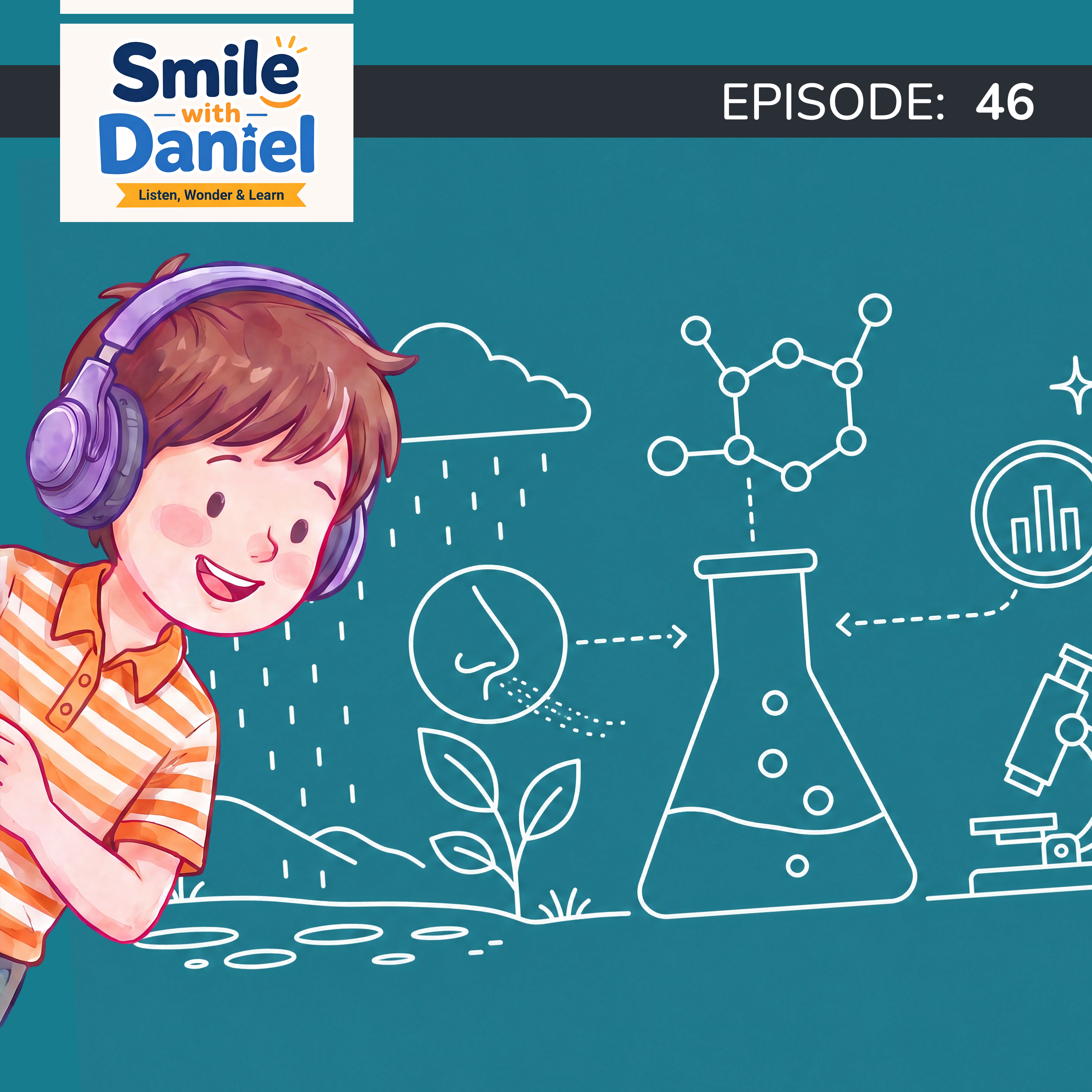
The Smell of Rain Has a Name. So Does the Science Behind It
Streams straight from the publisher. podnod never proxies or re-hosts episode audio.
Daniel smells rain coming through the window and asks why. Rain is just water. Water doesn't have a smell. So what is he actually smelling?
At least three things. And none of them are the rain itself.
The main one has a name: petrichor. Coined in 1964 by two Australian scientists -- Isabel Joy Bear and Richard Thomas -- who published a paper in the journal Nature. They built the word from two Greek words. Petra, meaning stone. And ichor -- the fluid that flows in the veins of the gods in Greek mythology.
So the smell of rain on dry earth has a name that means the blood of the gods.
Petrichor comes from two sources mixing together. First -- oils that plants release during dry periods that soak into rocks and soil. When rain hits, the impact releases them into the air. Second -- a chemical called geosmin, produced by certain bacteria living in the soil as they break down dead plant matter. The word geosmin itself comes from Greek too: geo for earth, osme for smell.
Here is the part that stops most people.
Humans can detect geosmin at concentrations as low as five parts per trillion. To picture that: a teaspoon of geosmin dissolved into two hundred Olympic swimming pools. You would still be able to smell it. Scientists think this extraordinary sensitivity may have evolved because geosmin was a signal to our ancestors that water was near. And humans are about two hundred thousand times more sensitive to geosmin than sharks are to blood.
We can smell this particular compound in dirt better than sharks smell blood.
Then there is the sharp electric smell before a storm. That is completely different. That is ozone -- created when lightning splits oxygen molecules and some of those atoms combine with ordinary oxygen molecules to form groups of three. The storm's downdrafts carry it down to ground level ahead of the rain. You are smelling the lightning before it arrives.
And when a raindrop hits a porous surface, it creates tiny bubbles of trapped air that burst upward through the water and release microscopic aerosols into the air -- carrying geosmin and plant oils with them. Every raindrop is a tiny catapult launching smell molecules toward your nose.
Daniel's closing line -- after putting all three sources together -- is the last exchange worth staying for.
What you will find in this episode:
- Why water itself is odorless -- and what you are actually smelling when you smell rain
- What petrichor is, where the word comes from, and what creates it
- What geosmin is and why humans can detect it at five parts per trillion
- Why humans are two hundred thousand times more sensitive to geosmin than sharks are to blood
- What that sharp electric pre-storm smell actually is -- and why you smell it before the rain arrives
- How raindrops launch smell molecules into the air
- Daniel's closing line about the blood of the gods and two hundred swimming pools
Short, surprising, and the kind of episode that makes every rainy day smell completely different.
Listen, wonder, and learn.
Find us @smilewithDaniel everywhere.
No links were found in this episode’s notes.