
Streams straight from the publisher. podnod never proxies or re-hosts episode audio.
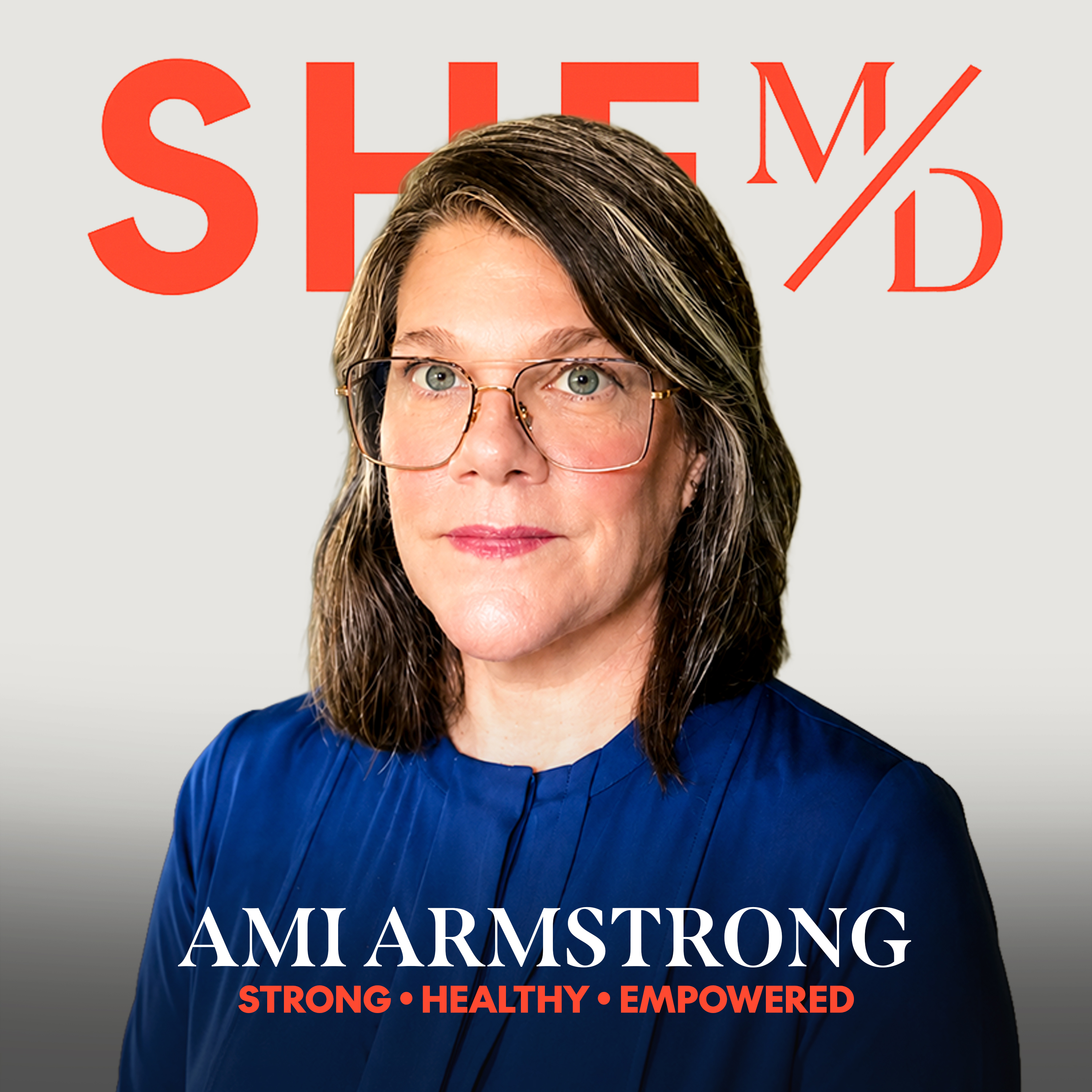
For decades, women have been told that hormone replacement therapy causes breast cancer, but where did that message come from, and is it the full story? In this episode, Mary Alice Haney is joined by former SheMD executive producer and award-winning storyteller, Ami Armstrong, to unpack the Women's Health Initiative, the landmark study that changed the course of menopause care for an entire generation. Together, they explore how one of the largest women's health studies ever conducted became one of the most misunderstood, and why many experts are working to correct the narrative today.
Mary Alice and Ami break down the difference between relative and absolute risk, discuss how media headlines fueled decades of fear around hormone therapy, and explain what today's research says about menopause treatment. They also examine why women have historically been left out of medical research, the importance of personalized healthcare, and how understanding your own risks can empower you to make informed decisions alongside your doctor.
Subscribe to SHE MD Podcast for expert tips on PCOS, endometriosis, fertility, hormonal balance, mental health, and more. Share with friends and visit SHE MD website and Ovii for research-backed resources, holistic health strategies, and expert guidance on women’s health and well-being.
Sponsors
K'chava: Treat yourself to a childhood favorite. Go to kachava.com and use code SheMD for 15% off your first order.
Midi Health: Book your first virtual visit today at joinmidi.com.
Babel: Right now, Babbel is offering listeners up to 60% off. Go to babbel.com/shemd. Rules and restrictions may apply.
Osea: Get 10% off your first order sitewide with code SheMD at oseamalibu.com.
Cash App: Parents and legal guardians can open a managed account for kids aged six through 12. Visit cash.app/legal/podcast for full disclosures.
Opill: Opill is birth control in your control. Check out Opill to see if it is right for you. You can find Opill at most major retailers in store and online at opill.com.
What You’ll Learn
- Why the Women's Health Initiative became one of the most influential and controversial studies in women's health.
- The difference between relative risk and absolute risk, and why that distinction matters.
- How media coverage dramatically changed public perception of hormone replacement therapy.
- Why today's menopause hormone therapy differs from what was studied in the original trial.
- How women were historically excluded from clinical research and how that affected medical care.
- What current evidence says about the timing of hormone therapy and menopause treatment.
- Why understanding your personal health risks leads to better conversations with your doctor.
Key Timestamps
00:00 Welcome Ami Armstrong
02:57 Ami's own HRT journey & why she made this series
05:04 The idea behind "It's Not a Purse" (Magritte inspiration)
07:43 "Feminine Forever" and the history of estrogen marketing
09:02 Why Ami dug into the Women's Health Initiative
11:48 Getting women into clinical trials: the 1990s shift
18:43 Placebo, estrogen-only & estrogen+progestin arms
20:15 What hormones were actually used in the WHI
22:04 The timing hypothesis explained
23:14 Inside the July 2002 press conference decision
24:53 Breaking down the breast cancer numbers (absolute vs. relative risk)
27:06 Why the trial was stopped early & the estrogen-only results
32:07 HRT use plummets & what hot flashes really mean
35:42 The researchers who fought back
42:32 Individualized risk & questioning the headlines
Key Takeaways
- The Women's Health Initiative began as an ambitious effort to better understand disease prevention in postmenopausal women but became defined by a controversial 2002 announcement that dramatically changed hormone therapy use.
- Headlines focused on relative risk increases without explaining the much smaller absolute risk, creating lasting public fear around HRT.
- The hormone formulations used in the original study are different from many of today's commonly prescribed bioidentical therapies.
- Experts now recognize that the timing of hormone therapy initiation plays an important role in determining benefits and risks.
- Women have historically been underrepresented in clinical research, leading to gaps in medical knowledge that continue to impact healthcare today.
- Every woman's health decisions should be individualized, based on current evidence, personal risk factors, and informed conversations with qualified healthcare providers, not fear-driven headlines.
See Privacy Policy at https://art19.com/privacy and California Privacy Notice at https://art19.com/privacy#do-not-sell-my-info.
SHE MD Podcast
shemdpodcast.comSHE MD website
shemdpodcast.comOvii
ovii.comhttps://art19.com/privacy
art19.com