Skip to content
Artwork for Science Friday
Science Friday · Yesterday · 14 min

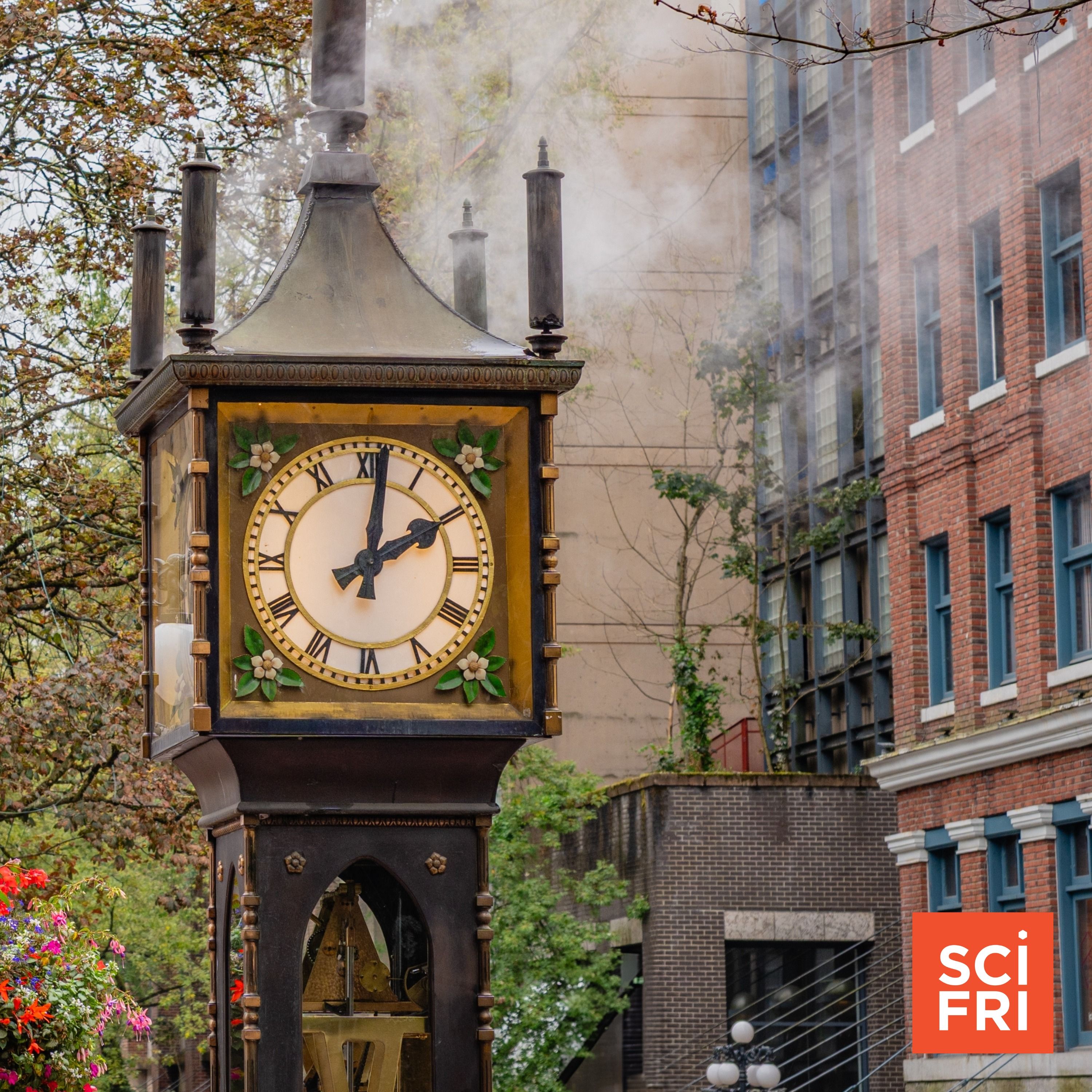
Why are we changing the way we keep time?

The time we see on our phones and clocks is based on the Earth’s rotation. But that rotation speed varies, so if it speeds up or slows down, our time measurements get thrown off. To solve this problem, timekeeping scientists have been deploying leap seconds to keep our clocks aligned with our planet. That is, until last week. After decades of debate, a global committee of timekeepers voted to kill the leap second. Host Flora Lichtman speaks to journalist Emma Gometz, who reported on the change for Scientific American, and physicist Judah Levine, to understand why this decision is a big deal and what exactly it means for us. Guests: Emma Gometz is the associate newsletter editor at Scientific American, based in Queens, New York. Dr. Judah Levine is a faculty member in the Department of Physics and a fellow of JILA at the University of Colorado, Boulder. Transcripts for each episode are available within 1-3 days at sciencefriday.com. Subscribe to this podcast. Follow our show on Instagram, TikTok, Facebook, and Bluesky @scifri and sign up for our newsletters. Got a science question that’s keeping you up at night? Call us: 877-472-4374 Hosted by Simplecast, an AdsWizz company. See pcm.adswizz.com for information about our collection and use of personal data for advertising.


0:00-14:03

transcript

No transcript — this publisher did not publish one.

show notes

The time we see on our phones and clocks is based on the Earth’s rotation. But that rotation speed varies, so if it speeds up or slows down, our time measurements get thrown off. To solve this problem, timekeeping scientists have been deploying leap seconds to keep our clocks aligned with our planet. That is, until last week. After decades of debate, a global committee of timekeepers voted to kill the leap second. 

Host Flora Lichtman speaks to journalist Emma Gometz, who reported on the change for Scientific American, and physicist Judah Levine, to understand why this decision is a big deal and what exactly it means for us.

Guests:

Emma Gometz is the associate newsletter editor at Scientific American, based in Queens, New York.

Dr. Judah Levine is a faculty member in the Department of Physics and a fellow of JILA at the University of Colorado, Boulder. 

Transcripts for each episode are available within 1-3 days at sciencefriday.com.
 

Subscribe to this podcast. Follow our show on Instagram, TikTok, Facebook, and Bluesky @scifri and sign up for our newsletters. Got a science question that’s keeping you up at night? Call us: 877-472-4374


Hosted by Simplecast, an AdsWizz company. See pcm.adswizz.com for information about our collection and use of personal data for advertising.

links10