
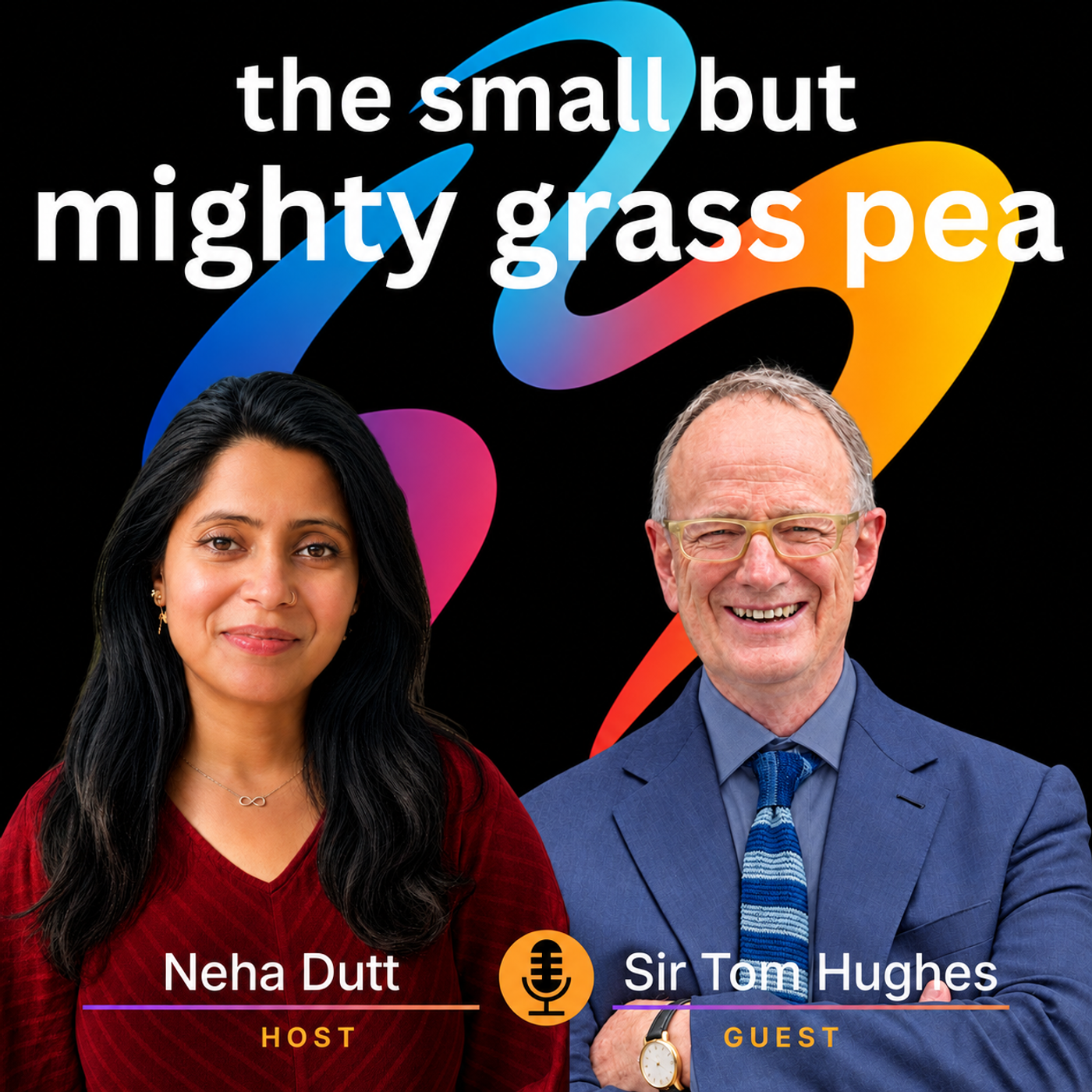
Episode 6: Nature's Plant, Science's Puzzle
transcript
show notes
What if a tiny pea could take some of the pressure off the world's standing forests?
Between 2001 and 2022, an estimated 11 million hectares of global deforestation was associated with soy and maize production. These are two crops deeply embedded in the world's animal-feed system.
Drumroll entry for the tiny but mighty grass pea:
High in protein. Able to survive drought and flooding. A nitrogen-fixing legume that can grow in extreme weather conditions and has prevented widespread famine in the Horn of Africa. And early studies already show it can replace some soy, even reduce maize use, in animal feed without compromising animal growth.
There is one catch: the grass pea contains a neurotoxin. Scientists around the world, including at the John Innes Centre, are now trying to breed it out while retaining the plant's extraordinary resilience.
Crack that, and this ancient famine-survival crop holds the potential to interrupt the current devastating deforestation footprint associated with soy and maize, taking pressure off forests while making food systems more resilient to a hotter, less predictable climate.
The humble grass pea now stands at a tipping point – can science work with Nature’s original design to breed out the neurotoxin and make it the plant that could rewiggle the world’s food systems and reduce their related deforestation footprint?
To learn more, listen to rewiggle episode 6: Nature’s Plant, Science’s Puzzle, with Sir Thomas Hughes-Hallet, Chair of the John Innes Centre.
- an estimated 11 million hectares of global deforestation was associated with soy and maize production.nature.com
- prevented widespread famine in the Horn of Africacroptrust.org
- ncluding at the John Innes Centrejic.ac.uk
- current devastating deforestation footprint associated with soy and maizearchive.ourworldindata.org