transcript
show notes
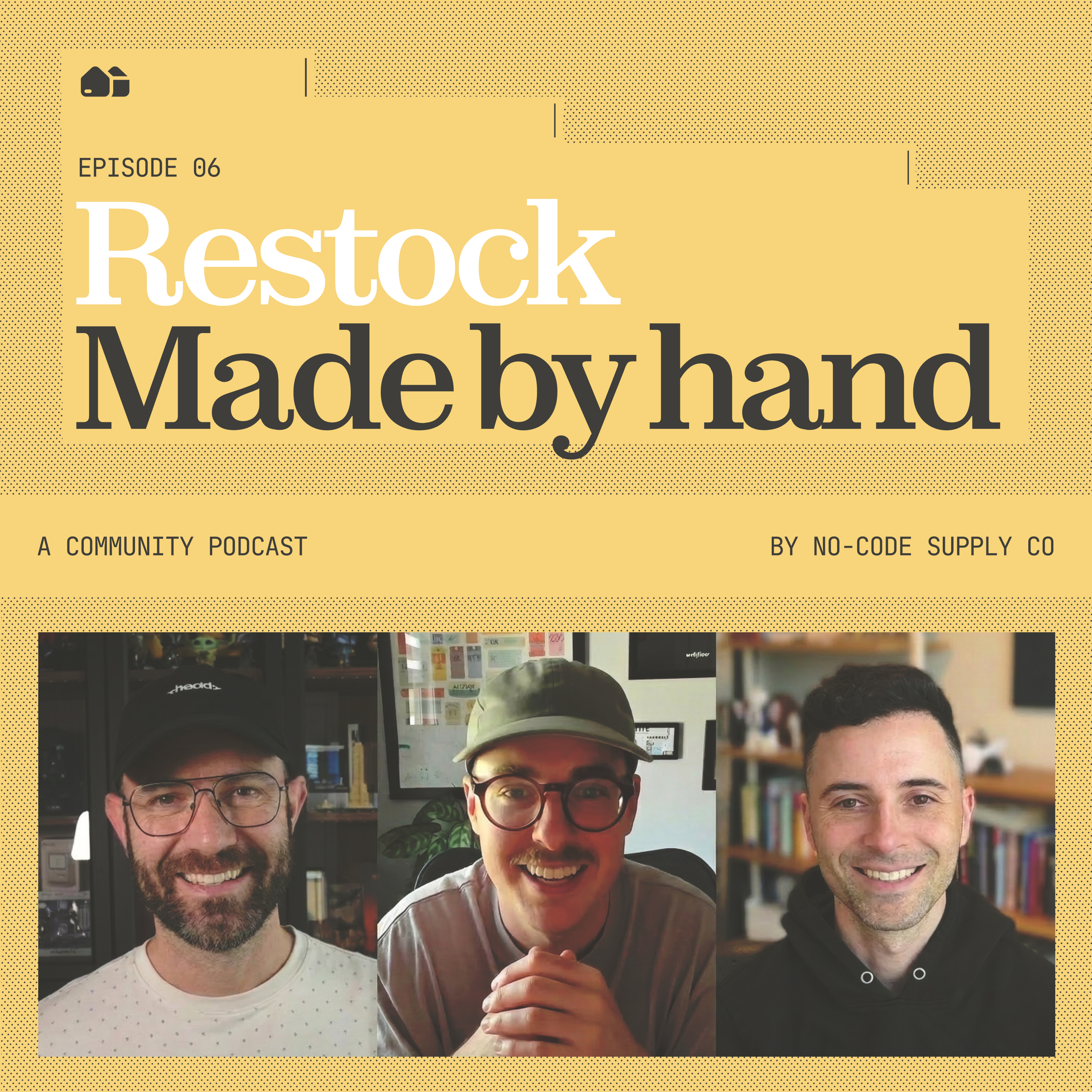
Restock by No-Code Supply Co. | Ep. 06 | Made by hand
Opus can one-shot shader language now, and that changes what a small team can build. Ilya Kroogman, founder of The Digital Panda, walks through what comes out of that unlock: gobo light maps, glass refraction on a product hero, fur and grass built from splines instead of meshes, a paint-on-an-object deformer for giving a panda a haircut. The catch is knowing when to ship it. A shader only earns its place when it serves the end user and the business goal, which is why financial clients get clean logins and animated illustrations get saved for the brands that actually want them.
The bigger idea is imperfection as a trust signal. Randomization, hand-drawn strokes, and the rough edges people read as real are exactly what a model defaults away from. As WebGPU and HTML in Canvas mature, the browser keeps moving toward a low-level operating system, the shareable link keeps replacing the static file, and the work that holds its value is the work a human chose to make by hand.
Resources & Links:
- The Digital Panda https://www.thedigitalpanda.com
- Ilya Kroogman https://www.linkedin.com/in/ilyakr
- Shadertoy https://www.shadertoy.com
- cables.gl https://cables.gl
- Three.js https://threejs.org
- Rive https://rive.app
- Lottie https://lottiefiles.com
- Active Theory https://activetheory.net
- Paul Scherrer Institute https://www.scholtysik.ch/projekte/paul-scherrer-institut-psi.html
- HTMLBin https://htmlbin.dev
- here.now https://here.now
- Linear https://linear.app
No-Code Supply Co. https://www.nocodesupply.co
Corey Moen https://www.coreymoen.com
Matthew P Munger https://www.matthewpmunger.com