Artwork for Reel Britannia
TV & Film

Reel Britannia

Scott

A very British podcast about very British movies...with the occasional hint of professionalism

  • 20 episodes
  • Updated Thursday

Episodes20

  • Thursday · 1 hr 34 min

    Episode 201 - The Commitments (1991)

    Dublin soul, magnificent music and enough creative differences to sink a small record label. This episode was recorded a couple of weeks ago, before the terribly sad news of Glen Hansard's death earlier this week. We remember him with great affection as Outspan Foster, one of the unforgettable faces and voices at the heart of The Commitments. Dublin has the music. Jimmy Rabbitte has the ambition. What he does not yet have is a band, any money, or the faintest idea how to keep a roomful of volatile musicians from throttling one another. This time on Reel Britannia, Scott is joined by Maurice in Melbourne, Kerry in Boston and Tom from just down the road for Alan Parker's joyous, foul-mouthed and gloriously chaotic 1991 musical comedy. Based on Roddy Doyle's novel, The Commitments follows Jimmy's attempt to bring soul music to the working-class streets of Dublin by assembling a group whose talent is matched only by its ability to argue. The team discusses the film's extraordinary cast, including Robert Arkins, Andrew Strong, Angeline Ball, Maria Doyle Kennedy, Bronagh Gallagher, Colm Meaney and Glen Hansard. There is also plenty of admiration for the thunderous soundtrack, the sharp dialogue and Parker's knack for making the whole enterprise feel as though it might either conquer the world or collapse before the next rehearsal. So pull on your sharpest suit, warm up the brass section and try not to mention creative differences. The Commitments are ready to play, although whether they will all still be speaking by the encore is another question. This and all previous episodes are available wherever you download your podcasts and at: https://directory.libsyn.com/shows/view/id/reelbritannia #ReelBritannia #TheCommitments #AlanParker #RoddyDoyle #GlenHansard #IrishCinema #BritishFilmPodcast #FilmPodcast

  • July 3 · 1 hr 4 min

    Episode 200 - Porridge - The Movie (1979)

    Fletch Gets Out. Getting Back In Is the Tricky Bit. For its landmark 200th episode, Reel Britannia is heading behind bars for Porridge – The Movie, the 1979 big-screen outing for one of Britain's best-loved television comedies. Ronnie Barker returns as the wily Norman Stanley Fletcher, still doing his best to serve his sentence with the minimum possible effort. Alongside him is Richard Beckinsale as the good-natured Lennie Godber, while Fulton Mackay's fearsome Mr Mackay and Brian Wilde's endlessly flustered Mr Barrowclough attempt to maintain something vaguely resembling order at Slade Prison. Peter Vaughan also appears as the quietly terrifying Harry "Grouty" Grout. When Fletcher is persuaded to help organise a football match between the prisoners and a celebrity team, he naturally suspects that something is amiss. Before long, he and Godber are caught up in an escape plan that leaves them facing an unusual problem: not how to get out of prison, but how to get back in before anyone notices. Directed by Dick Clement and written by Clement with Ian La Frenais, the film retains the warmth, sharp dialogue and beautifully observed characters of the original series. It is also one of those rare British sitcom spin-offs that feels like a proper film rather than an extended episode with a slightly larger catering budget. Join the Reel Britannia team as they celebrate episode 200 in their familiar warm, conversational and lightly irreverent style. This episode and the complete Reel Britannia back catalogue are available wherever you download your podcasts and at: https://directory.libsyn.com/shows/view/id/reelbritannia Follow the podcast on X at @rbritanniapod. Special bonus episodes are also available through the Reel Britannia Patreon, where your support unlocks even more British film discussion. #Porridge #PorridgeTheMovie #RonnieBarker #RichardBeckinsale #FultonMackay #BrianWilde #BritishComedy #BritishCinema #ReelBritannia #Podcast #Episode200

  • June 19 · 40 min

    Episode 199 - The Wrong Arm Of The Law (1963)

    When the crooks and the coppers join forces, London's criminal underworld is in very confused hands. For Episode 199, Reel Britannia slips into the sharply dressed, cheerfully crooked world of The Wrong Arm of the Law, a 1963 British crime comedy in which the nation's criminals discover that even dishonesty was better organised in the old days. Peter Sellers stars as Pearly Gates, a suave London gang boss who divides his time between running a fashion house and supervising a criminal organisation with the efficiency of a suburban business. His employees may be thieves, but they enjoy paid holidays, luncheon vouchers and a surprisingly enlightened approach to staff welfare. Crime, it seems, was never so civilised. Trouble arrives when a gang of Australian crooks begins impersonating police officers and helping themselves to the proceeds of other people's robberies. This is regarded as extremely poor form. With both Scotland Yard and the London underworld irritated, Pearly finds himself entering into an unusual alliance with Inspector "Nosey" Parker, played with glorious bluster by Lionel Jeffries. Directed by Cliff Owen and written by a team that includes Ray Galton and Alan Simpson, the film surrounds Sellers with a marvellous collection of familiar British faces. Bernard Cribbins brings nervous energy to Pearly's reluctant associate O'Toole, while John Le Mesurier appears with the beautifully weary air of a man who has already filled in far too many forms. The Wrong Arm of the Law is a breezy caper filled with bungling crooks, pompous policemen, double-crosses and a reassuring amount of London location work. It belongs to that wonderful strain of British comedy in which authority is treated with suspicion, crime is conducted by committee, and nobody appears capable of organising anything without first stopping for tea. Join us for Episode 199 of Reel Britannia, as we revisit a British battle between law and disorder — with just a hint of professionalism. All episodes available on your favourite podcast catcher Head over to Patreon for special bonus episodes Follow us on X @rbritanniapod

  • June 6 · 1 hr 2 min

    Episode 198 - Hammer Britannia 024 - Nightmare (1964)

    Hammer opens the door to a nightmare where every shadow has a secret. For the latest episode of Reel Britannia, we step into the chilly corridors and troubled dreams of Nightmare, Hammer's 1964 psychological thriller from director Freddie Francis and writer Jimmy Sangster. This is Hammer without the fangs, capes, castles, or buckets of Kensington Gore. Instead, it gives us something colder and more unsettling: a black-and-white tale of fear, memory, manipulation and madness, where the terror creeps in quietly and then refuses to leave. The story follows Janet, a young woman haunted by disturbing visions connected to her troubled family past. Sent home from school after a frightening episode, she returns to a grand country house where comfort, recovery and reassurance should be waiting. Naturally, this being Hammer, they are not. The house feels too still, the people around her seem a little too careful, and Janet's nightmares begin to blur horribly with waking life. With Jennie Linden, David Knight, Moira Redmond and Brenda Bruce leading the cast, Nightmare is a neat, sinister little puzzle box of a film. Freddie Francis brings his cinematographer's eye to every shadowy hallway and candlelit room, while Jimmy Sangster delivers one of those beautifully twisted Hammer scripts where nothing is quite as straightforward as it first appears. In this episode, we look at how Nightmare fits into Hammer's run of psychological thrillers alongside films such as Paranoiac, Maniac and Hysteria, and why these smaller, moodier pictures deserve just as much affection as the studio's better-known monster movies. We'll talk about its performances, its atmosphere, its clever structure, and that wonderful sense of 1960s British unease that Hammer did so well. All episodes available on your favourite podcast catcher Head over to Patreon for special bonus episodes Follow us on X @rbritanniapod #ReelBritannia #HammerHorror #Nightmare1964 #BritishCinema #HammerFilms #FreddieFrancis #JimmySangster #ClassicHorror #BritishFilm #MoviePodcast

  • May 21 · 1 hr 10 min

    Episode 197 - The Tall Guy (1989)

    Episode 197 - The Tall Guy (1989) "What in the name of Judas Iscariot's bumboy is going on?" Dexter King (Jeff Goldblum) is an awkward American actor stranded in London, suffering from severe hay fever and a chronic case of career stagnation. His day job consists of being repeatedly humiliated on stage as the hapless straight man to Ron Anderson (Rowan Atkinson), a spectacularly arrogant and insecure British comedian who wields his ego like a blunt instrument. Dexter's miserable existence takes a sharp upward turn when a trip to the clinic for allergy shots introduces him to Kate (Emma Thompson), a brisk, hyper-pragmatic nurse with a devastatingly dry wit. Naturally, Dexter is immediately smitten. What follows is a courtship that culminates in one of cinema's most gloriously destructive love scenes, where the sheer force of their pent-up, awkward passion obliterates an entire apartment, claiming a piano, a mattress, and several lamps as collateral damage. However, the path to happily-ever-after is rarely smooth. After finally snapping and getting fired by the tyrannical Ron, Dexter desperately auditions for the only gig available: the title role in Elephant!, a West End musical adaptation of The Elephant Man. It is a masterpiece of terrible taste, featuring upbeat tap numbers, grotesque latex prosthetics, and lyrics that rhyme "freak" with "eek." Just as Dexter is tap-dancing his way toward theatrical infamy, his newfound happiness with Kate is threatened by a misunderstanding and the predatory advances of his former boss, Ron. To win the girl back, Dexter must navigate the treacherous waters of opening night, outmaneuver a megalomaniac, and prove that underneath the giant, rubbery head of a Victorian medical curiosity beats the heart of a true romantic. It's a quintessential British rom-com, laced with absurdity, sharp theatrical satire, and a deeply relatable desire to punch your terrible boss in the face. #reelbritannia #podcast #movie #britmovie #TheTallGuy #TheTallGuy1989 #JeffGoldblum #EmmaThompson #RowanAtkinson #BestSexSceneEver #ElephantTheMusical All episodes available at: https://directory.libsyn.com/shows/view/id/reelbritannia Coming soon...our next episode:

  • April 29 · 1 hr 18 min

    Episode 196 - School For Scoundrels (1960)

    Episode 196 - School For Scoundrels (1960) "Hard cheese old boy!" School for Scoundrels is one of those wonderfully sharp British comedies that takes something faintly ridiculous and plays it with a completely straight face, which of course makes it even funnier. Released in 1960, it follows Henry Palfrey, a polite, mild-mannered man who seems to be permanently stuck on the losing side of life. He is decent, respectable and reasonably successful on paper, yet somehow he always ends up second best, especially when faced with people who have more confidence, more nerve and rather fewer scruples. Chief among those people is Raymond Delauney, a sleek, smug and maddeningly self-assured rival who seems able to outmanoeuvre Henry at every turn. Whether it is in romance, social situations or the small but humiliating battles of everyday life, Delauney has the infuriating knack of always coming out on top. Henry, increasingly fed up with being the one left floundering, is drawn into the orbit of the mysterious Mr Potter and his remarkable College of Lifemanship, where the art of being "one-up" is treated with all the seriousness of a military campaign. From there, the film becomes a deliciously observed contest of manners, manipulation and social gamesmanship. What makes it so enjoyable is the way it turns ordinary middle-class anxieties into something almost heroic. A lunch, a conversation, a game of tennis or the purchase of a second-hand car suddenly become matters of strategy and survival. The humour is dry, knowing and beautifully played, with Ian Carmichael bringing warmth and sympathy to Henry's struggles, while Terry-Thomas is gloriously unbearable as the perfectly polished cad. Witty, elegant and just a little wicked, School for Scoundrels remains a classic British comedy because it understands an eternal truth: in a world full of bounders, bluffers and social bullies, good manners alone may not be enough. Coming soon...our next episode:

  • April 19 · 47 min

    Episode 195 - Home At Seven (1952)

    Episode 195 - Home At Seven (1952) He came home on time... a day too late. Home at Seven is a neatly unsettling British mystery that begins with one of the simplest ideas imaginable and turns it into something deeply unnerving. David Preston, a mild-mannered bank clerk, arrives home after work expecting an ordinary evening with his wife. Instead, he is met with shock, confusion and growing alarm, because as far as everyone else is concerned, he has not been gone for the day. He has been missing for over twenty-four hours. David is utterly baffled. To him, nothing is wrong. He left work, came home, and the clock seems to agree with him. But the people around him know otherwise, and the more questions they ask, the less certain everything becomes. His wife Janet is frightened and hurt, his friends are concerned, and before long the police are taking an interest as well. What begins as a strange domestic puzzle quickly deepens into something much darker when it becomes clear that David's missing hours may be connected to a serious crime. The great strength of the film lies in the way it builds tension from ordinary surroundings. This is not a flashy thriller full of car chases and melodrama. It is a quiet, close, nerve-jangling mystery played out in drawing rooms, offices and polite conversations that gradually become loaded with suspicion. The more David tries to understand what has happened, the more trapped he seems to become, and the film draws real unease from the idea that a respectable, routine life can suddenly tilt off balance. With strong performances, especially from Ralph Richardson and Margaret Leighton, Home at Seven creates a mood of creeping dread without ever overplaying its hand. It is a clever, intimate thriller about memory, identity and the terrifying possibility that a missing day might hold far more than anyone is prepared for.

  • April 7 · 52 min

    Episode 194 - Go to Blazes (1962)

    Episode 194 - Go To Blazes (1962) "So many firms nowadays prefer conflagration to liquidation." If you are looking for a cracking way to spend eighty minutes, Go to Blazes is a proper hidden gem of British cinema. It has that pitch-perfect 1962 atmosphere—stylish, colourful, and just a touch rebellious. The plot is an absolute hoot: three ambitious but slightly dim-witted crooks decide the ultimate way to beat the London traffic after a smash-and-grab is to nick a literal fire engine. It is one of those "so barmy it just might work" ideas that keeps you smiling as you watch them navigate the sheer absurdity of their own scheme. What really makes the film stand out is its visual flair. The vibrant red of the fire engine against the backdrop of vintage London looks smashing in Technicolor, and the whole thing has a snappy, rhythmic energy. Dave King is top-notch as the group's leader, Bernard; he plays the part with a smooth, confident charm that makes you genuinely root for the lads to pull it off, even when things start going pear-shaped. Alongside Norman Rossington and Daniel Massey, the trio shares a natural, effortless chemistry that feels like a group of real mates getting in way over their heads. The humour is exactly what you want from a classic British comedy—sharp and dry, but never slow or stuffy. It is a breezy, lighthearted caper that does not try to be a heavy drama, and it is all the better for it. Between the jazzy soundtrack and the escalating chaos of the fire engine ruse, the film is just pure, unadulterated entertainment. It captures a sense of mischief and fun that feels completely timeless. It is a stylish, cheeky joyride that proves you do not need a massive budget to make a comedy that really hits the mark.

  • March 22 · 1 hr 20 min

    Episode 193 - Hammer Britannia 023 - Taste Of Fear / Scream Of Fear (1961)

    Taste Of Fear / Scream Of Fear (1961) "You say my mind is affecting my legs. You're wrong. It's my legs that are affecting my mind." Taste of Fear, released in 1961 and also known in some territories as Scream of Fear, is one of those wonderfully chilly British thrillers that shows just how much tension can be created without a drop of gore. Directed by Seth Holt for Hammer Films, it stands slightly apart from the studio's more famous horror output of the period. Instead of Gothic castles, vampires and lurid supernatural shocks, this is a sleek, sinister psychological suspense picture, elegant and unsettling in equal measure. The story centres on Penny Appleby, a young woman confined to a wheelchair, who arrives at her estranged father's Riviera home only to discover that he is mysteriously absent. Waiting there are her father's new wife Jane, the family doctor, and a coolly attentive chauffeur, all of whom seem polite on the surface but quietly difficult to trust. Almost at once, Penny begins to experience strange and deeply unnerving sights, including apparent glimpses of her father's dead body. The trouble is that each terrifying vision vanishes before anyone else can confirm it, leaving both Penny and the audience unsure of what is real, what is manipulation, and what might be happening inside her own distressed mind. What makes Taste of Fear so effective is its atmosphere. Holt directs with tremendous control, drawing suspense from silence, glances, footsteps, empty corridors and sudden appearances rather than noisy shocks. The black-and-white photography gives the film a sharp, polished look, all bright sunlight and dark shadows, which somehow makes everything feel even more threatening. Susan Strasberg gives Penny real vulnerability and determination, while Ann Todd brings an icy poise to Jane that keeps the nerves jangling. It remains one of Hammer's smartest and most stylish thrillers: tense, clever, beautifully made, and full of quiet menace from the first frame to the last. All episodes available on your favourite podcast catcher Head over to Patreon for special bonus episodes Follow us on X @rbritanniapod

  • March 14 · 1 hr

    Episode 192 - To Sir With Love (1967)

    Episode 192 - To Sir WIth Love (1967) "If you must play these filthy games, do them in your homes, and not in my classroom!" Set against the vibrant, swinging backdrop of 1960s London, To Sir, With Love is a timeless feel-good classic that radiates warmth and optimism. The film stars the legendary Sidney Poitier as Mark Thackeray, an unemployed engineer who takes a temporary teaching position at a rough-and-tumble East End school. At first, the situation seems impossible. The students are rowdy, rebellious, and determined to drive their new teacher away just as they did the others. But Thackeray refuses to quit. In a pivotal, triumphant moment, he literally throws the textbooks into the bin and changes the rules. He decides to treat these "delinquents" not as children, but as adults, demanding nothing but mutual respect and dignity. What follows is a delightful transformation. Through honest conversations about life, survival, and personal pride—and a charming class trip to a museum—the friction melts into friendship. The students, including the tough Denham and the spirited Peg, begin to blossom, realizing that Thackeray is the champion they never knew they needed. The film culminates in the iconic end-of-term dance, a scene overflowing with joy and 60s style. When Lulu takes the stage to belt out the soaring title track, it captures the emotional peak of the story perfectly. It is a celebration of growth, gratitude, and the human connection. Ultimately, To Sir, With Love is a shining reminder that patience and kindness can change lives, leaving the audience cheering for the teacher who taught his students how to face the world.

  • February 28 · 1 hr 4 min

    Episode 191 - The L Shaped Room (1962)

    Episode 191 - The L Shaped Room (1962) "You've had eight over the eight, you lovely bit of crumpet, you!" Directed by Bryan Forbes and based on the novel by Lynne Reid Banks, The L-Shaped Room is a quintessential example of British "kitchen sink" realism. The film tells the poignant story of Jane Fosset (played by Leslie Caron in a BAFTA-winning performance), a young French woman who arrives in London unmarried and pregnant—a precarious social position in the early 1960s. Seeking anonymity, Jane moves into a bug-ridden boarding house in Notting Hill. Her room, grim and L-shaped, becomes the center of her new life among a community of social outcasts. Her neighbors include Mavis, an aging vaudeville performer; Johnny, a black jazz musician facing prevalent racism; and distinctively, Toby (Tom Bell), a struggling, cynical writer. The core of the narrative focuses on the tentative, blossoming romance between Jane and Toby. As they find solace in one another amidst the squalor, Jane grapples with whether to undergo an abortion or keep the child. However, the relationship is built on a fragile foundation of silence; Jane hides her pregnancy from Toby, fearing rejection. When the truth inevitably surfaces, Toby's struggle to accept another man's child exposes the limitations of his love and the harsh moral judgements of the era. Ultimately, the film is a sensitive character study rather than a traditional romance. It tackles then-taboo subjects—illegitimacy, race, and sexuality—with remarkable nuance. The story concludes on a bittersweet note of independence: Jane chooses to keep her baby but leaves the L-shaped room and Toby behind, departing not as a victim, but as a woman who has found the strength to face the future on her own terms.

  • February 15 · 1 hr 3 min

    Episode 190 - Carry On Cabby (1963)

    Episode 190 - Carry On Cabby (1963) "I wonder if I've got the right soap? I can't remember if it was green for oily skin or oily for green skin." "Carry On Cabby" is widely celebrated as one of the most heartwarming and narrative-driven treasures in the famous franchise. Stepping away from the purely episodic sketches of its predecessors, this 1963 classic delivers a genuinely sweet romantic comedy that stands the test of time. It is a delightful battle of the sexes that combines wit, charm, and a surprising amount of emotional depth. The story centers on workaholic Charlie Hawkins, played by the legendary Sid James, who runs the gritty "Speedee Taxis." When Charlie begins to neglect his home life, his wife Peggy—portrayed by the wonderful Hattie Jacques—decides to teach him a lesson he will never forget. She secretly uses his money to launch a rival company, "Glam Cabs." Suddenly, Charlie faces stiff competition from a fleet of shiny new Fords driven by stunning women, turning the streets of London into a hilarious battleground. What makes this film truly special is the undeniable magic between the leads. Sid James and Hattie Jacques are at their absolute best, portraying a married couple with a warmth that grounds the wackiness. The humor is infectious, moving from the cheeky banter of the "Glam Cab" drivers to the slapstick failures of Charlie's men as they attempt to sabotage the competition. Beyond the laughs, the movie serves as a vibrant time capsule, offering viewers a nostalgic glimpse of 1960s London in all its retro glory. Ultimately, love conquers all in a chaotic, horn-honking finale, proving that this is one ride you don't want to miss!

  • January 25 · 1 hr 24 min

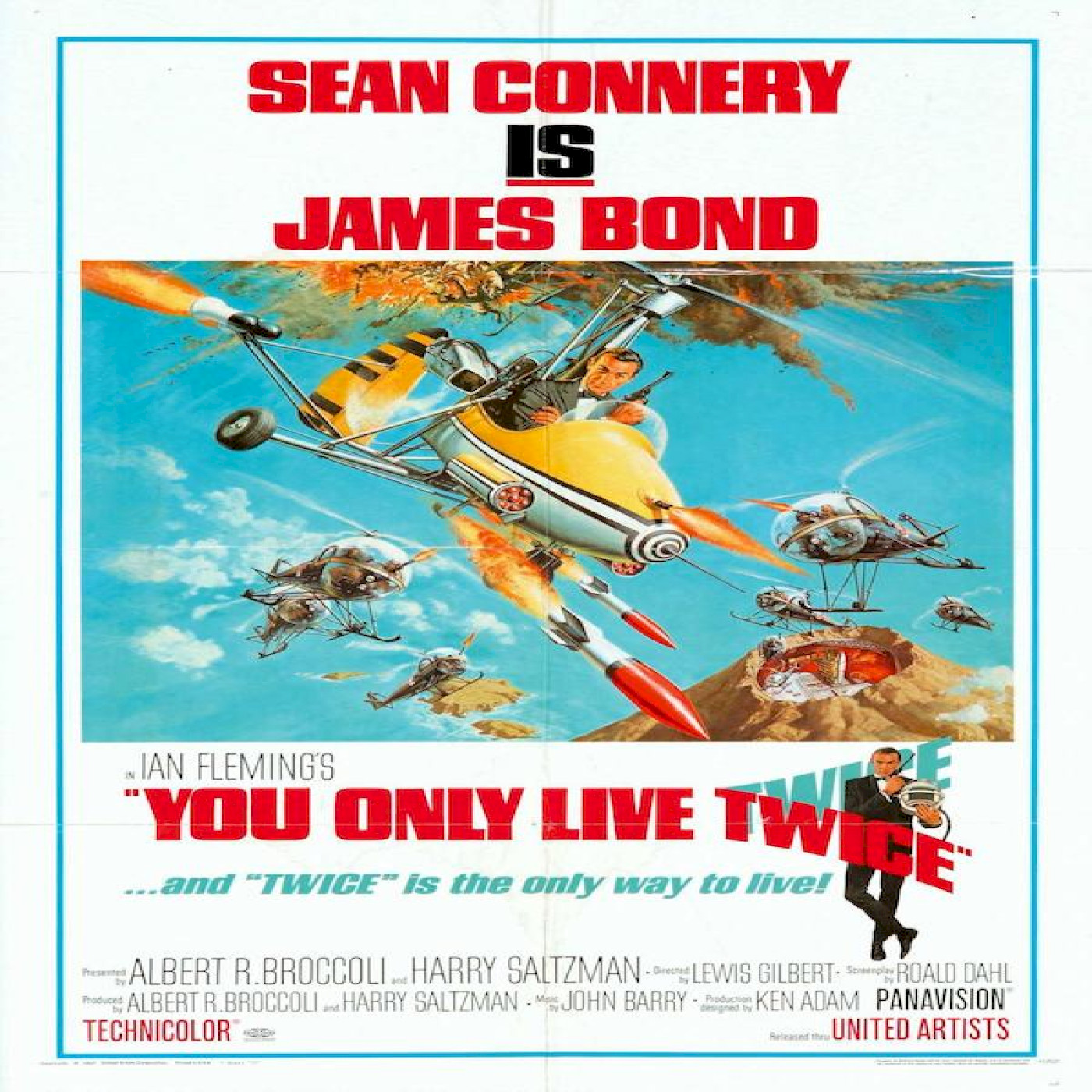
    Episode 189 - You Only Live Twice (1967)

    Episode 189 - You Only Live Twice (1967) "I must say, you have a lot of energy for a dead man, Mister Bond." Get ready for the ultimate 1960s spy spectacle! You Only Live Twice (1967) isn't just a movie; it is a massive, colourful adventure that takes Sean Connery's James Bond to the vibrant landscapes of Japan for one of his most ambitious missions ever. From the opening moments, the film radiates a distinct, larger-than-life energy that defined the "blockbuster" era of the franchise. The film is a masterclass in escapism. Bond trades his usual Aston Martin for "Little Nellie," a heavily armed, pocket-sized autogyro that leads to one of the most thrilling and inventive aerial dogfights in cinema history. The action is fast, fun, and filled with the classic 007 swagger that fans adore. However, the true showstopper is the scale of the villainy. We finally see the face of Bond's arch-nemesis, Ernst Stavro Blofeld (complete with the iconic white cat), hiding out in what is arguably the greatest movie set ever built: a massive, hollowed-out volcano rocket base! The climax is pure adrenaline, featuring a literal army of ninjas repelling down into the volcano to stop World War III. With Nancy Sinatra's dreamy, beautiful title track setting the mood and Ken Adam's breathtaking set designs stealing the show, You Only Live Twice is a triumph of imagination. It is campy, explosive, and wildly entertaining—Bond at his absolute biggest and boldest.

  • January 11 · 1 hr 7 min

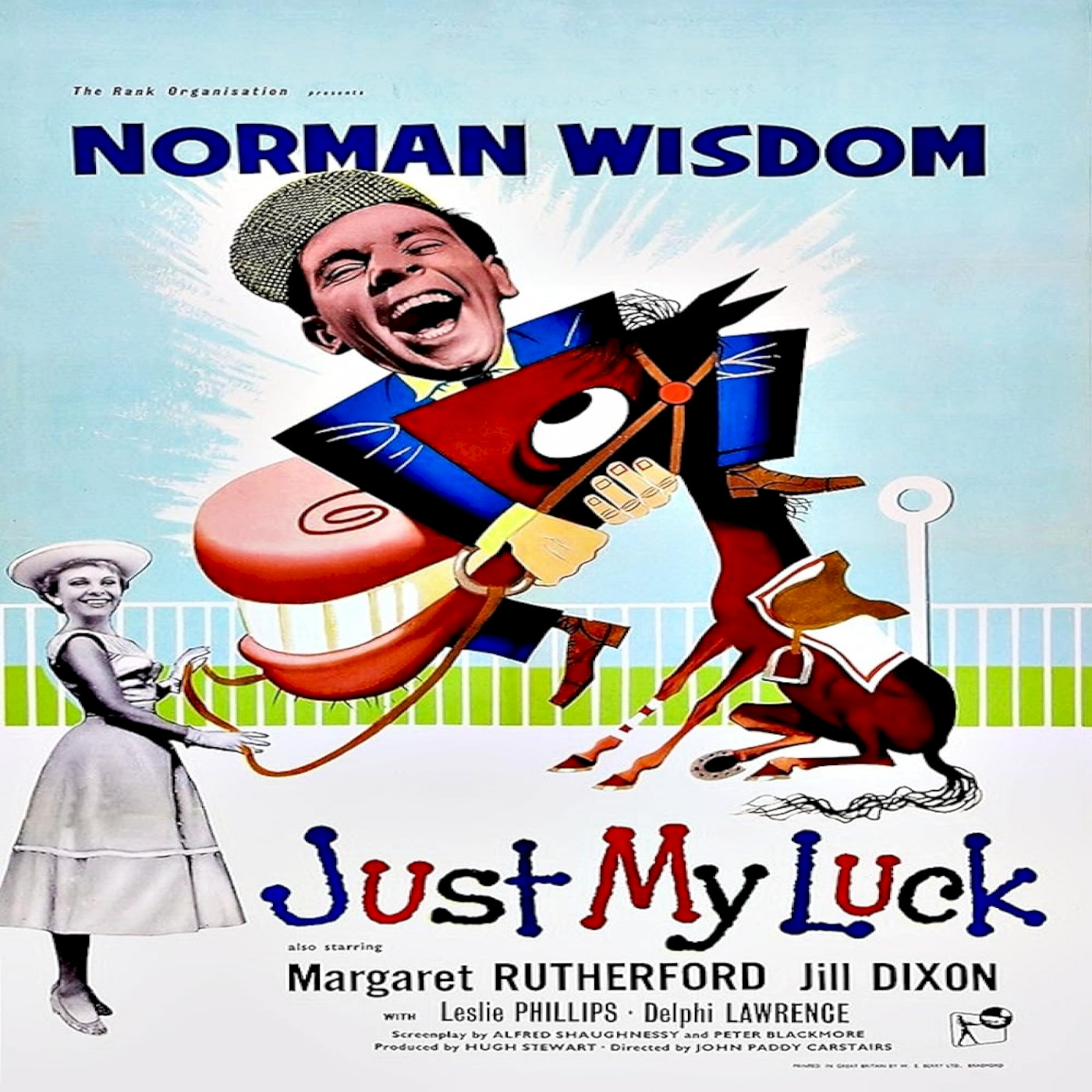
    Episode 188 - Just My Luck (1957)

    Episode 188 - Just My Luck (1957) "Choose Your Entertainment With "WISDOM"!!" Just My Luck (1957) is a sparkling slice of postwar British comedy that captures both the optimism and the charm of its era. Starring the ever-appealing Norman Wisdom as Norman Hackett, a humble jeweller's apprentice with big dreams, the film follows his hapless but heartfelt attempts to turn his fortunes around. Norman, eternally late and forever in trouble at work, is secretly besotted with glamorous shop assistant Anne (delightfully played by Jill Dixon). When he overhears that she's a fan of racing, he decides to risk everything by placing a series of bets—turning a simple flutter into a full-blown adventure. What follows is a joyful run of misunderstandings, slapstick chaos and bursts of romantic idealism, all propelled by Wisdom's trademark physical comedy and irrepressible energy. He tumbles, stumbles, and careens through life with that winning mix of innocence and determination that made him Britain's favourite underdog. The climax at the racetrack—where Norman's luck finally turns in spectacular fashion—delivers a perfectly timed payoff that leaves audiences smiling. Behind the laughter, Just My Luck shows the craftsmanship of director John Paddy Carstairs, who had honed Wisdom's screen persona across several Ealing-flavoured comedies. Shot at Pinewood Studios, the film's brisk pacing, colourful sets, and lively orchestral score give it a polish that stands out among the decade's feel-good comedies. On release, it proved another box-office hit for Wisdom, confirming his status as the British everyman who could make misfortune look hilarious. Critics admired its warmth and verve, and audiences adored its blend of humour, heart, and a touch of fantasy—the notion that sheer enthusiasm might be enough to change one's destiny. Buoyant, bright, and brimming with optimism, Just My Luck remains a charming reminder that sometimes fortune really does favour the foolishly brave.

  • January 8 · 57 min

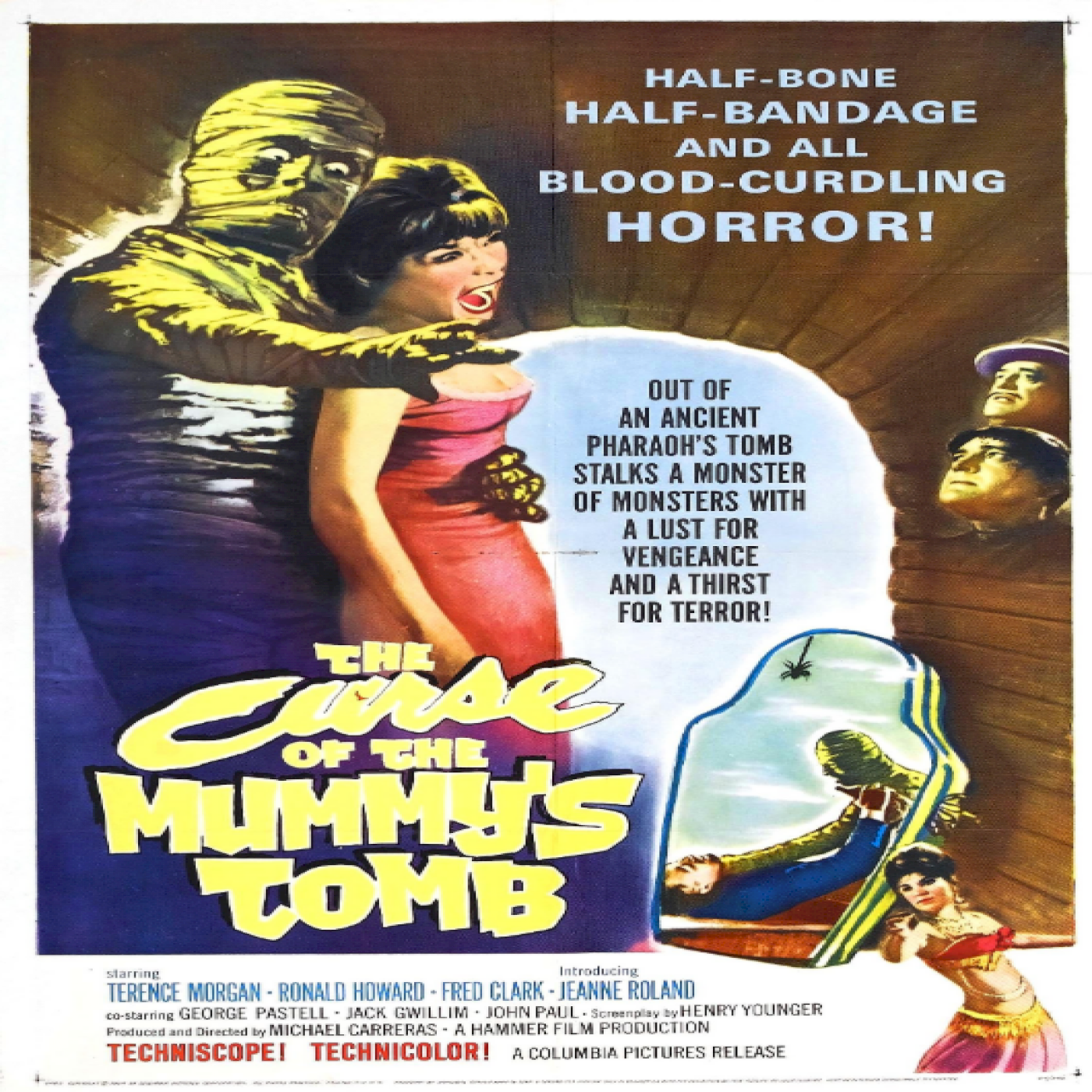
    Episode 187 - Hammer Britannia 022 - The Curse Of The Mummy's Tomb (1964)

    Episode 187 - Hammer Britannia 022 - The Curse Of The Mummy's Tomb (1964) "He's living in the past! This is 1900, you have to think modern." Dust off your fez and grab your torch! If you're in the mood for a splendidly spooky adventure that oozes 1960s charm, look no further than Hammer's 1964 classic, The Curse of the Mummy's Tomb. This film is a pure, unadulterated slice of gothic fun, a wonderful reminder of a time when movie monsters were tragic, heroes were dashing, and curses were, well, very literal. The story kicks off in the grand tradition: a team of intrepid (and slightly reckless) archaeologists unearths the tomb of the Egyptian prince Ra-Antef. Despite the usual ominous warnings etched on the walls, they crate up their findings and ship them off to London, guided by the bombastic American showman, Adam Beauchamp (played with wonderful gusto by Fred Clark). Beauchamp's plan? A sensational, profit-making roadshow! Of course, the mummy has other ideas. It's not long before the ancient guardian is re-animated and stalking the foggy streets of London, exacting a methodical and wonderfully theatrical revenge on his desecrators. What makes this movie such a joy isn't bone-chilling terror, but its incredible atmosphere and earnestness. It's a film that fully commits to its premise. The sets are a colorful delight, from the treasure-filled tomb to the lavishly decorated London drawing rooms that are about to be rudely interrupted by a 4,000-year-old party crasher. The mummy itself, when finally revealed in its full, bandaged glory, is a fantastic piece of classic monster design. The cast is clearly having a wonderful time. Terence Morgan is the perfect, square-jawed hero, while Ronald Howard provides the necessary archaeological gravitas. But it's Fred Clark's performance as the quintessential "Ugly American" promoter that steals the show, chewing scenery with an infectious energy. The Curse of the Mummy's Tomb is the perfect cinematic comfort food. It's a fast-paced, colourful, and thrilling adventure that never takes itself too seriously. It doesn't aim to haunt your nightmares; it aims to entertain you for 80 minutes with a ripping good yarn. This and previous episodes can be found everywhere you download your podcasts Bonus content available at: patreon.com/ReelBritanniaPodcast Follow us on Twitter @rbritanniapod Thanks for listening Scott and Steven

  • Dec 20, 2025 · 55 min

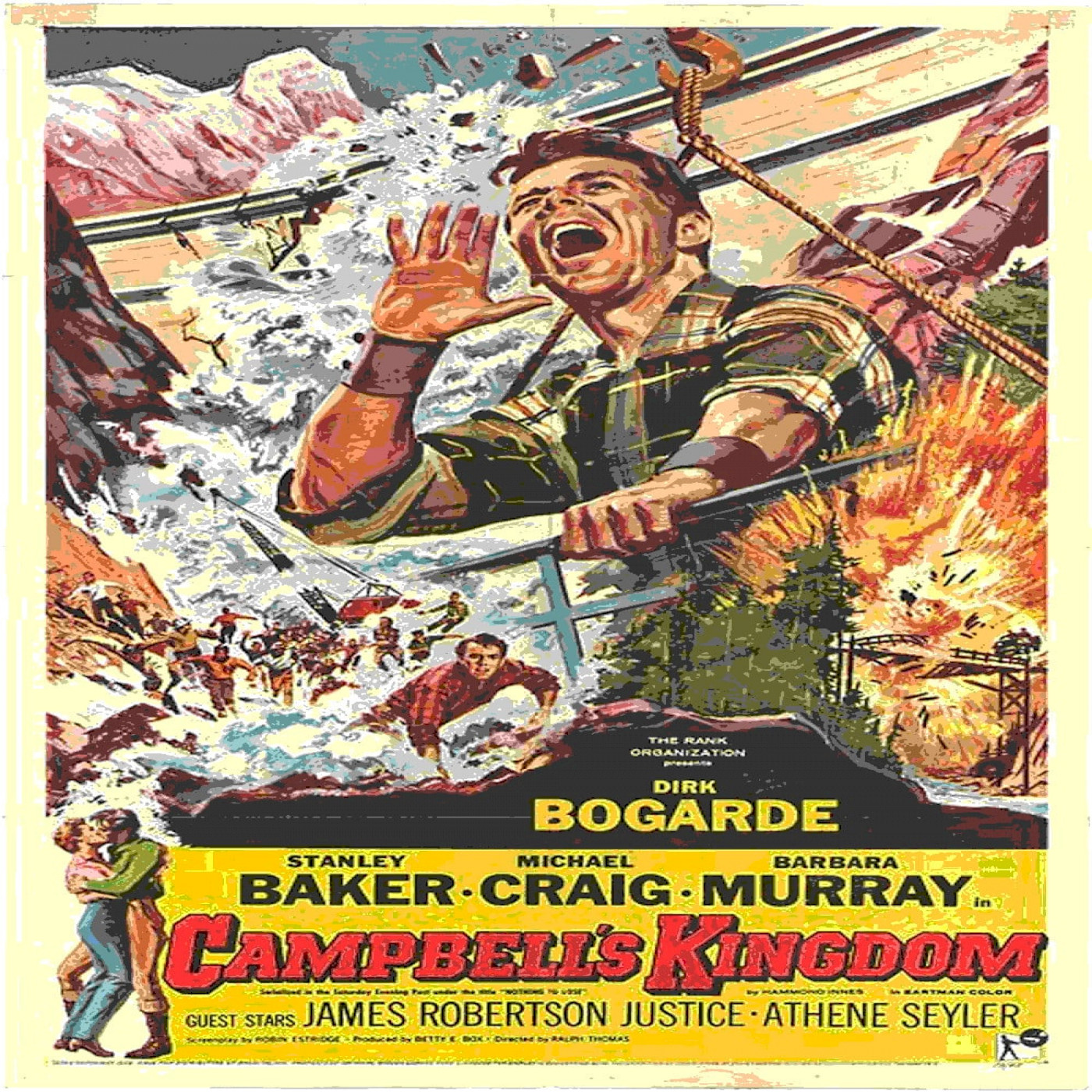
    Episode 186 - Campbell's Kingdom (1957)

    Episode 186 - Campbell's Kingdom (1957) "Rugged Wildcatters...Fighting The Treacherous Might Of The Canadian Rockies" Grab your parka and get ready for a trip to the Canadian Rockies, because 1957's Campbell's Kingdom is a gloriously old-school adventure that absolutely bursts with high-stakes drama and breathtaking scenery. If you're in the mood for a classic "ripping yarn," this is the film for you. It's a story of grit, oil, and one man's incredible race against time, all set against one of the most stunning backdrops ever captured on film. At the heart of the story is the wonderfully charismatic Dirk Bogarde as Bruce Campbell. Given a grim health diagnosis, Bruce inherits a patch of land in Alberta known as "Campbell's Kingdom." He's told it's worthless, but his grandfather died believing there was oil under that rocky soil. With nothing left to lose, Bruce sinks his last penny and every ounce of his failing strength into proving him right. This is where the fun really starts. The film is a fantastic story of the underdog. Bruce is a man with a dream, facing down a world of naysayers. This includes the slick, menacing villain Owen (played with wonderful steel by Stanley Baker) and a looming deadline from a hydro-electric company threatening to flood the entire valley. But Campbell's Kingdom isn't just a character drama; it's a grand spectacle! Director Ralph Thomas makes the Canadian Rockies a character in their own right. The Vistavision and Technicolor cinematography is simply spectacular, with sweeping vistas of snow-capped mountains, turquoise lakes, and rugged forests that will have you longing for the great outdoors. The action builds to a truly thrilling climax. As Bruce and his small, loyal crew drill desperately for their "black gold," the tension mounts. Will they strike it rich before the dam floods them out? Will Owen's schemes succeed? The final sequences are pure, high-adventure magic, delivering a payoff that is both exciting and deeply satisfying. Sure, it's a film of its time, with earnest heroes and clear-cut villains, but that's precisely its charm. Campbell's Kingdom is a wonderfully made, optimistic, and thrilling piece of classic British cinema. It's a feel-good movie about betting it all on a dream, and it leaves you with a real sense of exhilaration. This and previous episodes can be found everywhere you download your podcasts Bonus content available at: patreon.com/ReelBritanniaPodcast Follow us on Twitter @rbritanniapod Thanks for listening Scott and Steven

  • Nov 9, 2025 · 1 hr 1 min

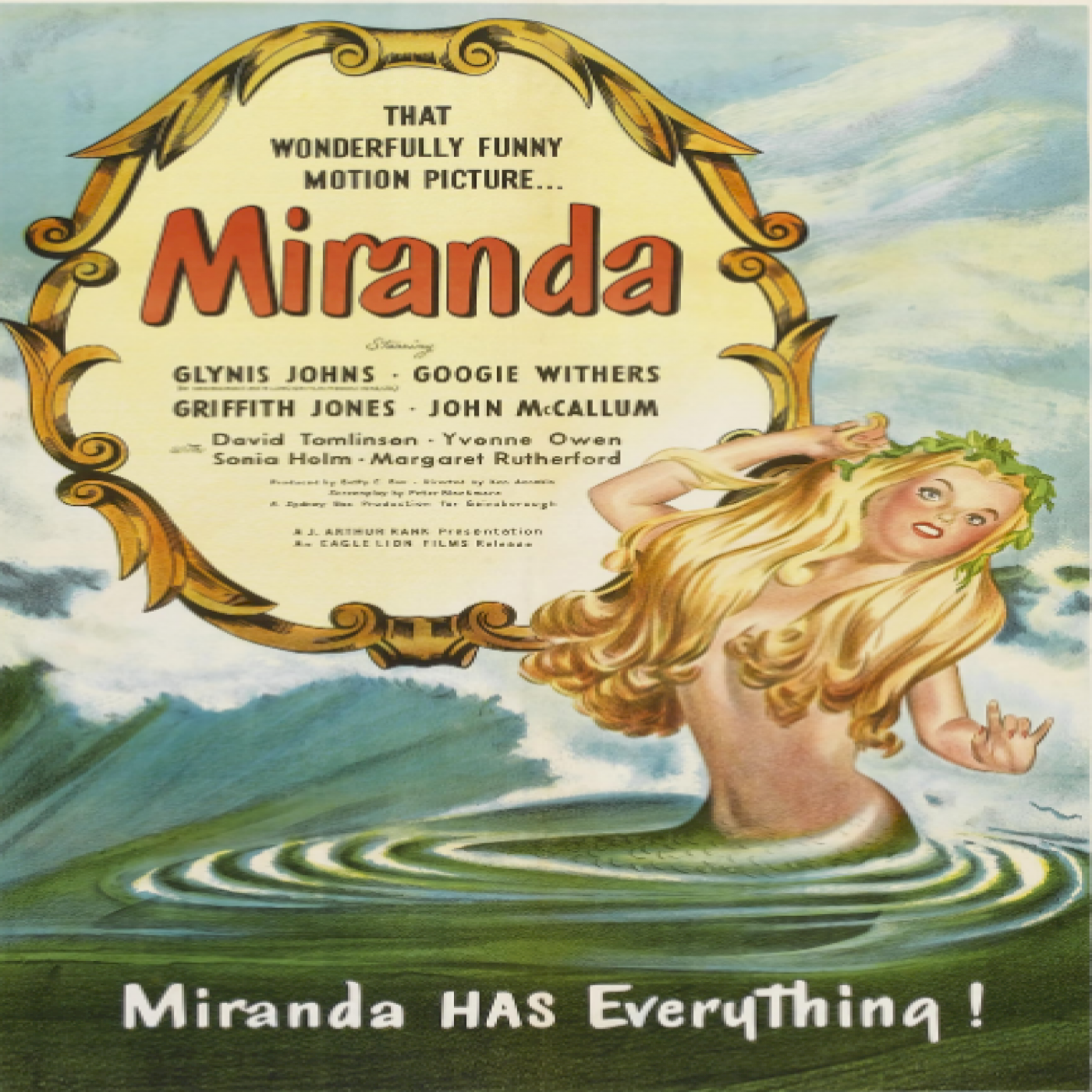
    Episode 185 - Miranda (1948)

    Episode 185 - Miranda (1948) "You've hated me ever since I set tail in this house." In the canon of post-war British comedy, there are grand spectacles and quiet character studies. And then, every so often, there's a film so completely, cheerfully absurd that it defies category. Miranda (1948) is one such treasure, a fantasy-comedy that is as polished and witty as it is delightfully naughty. It's a film that asks what would happen if a classic British "comedy of manners" was suddenly interrupted by a mermaid—and the answer, it turns in, is pure, bubbly entertainment. The story itself is a wonderfully silly concoction. Dr. Paul Martin (Griffith Jones), escaping his wife for a solo fishing holiday in Cornwall, gets more than he bargained for. He doesn't just catch a fish; he is caught by Miranda, a flirtatious, man-crazy mermaid who promptly holds him captive in her aquatic cave. His ransom? A trip to see London. What follows is a brilliant farce. Paul passes off the beautiful Miranda as an "invalid patient," concealing her tail under long dresses and wheeling her around his sophisticated London home. This is where the film truly shines, thanks to the absolutely enchanting central performance from Glynis Johns. Long before she was Mrs. Banks in Mary Poppins, Johns established her star power here. With a coy, kittenish voice and eyes that perpetually sparkle with mischief, her Miranda is a sublime creation. She's no innocent nymph; she's a charming siren who has every man in the house—from her "doctor" to the lovestruck chauffeur (a wonderful David Tomlinson)—wrapped around her little finger, or fin. While Glynis Johns is the undeniable heart of the film, she is bolstered by one of the finest supporting casts in British comedy. Googie Withers is perfectly cast as Paul's increasingly bewildered and suspicious wife, Clare. But it is the magnificent, eccentric Margaret Rutherford who threatens to steal the entire picture as Nurse Carey. Hired to look after the "patient," she is not shocked to discover Miranda's secret but openly delighted, exclaiming, "It's a mermaid! I've always believed in them!" The film is packed with witty dialogue and brilliant sight gags that never get old: Miranda's insistence on eating raw fish sandwiches, her casual snacking from the goldfish bowl, and a priceless scene at the zoo where she communicates with the seals. It's all so unapologetically fun, a droll and airy fantasy that was a smash hit with audiences at the time, and it's easy to see why. Miranda is a whimsical, charming, and thoroughly amusing escape that still feels as fresh and sparkling as the day it first splashed onto the screen. This and previous episodes can be found everywhere you download your podcasts Bonus content available at: patreon.com/ReelBritanniaPodcast Follow us on Twitter @rbritanniapod Thanks for listening Scott and Steven

  • Oct 29, 2025 · 56 min

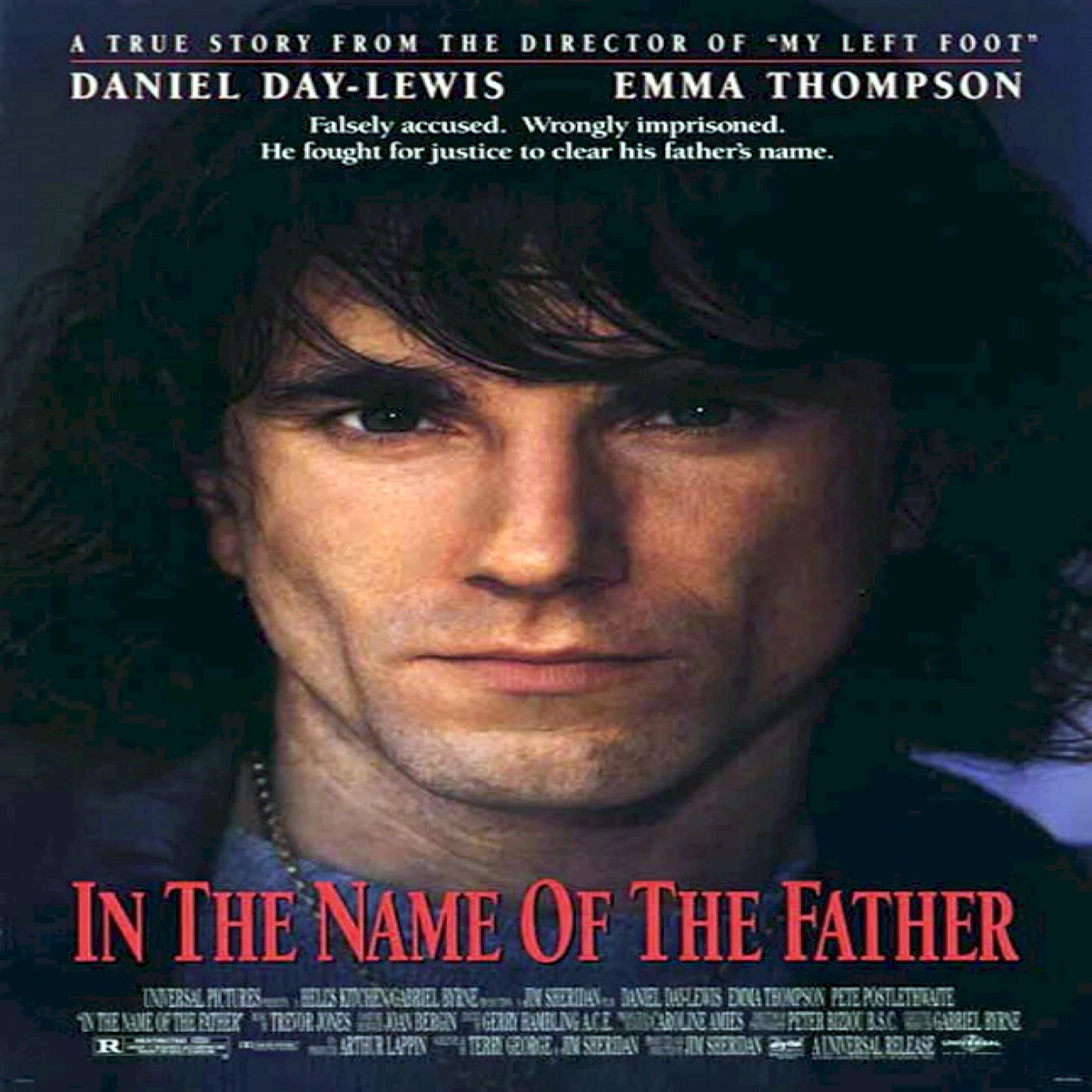
    Episode 184 - In The Name Of The Father (1993)

    Episode 184- In The Name Of The Father (1993) "You got 15 years of blood and sweat and pain from my client - whose only crime was that he was bloody well Irish. And he was foolish, and he was in the wrong place at the wrong time!" Based on the powerful true story of the Guildford Four, In the Name of the Father (1993) is a gripping legal and personal drama chronicling a devastating miscarriage of justice during "The Troubles" in 1970s England. The film centers on Gerry Conlon (Daniel Day-Lewis), a petty thief from Belfast. To escape the escalating violence, his father sends him to London. While Gerry and his friend Paul Hill are squatting in a flat, an IRA bomb explodes at a pub in Guildford, killing five people. Under intense pressure to secure convictions, the British police, led by Inspector Robert Dixon, arrest Gerry and Paul as prime suspects. What follows is a harrowing interrogation. Gerry is subjected to days of psychological torture, threats, and violence, eventually breaking down and signing a false confession. This confession is then used to implicate not only himself and Paul but also two others (the "Guildford Four") and, shockingly, members of Gerry's own family who had no connection to the crime, including his asthmatic, law-abiding father, Giuseppe (Pete Postlethwaite). This group becomes known as the "Maguire Seven." Despite glaring inconsistencies and the lack of physical evidence, the coerced confessions are enough to convict them. Gerry and his father are sentenced to life in prison. The film's focus then shifts to their 15-year incarceration. The volatile Gerry and the devout, peaceful Giuseppe share a cell, their strained relationship evolving into a profound bond of love and shared resilience. Giuseppe works tirelessly from prison to prove their innocence, while Gerry struggles with despair. They even encounter the actual IRA bomber, who confesses to the crime, but the authorities refuse to reopen the case, burying the new evidence. Giuseppe eventually dies in prison, which galvanizes Gerry. He begins working with a determined solicitor, Gareth Peirce (Emma Thompson). Peirce meticulously re-examines the case and, after a long fight, uncovers crucial files that the prosecution deliberately withheld from the defense—evidence that contained an alibi proving Gerry's innocence. In a dramatic climax, the case is brought back to court, the police corruption is exposed, and the convictions of the Guildford Four are finally quashed. Gerry Conlon emerges from the courthouse a free man, vowing to clear his father's name. This and previous episodes can be found everywhere you download your podcasts Bonus content available at: patreon.com/ReelBritanniaPodcast Follow us on Twitter @rbritanniapod Thanks for listening Scott and Steven

  • Oct 17, 2025 · 1 hr 5 min

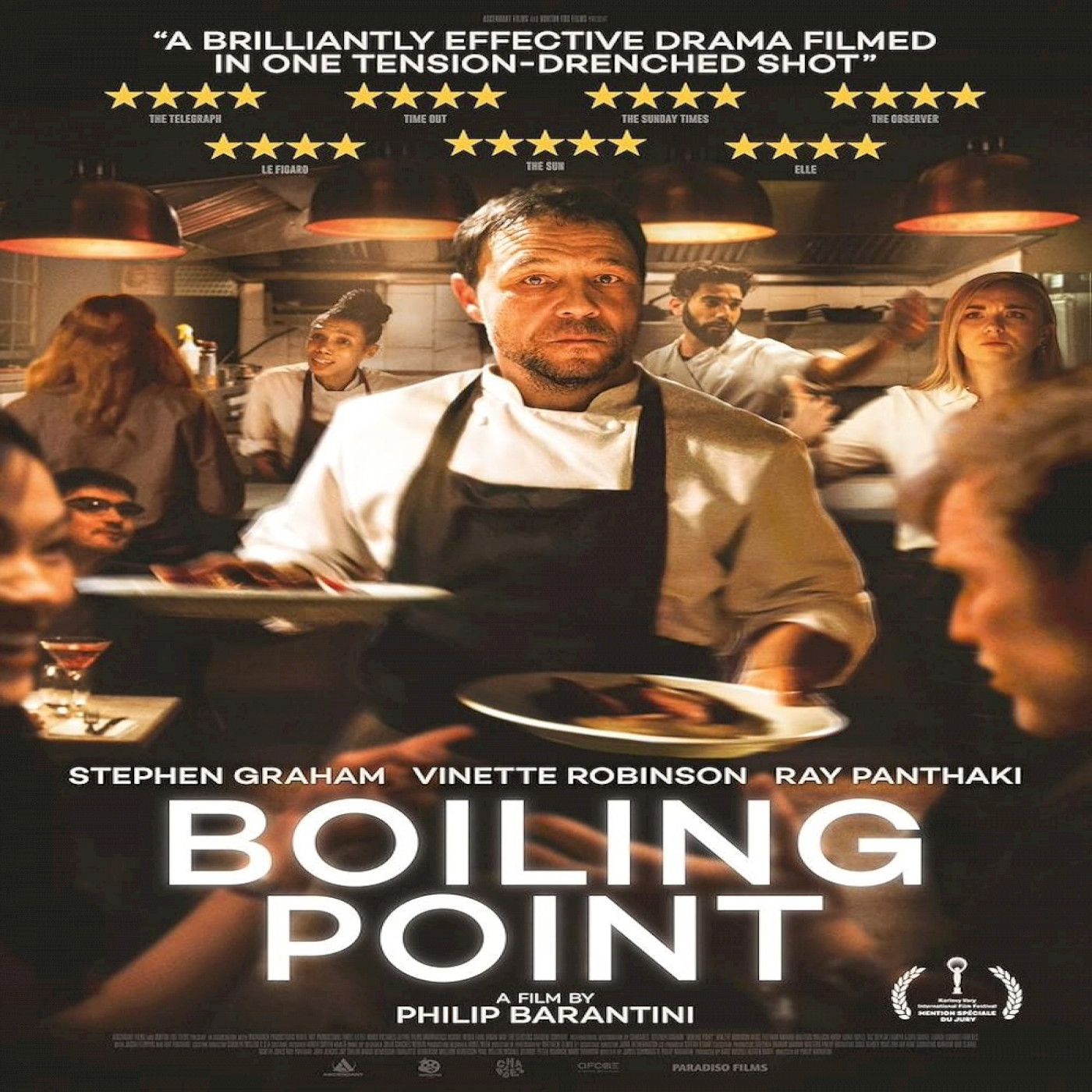
    Episode 183 - Boiling Point (2021)

    Episode 183 - Boiling Point (2021) "I do not get paid enough to deal with this shit." The 2021 British film "Boiling Point" offers a raw and immersive look into the high-pressure environment of a professional kitchen, captured in a single, continuous take. Directed by Philip Barantini, who co-wrote the screenplay with James Cummings, the film is a technical marvel that amplifies the relentless stress of the culinary world. The production notably filmed the entire movie four times, with the third take being the one used in the final cut, a testament to the cast and crew's incredible coordination and performance. The narrative unfolds in real-time on the last Friday before Christmas, one of the busiest nights of the year for the upscale London restaurant, Jones & Sons. At the heart of the storm is Head Chef Andy Jones, portrayed with a visceral intensity by Stephen Graham. Already burdened by personal issues, Andy's night spirals into chaos from the moment he arrives. A surprise visit from a health and safety inspector downgrades the restaurant's rating, setting a tense tone for the evening. As the service gets underway, the pressure cooker environment of the kitchen reaches a fever pitch. The camera masterfully weaves through the cramped and chaotic space, capturing the escalating conflicts between the overworked staff. Andy's patient and capable sous-chef, Carly (Vinette Robinson), struggles to manage the kitchen amidst her boss's erratic behavior. Meanwhile, the front-of-house manager, Beth (Alice Feetham), adds to the friction with her mishandling of demanding customers, including a celebrity chef who is also Andy's former mentor and a renowned food critic. The film expertly juggles multiple storylines, from difficult patrons with severe food allergies to internal staff disputes, all while Andy's personal life continues to unravel just outside the kitchen doors. The result is a palpable sense of anxiety that leaves the audience on the edge of their seat, deeply invested in the fate of the restaurant and its deeply flawed but compelling protagonist. This and previous episodes can be found everywhere you download your podcasts Bonus content available at: patreon.com/ReelBritanniaPodcast Follow us on Twitter @rbritanniapod You can follow Hal @coupleindemnity Thanks for listening Scott and Steven

  • Oct 8, 2025 · 1 hr 29 min

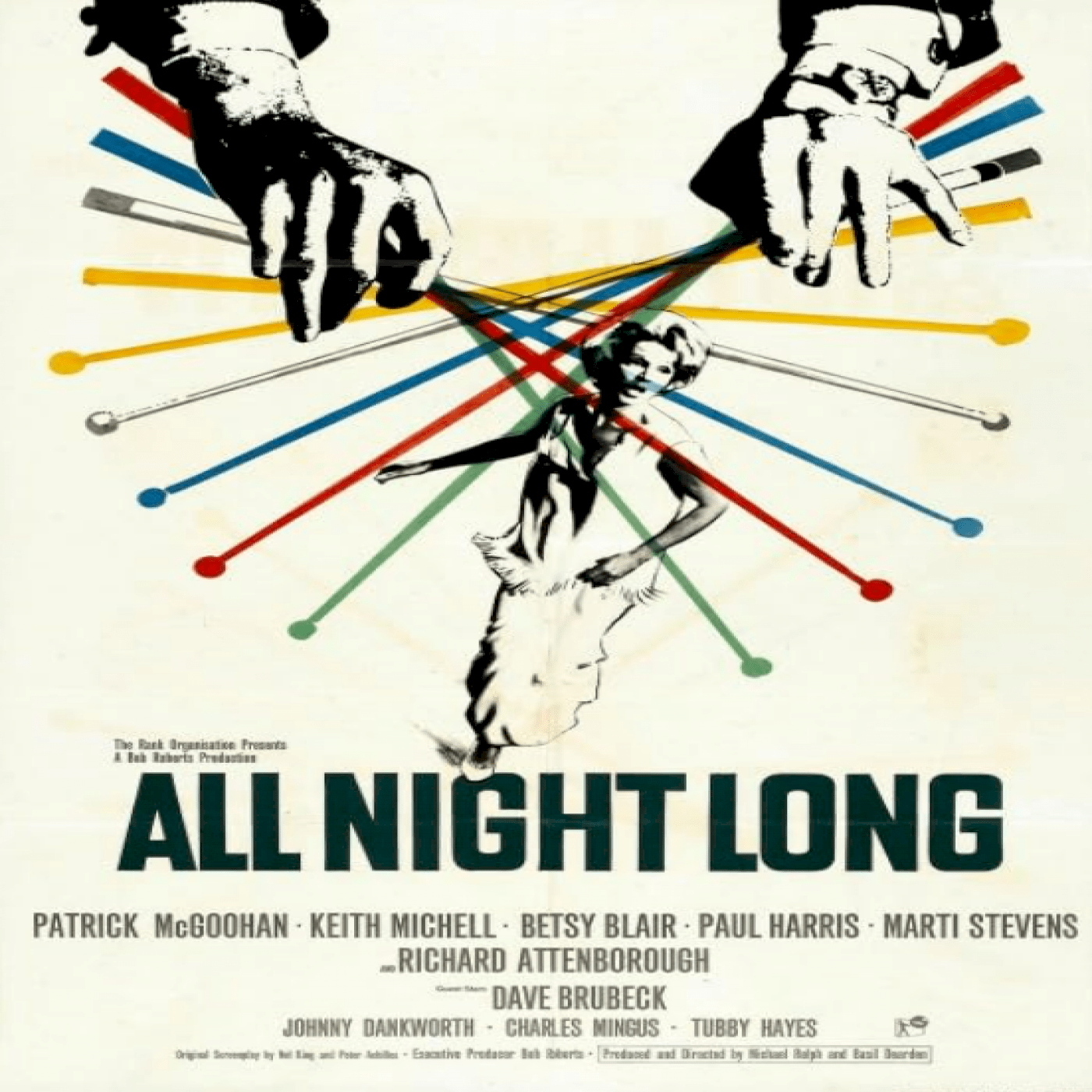
    Episode 182 - All Night Long (1962)

    Episode 182 - All Night Long (1962) "Me? Oh, I belong to that new minority group: white American jazz musicians. They're going to hold a mass meeting in a phone booth." Get ready to step into the coolest party of 1962. Basil Dearden's All Night Long is a cinematic powder keg, a film that brilliantly transplants Shakespeare's classic tragedy Othello into the vibrant, smoke-filled world of the London jazz scene, and it does so with an electrifying pulse that never lets up. This isn't just a drama; it's a front-row seat to a once-in-a-lifetime jam session, featuring knockout performances from real-life jazz giants like Dave Brubeck, Charles Mingus, and Johnny Dankworth. The result is a stunningly stylish and suspenseful ride that swings to its own dynamic rhythm. The story unfolds over the course of a single, spectacular evening. Wealthy music enthusiast Rod Hamilton (a wonderfully suave Richard Attenborough) is hosting an anniversary party for the golden couple of the jazz world: the supremely talented bandleader and pianist Aurelius Rex (Paul Harris) and his beautiful wife, Delia Lane (Marti Stevens), a celebrated singer who has happily retired from the stage for a life with her husband. The setting is a chic, converted warehouse on the Thames, buzzing with the energy of musicians, friends, and the infectious sound of bebop. The champagne is flowing, the music is hot, and love is in the air. For Rex and Delia, it's a perfect celebration of their first year together. But lurking in the shadows of this joyous occasion is the ambitious and conniving drummer, Johnny Cousin (a riveting Patrick McGoohan). Johnny has big plans to launch his own band, but his financial backing hinges on one crucial element: persuading Delia to be his lead singer. When Delia, devoted to Rex and her new life, politely turns him down, Johnny's ambition curdles into a venomous plot. If he can't get her to join him, he'll destroy the very foundation of her happiness. With a wicked grin and a drummer's sense of timing, he sets out to poison Rex's mind, spinning a devious web of lies to convince the bandleader that Delia is having an affair with their trusted friend and saxophonist, Cass Michaels (Keith Michell). What follows is a masterclass in tension, made all the more thrilling by the incredible musical backdrop. As the party roars on, with Mingus plucking his bass and Brubeck commanding the piano, Johnny moves through the crowd like a phantom, orchestrating his symphony of destruction. He slyly gets Cass to smoke a "drugged" cigarette, loosens his tongue, and then, in a stroke of cunning genius, uses a reel-to-reel tape recorder to capture and manipulate conversations. He masterfully edits the tape to create a false, damning narrative of Delia and Cass's "love affair." McGoohan is absolutely electric as the scheming Johnny, his intense eyes darting around the room, always a step ahead, turning a joyous celebration into his personal playground of chaos. The music acts as the film's heartbeat, with each sensational performance escalating the drama until it reaches a fever pitch. When Rex finally hears the doctored tape, his love and trust shatter, leading to a raw and explosive confrontation that silences the entire party. But just when it seems tragedy is inevitable, Johnny's web of deceit is heroically untangled by his own long-suffering wife. The truth comes crashing down, and Johnny's grand ambitions are left in ashes. In a powerful final scene, he is left alone, frantically beating his drums in a furious, solitary solo. The party is over, but for Rex and Delia, there's a glimmer of hope as they walk out into the dawn, their bond tested but ultimately not broken, ready to pick up the pieces. All Night Long is a triumph—a sharp, exhilarating fusion of high drama and spectacular music that remains an absolute knockout. This and previous episodes can be found everywhere you download your podcasts Bonus content available at: patreon.com/ReelBritanniaPodcast Follow us on Twitter @rbritanniapod Thanks for listening Scott and Steven