Skip to content
Artwork for Quantum Imaging Lab
Quantum Imaging Lab · June 22 · 51 min

[Radiologic Physics] Ep 13 – X-ray Tube Structure

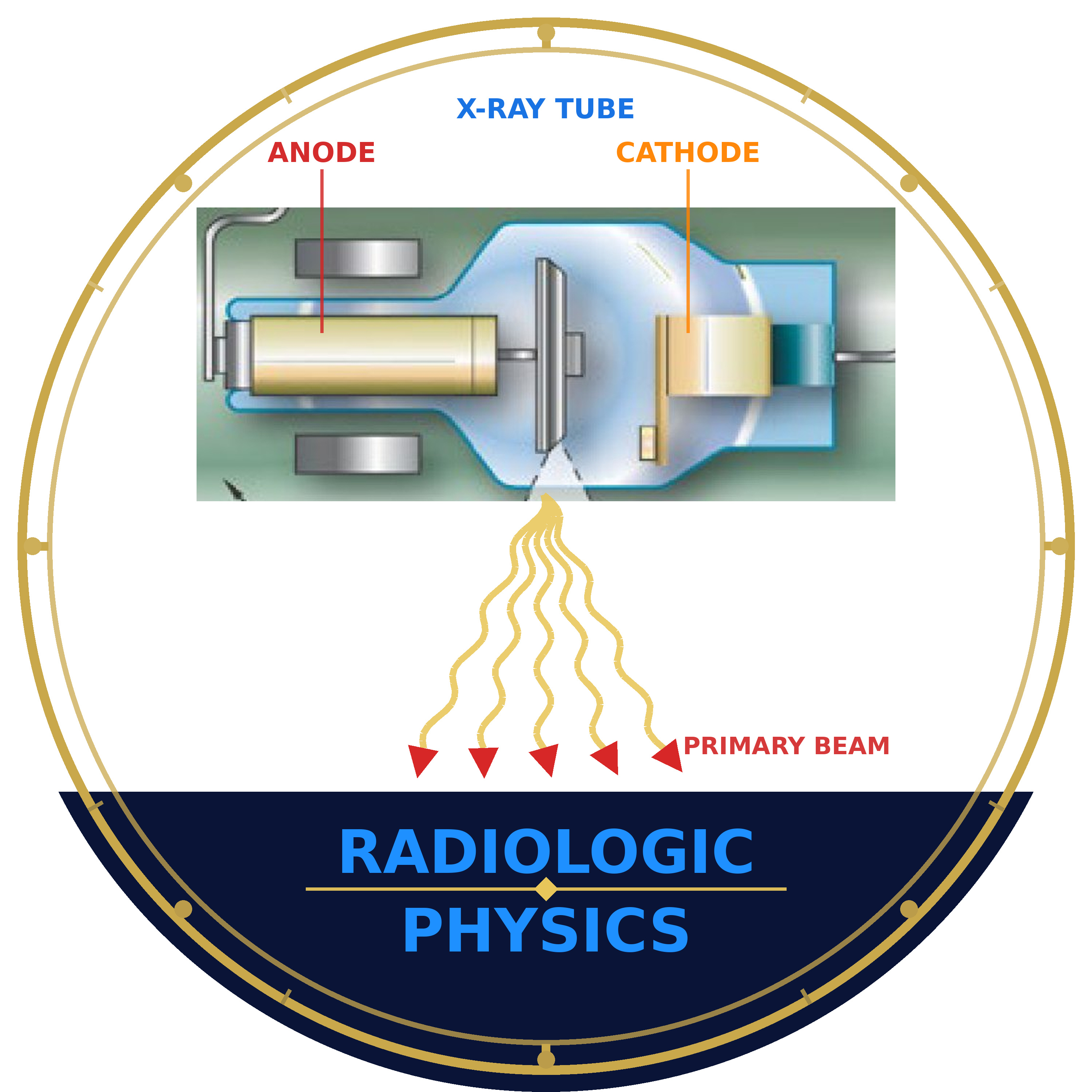
This episode covers the x-ray tube — the heart of every imaging system — tracing its evolution from the Crookes tube to the modern Coolidge tube and examining every component of its external and internal structure. Prof. Arya details the protective housing, glass or metal envelope, and tube window, then moves inside to the cathode assembly: tungsten filament composition and thermionic emission, the space charge effect, the focusing cup's role in directing electrons, and the clinical implications of dual-filament, dual-focal-spot design. The anode is examined in equal depth — stationary versus rotating types, target materials, the induction motor's rotor-stator mechanism, the line focus principle, and the anode heel effect with its practical positioning applications. The second half addresses x-ray tube life and thermal management. Prof. Arya explains why x-ray production is thermally inefficient, how heat is dissipated through radiation, conduction, and convection, and what causes filament failure and anode damage. The episode walks through heat unit calculations across generator types and teaches students to interpret all three rating charts — radiographic, anode cooling, and housing cooling — through worked examples that directly apply to clinical practice. This episode aligns with the Equipment Operation and Quality Assurance content category — Radiographic Equipment subcategory — of the ARRT Radiography Examination Content Specifications. Audio content is adapted from original instructional material developed by Professor Sanjay Arya, M.S., R.T.(R)(MR) for radiologic technology education. Part of the Radiologic Physics series — Quantum Imaging Lab. © 2026 Quantum Imaging Lab. All rights reserved.

0:00-51:43

transcript

No transcript — this publisher did not publish one.

show notes

This episode covers the x-ray tube — the heart of every imaging system — tracing its evolution from the Crookes tube to the modern Coolidge tube and examining every component of its external and internal structure. Prof. Arya details the protective housing, glass or metal envelope, and tube window, then moves inside to the cathode assembly: tungsten filament composition and thermionic emission, the space charge effect, the focusing cup's role in directing electrons, and the clinical implications of dual-filament, dual-focal-spot design. The anode is examined in equal depth — stationary versus rotating types, target materials, the induction motor's rotor-stator mechanism, the line focus principle, and the anode heel effect with its practical positioning applications.

The second half addresses x-ray tube life and thermal management. Prof. Arya explains why x-ray production is thermally inefficient, how heat is dissipated through radiation, conduction, and convection, and what causes filament failure and anode damage. The episode walks through heat unit calculations across generator types and teaches students to interpret all three rating charts — radiographic, anode cooling, and housing cooling — through worked examples that directly apply to clinical practice.

This episode aligns with the Equipment Operation and Quality Assurance content category — Radiographic Equipment subcategory — of the ARRT Radiography Examination Content Specifications.

Audio content is adapted from original instructional material developed by Professor Sanjay Arya, M.S., R.T.(R)(MR) for radiologic technology education. Part of the Radiologic Physics series — Quantum Imaging Lab.

© 2026 Quantum Imaging Lab. All rights reserved.