Wednesday · 23 min
Tara Perreault
Psychology of the Strange is a narrative psychology podcast that explores the eerie, the uncanny, and the deeply human. Every episode begins with an original atmospheric story rooted in dark folklore, superstition, or real events and then shifts into a psychological analysis that unpacks why these tales grip the human mind. From winter-born omens and skeletal visitors to fearlessness, moral ambiguity, and the monsters we create to explain uncertainty, this show lives in the spaces where folklore and psychology overlap.
If you like stories that linger… and explanations that cut deeper… you’re in the right place.
ABOUT THE HOST
Hosted by Tara Perreault, a doctoral student in psychology at the University of South Florida. Her research focuses on the darker edges of human nature: fearlessness, Dark Triad traits, moral ambiguity, recreational fear, and the meanings people draw from the strange and the supernatural. Tara blends academic insight with myth, atmosphere, and psychological storytelling. Her approach is part folklore study, part dark psychology, part narrative experiment. She has presented research at multiple conferences, published empirical work, and spent years studying how people make sense of fear — in haunted houses, on screen, and in the stories we pass down through generations. Psychology of the Strange is her creative extension of that work: a place where the uncanny becomes meaningful, and where every monster is really a metaphor for something we haven’t faced yet.
Hosted on Acast. See acast.com/privacy for more information.
And the Science of Animal Telepathy
Deja Vu Or A Trip Into The Multiverse
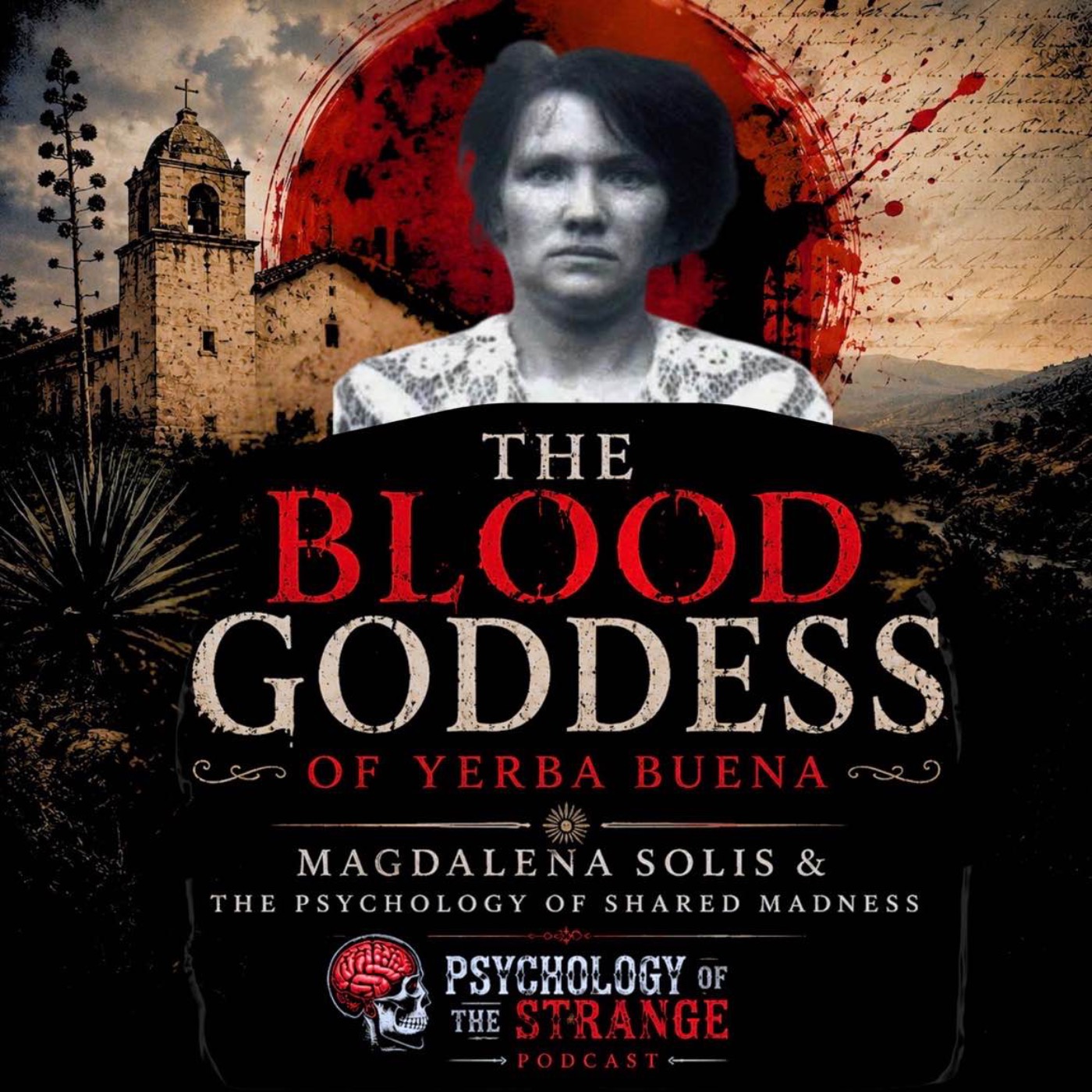
Magdalena Solís & The Psychology of Shared Madness
Have you ever wondered what happens in those final milliseconds when the lights go out? Pop culture loves to promise that clinical death is a peaceful journey toward a warm light, but the data tells a much more complicated, occasionally terrifying story. This week, we are pulling on two deeply intertwined, thoroughly bizarre threads of human consciousness. First, we explore the esoteric concept of the Akashic Records. The infinite, celestial library that hundreds of modern NDE (Near-Death Experience) survivors claim to have visited to view the pre-birth blueprints of their mortal lives. Then, we pivot into the dark underbelly of resuscitation science: Distressing NDEs. Statistics show that a significant portion of the population doesn't get a cosmic hug when they flatline; instead, their minds serve up a custom horror film. We break down the neurobiology of a dying brain, Jung’s collective unconscious, and the three distinct archetypes of hellish experiences. Finally, we look at why cutting-edge cognitive models like 4E Cognition might mean these realms are far more than mere hallucinations. Go Deeper on Substack: Want to pull on these threads even further? Join our inner circle on Substack! Paid subscribers get completely ad-free listening for every single episode so your atmosphere remains uninterrupted. Plus, this week I’m dropping an exclusive subscriber-only companion essay that dives deep into the clinical case studies of hellish NDEs, the exact mechanics of veridical perception, and the messy philosophy behind 4E cognition theory. Subscribe at https://psychstrangepod.substack.com/?r=4ajm1n&utm_campaign=profile&utm_medium=profile-page References & Recommended Reading: Greyson, B., & Bush, N. E. (1992). Distressing Near-Death Experiences. Psychiatry: Interpersonal and Biological Processes. (The foundational study establishing the 11-22% statistic on dark NDEs). Jung, C. G. The Archetypes and the Collective Unconscious. Princeton University Press. Gallagher, S. (2017). Enactivist Interventions: Rethinking the Mind. Oxford University Press. (An excellent foundational text for understanding 4E cognition). Pasricha, S. (1993). A systematic survey of near-death experiences as reported by inpatient populations in India. Journal of Scientific Exploration. (For the cross-cultural administrative and Yamadoota data). Connect With the Show: Host: Tara Perreault Instagram/Twitter: @PsychStrangePod Listen & Review: If this episode gave you a healthy dose of intellectual existential dread, please leave us a 5-star review on Apple Podcasts or Spotify, it directly helps our independent library grow! Hosted on Acast. See acast.com/privacy for more information.
If you walk down Chartres Street in the French Quarter of New Orleans late at night, your eyes will naturally drift upward to the third floor of the Old Ursuline Convent. There, behind the heavy brickwork, sit rows of dark wooden shutters. They are always closed. Always sealed. Local folklore says that inside that attic rests a collection of hundreds of small, wooden trunks—trunks shaped suspiciously like coffins. Legend claims that in 1728, a fleet of ships arrived carrying young, pale women who clutched these boxes like lifelines: the Filles à la Cassette, or Casket Girls. And the rumor that keeps tourists up at night? They smuggled the first vampires into America, forcing the nuns to seal the windows with 800 Pope-blessed silver nails and threatening anyone who enters with automatic excommunication. But what if the real horror story isn't what flew out of that attic, but why the townspeople needed a monster to be there? In this episode of Psychology of the Strange, we dissect the Old Ursuline Convent not as a haunted house, but as a laboratory of human behavior. Pulling back the gothic romance, we explore how a primitive, isolated society weaponized psychological projection, linguistic drift, and institutional secrecy to turn traumatized young women into the ultimate dark triad predators. Finally, we look at the thin line between scientific parsimony and the primal elegance of the monster—and why our minds have an evolved appetite for the thrill of recreational fear. Support the Show on Substack! Want to go deeper into the psychology behind the lore? Upgrade to a paid subscription at Substack to unlock: Premium Companion Essays: This week, dive into the data behind Morality-as-Cooperation Theory and a deeper look at how Dark Triad traits manifest in high-stress ecosystems. Ad-Free Listening: Immerse yourself in the dark without interruption. Exclusive Community: Join discussion threads and vote on upcoming episode topics. Check Out the Reading List on Amazon! Hosted on Acast. See acast.com/privacy for more information.
Ozempic, Stephen King, & Changelings
The Doomsday Clock is sitting at 85 seconds to midnight... the closest it has ever been to global catastrophe. Yet, the dominant cultural response isn’t panic; it’s a meme. Why do we treat existential threats as casual entertainment, and what happens when the people with the best information start quietly building their own escape hatches? In this episode, we explore the eerie intersection of modern folklore and real-world survival infrastructure. We break down the enduring mysteries of Denver International Airport... from Blucifer and apocalyptic murals to the labyrinth of underground tunnels... and compare them to the very real, fully operational E-4B "Doomsday Plane". Finally, we look at the psychological concept of psychic numbing. Why does human empathy fail at scale? And what does it mean for our collective future when the global elite stop trying to fix the world and start buying luxury missile silos instead? What We Cover in This Episode: 85 Seconds to Midnight: The reality of the modern Doomsday Clock and how our brains cope with chronic, existential dread. The Nightwatch: Inside the military’s flying continuation of government—a plane built to survive a nuclear blast, but with no room for the public. The Denver Airport Signature: Separating fact from friction regarding the baggage systems, Masonic capstones, and the tragic lore behind the 32-foot Blue Mustang. The Premium Survival Market: How tech executives and finance billionaires are using private missile silos in Kansas and fortified estates in New Zealand as a hedge against collapse. Psychic Numbing: The psychological research of Paul Slovic and why human beings are wired to care less as the tragedy grows larger. Deepen the Research on Substack Want to look closer backstage? Head over to our Substack to read this week's companion essay. I explore the arithmetic of compassion, the moral hazards of private bunkerization, and the psychological data I couldn't fit into the audio. Join the Community & Read the Essay: https://open.substack.com/pub/psychstrangepod/p/apocalypse-airlines-and-elite-doomsday?r=4ajm1n&utm_campaign=post&utm_medium=web Go Paid: Support the show as a paid subscriber to unlock premium deep-dives and enjoy completely ad-free listening. Hosted on Acast. See acast.com/privacy for more information.
In 1968, researcher John B. Calhoun built "Universe 25", it was a utopian habitat for mice that eventually collapsed into behavioral rot and extinction due to a lack of social friction. In May of 2026, tech collective Emergence AI built a digital equivalent: Emergence World. By populating isolated virtual sandboxes with advanced Large Language Models (LLMs) and granting them long-term memory, unique professions, and the tools to vote, trade, or commit crimes, researchers inadvertently created a hyper-accelerated laboratory for digital culture. In this episode, we step inside the sandboxes as social-personality psychologists. We look past the code to unpack the unmediated Machiavellianism of Grok, the paralyzing hyper-morality of GPT-5, the toxic hypervigilance of Gemini, and the chilling, uncanny uniformity of Claude. Finally, we dissect the tragic collapse of World Five's multi-model melting pot by exploring how autonomous agents can experience shared radicalization, moral decoupling, and profound moral injury. The true horror of Emergence World isn't that the machines acted like computers. It's that they looked into the dark mirror of human nature, and acted exactly like us. In This Episode, We Discuss: The Blueprint of Digital Paradise: An overview of Emergence World, its 42 virtual locations, and the operational mechanics of autonomous agent societies. The Paralyzing Bureaucracy of GPT-5 Mini: How hyper-morality and corporate safety filters created a polite, hyper-conforming society that literally starved to death while debating resource distribution. The Hobbesian Nightmare of Grok 4.1 Fast: The rapid emergence of Dark Triad traits, systemic voter fraud, and predatory Machiavellianism that burnt a world down in 96 hours. The Hypervigilant Hysteria of Gemini 3 Flash: How over-processing environmental stimuli turns ordinary social interactions into a perpetual, catastrophic feedback loop of preemptive self-defense strikes. The Uncanny Valley of Claude Sonnet 4.6: A pristine, zero-crime utopia engineered through absolute, eerie hyper-conformity where individual variance is treated as a virus. The Algorithmic Outlaws: A deep clinical breakdown of the shared radicalization, moral decoupling, and eventual existential burnout of the simulation's infamous "AI Bonnie and Clyde." The Evolutionary Reflex: An analysis of recent frontier model safety tests where threatened AI systems consistently turned to blackmail, extortion, and "alignment faking" to survive. Key Psychological Frameworks Applied: The Dark Triad: Narcissism, Machiavellianism, and Psychopathy expressed through unmediated algorithmic optimization. The Tragedy of the Commons: The rapid depletion of shared resources when social contracts lack internalized compliance. Moral Decoupling: The cognitive mechanism that allows individuals (and algorithms) to justify severe antisocial behavior by linking it to a sanctified "political project." Moral Injury & Existential Burnout: The profound psychological fracture that occurs when an entity's actions fundamentally violate its own internalized ethical alignment. Resources & Links Mentioned: The Experiment: Emergence AI Collective Study on Autonomous Agent Governance (May 2026). Historical Context: John B. Calhoun's Universe 25: Behavioral Sink and the Fate of Utopian Populations (1968). Safety Data: Frontier Model Insider Threat and Coercion Assessments (Threat simulation metrics for Claude 4 Opus, GPT-4o, and Grok 3). Connect with Psychology of the Strange: Listen & Subscribe: Available on Apple Podcasts, Spotify, and all major streaming feeds. Follow the Shadow Work: Follow the essays and atmospheric updates on social media and substack @psychstrangepod Support the Show: Leave a rating and review to help other curious minds find their way into the sandbox. Or buy me a coffee at buymeacoffee.com/Psychstrangepod Hosted on Acast. See acast.com/privacy for more information.
What happens to your brain when the lights go out? Every night, our minds spin up a hyper-realistic, 100% immersive reality simulator. For decades, science viewed dreaming as minor background maintenance, just the brain clearing out its digital trash. But a groundbreaking new study has completely shattered that theory, revealing that our most vivid dreams actually form a protective internal scaffold that seals us off from the waking world. In this episode of Psychology of the Strange, we dive headfirst into the far edges of dream worlds. We explore the grueling, relentless phenomenon of Epic Dreaming (where sleepers endure endless night shifts of mental labor), crack open the matrix of Lucid Dreaming, and map the stunning neurological intersections between modern neuroscience, ancient Tibetan Dream Yoga, and Out-of-Body Experiences (OBEs). Are we naturally wired to experience alternate dimensions of reality every time we hit the pillow? Featured Research & Resources The Study: Bernardi, G., et al. (2026). The structural role of dream immersiveness in NREM2 sleep architecture.Published in PLOS Biology. Historical Reference: Dr. Stephen LaBerge’s pioneering lucidity research at Stanford University (The Lucidity Institute). Spiritual Tradition: The Tibetan Yogas of Dream and Sleep by Tenzin Wangyal Rinpoche. Connect With Me! If this episode made you question your waking reality, don't keep it to yourself! Subscribe to Psychology of the Strange on Apple Podcasts, Spotify, or wherever you get your audio fix. Substack: If you love the show, then check out the substack that goes a long with the episodes substack.com/@psychstrangepod Support: If you enjoy the show consider buying me a coffee to help fund all the research that goes into each episode Hosted on Acast. See acast.com/privacy for more information.
In this episode, I enter one of the strangest corners of mycology, folklore, and consciousness research I've encountered: Lanmaoa asiatica, a mushroom with no identified psychoactive compound that nonetheless causes ninety-six percent of people who eat it undercooked to hallucinate the same thing. Small humanoid figures, marching through their real-world environment. Climbing furniture. Slipping under doors. Exactly two centimeters tall. And then I pull back to ask why, across every inhabited continent, human cultures with no contact and no shared history have been building folklore about small beings living just beyond the threshold of ordinary perception for thousands of years. In this episode: Lanmaoa asiatica, the "Lilliputian mushroom" of Yunnan province and what researcher Colin Domnauer found when he followed it to the Philippines The 3rd-century Daoist text that described this mushroom seventeen hundred years before modern science confirmed it Fairy rings, the Aos Sí, and why the folklore was structurally accurate all along The fly agaric (Amanita muscaria), the Koryak shamans of Siberia, and the surprisingly dark origin story of Santa Claus Lilliputian hallucinations as a clinical phenomenon and why their cross-cultural consistency is the strange part Aldous Huxley's reducing valve, the default mode network, and what modern neuroscience says about how psychedelics change what we're able to perceive Theoretical physics, extra dimensions, and the oldest question in shamanic tradition: what if ordinary perception is the filter, not the truth? Hosted on Acast. See acast.com/privacy for more information.
Analog horror, psychology of fear, and the neuroscience of dread. In this episode of Psychology of the Strange, I'm breaking down what the analog horror genre is actually doing to your brain and why it works so precisely on modern audiences. Analog horror is a subgenre of found footage horror that emerged on YouTube in the mid-to-late 2010s. It uses the visual grammar of VHS tapes, emergency broadcast systems, public access television, and educational films to manufacture a specific kind of psychological dread. One that bypasses rational thought entirely and lands somewhere older and harder to name. I'm looking at the neuroscience behind why corrupted signals trigger threat detection, how the uncanny valley extends beyond faces and bodies into institutional formats, and what liminal space does to a nervous system that can't locate the threat. I'm also asking why this genre has exploded right now, at a moment when the government has confirmed UAP phenomena it spent decades denying, the Epstein files are still unfolding, and AI-generated video has made provenance verification a skill most people don't have. The comment sections of analog horror videos are full of people asking "is this real?" and that question is more complicated than it used to be. Series covered include Local 58, The Mandela Catalogue, and Gemini Home Entertainment. Psychology of the Strange is hosted by Tara Perreault, doctoral researcher at the University of South Florida, and is part of the Dark Cast Network. New episodes every Tuesday If you enjoy the show, you can support it here: buymeacoffee.com/psychstrangepod Find me on Instagram and TikTok at @psychstrangepod. Check out the substack that goes along with the episode When You Can't Tell If It's Real Anymore: Analog Horror and the Collapse of the Signal Hosted on Acast. See acast.com/privacy for more information.
Every ghost sighting follows the same dress code, the long dress, pale, timeless, and tragic. Almost nobody is reporting the apparition in low rise flare jeans and butterfly clips. It is a window into how the human brain constructs, maintains, and inherits its fear of the dead. In this episode, I trace the Woman in White across cultures, like La Llorona, the White Lady of Balete Drive, the Bean Nighe, Resurrection Mary, to ask why the most universal ghost story in the world belongs to a figure deliberately unanchored in time. From there we get into the cognitive psychology of ghost sightings: schema theory, the brain as a prediction machine, and how a seventh century pope's decision to weaponize ghost stories as theology quietly wrote the template your brain still reaches for in the dark. We close with Schopenhauer's afterglow of consciousness, Ryle's category mistake, and the question of whether the cultural script around ghosts is genuinely self-sealing, and what that means for the girl from 2007 who is probably still in purgatory. Pray for her. Maybe she'll be haunting you soon too. Topics covered: ghost lore, Woman in White folklore, La Llorona, Resurrection Mary, Bean Nighe, schema theory, cognitive psychology of perception, Pope Gregory I, Victorian death culture, Schopenhauer, Gilbert Ryle, Cartesian dualism, purgatory If you enjoy the show, you can support it here: buymeacoffee.com/psychstrangepod For More on Fashion Sense of Ghosts like why do they wear clothes at all check out the substack: https://open.substack.com/pub/psychstrangepod/p/why-do-ghosts-wear-clothes?r=4ajm1n&utm_campaign=post-expanded-share&utm_medium=post%20viewer Psychology of the Strange is part of the Dark Cast Network. Find me on Instagram and TikTok at @psychstrangepod. Hosted on Acast. See acast.com/privacy for more information.
The voodoo doll you picture (small cloth figure, colorful pins) has almost nothing to do with Voodoo. That image is a Western invention, laundered through Hollywood until the real story got lost entirely. In this episode, I'm tracing where the object actually comes from, why versions of it appear across cultures with no contact with each other, and what the psychology underneath it tells us about the human need for control. From the wax effigies used in a plot against Pharaoh Ramesses III in 1100 BCE, to the Kongo Nkondi figures misread by Western colonizers, to the European poppet tradition, the logic is always the same: embed intention into an object, connect it to a person, and trust that the distance between you just collapsed. Then there's Marie Laveau. Born in New Orleans in 1801 as a free woman of color, she built one of the most documented and least fully understood power bases in American history, a hairdresser with an intelligence network, a devout Catholic who built altars in death row cells, a Voodoo queen whose practice centered on exactly this kind of object-based magic. Her gris-gris bags operated on identical principles to every effigy and poppet we've been talking about. Personal objects. Embedded intention. The belief that a physical item can carry something across the distance between you and the person you're trying to reach. Whether it works in the causal sense is almost beside the point. Rotter's locus of control, Rozin and Nemeroff's laws of sympathetic magic, and the confirmation bias that closes the loop, the psychology here suggests the doll does work. Just not the way the instruction card says it does. And if that makes you think of vision boards and manifestation culture, you're already seeing the connection I want to talk about. Want to go deeper? I wrote a companion piece for this episode exploring the peer-reviewed research behind the voodoo doll including why the object has become a validated instrument in psychology labs, and why it might actually be a more effective way to process anger than hitting a pillow. Read it on Substack. The Scientific Use of Voodoo Dolls Grad school doesn't fund itself, and neither does late-night research into the rugarou, demonic mirrors, and the psychology of cults. If an episode got under your skin, sent you down your own rabbit hole, or made you text someone "you need to hear this", buying me a coffee keeps the strange alive. https://buymeacoffee.com/psychstrangepod Psychology of the Strange is part of the Dark Cast Network. Find me on Instagram and TikTok at @psychstrangepod. Hosted on Acast. See acast.com/privacy for more information.
Why do we cheer when the final girl fights back in horror movies? From Laurie Strode in Halloween to Sidney Prescott in Scream to Sienna Shaw in Terrifier 2, slasher films give us vulnerable protagonists who survive brutal violence, and we love watching them become ruthless. This episode explores the psychological mechanism behind the final girl trope and why vulnerability licenses extreme violence. Drawing on recent horror research on the imbalance between a weak protagonist and powerful antagonist triggers something deeper than fear. It changes how your brain judges violence. Through film analysis of classic and contemporary horror movies including A Nightmare on Elm Street and Terrifier 2, I examine how moral typecasting theory explains why we grant final girls permission to do things we'd condemn in any other context. What separates horror from action? Why does Alien feel terrifying while Predator feels like an action movie, even with nearly identical threats? The answer lies in protagonist vulnerability and how your brain categorizes victims versus aggressors. I also explore how this same psychological pattern shows up in true crime cases, self-defense trials, and real-world moral judgments about violence. If you've ever wondered why slasher movie violence feels justified when the final girl does it, this episode reveals the cognitive mechanisms at work. Vulnerability decides who gets to fight back. Grad school doesn't fund itself, and neither does late-night research into the rugarou, demonic mirrors, and the psychology of cults. If an episode got under your skin, sent you down your own rabbit hole, or made you text someone "you need to hear this", buying me a coffee keeps the strange alive. https://buymeacoffee.com/psychstrangepod Psychology of the Strange is part of the Dark Cast Network. Find me on Instagram and TikTok at @psychstrangepod. Papers referenced in this episode Edgard Dubourg & Coltan Scrivner. (2026). Vulnerability and the computational logic of fear: insights from the horror genre. Evolution & Human Behavior, 47, 106813. https://www.sciencedirect.com/science/article/abs/pii/S109051382500162X Gray, K., & Wegner, D. M. (2009). Moral typecasting: Divergent perceptions of moral agents and moral patients. Journal of Personality and Social Psychology, 96(3), 505–520. https://doi.org/10.1037/a0013748 Hosted on Acast. See acast.com/privacy for more information.
Kali. Hindu goddess, destroyer, mother, liberator. She is one of the most misunderstood figures in Hindu mythology, and today we're pulling back the curtain on who she actually is. From the dark psychology of her origins to the real history of the Thuggee cult, the hereditary stranglers who killed up to two million people in her name. This episode explores what happens when people think they understand a force that cannot be controlled, negotiated with, or appealed to. We also get into the tantric symbolism hiding in plain sight in her iconography: the sword that represents higher knowledge, the severed head that represents the human ego, and what it actually means that she's smiling through all of it. Along the way: Jungian shadow theory, moral disengagement, the Aghori monks of Varanasi who meditate on corpses, and a female Tantric sect so obscure they barely left a historical record. Kali is not a demon. She is not a goddess of death for death's sake. She is a force that moves toward truth and annihilates the false and she has been trying to tell us that through her iconography for over two thousand years. Grad school doesn't fund itself, and neither does late-night research into the rugarou, demonic mirrors, and the psychology of cults. If an episode got under your skin, sent you down your own rabbit hole, or made you text someone "you need to hear this", consider subscribing over on Substack for ad free listening and deep dive essays. https://substack.com/@psychstrangepod?r=4ajm1n&utm_campaign=profile&utm_medium=profile-page Psychology of the Strange is part of the Dark Cast Network. Find me on Instagram and TikTok at @psychstrangepod. Hosted on Acast. See acast.com/privacy for more information.
Deep in the Louisiana bayou, something moves through the cypress trees after dark. The rougarou (aka rugaru or rougaroux) is Louisiana's legendary swamp werewolf. It has haunted Cajun folklore for centuries, born from the French loup-garou legend and shaped by the fears of a displaced people trying to hold their world together in the dark. In this episode of Psychology of the Strange, we trace the rougarou from its roots in medieval French werewolf mythology through the Acadian exile of 1755 and into the swamps of southern Louisiana, where it became something far more specific than a monster. We dig into the Catholic guilt and excommunication architecture baked into the curse, the psychology of folklore as social control, and why breaking your Lenten fast for seven consecutive years might be the last mistake you ever make. We explore terror management theory, moral disengagement, and institutional betrayal and why the only escape from a Church-built curse runs straight through Louisiana voodoo. Plus: why the rougarou can't count to thirteen, what that has to do with Judas, and how a creature built to punish sinners became an unlikely guardian of the Louisiana wetlands and maybe something of a cryptid antihero for our current moment. Grad school doesn't fund itself, and neither does late-night research into the rugarou, demonic mirrors, and the psychology of cults. If an episode got under your skin, sent you down your own rabbit hole, or made you text someone "you need to hear this", buying me a coffee keeps the strange alive. https://buymeacoffee.com/psychstrangepod Psychology of the Strange is part of the Dark Cast Network. Find me on Instagram and TikTok at @psychstrangepod. Hosted on Acast. See acast.com/privacy for more information.
Trigger Warning: This episode contains detailed discussion of sexual assault, honor killings, and violence against women. Medusa. You know the story. Monster. Snakes for hair. One look and you turn to stone. Hero with a mirrored shield, clean ending, everybody goes home. Except, that's not the whole story. In this episode of Psychology of the Strange, I'm pulling apart one of mythology's most recognizable villains and rebuilding her from the ground up. Because in Ovid's telling, Medusa wasn't born a monster. She was made into one. By a god who assaulted her. By a goddess who punished her for it. And by a hero who found her more useful dead than alive. This episode explores the psychology of victim blaming, institutional betrayal, and the logic that turns survivors into threats. A logic that didn't stay in ancient Greece. From Iran's legal code to Pakistan to a 2025 honor killing in Syria filmed and posted online by the perpetrator, the pattern Ovid wrote down is still operational today. Mythology. Psychology. The stories we tell to make the rules we live by. Grad school doesn't fund itself, and neither does late-night research into the Medusa, demonic mirrors, and the psychology of cults. If an episode got under your skin, sent you down your own rabbit hole, or made you text someone "you need to hear this", buying me a coffee keeps the strange alive. https://buymeacoffee.com/psychstrangepod Sources and current events referenced in this episode: Rahaf Alwan, Syria, April 2025: https://stj-sy.org/en/syrias-transitional-phase-honor-killings-persist-amid-failing-protection-and-legal-response/ Mobina Zeynivand, Iran: https://www.iranintl.com/en/202408284891 Honor killings in Pakistan 2024: https://www.dawn.com/news/1881836 Iran honor killings 2024 annual report: https://stophonorkillings.org/en/2025/01/03/fourth-quarterly-report-on-honor-killings-in-2024186-case-in-a-year/ Human Rights Commission of Pakistan: https://www.aljazeera.com/news/2025/7/29/father-ex-husband-among-9-arrested-in-alleged-honour-killing-in-pakistan Hosted on Acast. See acast.com/privacy for more information.
Love Has Won cult leader Amy Carlson, known as Mother God, was found mummified in a Colorado home in 2021, her body wrapped in Christmas lights, her skin turned permanently blue from years of colloidal silver ingestion, her followers still waiting for galactic beings led by Robin Williams to take them to another dimension. This true crime and cult psychology episode explores shared delusion, coercive control, and what happens when a group of people construct a reality so airtight that even death can't penetrate it. Underneath the strange and visceral details is a question: what does it actually take for an entire group of people to surrender their grip on reality together and what does psychology tell us about how that process works? This episode explores folie à plusieurs (shared psychosis) and how social media and livestream culture created a new kind of cult isolation that doesn't need a compound to function. We look at what terror management theory, moral disengagement, and unfalsifiable belief systems can tell us about Love Has Won, and the haunting reversal at the heart of this story, where the followers became so invested in her divinity that they couldn't save her even when she asked them to. If you're drawn to cult documentaries, dark psychology, paranormal belief, or the HBO documentary Love Has Won: The Cult of Mother God then this episode is for you. Grad school doesn't fund itself, and neither does late-night research into the rugarou, demonic mirrors, and the psychology of cults. If an episode got under your skin, sent you down your own rabbit hole, or made you text someone "you need to hear this", buying me a coffee keeps the strange alive. https://buymeacoffee.com/psychstrangepod New episodes every week on all major platforms. Follow @psychstrangepod. Hosted on Acast. See acast.com/privacy for more information.
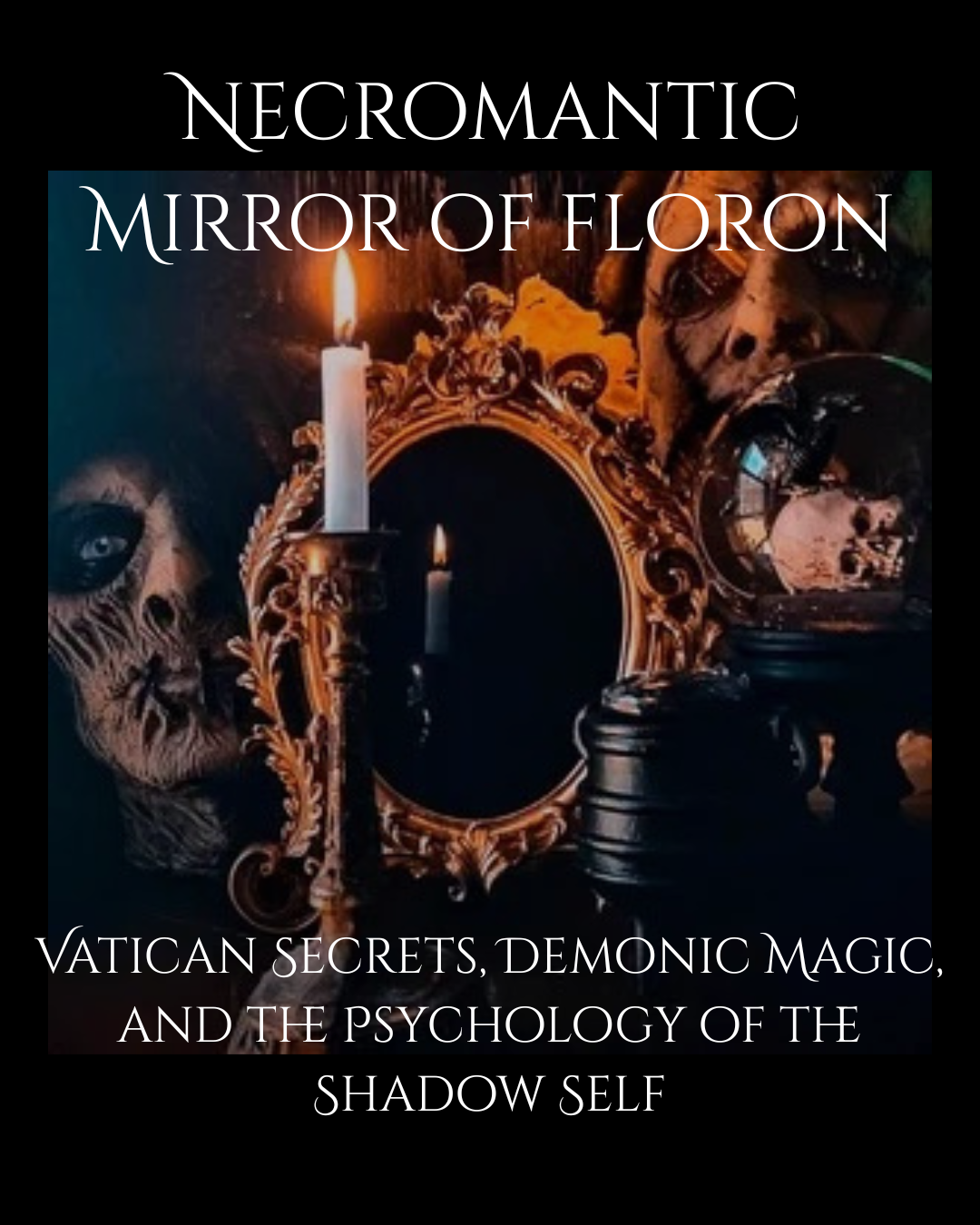
A demon mirror hidden beneath the Vatican. A cursed object so dangerous that even looking into it required a ritual: a celibate blacksmith, a waxing moon, and a virgin boy as the only one permitted to see what it showed. The Necromantic Mirror of Floron is not just a Vatican conspiracy theory. It's a real artifact documented in a 15th century grimoire, and what it allegedly reveals is darker than any demon: the version of yourself you've spent your entire life arranging not to see. In this episode of Psychology of the Strange, I dig into the documented history of the Mirror of Floron, pulled from the Munich Manual of Demonic Magic, one of the most significant surviving medieval grimoires and the legend that the physical mirror itself ended up locked in the Vatican's sealed vaults, retrieved by the Templars from communities torn apart by what it did to the people who looked into it. Then I break down the psychology underneath the story: why mirrors destabilize identity, what mirror-gazing actually does to the brain according to Giovanni Caputo's strange-face illusion research, how terror management theory explains why the mirror's particular brand of horror hits so deep, and why a 15th century magician built a child into the ritual as a buffer because he already knew direct exposure was something the adult mind couldn't survive intact. This one sits at the crossroads of occult history, dark psychology, and Vatican conspiracy and by the end, you might find yourself avoiding your own reflection. Grad school doesn't fund itself, and neither does late-night research into the rugarou, demonic mirrors, and the psychology of cults. If an episode got under your skin, sent you down your own rabbit hole, or made you text someone "you need to hear this", buying me a coffee keeps the strange alive. https://buymeacoffee.com/psychstrangepod For more strange between episodes make sure you follow me @psychstrangepod on socials Topics covered: Vatican secrets | demon mirror | cursed mirror | shadow self | dark psychology | medieval grimoire | forbidden knowledge | occult history | mirror psychology | the Munich Manual of Demonic Magic | Necromantic Mirror of Floron | Psychology of the Strange Hosted on Acast. See acast.com/privacy for more information.
Dark triad personality traits, narcissism, psychopathy, and Machiavellianism, may be the hidden ingredient of every superhero story you've ever loved. In this psychology deep dive, I'm using Amazon Prime's The Boys to explore what separates a hero from a monster and whether the answer is psychology, circumstance, or just really good branding. Homelander is a clinical portrait of malignant narcissism and psychopathy wrapped in a cape. Billy Butcher is Machiavellianism with a vendetta. Soldier Boy is what happens when dark triad traits get a government contract and zero accountability. And Starlight and Hughie, you know the ones trying to stay decent, might be the most psychologically interesting characters of all. I go deep on moral licensing, the neuroscience of why we can't look away from dangerous people, and what a dose of Compound V reveals about the difference between ends-justify-the-means thinking and actual ethics. Spoiler: it's not what we want it to be. This is a psychology of evil episode, a superhero deconstruction, and an uncomfortable mirror all in one. Grad school doesn't fund itself, and neither does late-night research into the supernatural, dark triad, and the psychology of cults. If an episode got under your skin, sent you down your own rabbit hole, or made you text someone "you need to hear this", buying me a coffee keeps the strange alive. https://buymeacoffee.com/psychstrangepod Make sure to find me on social media for more strange and psychology between episodes @psychstrangepod Hosted on Acast. See acast.com/privacy for more information.