Skip to content
Artwork for 生物漫游指南
生物漫游指南 · Thursday · 1 hr 56 min

闭上眼,让耳朵带我们逛动物园|听懂"生物声学"

这声鸟叫,真的是鸟吗?那个狗叫和猫叫是谁发出来的?怎么鸟还会发出激光枪和婴儿哭声?这期节目我们把话筒交给动物,盲听一下不同动物的声音:夜莺带着庞大曲库登场,琴鸟一开口就让人怀疑耳朵,顶着骷髅纹的飞蛾也来亮嗓,后面还有把落叶当乐器的狼蛛,以及越唱越热闹的家庭合唱……而这些或好听,或奇妙的声音,其实都是不同生物用来找对象、认家人、守地盘和传递警报的生存手段。把眼睛闭上,这回让耳朵逛动物园——谁才是你心目中的动物好声音? 也欢迎把你印象深刻的动物声音和背后的故事分享给我们,一起共创后续的声音节目。 想要讨论更多动物的声音欢迎加小导游进入听友群:bio_kiwi 想要投稿音频文件,也可以加生物漫游小导游,或者发送至邮箱:nomilktree@gmail.com 在本期节目你将听到: 00:51闭眼盲选开启,谁能让你为它转身 05:04夜莺登场,一开嗓就是花式炫技 09:31一只夜莺的曲库究竟能有多大 14:21东方歌手画眉,也有丰富的唱腔 17:20鸟类藏着人类学不来的唱歌技巧 20:58城市太吵,鸟儿如何让歌声被听见 25:22半吨重的海牛,竟然有一副尖嗓子 28:12海牛宝宝用高音呼唤:妈妈来找我 32:12听着像鸟叫,结果竟然是美洲狮 35:34美洲狮的尖叫,听着竟然像人声 37:01多才多艺的琴鸟怎么什么声音都有? 41:51琴鸟模仿婴儿哭声,究竟为了什么 46:19琴鸟搭舞台翻尾羽,唱跳一起上 49:34雌性琴鸟也会口技,用声音保护巢穴 52:43灰猫嘲鸫登场,天生就有一副猫嗓 56:37食肉蝌蚪开口,发出拉链般的声音 01:00:39骷髅天蛾登场,朋克造型配奇妙嗓音 01:04:35偷蜜的天蛾,怎样伪造蜜蜂身份证 01:08:07狼蛛把落叶当乐器,奏响求偶之歌 01:13:07国宝开嗓,大熊猫竟然羊里羊气 01:17:51笑翠鸟合唱,听着像反派集体坏笑 01:21:09笑翠鸟全家带娃,笑声连起大家庭 01:26:30帅气鹭鹤亮相,鸟儿也能汪汪叫 01:36:15大狐猴的对唱竟然还藏着复杂节拍? 01:41:32长臂猿的歌声真的那么哀伤吗 01:46:46长臂猿听懂警报歌声,立刻戒备 01:53:01好听之外,去理解珍惜和保护声音 本期提及的视频或图片: 鸟类的鸣管结构: 丑萌的海牛: 海牛体型与声音的变化: 琴鸟与里拉琴: 琴鸟边跳舞边唱歌的视频(来自文献,需要往下翻翻): https://www.cell.com/current-biology/fulltext/S0960-9822(13)00581-2 骷髅天蛾: “鸣叫狼蛛”与它的声音频率图: 笑翠鸟(Shovel-billed kookaburra): Kagu鸟/鹭鹤: 长相神奇的大狐猴: 大狐猴的复杂合唱: https://www.youtube.com/watch?v=wxVYsAodZ6U 长臂猿叫声的类型: 长臂猿在正常情况(A)和遇到捕食者(B)的不同歌曲结构: 本期片尾曲: 《山雀》万能青年旅店 (纠结了好几首,感觉这首歌词还是相当契合的) 部分参考资料: Roth T, Sprau P, Schmidt R, et al. Sex-specific timing of mate searching and territory prospecting in the nightingale: nocturnal life of females[J]. Proceedings of the Royal Society B: Biological Sciences, 2009, 276(1664): 2045. Amrhein V, Korner P, Naguib M. Nocturnal and diurnal singing activity in the nightingale: correlations with mating status and breeding cycle[J]. Animal Behaviour, 2002, 64(6): 939-944. Jäckel D, Mortega K G, Brockmeyer U, et al. Unravelling the stability of nightingale song over time and space using open, citizen science and shared data[J]. Frontiers in Ecology and Evolution, 2022, 10: 778610. Costalunga G, Carpena C S, Seltmann S, et al. Wild nightingales flexibly match whistle pitch in real time[J]. Current Biology, 2023, 33(15): 3169-3178. e3. Budka M. Thrush nightingales adjust the peak frequency and structure of their songs in response to different types of experimental noise[J]. Scientific Reports, 2025, 15(1): 2652. https://avifauna.hkbws.org.hk/species/0370/044200 O'Shea T J, Poché Jr L B. Aspects of underwater sound communication in Florida manatees (Trichechus manatus latirostris)[J]. Journal of Mammalogy, 2006, 87(6): 1061-1071. Allen M L, Wang Y, Wilmers C C. Exploring the adaptive significance of five types of puma (Puma concolor) vocalizations[J]. The Canadian Field-Naturalist, 2016, 130(4): 289-294. Dalziell A H, Maisey A C, Magrath R D, et al. Male lyrebirds create a complex acoustic illusion of a mobbing flock during courtship and copulation[J]. Current Biology, 2021, 31(9): 1970-1976. e4. Dalziell A H, Peters R A, Cockburn A, et al. Dance choreography is coordinated with song repertoire in a complex avian display[J]. Current Biology, 2013, 23(12): 1132-1135. Dalziell A H, Welbergen J A. Elaborate mimetic vocal displays by female superb lyrebirds[J]. Frontiers in Ecology and Evolution, 2016, 4: 34. Kroodsma D E, Houlihan P W, Fallon P A, et al. Song development by grey catbirds[J]. Animal behaviour, 1997, 54(2): 457-464. Natale G S, Alcalde L, Herrera R, et al. Underwater acoustic communication in the macrophagic carnivorous larvae of Ceratophrys ornata (Anura: Ceratophryidae)[J]. Acta Zoologica, 2011, 92(1): 46-53. Brehm G, Fischer M, Gorb S, et al. The unique sound production of the Death’s-head hawkmoth (Acherontia atropos (Linnaeus, 1758)) revisited[J]. The Science of Nature, 2015, 102(7): 43. Sweger A L, Uetz G W. Characterizing the vibratory and acoustic signals of the “purring” wolf spider, Gladicosa gulosa (Araneae: Lycosidae)[J]. Bioacoustics, 2016, 25(3): 293-303. Legge S. Helper contributions in the cooperatively breeding laughing kookaburra: feeding young is no laughing matter[J]. Animal Behaviour, 2000, 59(5): 1009-1018. Baker M C. The chorus song of cooperatively breeding laughing kookaburras (Coraciiformes, Halcyonidae: Dacelo novaeguineae): characterization and comparison among groups[J]. Ethology, 2004, 110(1): 21-35. Jacko, the Broadcasting Kookaburra https://www.radioheritage.com/otsw/Jacko.html De Gregorio C, Valente D, Raimondi T, et al. Categorical rhythms in a singing primate[J]. Current Biology, 2021, 31(20): R1379-R1380. Andrieu J, Penny S G, Bouchet H, et al. White-handed gibbons discriminate context-specific song compositions[J]. PeerJ, 2020, 8: e9477. 在小宇宙查看该单集文稿

0:00-1:56:16

transcript

No transcript — this publisher did not publish one.

show notes

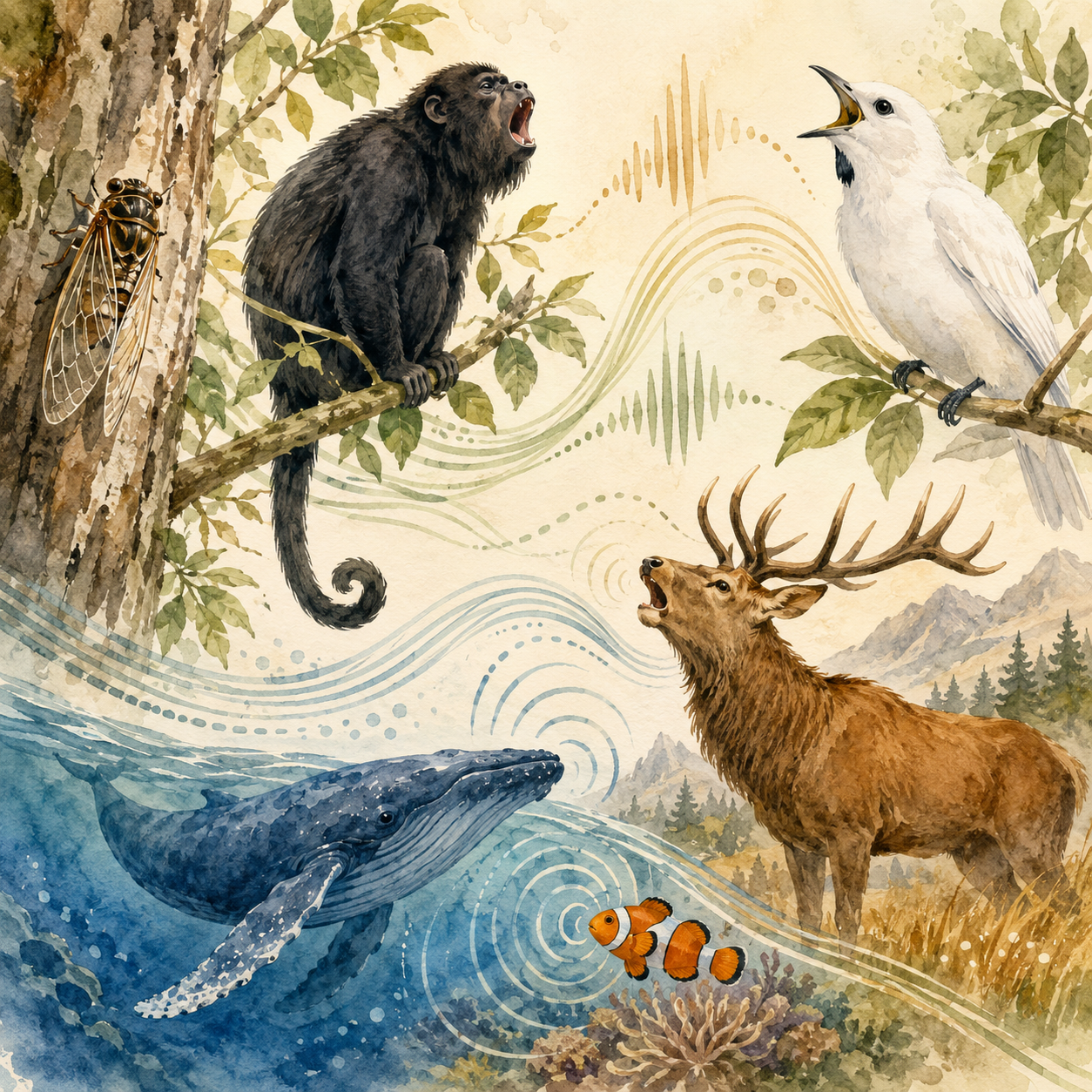
这声鸟叫,真的是鸟吗?那个狗叫和猫叫是谁发出来的?怎么鸟还会发出激光枪和婴儿哭声?这期节目我们把话筒交给动物,盲听一下不同动物的声音:夜莺带着庞大曲库登场,琴鸟一开口就让人怀疑耳朵,顶着骷髅纹的飞蛾也来亮嗓,后面还有把落叶当乐器的狼蛛,以及越唱越热闹的家庭合唱……而这些或好听,或奇妙的声音,其实都是不同生物用来找对象、认家人、守地盘和传递警报的生存手段。把眼睛闭上,这回让耳朵逛动物园——谁才是你心目中的动物好声音?


也欢迎把你印象深刻的动物声音和背后的故事分享给我们,一起共创后续的声音节目。

想要讨论更多动物的声音欢迎加小导游进入听友群:bio_kiwi

想要投稿音频文件,也可以加生物漫游小导游,或者发送至邮箱:nomilktree@gmail.com


在本期节目你将听到:

00:51闭眼盲选开启,谁能让你为它转身

05:04夜莺登场,一开嗓就是花式炫技

09:31一只夜莺的曲库究竟能有多大

14:21东方歌手画眉,也有丰富的唱腔

17:20鸟类藏着人类学不来的唱歌技巧

20:58城市太吵,鸟儿如何让歌声被听见

25:22半吨重的海牛,竟然有一副尖嗓子

28:12海牛宝宝用高音呼唤:妈妈来找我

32:12听着像鸟叫,结果竟然是美洲狮

35:34美洲狮的尖叫,听着竟然像人声

37:01多才多艺的琴鸟怎么什么声音都有?

41:51琴鸟模仿婴儿哭声,究竟为了什么

46:19琴鸟搭舞台翻尾羽,唱跳一起上

49:34雌性琴鸟也会口技,用声音保护巢穴

52:43灰猫嘲鸫登场,天生就有一副猫嗓

56:37食肉蝌蚪开口,发出拉链般的声音

01:00:39骷髅天蛾登场,朋克造型配奇妙嗓音

01:04:35偷蜜的天蛾,怎样伪造蜜蜂身份证

01:08:07狼蛛把落叶当乐器,奏响求偶之歌

01:13:07国宝开嗓,大熊猫竟然羊里羊气

01:17:51笑翠鸟合唱,听着像反派集体坏笑

01:21:09笑翠鸟全家带娃,笑声连起大家庭

01:26:30帅气鹭鹤亮相,鸟儿也能汪汪叫

01:36:15大狐猴的对唱竟然还藏着复杂节拍?

01:41:32长臂猿的歌声真的那么哀伤吗

01:46:46长臂猿听懂警报歌声,立刻戒备

01:53:01好听之外,去理解珍惜和保护声音


本期提及的视频或图片:

鸟类的鸣管结构:

丑萌的海牛:

海牛体型与声音的变化:

琴鸟与里拉琴:

琴鸟边跳舞边唱歌的视频(来自文献,需要往下翻翻):

https://www.cell.com/current-biology/fulltext/S0960-9822(13)00581-2

骷髅天蛾:

“鸣叫狼蛛”与它的声音频率图:

笑翠鸟(Shovel-billed kookaburra):

Kagu鸟/鹭鹤:

长相神奇的大狐猴:

大狐猴的复杂合唱:

https://www.youtube.com/watch?v=wxVYsAodZ6U

长臂猿叫声的类型:

长臂猿在正常情况(A)和遇到捕食者(B)的不同歌曲结构:


本期片尾曲:

《山雀》万能青年旅店

(纠结了好几首,感觉这首歌词还是相当契合的)


部分参考资料:

Roth T, Sprau P, Schmidt R, et al. Sex-specific timing of mate searching and territory prospecting in the nightingale: nocturnal life of females[J]. Proceedings of the Royal Society B: Biological Sciences, 2009, 276(1664): 2045.

Amrhein V, Korner P, Naguib M. Nocturnal and diurnal singing activity in the nightingale: correlations with mating status and breeding cycle[J]. Animal Behaviour, 2002, 64(6): 939-944.

Jäckel D, Mortega K G, Brockmeyer U, et al. Unravelling the stability of nightingale song over time and space using open, citizen science and shared data[J]. Frontiers in Ecology and Evolution, 2022, 10: 778610.

Costalunga G, Carpena C S, Seltmann S, et al. Wild nightingales flexibly match whistle pitch in real time[J]. Current Biology, 2023, 33(15): 3169-3178. e3.

Budka M. Thrush nightingales adjust the peak frequency and structure of their songs in response to different types of experimental noise[J]. Scientific Reports, 2025, 15(1): 2652.

https://avifauna.hkbws.org.hk/species/0370/044200

O'Shea T J, Poché Jr L B. Aspects of underwater sound communication in Florida manatees (Trichechus manatus latirostris)[J]. Journal of Mammalogy, 2006, 87(6): 1061-1071.

Allen M L, Wang Y, Wilmers C C. Exploring the adaptive significance of five types of puma (Puma concolor) vocalizations[J]. The Canadian Field-Naturalist, 2016, 130(4): 289-294.

Dalziell A H, Maisey A C, Magrath R D, et al. Male lyrebirds create a complex acoustic illusion of a mobbing flock during courtship and copulation[J]. Current Biology, 2021, 31(9): 1970-1976. e4.

Dalziell A H, Peters R A, Cockburn A, et al. Dance choreography is coordinated with song repertoire in a complex avian display[J]. Current Biology, 2013, 23(12): 1132-1135.

Dalziell A H, Welbergen J A. Elaborate mimetic vocal displays by female superb lyrebirds[J]. Frontiers in Ecology and Evolution, 2016, 4: 34.

Kroodsma D E, Houlihan P W, Fallon P A, et al. Song development by grey catbirds[J]. Animal behaviour, 1997, 54(2): 457-464.

Natale G S, Alcalde L, Herrera R, et al. Underwater acoustic communication in the macrophagic carnivorous larvae of Ceratophrys ornata (Anura: Ceratophryidae)[J]. Acta Zoologica, 2011, 92(1): 46-53.

Brehm G, Fischer M, Gorb S, et al. The unique sound production of the Death’s-head hawkmoth (Acherontia atropos (Linnaeus, 1758)) revisited[J]. The Science of Nature, 2015, 102(7): 43.

Sweger A L, Uetz G W. Characterizing the vibratory and acoustic signals of the “purring” wolf spider, Gladicosa gulosa (Araneae: Lycosidae)[J]. Bioacoustics, 2016, 25(3): 293-303.

Legge S. Helper contributions in the cooperatively breeding laughing kookaburra: feeding young is no laughing matter[J]. Animal Behaviour, 2000, 59(5): 1009-1018.

Baker M C. The chorus song of cooperatively breeding laughing kookaburras (Coraciiformes, Halcyonidae: Dacelo novaeguineae): characterization and comparison among groups[J]. Ethology, 2004, 110(1): 21-35.

Jacko, the Broadcasting Kookaburra https://www.radioheritage.com/otsw/Jacko.html

De Gregorio C, Valente D, Raimondi T, et al. Categorical rhythms in a singing primate[J]. Current Biology, 2021, 31(20): R1379-R1380.

Andrieu J, Penny S G, Bouchet H, et al. White-handed gibbons discriminate context-specific song compositions[J]. PeerJ, 2020, 8: e9477.


在小宇宙查看该单集文稿

links5