Skip to content
Artwork for Plastic. Climate. Future.
Plastic. Climate. Future. · February 19 · 52 min

Are Enzymes the Missing Link in Plastics Circularity?

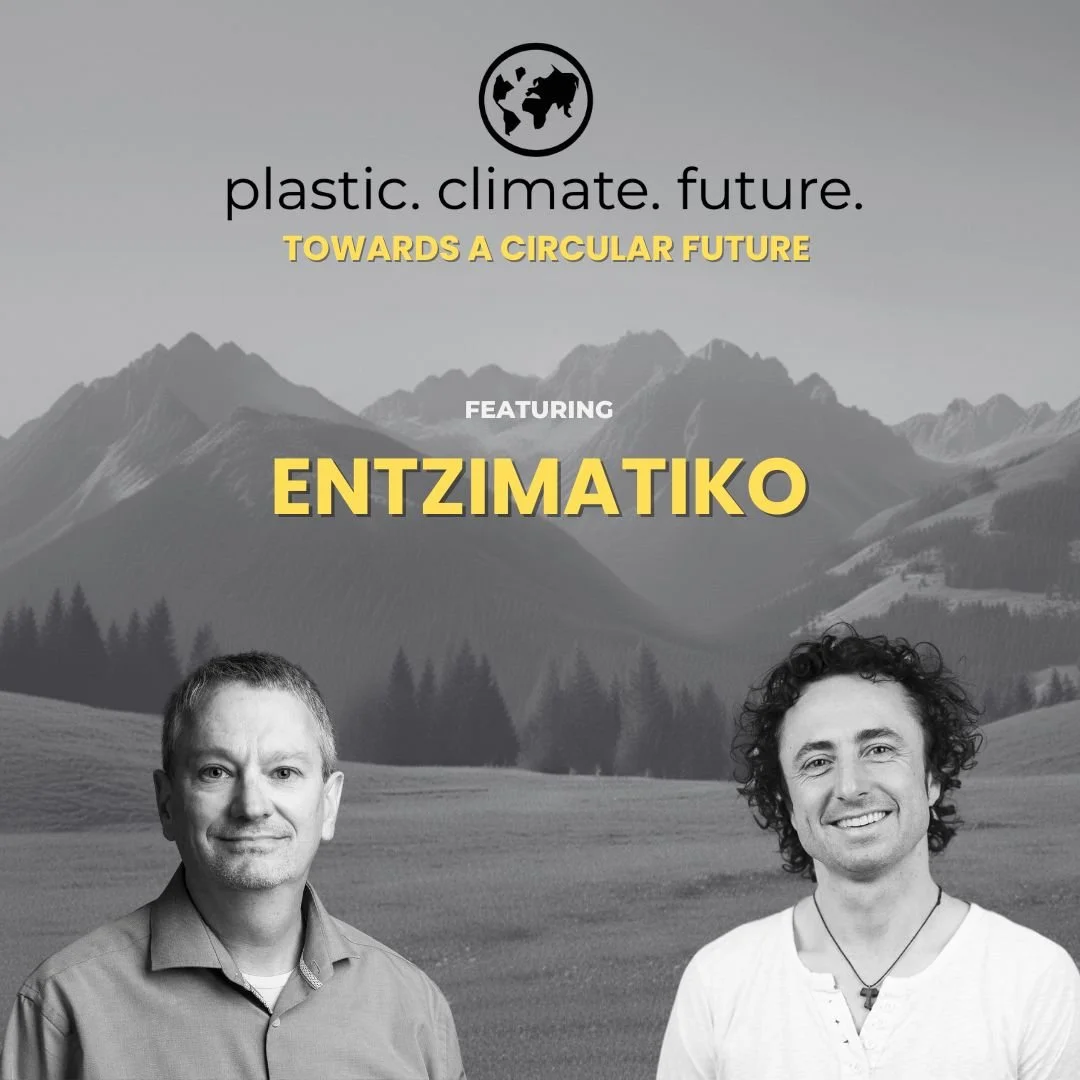
What if the breakthrough in plastic recycling doesn’t come from higher temperatures or bigger reactors — but from biology? In this episode of Plastic. Climate. Future., we speak with Oliver Borek from Entzimatiko, a company developing a novel enzymatic technology that goes beyond conventional chemical recycling. Their approach combines enzyme engineering, nano-encapsulation, and oxidation in a single-step process — operating at ambient conditions and targeting even the toughest materials, including polyolefins. We explore: Why polyolefins have long been considered “uncrackable” — and what may be changing How enzymatic machinery differs from pyrolysis and hydrothermal methods What low-temperature, solvent-free processing could mean for cost and scalability Why competitiveness with fossil equivalents is critical for real impact The roadmap to commercial scale by 2030 A fascinating conversation about science, risk, and what it takes to move breakthrough technology from lab to market. If circularity is to scale, innovation must go beyond incremental change. This episode dives into what that could look like. 🎧 Listen now on Spotify or Apple Podcasts!

0:00-52:48

transcript

No transcript — this publisher did not publish one.

show notes

What if the breakthrough in plastic recycling doesn’t come from higher temperatures or bigger reactors — but from biology?

In this episode of Plastic. Climate. Future., we speak with Oliver Borek from Entzimatiko, a company developing a novel enzymatic technology that goes beyond conventional chemical recycling.

Their approach combines enzyme engineering, nano-encapsulation, and oxidation in a single-step process — operating at ambient conditions and targeting even the toughest materials, including polyolefins.

We explore:

Why polyolefins have long been considered “uncrackable” — and what may be changing

How enzymatic machinery differs from pyrolysis and hydrothermal methods

What low-temperature, solvent-free processing could mean for cost and scalability

Why competitiveness with fossil equivalents is critical for real impact

The roadmap to commercial scale by 2030

A fascinating conversation about science, risk, and what it takes to move breakthrough technology from lab to market.

If circularity is to scale, innovation must go beyond incremental change. This episode dives into what that could look like.

🎧 Listen now on Spotify or Apple Podcasts!