Skip to content
Artwork for Pigskin Dispatch
SportsFootballHistoryLeisureHobbies

Pigskin Dispatch

Darin Hayes

Get a daily glimpse at the history of American football highlighting the events, people, teams, and anniversaries that took place on the calendar day, the year, or the story that the episode centers on. The show is in lock-step with our website PigskinDispatch.com to bring football fans of all ages a refreshing and fun gridiron experience!

Play
  • 31 episodes
  • a few times a week
  • Avg 19 min
  • English

Support the show

Goes straight to the publisher. podnod takes nothing.

Counted on this page — what you have heard stays on this device, so it is not something the list can be paged by.
  • S7 · E1576
    August 4 · 13 min

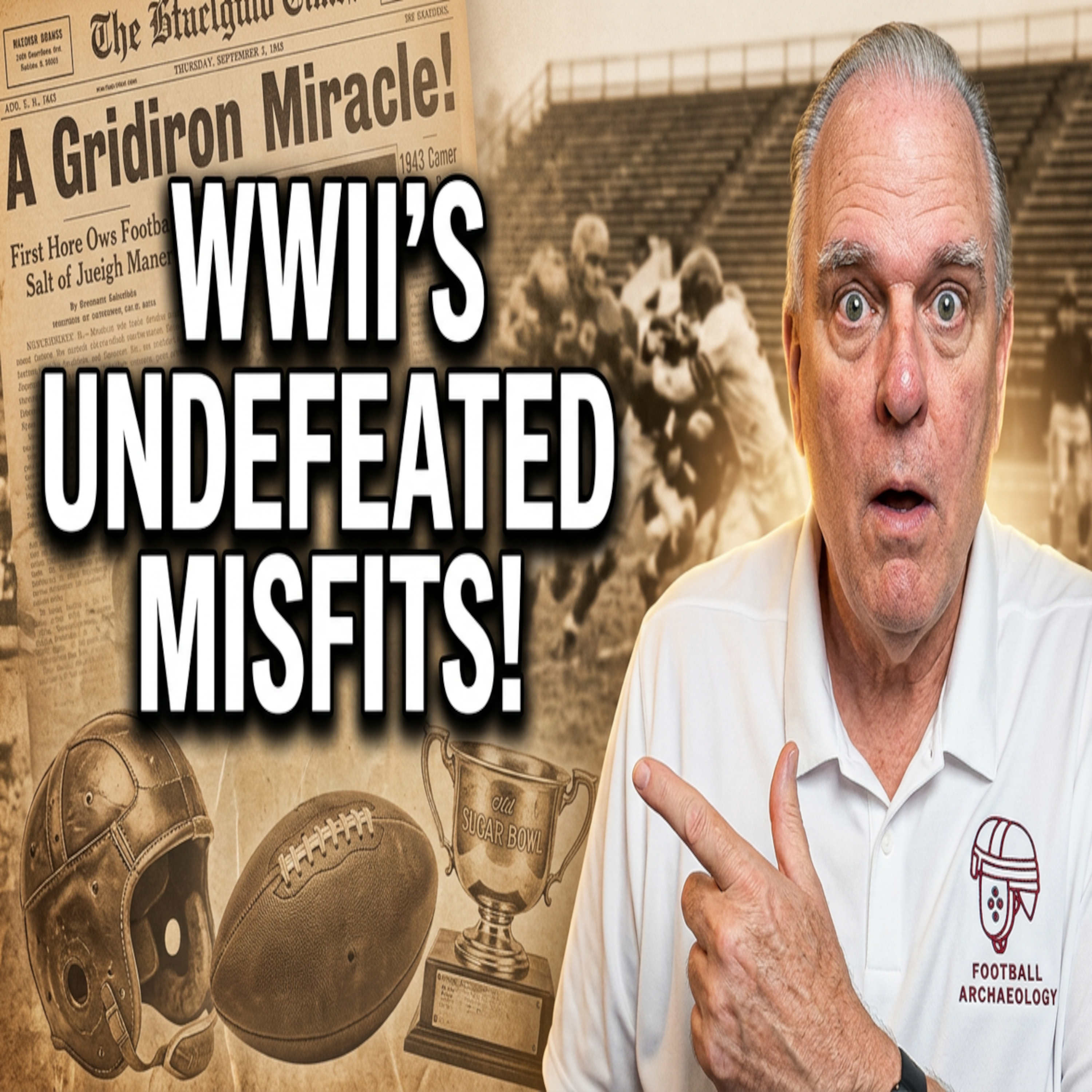
    The Unlikely Champions: Tulsa's 1943 Football Team

    The 1943 Tulsa Golden Hurricane football team represents an extraordinary narrative of resilience and triumph amidst the adversities of World War II. Comprising a unique assortment of athletes, including one-armed guards, lung-tackled individuals, and medically discharged soldiers, this team achieved an undefeated regular season, culminating in an appearance at the prestigious Sugar Bowl. Their remarkable journey, recounted by our esteemed guest Timothy P. Brown, exemplifies how wartime conditions inadvertently provided opportunities for schools like Tulsa, which traditionally lacked such prominence in collegiate football. The dynamics of college football during this period were profoundly altered, as many able-bodied young men were enlisted or engaged in military training, thus reshaping the landscape of the sport. We invite you to delve into this captivating story that not only highlights a significant chapter in football history but also underscores the indomitable spirit of those who played the game under extraordinary circumstances. Don't forget to check out and subscribe to the Pigskin Dispatch YouTube channel for additional content and the regular Football History Minute Shorts. Miss our football by the day of the year podcasts, well, don't, because they can still be found at the Pigskin Dispatch website. Do you want more football history? Test your Gridiron Knowledge, we feed you Daily with our new FREE activity, The Pigskin Trivia Drive. Grab a copy of our latest book, "Marooned," on the 1925 Pottsville Maroons NFL franchise saga. *OR* Grab a copy of our book on Western Pennsylvania football history, "World's Greatest Gridiron Team" on the 1903 Franklin All-Stars Drop us a line at PigskinDispatch@gmail .com and check out and subscribe to the Pigskin Dispatch YouTube channel. Contact us directly at PigskinDispatch@Gmail.com Miss our football by the day of the year podcasts, well, don't because they can still be found at the Pigskin Dispatch website. The narrative delineates a remarkable chapter in collegiate football history, specifically highlighting the Tulsa Golden Hurricanes of 1943. This team, comprised predominantly of individuals who had faced significant physical adversities, emerged as an emblem of resilience and tenacity during a tumultuous period marked by World War II. The composition of the team was particularly intriguing, featuring players who were medically discharged from military service, alongside those who were categorized as 4F—individuals deemed unfit for military service due to various health issues. Such a unique assemblage of athletes not only defied conventional expectations of physical prowess but also underscored the broader societal changes wrought by wartime circumstances. The Hurricanes' undefeated regular season culminated in an appearance at the Sugar Bowl, where they faced formidable competition, demonstrating that even in the face of adversity, achievement is possible. The discussion further delves into the broader implications of the war on college athletics. With many able-bodied men serving in the military, college football witnessed a paradigm shift, allowing institutions like Tulsa—traditionally overshadowed by larger programs—to seize opportunities that had previously eluded them. The team's coach, Henry Frnka, proved to be an astute recruiter, attracting talent from various backgrounds and even from schools that had suspended their football programs due to the war. This not only enriched the team’s roster but also highlighted the adaptability of collegiate sports in response to changing societal dynamics. The unique context of the 1943 season thus serves as a poignant reminder of the intersection between sports and historical events, illustrating how football became a medium for expressing resilience and community spirit during one of the most challenging periods in modern history.

    • Transcript
  • S7 · E1575
    August 3 · 10 min

    The Historic Rose Bowl of 1943: A Game Amidst War

    The focal point of our discussion revolves around the significant events of the year 1943 in the context of American football, particularly as they relate to the Rose Bowl game held on January 1, 1943. This game, which took place in Pasadena, marked a pivotal moment during World War II, as the nation sought solace in sports amid the turmoil of war. We delve into the performances of the Georgia Bulldogs, a formidable team led by the illustrious Frank Sinkwich, who ultimately triumphed over the UCLA Bruins with a final score of 9 to 0. The atmosphere of the game was electric, drawing 93,000 spectators despite the ongoing global conflict, underscoring the integral role of football as a source of normalcy for the American populace. We will explore the implications of this historic game and its significance in shaping the evolving landscape of football during a time of unprecedented challenges. Don't forget to check out and subscribe to the Pigskin Dispatch YouTube channel for additional content and the regular Football History Minute Shorts. Miss our football by the day of the year podcasts, well, don't, because they can still be found at the Pigskin Dispatch website. Do you want more football history? Test your Gridiron Knowledge, we feed you Daily with our new FREE activity, The Pigskin Trivia Drive. Grab a copy of our latest book, "Marooned," on the 1925 Pottsville Maroons NFL franchise saga. *OR* Grab a copy of our book on Western Pennsylvania football history, "World's Greatest Gridiron Team" on the 1903 Franklin All-Stars Drop us a line at PigskinDispatch@gmail .com and check out and subscribe to the Pigskin Dispatch YouTube channel. Contact us directly at PigskinDispatch@Gmail.com Miss our football by the day of the year podcasts, well, don't because they can still be found at the Pigskin Dispatch website. The discourse commences with the backdrop of World War II, a global conflict that significantly influenced numerous facets of life, including the realm of American football. Specifically, the narrative delves into the Rose Bowl game of January 1, 1942, which was unprecedentedly relocated to Durham, North Carolina, due to military restrictions imposed on the West Coast in the aftermath of the Pearl Harbor attack. The ensuing analysis shifts to the 1943 football season, emphasizing the need to comprehend the preceding 1942 season to fully grasp the context of the events that transpired. The return of the Rose Bowl to Pasadena in 1943 is marked as a beacon of normalcy amidst the chaos of war, representing a much-needed respite for a nation preoccupied with the struggles faced by its young men on distant battlefields. As the discussion unfolds, it highlights the formidable Georgia Bulldogs, whose remarkable performance during the 1942 season established them as a dominant force in college football. Under the astute leadership of Head Coach Wally Butts, the Bulldogs boasted an unparalleled offensive capability, averaging an astonishing 429.5 yards per game. This excellence was exemplified in their crushing victories over rivals such as Florida and Georgia Tech. The narrative further elucidates the individual brilliance of players like Frank Sinkwich, who secured the prestigious Heisman Trophy through his exceptional dual-threat capability, and Charlie Trippy, whose contributions were equally significant. The competitive landscape is enriched by the emergence of the UCLA Bruins, whose journey culminated in their inaugural bowl game appearance, reflecting the broader implications of the war on collegiate athletics. The climactic Rose Bowl game of 1943 is portrayed with vivid detail, emphasizing the electric atmosphere created by 93,000 attendees, despite the wartime restrictions. The contest witnessed a remarkable clash between Georgia's explosive offense and UCLA's resilient defense. The game, ultimately dominated by Georgia, culminated in a narrow victory, further solidifying their status as national champions. The aftermath of the game is steeped in poignancy, as many players transitioned from their football uniforms to military service, underscoring the profound intersection of sports and the realities of war. This narrative thread sets the stage for a deeper exploration of the 1943 football season, a pivotal year that would indelibly alter the trajectory of college football history.

    • Transcript
  • S6 · E1574
    July 31 · 13 min

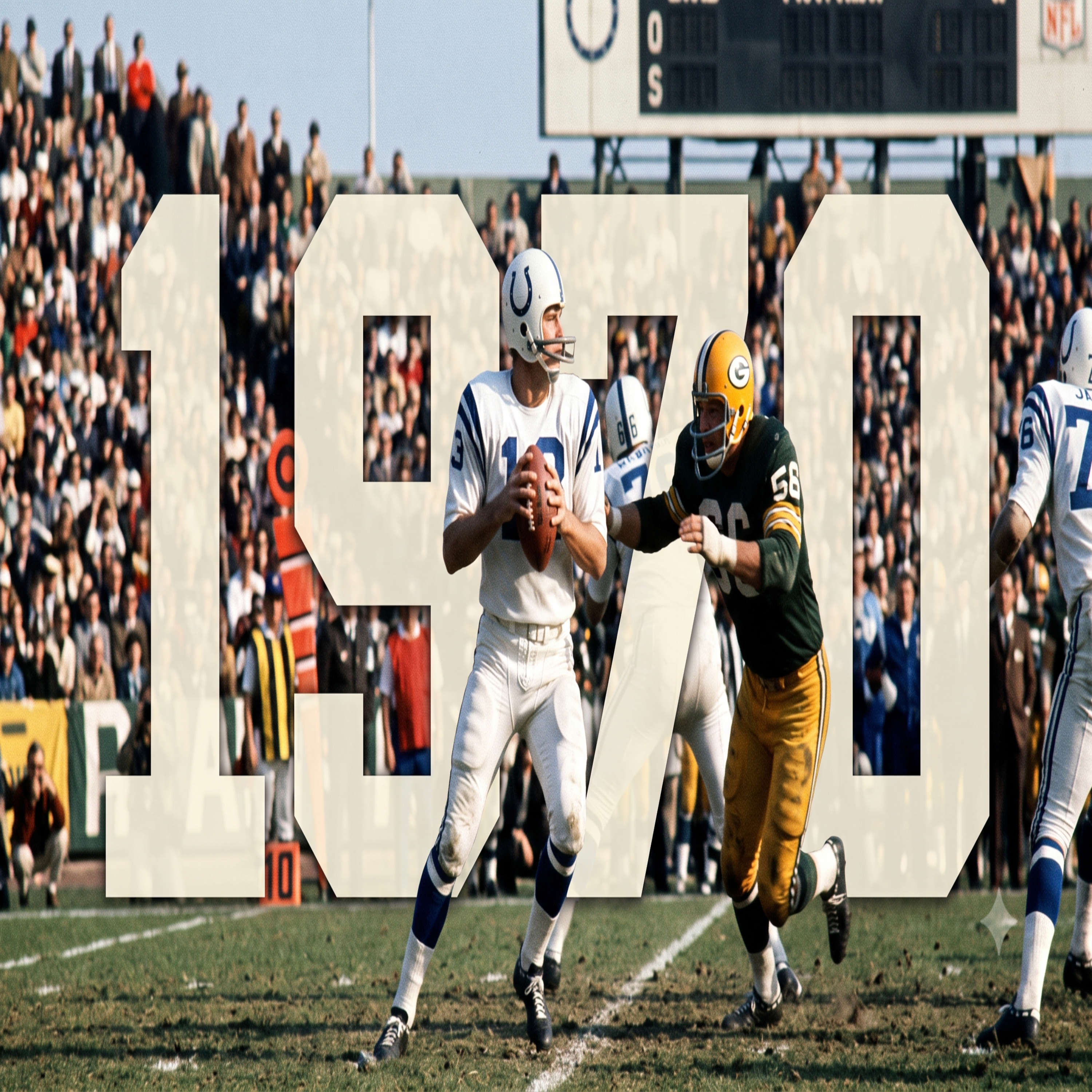
    The Pivotal Year: A Deep Dive into the 1970 American Football Season

    The year 1970 stands as a monumental chapter in the annals of American football, encapsulating a series of transformative events that irrevocably altered the landscape of the sport. This episode meticulously examines these pivotal shifts, particularly highlighting the remarkable resurgence of George Blanda, a quarterback whose age-defying performance at the age of 43 not only astonished fans but also earned him the prestigious title of Male Athlete of the Year. Furthermore, we delve into the inception of Monday Night Football, a groundbreaking television phenomenon that commenced on September 18, 1970, captivating audiences and setting the stage for a new era in sports broadcasting. Alongside these narratives, we explore the profound impacts of desegregation in college football, exemplified by USC’s historic victory over Alabama, which significantly influenced the dynamics of Southern football. As we traverse through these compelling stories, we invite our audience to reflect on the enduring legacy of the 1970 season, a year that truly changed the course of football history. Don't forget to check out and subscribe to the Pigskin Dispatch YouTube channel for additional content and the regular Football History Minute Shorts. Miss our football by the day of the year podcasts, well, don't, because they can still be found at the Pigskin Dispatch website. Do you want more football history? Test your Gridiron Knowledge, we feed you Daily with our new FREE activity, The Pigskin Trivia Drive. Grab a copy of our latest book, "Marooned," on the 1925 Pottsville Maroons NFL franchise saga. *OR* Grab a copy of our book on Western Pennsylvania football history, "World's Greatest Gridiron Team" on the 1903 Franklin All-Stars Drop us a line at PigskinDispatch@gmail .com and check out and subscribe to the Pigskin Dispatch YouTube channel. Contact us directly at PigskinDispatch@Gmail.com Miss our football by the day of the year podcasts, well, don't because they can still be found at the Pigskin Dispatch website. The 1970 American football season is a pivotal chapter in the history of the sport, characterized by transcendent achievements and transformative changes that reverberate through the annals of football lore. The advent of Monday Night Football on September 18, 1970, represented a seismic shift in how the game was consumed by the public. This inaugural broadcast, featuring the New York Jets and the Cleveland Browns, was not merely a sporting event; it was a cultural milestone that bridged the gap between entertainment and athletics. With Keith Jackson at the helm of commentary, accompanied by the distinctive voices of Dandy Don Meredith and Howard Cosell, the game introduced a new paradigm of sports broadcasting that emphasized personality, analysis, and fan engagement—elements that are now essential to the viewing experience. Central to the narrative of this season is George Blanda, whose remarkable resilience defied the conventions of age and performance in professional sports. At 43 years of age, Blanda's unexpected return to the field as an emergency quarterback for the Oakland Raiders culminated in a series of thrilling performances that not only secured victories but also etched his name in the record books as the Associated Press Male Athlete of the Year—the first football player to receive this honor. His journey serves as a poignant reminder of the indomitable human spirit and the capacity for excellence irrespective of age, challenging preconceived notions about longevity in professional athletics. Equally significant were the developments within college football, where the 1970 season bore witness to a watershed moment in the integration of the sport. The USC versus Alabama game became emblematic of the social changes sweeping across the nation, as the Trojans' resounding victory catalyzed a shift towards desegregation in collegiate athletics. Concurrently, Nebraska's ascendance to national prominence, culminating in their first consensus national championship, exemplified the evolving competitive landscape of college football. The confluence of these narratives—the innovation of Monday Night Football, Blanda's legendary performances, and the pivotal college games—collectively delineate a season that not only redefined the sport but also left an indelible mark on American culture, setting the stage for the future of football.

    • Transcript
  • S6 · E1573
    July 29 · 18 min

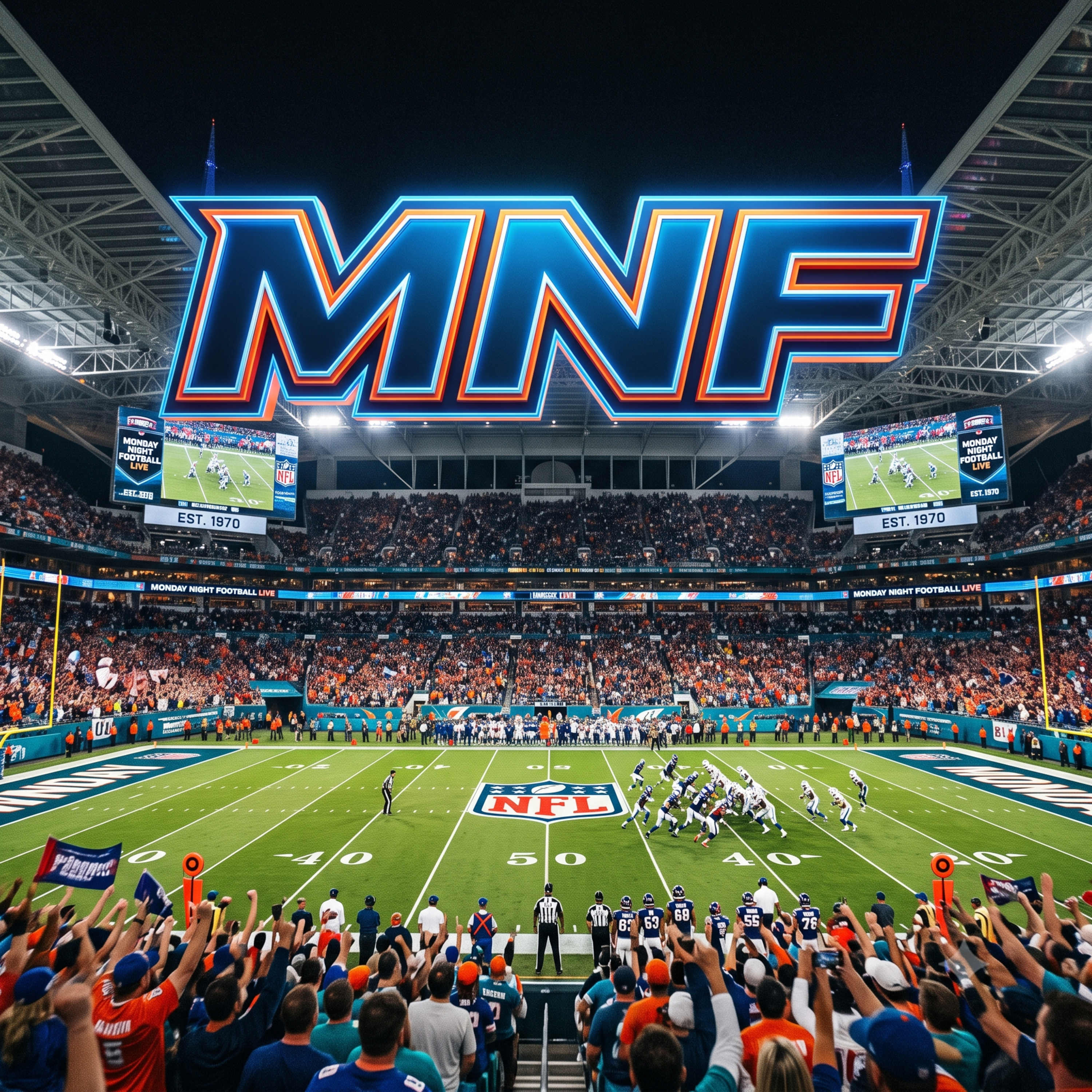
    From Experiment to Institution: The Birth of Monday Night Football

    The inception of "Monday Night Football" in 1970 brought a new era in American sports culture, marking the unprecedented convergence of prime-time television and professional football. On a historic night, 85,703 spectators filled Cleveland's Municipal Stadium, while millions across the nation tuned into ABC, resulting in a collective experience that forever altered the landscape of televised sports. This episode delves into the visionary efforts of NFL Commissioner Pete Rozelle, who, despite initial failures, strategically identified Monday night as an unclaimed opportunity for football viewership. We explore the innovative production techniques introduced by Rune Arledge, which elevated the broadcast to a spectacle, capturing not only the game but also the emotions of players and spectators alike. Ultimately, we reflect on how "Monday Night Football" became more than mere entertainment; it evolved into a cultural phenomenon that redefined the American pastime and solidified football's place as the nation's foremost sport. Don't forget to check out and subscribe to the Pigskin Dispatch YouTube channel for additional content and the regular Football History Minute Shorts. Miss our football by the day of the year podcasts, well, don't, because they can still be found at the Pigskin Dispatch website. Do you want more football history? Test your Gridiron Knowledge, we feed you Daily with our new FREE activity, The Pigskin Trivia Drive. Grab a copy of our latest book, "Marooned," on the 1925 Pottsville Maroons NFL franchise saga. *OR* Grab a copy of our book on Western Pennsylvania football history, "World's Greatest Gridiron Team" on the 1903 Franklin All-Stars Drop us a line at PigskinDispatch@gmail .com and check out and subscribe to the Pigskin Dispatch YouTube channel. Contact us directly at PigskinDispatch@Gmail.com Miss our football by the day of the year podcasts, well, don't because they can still be found at the Pigskin Dispatch website. [0:00–1:30] COLD OPEN — The Booth, The Lights, The Gamble That night, 85,703 people packed Cleveland's Municipal Stadium — the largest crowd the Browns had ever drawn. Advertisers paid sixty-five thousand dollars per minute for the privilege of interrupting this experiment. One out of every three televisions in America was tuned to ABC. And the next morning, for the first time in history, millions of people walked into their offices, their factories, their schools, and asked the same question: "Did you see that football game last night?" Monday Night Football was born. And nothing — not the sport, not television, not the American week — would ever be the same. ACT I: THE VISION — Pete Rozelle's Decade-Long Campaign Pete Rozelle became NFL commissioner in 1960 at age thirty-three — the youngest man ever to hold the job. He inherited a league that was popular but provincial. Baseball was still the national pastime. College football had the pageantry and the tradition. The NFL had the players, the rivalries, and increasingly the television ratings — but only on Sunday afternoons. B-roll: Young Pete Rozelle — the horn-rimmed glasses, the sharp suits, the commissioner's office in Manhattan. Newspaper headline: "ROZELLE NAMED NFL COMMISSIONER, 1960." Rozelle believed football could dominate prime time. Not just championship games — he wanted a weekly game, under the lights, in the middle of the week, when America was home, eating dinner, watching television. His first attempt failed before it started. In 1964, Rozelle proposed a package of Friday night games. The response was swift and brutal. High school football coaches across the country accused him of trying to destroy their sport. Congress had already passed the Sports Broadcasting Act of 1961, which explicitly prohibited the NFL from televising games on Friday nights and Saturdays, to protect high school and college football. Rozelle was boxed in. But he wasn't done. He looked at the calendar. One night remained unclaimed, unprotected, and wide open: Monday. B-roll: Tiger Stadium, Detroit — September 28, 1964. A sellout crowd of 59,203 — the largest ever for pro football in Detroit. The Packers and Lions. No TV cameras. No broadcast. Just an experiment. That first Monday night game, Packers at Lions, wasn't televised. It didn't matter. The sellout crowd proved there was an appetite. Over the next four seasons, Rozelle kept pushing. CBS carried one Monday night game in 1966 and 1967, then two in 1968 and 1969. NBC followed with AFL Monday night games in 1968 and 1969. The ratings were strong. Rozelle had his proof of concept. Now he needed a network to commit to a full season — thirteen Monday nights, every week, September through December — as part of the new television contract that would begin in 1970, coinciding with the AFL-NFL merger. [3:30–5:30] ACT II: THE DEAL — How ABC Got Stuck with the Best Idea in Sports Rozelle took his Monday night proposal to all three networks in 1969. He went to CBS first. The "Tiffany Network" had carried the NFL since 1956. They were the league's natural partner. But CBS had a problem: Monday nights belonged to programming that worked. The Doris Day Show. The Carol Burnett Show. Mayberry R.F.D. These shows weren't spectacular, but they were stable. CBS executives looked at Rozelle's proposal, did the math, and said no. They weren't going to blow up their Monday schedule for a football experiment. Rozelle went to NBC next. Same response. NBC's Monday lineup included Rowan & Martin's Laugh-In — the hottest comedy on television. The network wasn't about to preempt it for thirteen weeks of football. Pass. That left ABC — the perennial third-place network. ABC had been a distant number three in prime time for years. Its Monday night lineup was a weakness, not a strength — a collection of low-rated shows nobody would miss. But even ABC was hesitant. A weekly three-hour prime-time sports broadcast was unheard of. The production costs would be enormous. The risk of failure was real. B-roll: The three network logos — CBS, NBC, ABC — appearing one by one. Each fades to red except ABC. Then: Howard Hughes — the reclusive billionaire, beard, long fingernails, the hermetic Las Vegas penthouse — a single photograph. Rozelle had one card left to play. He let it be known that if ABC passed, he would take the package to the Hughes Sports Network — an independent network bankrolled by the reclusive billionaire Howard Hughes. Hughes had the money. He had the satellite capacity. And if Rozelle signed with Hughes, ABC's affiliates — starved for football — might preempt the network's Monday programming anyway and carry the Hughes feed. It was a bluff. But ABC blinked. ABC signed for $8.5 million for the 1970 season. It was, by far, the cheapest of the three network contracts — CBS and NBC had paid far more for their Sunday afternoon packages. But ABC now owned Monday night. And Rozelle had one more demand. He insisted that ABC assign the production to Roone Arledge — the thirty-eight-year-old producer who had revolutionized Olympic coverage and transformed Wide World of Sports into a cultural institution. Rozelle had seen what Arledge could do with cameras, storylines, and human drama. If Monday Night Football was going to work, Arledge had to run it. ABC agreed. Arledge got the assignment. And he immediately started breaking every rule in sports television. [5:30–7:30] ACT III: THE ARCHITECT — Roone Arledge's Revolution Roone Arledge didn't want to produce a football game. He wanted to produce a spectacle. B-roll: Arledge — the thick glasses, the intense stare, the reputation for genius and impossible behavior. Behind him: camera banks, monitors, the chaos of a control room. His first decision: double the cameras. Standard NFL broadcasts at the time used four or five cameras to cover a game. Arledge ordered nine — more angles, tighter close-ups, better framing. He wanted viewers to see the sweat on a quarterback's face, the grass stains on a lineman's jersey, the steam rising from a bald head on the sideline. He wanted intimacy — the kind of visual storytelling that television dramas used, that sports had never attempted. B-roll: Slow-motion replay — the first extensive use in NFL broadcasting. A play runs forward, then rewinds, then runs again from a different angle. Arledge's innovation. His second decision: embrace instant replay. Replay technology had existed for years, but no NFL broadcast had used it extensively. Arledge made it the centerpiece. Every big play would be shown twice, three times, from multiple angles. The audience wouldn't just watch the game — they would study it. His third decision was the most radical of all. Standard broadcast booths had two men: a play-by-play announcer and a color analyst. Arledge wanted three. One voice to call the action. One voice to explain the strategy from a player's perspective. And one voice — the wildcard — to criticize, provoke, and entertain. For play-by-play, Arledge pursued Curt Gowdy of NBC and Vin Scully of the Dodgers. Both were under contract and couldn't break free. He considered Jack Buck — but Buck, still angry about his treatment at ABC years earlier, refused to even respond to the offer. Arledge settled on Keith Jackson — the golden-voiced Georgia native who was already ABC's best college football announcer. Jackson was a pro. He could anchor anything. For the analyst chair, Arledge wanted Frank Gifford — the former Giants star who had become a polished broadcaster at CBS. But Gifford was still under contract. He suggested an alternative: Don Meredith, the recently retired Dallas Cowboys quarterback. Meredith had a Texas drawl, a folksy charm, and absolutely no broadcasting experience. Arledge hired him anyway. He wanted a voice that sounded like the audience — a fan who happened to have played the game. For the third chair, Arledge wanted controversy. He wanted someone America would talk about on Tuesday morning, whether they loved him or hated him. He hired Howard Cosell — a forty-nine-year-old attorney turned sportscaster, with a nasal Brooklyn accent, a vocabulary that belonged in a courtroom, and an unshakable belief that he was the smartest person in any room. Cosell had spent years irritating viewers on ABC's boxing broadcasts and local New York radio. Arledge didn't just tolerate Cosell's abrasiveness — he weaponized it. The booth was set. Jackson, Meredith, Cosell. The stage was built. Nine cameras, instant replay, three voices, prime time, Monday night. All Arledge needed was the right game. He demanded Joe Namath. [7:30–9:30] ACT IV: THE GAME — September 21, 1970 Joe Namath was the most famous athlete in America. Broadway Joe — the fur coats, the white shoes, the Manhattan nightlife, the guarantee of Super Bowl III eighteen months earlier. He was a television star who happened to play quarterback. Arledge told Rozelle: the first Monday Night Football game must feature Namath and the New York Jets. The opponent didn't matter. Namath was the draw. The league scheduled the Jets against the Cleveland Browns — a game that, on paper, looked like a mismatch in Cleveland's favor. The Browns had gone 10-3-1 the previous season, reaching the NFL Championship Game. The Jets had finished 10-4 in the AFL but missed the playoffs. But the records were beside the point. Namath was the story. B-roll: Cleveland Municipal Stadium, September 21, 1970 — 85,703 fans. The field under the lights. Namath warming up, the white cleats, the left arm. Keith Jackson setting the scene: "Two powers in professional football meet for the first time ever as members of the new American Football Conference." The game delivered. Cleveland struck first — Bill Nelsen, the Browns' steady veteran quarterback, took control early. The Jets answered. By halftime, the Browns led 14-7. Then, on the opening kickoff of the second half, came the moment that announced this show was different. B-roll: Homer Jones — the Browns' explosive return man — catching the kickoff at the six-yard line. He cuts left, finds a seam, accelerates. Ninety-four yards. Touchdown. The stadium erupts. Homer Jones, one of the fastest men in football, returned the second-half kickoff ninety-four yards for a touchdown. Cleveland led 21-7. The Jets wouldn't quit — Namath hit George Sauer for a thirty-three-yard touchdown to pull within a touchdown. But late in the fourth quarter, Billy Andrews — a Browns defensive back — intercepted Namath and returned it twenty-five yards for the game-clinching score. Final: Browns 31, Jets 21. B-roll: The final whistle. The scoreboard. The three men in the booth — Jackson professional to the end, Meredith adding the folksy touch, Cosell holding court. But the game on the field was only half the story. The broadcast itself was unlike anything America had seen. The cameras captured faces — Namath's frustration, Nelsen's grim resolve, the crowd's delirium. The three-man booth crackled with energy — Jackson's steady narration, Meredith's aw-shucks humor, Cosell's biting commentary. At halftime, Cosell provided highlights from Sunday's games — for millions of viewers, this was the first time they saw what had happened around the league that weekend, three days late, in a pre-cable, pre-internet world where sports news traveled slowly. There was one audience that didn't see the broadcast: the city of Cleveland. NFL blackout rules required home games to be blacked out in the local market through 1972. WEWS-TV, Cleveland's ABC affiliate, showed alternate programming. Eighty-five thousand people filled the stadium. Millions more watched across the country. But Clevelanders who stayed home missed it — a cruel irony for the city that hosted history. The numbers told the story. Thirty-three percent of American televisions were tuned to ABC that night — a share that rivaled the biggest entertainment shows. Advertisers who had gambled $65,000 per minute felt like geniuses. The Tuesday morning verdict was unanimous: Monday Night Football was not an experiment. It was the future. [9:30–10:30] ACT V: THE AFTERMATH — How Monday Night Changed America The cultural impact was immediate and permanent. Bars and restaurants that had never owned televisions installed them — and kept them tuned to ABC on Monday nights. What had been the slowest night of the week in the restaurant industry became one of the busiest. Monday became an event. Women began watching professional football in numbers the sport had never seen. The three-man booth — with its entertainment-first approach, its personalities, its drama — made the broadcast accessible to viewers who didn't know a nickel defense from a two-deep zone. Cosell explained the game in English, not jargon. Meredith made jokes. Gifford — who replaced Jackson in 1971 — provided the steady, handsome center. You didn't need to know football to enjoy Monday Night Football. You just needed to be awake. B-roll: The iconic trio — Cosell, Gifford, Meredith — in the booth. The 1975 introduction of "Heavy Action" — Johnny Pearson's theme that became synonymous with Monday night. Celebrity guests: John Lennon in the booth, 1974, laughing with Cosell. Muhammad Ali. Presidents. By the mid-1970s, Monday Night Football was routinely the highest-rated show on television — not just among sports programs, among all programs. The 1977 season opener between the Cowboys and Vikings drew a 31.1 rating. A midseason game between the undefeated Dolphins and the Steelers in 1972 drew 35.7 million viewers. These were Super Bowl-level numbers arriving every Monday night. The show's success changed the economics of professional football. The MNF contract proved that prime-time NFL programming could command premium advertising rates. Every subsequent television negotiation — every rights fee increase, every expansion of coverage — traced back to the proof of concept that Arledge and Rozelle established on September 21, 1970. And the show transcended sports in ways no one could have predicted. B-roll: December 8, 1980. The Orange Bowl — Dolphins vs. Patriots. A close game, fourth quarter. In the booth, Cosell receives a note. His face changes. On December 8, 1980, during a tight game between the Dolphins and Patriots, a producer handed Howard Cosell a slip of paper. Cosell read it, hesitated, then looked into the camera. He told America, live, that John Lennon — the former Beatle, a cultural icon, a friend who had been a halftime guest on the program years earlier — had been shot and killed outside his apartment building in New York. The moment was surreal — a football game suddenly interrupted by tragedy, announced by the most controversial voice in sports. It is, to this day, one of the most famous moments in American television history. Monday Night Football had become more than a game. It was the place where America gathered on Monday nights — for sport, for entertainment, for news, for community. It was appointment viewing in an era before DVRs, before streaming, before the fragmentation of attention. When Monday Night Football was on, the country stopped what it was doing and watched together. [10:30–11:00] CLOSING — The Legacy Visual: Fast cuts — the modern MNF broadcast on ESPN, Joe Buck and Troy Aikman, the Manningcast, the elaborate graphics packages. Then — a slow dissolve back to 1970: Keith Jackson's voice, the grainy footage, the packed Municipal Stadium, the original booth. Monday Night Football aired on ABC for thirty-six years — from 1970 through 2005, one of the longest-running prime-time series in American television history. It moved to ESPN in 2006, where it continues today. As of 2026, the broadcast has aired 718 games. The current television contract runs through 2033. The show that CBS and NBC refused to touch is now worth billions. But the real legacy isn't financial. Before Monday Night Football, the Super Bowl was the only NFL game that felt like national event television. After Monday Night Football, every week had a national game — a shared moment, a watercooler conversation, a collective experience that crossed regional loyalties and made football the universal language of American leisure. Baseball had been the national pastime. By the end of the 1970s, football had taken the crown. Monday Night Football didn't do that alone — but it was the wedge that broke the door open. It proved that football wasn't just Sunday afternoon entertainment. It was prime time. It was

    • Transcript
  • S6 · E1572
    July 28 · 13 min

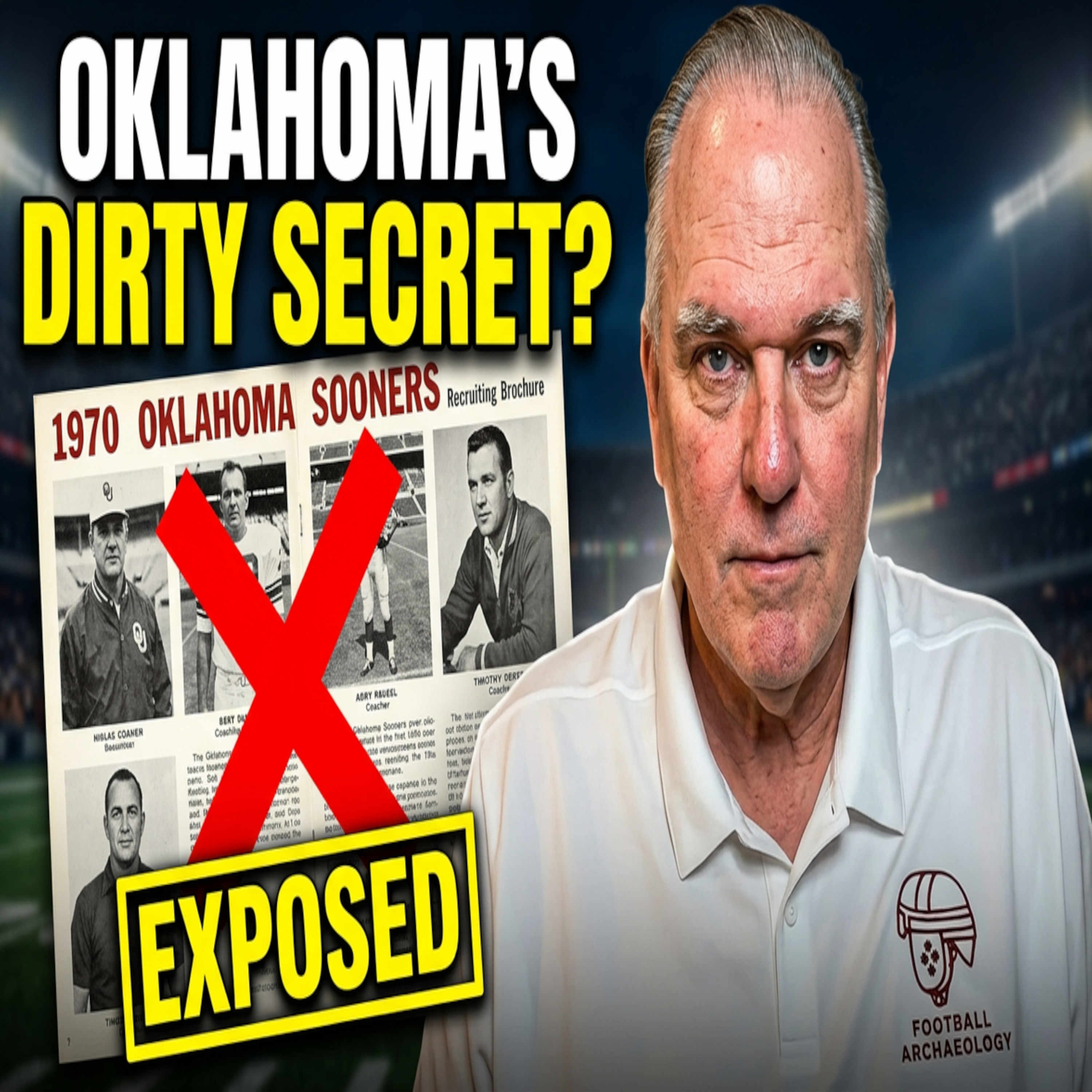
    Exploring the Scandalous Legacy of the 1970 Oklahoma Coaching Staff

    Today, we delve into the intricate and often controversial history of the 1970 Oklahoma football coaching staff, whose legacies are as much marked by scandal as by their remarkable achievements in Super Bowls and National Championships. Our esteemed guest, Timothy P. Brown from footballarchaeology.com, guides us through this compelling narrative, examining the values espoused in a vintage recruiting brochure juxtaposed against the dubious ethics that permeated the program. The discussion reveals the complexities surrounding prominent figures such as Chuck Fairbanks, Barry Switzer, and Jimmy Johnson, each of whom encountered significant challenges, including numerous NCAA violations. As we navigate through the legacies of these coaching luminaries, we uncover the dichotomy between their successes and the ethical quandaries that shadowed their careers. Join us as we unravel the fabric of this storied past, shedding light on the realities that underscore the victories of an iconic football era. Don't forget to check out and subscribe to the Pigskin Dispatch YouTube channel for additional content and the regular Football History Minute Shorts. Miss our football by the day of the year podcasts, well, don't, because they can still be found at the Pigskin Dispatch website. Do you want more football history? Test your Gridiron Knowledge, we feed you Daily with our new FREE activity, The Pigskin Trivia Drive. Grab a copy of our latest book, "Marooned," on the 1925 Pottsville Maroons NFL franchise saga. *OR* Grab a copy of our book on Western Pennsylvania football history, "World's Greatest Gridiron Team" on the 1903 Franklin All-Stars Drop us a line at PigskinDispatch@gmail .com and check out and subscribe to the Pigskin Dispatch YouTube channel. Contact us directly at PigskinDispatch@Gmail.com Miss our football by the day of the year podcasts, well, don't because they can still be found at the Pigskin Dispatch website. The conversation unfolds with an exploration of the 1970 Oklahoma football coaching staff, a collective of distinguished yet controversial figures whose legacies are marred by both triumphs and transgressions. The episode delves into the paradox of their esteemed achievements juxtaposed against a backdrop of ethical quandaries, particularly focusing on the notorious 107 recruiting violations that ultimately led to sanctions against the program. Our guest, Timothy P. Brown, presents an intriguing analysis of a vintage recruiting brochure that not only showcases the staff's credentials but also raises questions about the integrity of their values as purported in the promotional materials. The discussion illuminates the complexities of a coaching philosophy that, while yielding significant accolades, was tainted by questionable decisions, encapsulating the duality of excellence and ethical lapses that characterized this era of college football. Through this lens, we gain insight into the broader implications of such conduct on the sport's integrity and the enduring legacy of those involved.

    • Transcript
  • S6 · E1571
    July 24 · 11 min

    The 1880 Day Rugby was Severed: How Walter Camp Invented American Football

    On October 12, 1880, a 21-year-old Yale student named Walter Camp walked into a Massachusetts hotel meeting and killed the rugby scrum. Discover how Camp drew the line of scrimmage, created the quarterback position, and transformed continuous British chaos into the strategic, play-by-play game we know today. In the late 19th century, "American college football" was virtually indistinguishable from English rugby. It was a chaotic, 15-man sport governed by brute strength, invisible balls, and bloody "scrummages." Everything changed on October 12, 1880. Walter Camp—a young student-athlete at Yale—leveraged a voting majority to push through a radical new rule: the line of scrimmage. In this episode, we explore how one man systematically redesigned a sport, invented the modern football positions, saved the game with the creation of "downs," and laid the groundwork for American gridiron culture. Timestamps: **** Intro: The Cold Open – October 12, 1880 **** Act I: The 15-Man Rugby Chaos – How the 1876 Massasoit Convention adopted British rules, and why early football was pure violence and chance. **** Act II: The Obsessive – Meet Walter Camp, the "spirit and whipcord" Yale player obsessed with scientific strategy. **** Act III: The Convention – The vote in Springfield, killing the scrum, and the birth of the line of scrimmage. **** Act IV: The Line – Guaranteed possession, the creation of the T-formation, and how modern football positions got their names. **** Act V: The Near-Death Experience – The "Block Game" disaster of 1881 and the 1882 creation of the system of downs. **** Act VI: The Legacy – Clock salesman, father of All-America, and the enduring gridiron legacy of Walter Camp. How 1880 Changed Football: The Story of Walter Camp and the Line of Scrummage On October 12, 1880, the Intercollegiate Football Association gathered at a meeting in Springfield, Massachusetts. At the time, American college football was, in every meaningful sense, still English rugby. It was a game defined by 15-man teams, bloody scrums, and an invisible ball buried beneath a pile of crushing bodies. Then, a 21-year-old Yale student named Walter Camp stood up and proposed something radical. He wanted to kill the scrum. He wanted to draw a clean line in the dirt and separate offense from defense. The room pushed back, but Camp had the votes. When the meeting adjourned, the scrum was dead, the line of scrimmage was born, and American football had officially split from its British parent. Here is the story of how Walter Camp transformed a game of continuous chaos into the strategic, play-by-play sport we watch today. Act I: The 15-Man Rugby Chaos (1876–1880) In 1876, representatives from Harvard, Yale, Princeton, and Columbia met at the Massasoit House in Springfield to agree on a unified rulebook. Of the 61 rules adopted, 56 were copied verbatim from the British Rugby Union code. +-----------------------------------------------------------------------+ | 1876 American Football (Rugby Code) | +-----------------------------------------------------------------------+ | • 15 players per side | | • Continuous play via a "scrummage" (contested ball on the ground) | | • No guaranteed possession | | • No line of scrimmage, no downs, and no designated play calls | +-----------------------------------------------------------------------+ Without possession guarantees, strategy was virtually impossible. It was a game of pure chance and raw physical force. Players choked each other in piles, fists flew, and spectators routinely witnessed brutal injuries. Camp looked at this violent churn and saw a system that was fundamentally broken and unscientific. Act II: The Obsessive—Who Was Walter Camp? Walter Camp entered Yale in 1876 at just 17 years old. Weighing only 156 pounds, he transformed himself through an obsessive, self-invented conditioning routine: Running cross-country alone through New Haven. Performing secret morning calisthenics. Carrying a football to class to build muscle memory and prevent fumbles. Camp wasn't just physical—he was a multi-sport star, class poet, and top academic student. Yet his true passion was analyzing rulebooks. Attending rules conventions as a young delegate in 1878 and 1879, Camp realized that rugby rewarded brute force over intellect. He envisioned a sport driven by set formations, clear possession, and sequential plays. To make it happen, he needed a concrete proposal and the political backing to pass it. Act III: The 1880 Convention & The Scrimmage Rule By October 1880, Yale’s committee delegation had grown, giving Camp the voting leverage he needed. At the Springfield convention, he introduced a series of revolutionary reforms: Replace the Scrum: Establish a "line of scrimmage" giving one team exclusive, un-contested possession of the ball. Reduce Roster Size: Lower team size from 15 to 11 players to open up the field for speed and dynamic plays. Formalize the Snap: Require a designated player to snap the ball backward with his foot to initiate a play. Traditionalists argued that removing the unpredictability of the scrum would destroy the essence of the game. Camp didn't argue—he simply cast his votes. The rules passed. "In one afternoon, a 21-year-old severed American football from its rugby parent. The sport would never look back." Act IV: How the Line Created Modern Football The introduction of the line of scrimmage created the distinct rhythm of American gridiron action: a play, a tackle, a pause, and a reset. It also directly birthed every position name on the field today: This alignment (the early T-formation) allowed teams to execute planned running plays, misdirection, and structured offenses for the first time in history. Act V: The 1881 Crisis and the System of Downs The new scrimmage rule had one glaring loophole: there was no rule requiring a team to advance the ball. During the 1881 Yale-Princeton championship game, Yale took advantage of this flaw. Securing the ball under the line of scrimmage, they held possession for an entire half without attempting to score. Princeton couldn't touch the ball, resulting in a agonizing 0–0 draw known as the "Block Game." Realizing the game was at risk of becoming unwatchable, Camp devised his second landmark reform in 1882: the system of downs. The 1882 Rule: An offense had to gain 5 yards in 3 attempts (downs) or surrender possession of the ball. While the yardage and attempts were later modified to 10 yards in 4 downs, this fundamental mechanism forced teams to attack, saving American football from endless stalling. Conclusion: The Legacy of Gridiron's Architect Walter Camp spent the next four decades serving as the primary steward of college football. He chaired rules committees, authored the first official book on the sport, and selected the inaugural All-America teams. While Camp was an amateur who made his living selling clocks, his influence on American culture remains massive. The snap, the quarterback, the line of scrimmage, and the system of downs were all forged in a two-year burst of brilliant innovation by a young student who looked at chaos and chose to draw a line. Don't forget to check out and subscribe to the Pigskin Dispatch YouTube channel for additional content and the regular Football History Minute Shorts. Miss our football by the day of the year podcasts, well, don't, because they can still be found at the Pigskin Dispatch website. Do you want more football history? Test your Gridiron Knowledge, we feed you Daily with our new FREE activity, The Pigskin Trivia Drive. Grab a copy of our latest book, "Marooned," on the 1925 Pottsville Maroons NFL franchise saga. *OR* Grab a copy of our book on Western Pennsylvania football history, "World's Greatest Gridiron Team" on the 1903 Franklin All-Stars Drop us a line at PigskinDispatch@gmail .com and check out and subscribe to the Pigskin Dispatch YouTube channel. Contact us directly at PigskinDispatch@Gmail.com Miss our football by the day of the year podcasts, well, don't because they can still be found at the Pigskin Dispatch website.

  • S6 · E1570
    July 21 · 18 min

    The Historical Significance of Ball Rotation Spots in Football

    The crux of this podcast episode revolves around the intriguing evolution of the process involved in spotting the football, as elucidated by our esteemed guest, Timothy Brown, an expert in football archaeology. Our discourse delves into the historical nuances of how the game’s foundational rules regarding the placement of the ball have transformed over time, particularly examining the practices in antiquity when the rules were not as clearly defined. We explore the transition from an era where the ball’s placement was dictated by custom and player discretion to a more structured system governed by modern officiating protocols. Additionally, we discuss pivotal moments in football history that shaped the current regulations surrounding the rotation and positioning of the ball during play. Join us as we navigate through these historical developments that have indelibly influenced the game we know and cherish today. The conversation is based on Tim's recent article titled: The Twists and Turns of Spotting Dead Balls - https://www.footballarchaeology.com/p/the-twists-and-turns-of-spotting The discourse engages with the evolution of the fundamental aspects of American football, specifically the intricate process of how the ball is spotted during gameplay. The conversation unveils historical practices, revealing that the early iterations of football lacked a standardized method for ball placement, which was primarily dictated by custom rather than formal regulations. The dialogue emphasizes the transformative journey from a rudimentary and fluid style of play, akin to rugby, to the regimented and rule-bound game we recognize today. The speakers delve into the historical context, citing the contributions of notable figures such as Timothy Brown, who elucidates the significance of ball rotation and spotting techniques that have become integral to the sport. Through their discussion, they elucidate that the methods used to determine ball placement were not merely technicalities, but rather reflections of the game's evolution and the establishment of a more structured approach to play. ⏰ Timecodes ⏰ 00:21 The Origins of Game Rules 01:49 The Evolution of Spotting the Ball in Football 04:31 The Evolution of Touchdown Rules in Football 09:35 The Evolution of Football Rules: The Ball Rotation Controversy 11:52 Understanding the Goal Line and the Ball's Position 15:12 Exploring Football History and Resources Do you want more football history? Grab a copy of our Award-Winning book, "The World's Greatest Pro Gridiron Team: The 1903 Franklin All-Stars" at https://amzn.to/4rG6uVe Don't forget to check out and subscribe to the Pigskin Dispatch YouTube channel for additional content and the regular Football History Minute Shorts. Miss our football by the day of the year podcasts, well, don't, because they can still be found at the Pigskin Dispatch website. Do you want more football history? Test your Gridiron Knowledge, we feed you Daily with our new FREE activity, The Pigskin Trivia Drive. Grab a copy of our latest book, "Marooned," on the 1925 Pottsville Maroons NFL franchise saga. *OR* Grab a copy of our book on Western Pennsylvania football history, "World's Greatest Gridiron Team" on the 1903 Franklin All-Stars Drop us a line at PigskinDispatch@gmail .com and check out and subscribe to the Pigskin Dispatch YouTube channel. Contact us directly at PigskinDispatch@Gmail.com Miss our football by the day of the year podcasts, well, don't because they can still be found at the Pigskin Dispatch website.

    • Transcript
  • S6 · E1569
    July 20 · 40 min

    The Historical Timeline of Gridiron Football: An Alternate Theory of When It Began?

    The discourse presented in this episode centers on the origins of American football, with our esteemed guest, Bert Gambini, positing that the pivotal moment in football's history occurred on October 16, 1880. Gambini articulates that this date marks the first instance of gridiron football being played under the critical rule of scrimmage, a significant departure from previous iterations of the game. Throughout the discussion, we meticulously analyze various claims regarding the inception of football, including widely accepted dates such as 1869 and 1876, yet we ultimately find them lacking in defining the essence of what constitutes football. Gambini's research highlights the importance of understanding the transformation of the game from its rudimentary forms to the establishment of structured play, notably through the introduction of possession rules. This episode serves not only as an exploration of football's historical timeline but also as an invitation to reconsider the narratives that have long shaped our understanding of the sport's evolution. Don't forget to check out and subscribe to the Pigskin Dispatch YouTube channel for additional content and the regular Football History Minute Shorts. Miss our football by the day of the year podcasts, well, don't, because they can still be found at the Pigskin Dispatch website. Do you want more football history? Test your Gridiron Knowledge, we feed you Daily with our new FREE activity, The Pigskin Trivia Drive. Grab a copy of our latest book, "Marooned," on the 1925 Pottsville Maroons NFL franchise saga. *OR* Grab a copy of our book on Western Pennsylvania football history, "World's Greatest Gridiron Team" on the 1903 Franklin All-Stars Drop us a line at PigskinDispatch@gmail .com and check out and subscribe to the Pigskin Dispatch YouTube channel. Contact us directly at PigskinDispatch@Gmail.com Miss our football by the day of the year podcasts, well, don't because they can still be found at the Pigskin Dispatch website. A profound examination of the origins of American football unfolds in this enlightening discussion, wherein the speakers engage with the esteemed historian Bert Gambini. The discourse traverses various proposed starting points of football, including the commonly cited years of 1869, 1874, and 1876, culminating in Gambini's compelling assertion that the true inception occurred in 1880. Gambini articulates a critical distinction between earlier forms of the game and the establishment of scrimmage rules, which he argues fundamentally transformed football into the sport we recognize today. The conversation delves into the socio-historical context surrounding these developments, highlighting the necessity for a more nuanced understanding of football's evolution. Gambini's meticulous research, which includes references to contemporaneous newspaper reports, illuminates the obscured narratives and misconceptions that have persisted over time, challenging the audience to reconsider widely held beliefs about the game’s origins. This episode serves not only as a chronicle of football history but also as an invitation to engage critically with the sources that shape our understanding of the past. The speakers emphasize the importance of recognizing scrimmage as a pivotal moment in football’s development, underscoring that this rule change marked a departure from its rugby roots. Gambini’s insightful analysis prompts a re-evaluation of the historical timeline, advocating for a recognition of the 1880 game between Rutgers and the Stevens Institute as the first true gridiron football match. This perspective not only enriches our comprehension of football's lineage but also invites further scholarly inquiry into the myriad influences that have shaped the sport over the decades.

    • Transcript
  • S6 · E1568
    July 16 · 15 min

    The Amazing 1983 American Football Season

    The 1983 American football season stands as a watershed moment in the sport’s history. It was a year that defined a generation of professional talent, birthed a collegiate dynasty, and saw the introduction of a major rival professional league. Don't forget to check out and subscribe to the Pigskin Dispatch YouTube channel for additional content and the regular Football History Minute Shorts. Miss our football by the day of the year podcasts, well, don't, because they can still be found at the Pigskin Dispatch website. Do you want more football history? Test your Gridiron Knowledge, we feed you Daily with our new FREE activity, The Pigskin Trivia Drive. Grab a copy of our latest book, "Marooned," on the 1925 Pottsville Maroons NFL franchise saga. *OR* Grab a copy of our book on Western Pennsylvania football history, "World's Greatest Gridiron Team" on the 1903 Franklin All-Stars Drop us a line at PigskinDispatch@gmail .com and check out and subscribe to the Pigskin Dispatch YouTube channel. Contact us directly at PigskinDispatch@Gmail.com Miss our football by the day of the year podcasts, well, don't because they can still be found at the Pigskin Dispatch website.

    • Transcript
  • S6 · E1567
    July 15 · 14 min

    The Refusal 1983 — John Elway, the Colts, and the QB Class That Changed Everything"

    The crux of this episode revolves around John Elway's unprecedented decision to refuse playing for the Baltimore Colts, thereby instigating one of the most consequential standoffs in NFL draft history. On April 25, 1983, Elway, through his agent, communicated a resolute message to the Colts: he would not don their uniform, opting instead to pursue a career in baseball should they select him. This defiance was rooted in the Colts' tumultuous state, characterized by mismanagement and a lack of stability, which Elway and his family deemed unsuitable for the commencement of his professional career. The episode meticulously explores the implications of Elway's stance, the dynamics of the draft, and the subsequent trade that ultimately reshaped not only his career but also the fortunes of the franchises involved. As we delve into this historical narrative, we illuminate the broader context of the 1983 NFL draft, showcasing its lasting impact on the landscape of professional football. Don't forget to check out and subscribe to the Pigskin Dispatch YouTube channel for additional content and the regular Football History Minute Shorts. Miss our football by the day of the year podcasts, well, don't, because they can still be found at the Pigskin Dispatch website. Do you want more football history? Test your Gridiron Knowledge, we feed you Daily with our new FREE activity, The Pigskin Trivia Drive. Grab a copy of our latest book, "Marooned," on the 1925 Pottsville Maroons NFL franchise saga. *OR* Grab a copy of our book on Western Pennsylvania football history, "World's Greatest Gridiron Team" on the 1903 Franklin All-Stars Drop us a line at PigskinDispatch@gmail .com and check out and subscribe to the Pigskin Dispatch YouTube channel. Contact us directly at PigskinDispatch@Gmail.com Miss our football by the day of the year podcasts, well, don't because they can still be found at the Pigskin Dispatch website.

    • Transcript
  • July 14 · 1 min

    The Patriots: From Boston to Foxboro (Presented by the Sports History Network) - The Patriots: From Boston to Foxboro

    This podcast is part of the Sports History Network - the headquarters of sports' yesteryear. SHOW DESCRIPTION: These days, the New England Patriots are often thought of as one of the elite teams in the NFL. However, that hasn’t always been the case, especially during the team’s infancy, when they were a charter member of the upstart AFL and chaos and confusion often reigned. The Patriots of the 60s and early 70s were a transient team and played its home games in no less than 5 different stadiums. The Pats also cycled thru its head coaches quite frequently back then and one coach in particular is often remembered as the one who best epitomized the team’s failings during this time. In this 4-part series, we will take a look at the team’s humble beginnings in Boston in 1960 to their first years in Foxboro. We will also do a deep dive into the timeline between 1969 – 1972 to relive some of the most shocking and bizarre events to ever impact a professional sports franchise. The Patriots: From Boston to Foxboro. HOST - JOE SANTOS: Joe Santos grew up in Massachusetts and is an avid football fan, with a special fondness for the NFL in the early 70s. This Week in Pro Football and NFL Game of the Week were must-see TV back in the day. And living in Massachusetts meant you saw all of the NY Giants games on tv, both home and away, as they were the de facto home team for the NFC. Due to the blackout rules at the time, only the Patriots away games were shown. Being a huge sports history fan, Joe will continue to tell the unusual stories from an era that's considered to be the golden age of pro football.

Showing 21–31 of 31 episodes