Skip to content
Artwork for Pawplexity Pawdcast
Kids & FamilyPets & AnimalsSociety & CultureRelationships

Pawplexity Pawdcast

Annika Tringali

Ever wondered why your dog does the exact opposite of what the book said?

Your dog didn't come with a manual, and neither did the vet visit, the first night with a puppy, or the moment you realized your dog has more opinions than you do. Pawplexity is a podcast about the messy, funny and sometimes stressful side of living with dogs and cats, from three hosts who share their lives with pets in three different countries. Made for dog owners, new and experienced, who want the honest version.

Each episode takes one everyday moment, like the vet visit, leaving your dog home alone, or the walk that goes sideways, and talks it through with real experience and plenty of humor.

Bigger questions get the same honest treatment: whether dog parks suit every dog, what a second pet does to a household, how the world your dog grows up in shapes who they become, and why the spay and neuter debate looks so different depending on where you live.

Expect honest conversation and plenty of humor. Nobody here has every answer, and we'll tell you when we got it wrong.

If this sounds like your house, hit subscribe and start with episode one, "Our truth about puppyhood.“

Play
  • 16 episodes
  • fortnightly
  • Avg 40 min
  • English
  • S1 · E15
    November 18 · 34 min

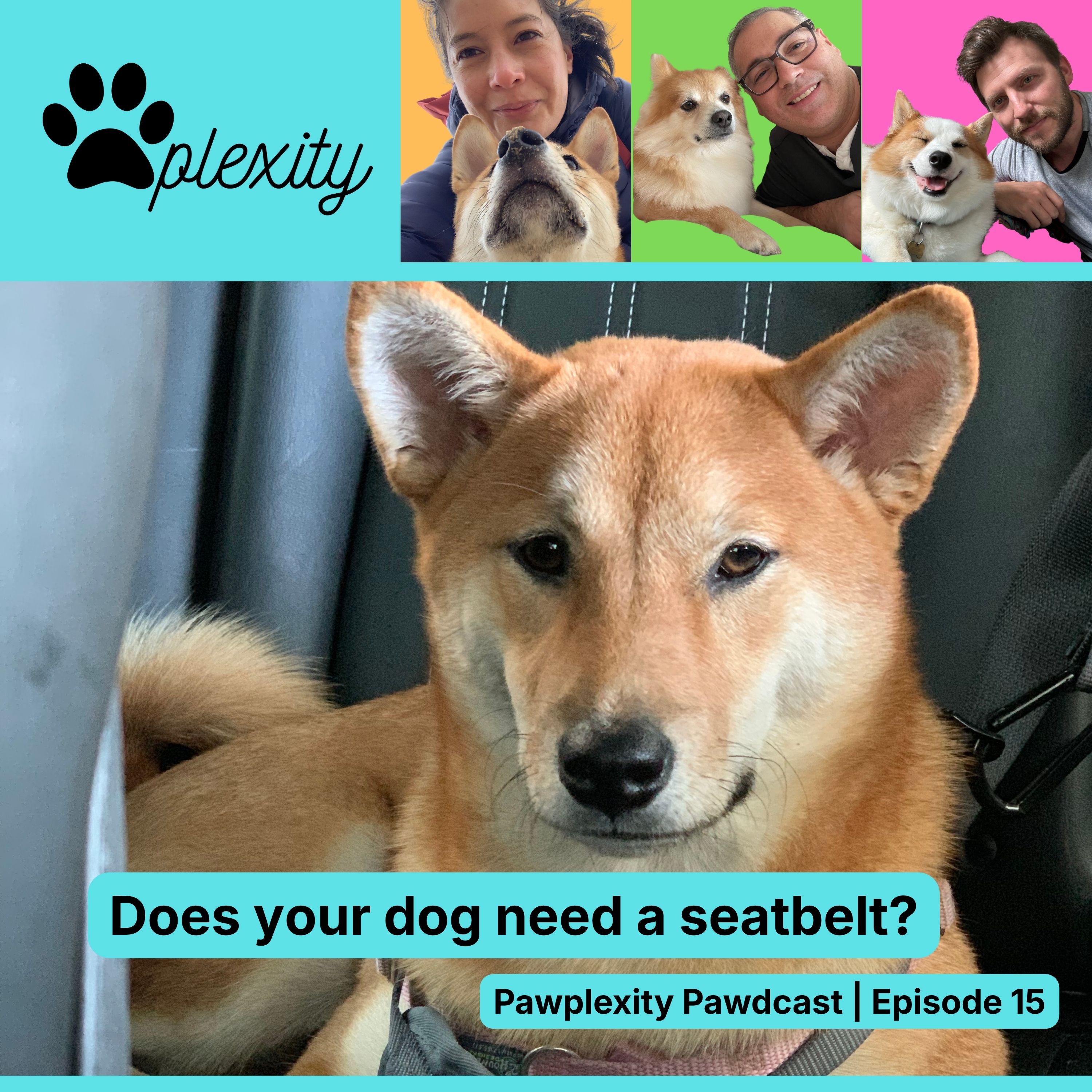
    E15: Does your dog need a seatbelt?

    Driving with our dogs is one of the things many of us do not even train for. After all, there are places we, and they, have to get to. Bowie is a pro on public transportation, but he doesn’t like riding in the car as much. Though he is fine on car rides now, he used to dribble and get sick initially. Judge doesn’t have any problem riding in the car as long as he can sit on Bruce’s lap, whether Bruce is driving or not. Makenzie just loves to be in the car these days. She has the entire backbench to herself, set up with a proper bed and all. The question though is how to best secure our dogs in the car? There are many options out there, but which is the safest? And is that safest option also a comfortable one for our dogs? How does your dog get from A to B? And are they happy with their travel set up? Tell us in the comments.

    • Transcript
  • S1 · E14
    November 4 · 42 min

    E14: Dog parks - who are they really for?

    Are dog parks for the dogs, or for the people who bring them? Well, that may just depend on the park and the people in it. Makenzie spent the first eleven months of her life in Seattle, and we went to the many different dog parks three times a day. Dog parks gave us structure and off-leash freedom, and were training ground as much as playground. Bruce’s local dog park helps to prevent tension by offering a small dog and a big dog section. Judge and Max both love going to their park and meet friends there. Outside the US, dog parks are not as big of a thing. Ben has seen fights in a little London dog park, so he gets nervous when he sees too many dogs in there or dogs that aren't under control. Bowie grew up in Toronto frequenting regular parks. And having good recall he does not need the fence around the park as much as Judge and Makenzie do. Makenzie and I never had a single incident or sticky situation in any of the many dog parks we went to. What they all had in common, no matter the size, were people tuned in with their dogs, and dogs tuned in with their people. Knowing that made all the difference to us. Do you go to dog parks, or are they on your no-go list? Tell us in the comments.

    • Transcript
  • S1 · E13
    October 21 · 40 min

    E13: Good dogs in public

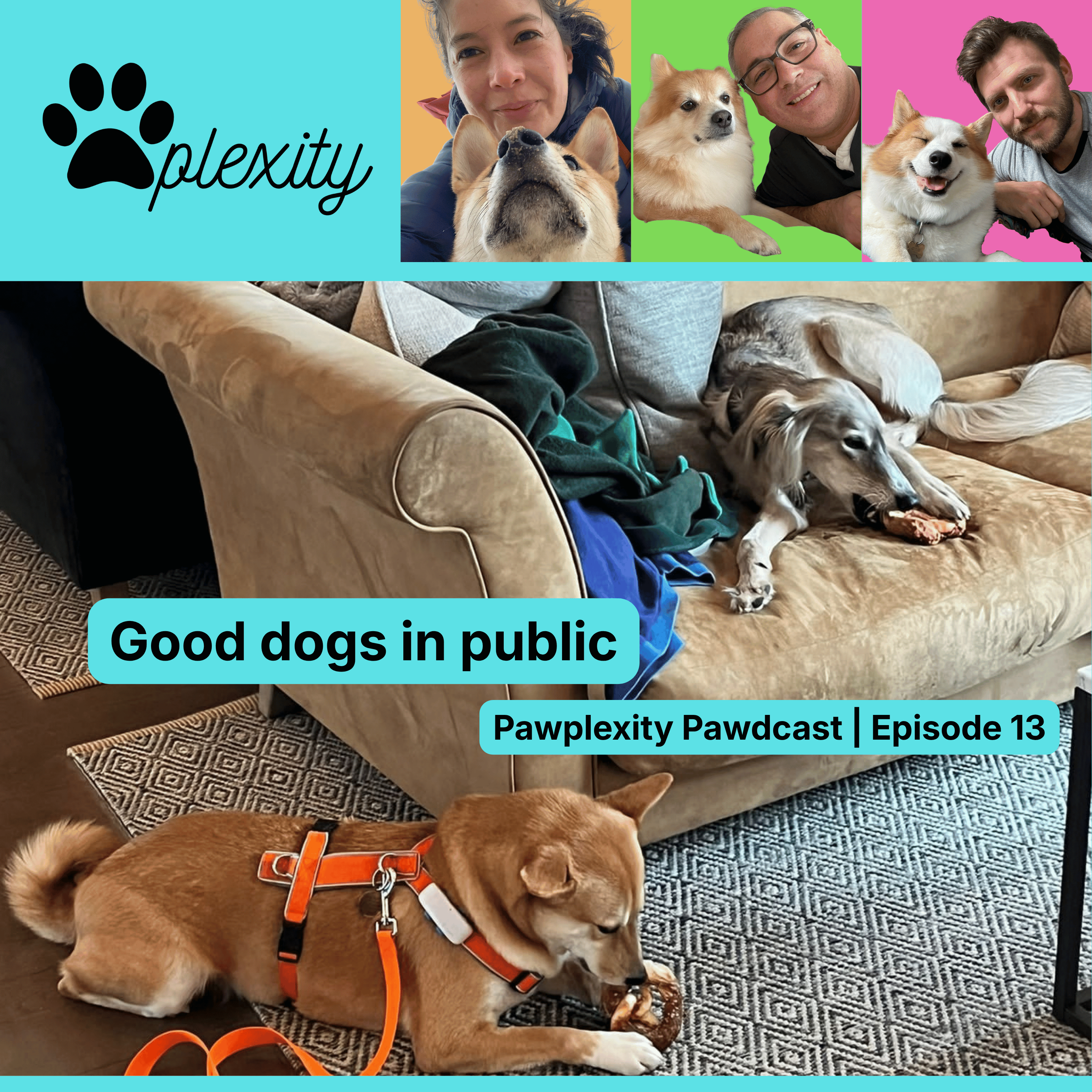
    What makes a good dog in public? And how much do our dogs have to compromise to be good in the public places made for us? Ben, Bruce, and I take our dogs almost everywhere we can, from the tube to the pub. Bowie is absolutely spot on in public. He is unfazed by the London tube, happily hops on trains, and joins a pub night. Judge adored joining Bruce in the London pubs though they are still looking for a good local back in New Jersey. Judge is a star in public, as long as nothing triggers his possession aggression. Makenzie thinks there is a treat in every restaurant or shop she enters, though she prefers to be admired from a distance. Out of our three dogs, Makenzie is the one who expresses discomfort when being in our public spaces the most. She is also the one who needs to be heard before things go wrong. Which raises the question of how much we ask them to compromise, and how often we stop to listen to our dogs when they move through our world, on our terms. What's the most embarrassing thing your dog has done in public? Tell us in the comments.

    • Transcript
  • S1 · E12
    October 7 · 41 min

    E12: Should you neuter your dog?

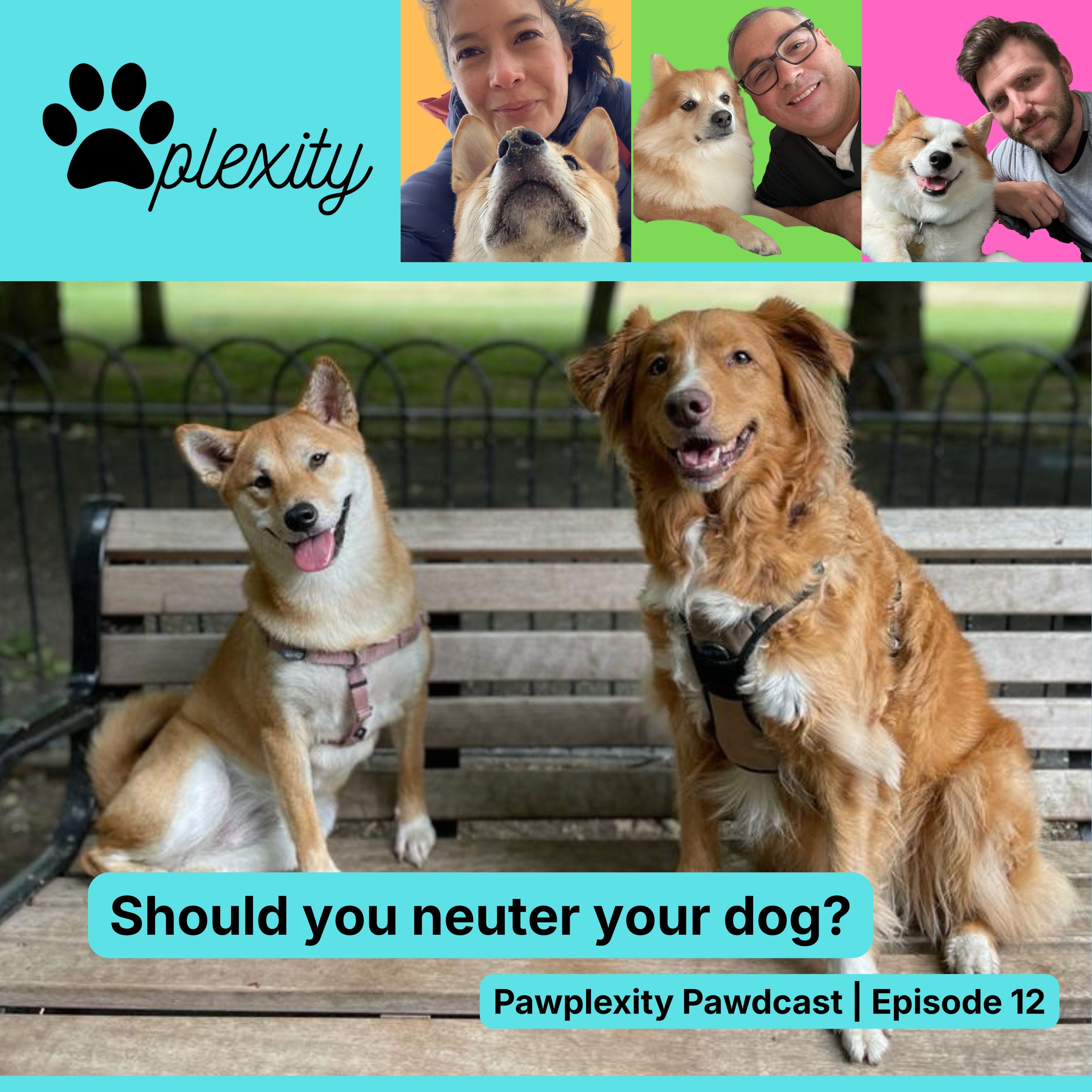
    If or when to neuter or spay a dog is a big decision, and it's dealt with differently across the countries we live in. In the US spaying and neutering usually happens early around the 6-months mark or before a female dog’s first cycle. In the UK vets often advise to wait after their first cycle. In Germany and Italy, neither is done as a routine prevention. Makenzie, Judge and Bowie all spent their puppyhood in North America and were neutered or spayed there. For Judge’s little brother Max Bruce still needs to make that decision. Today, we are still not 100% sure our decisions were the right ones. Ben would have loved to see little Bowie puppies, Bruce agrees that there is not enough scientific evidence to confirm that either improves canine health. But living in the US and depending on doggy daycare at times, not neutering is not really an option. Living in Europe, our social structure does not require Makenzie to be spayed, and I wish we had had the option to decide against it sooner. Did your vet explain why, or did they just book the appointment? Tell us in the comments.

    • Transcript
  • S1 · E11
    September 23 · 37 min

    E11: Why everyone has an opinion about your dog

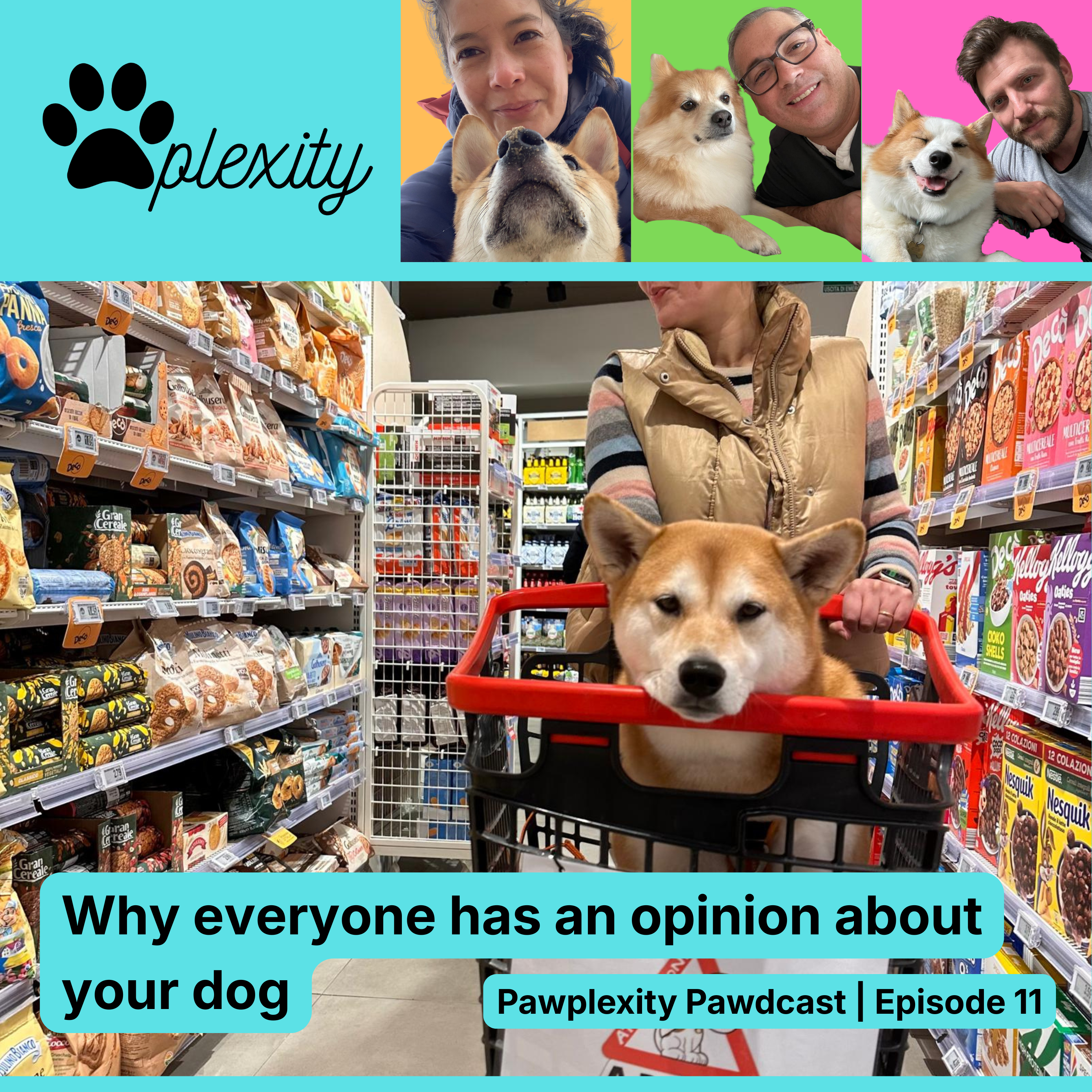
    Everyone has an opinion about your dog. But which ones do we actually listen to? Ben, Bruce, and I have all been given plenty of advice, and most of it came from people who meant well, though we did not always ask for it - professional advice excluded. Bruce trusted his friends’ advice on letting Judge sort things out with their Rottweiler, Trigger. As a puppy, Judge once went too far with him and backed off by himself as soon as he understood what Trigger was telling him. Ben initially thought he had the puppy phase covered until he realised he still had to teach Bowie how to properly walk on the lead. Ben might not need much advice, but he’s not shy about giving his dad plenty of it, though he says very little gets followed. I initially took every piece of advice as gospel, and was quickly tangled up in contradictions on how to best raise Makenzie. We tend to trust our own view over advice, mostly because we know our own reasons but never the adviser's. It took a while for me to learn how to form my own opinion and stick with it. Which advice has actually worked for your dog? Tell us in the comments.

    • Transcript
  • S1 · E10
    September 9 · 42 min

    E10: Two dogs and what really changes

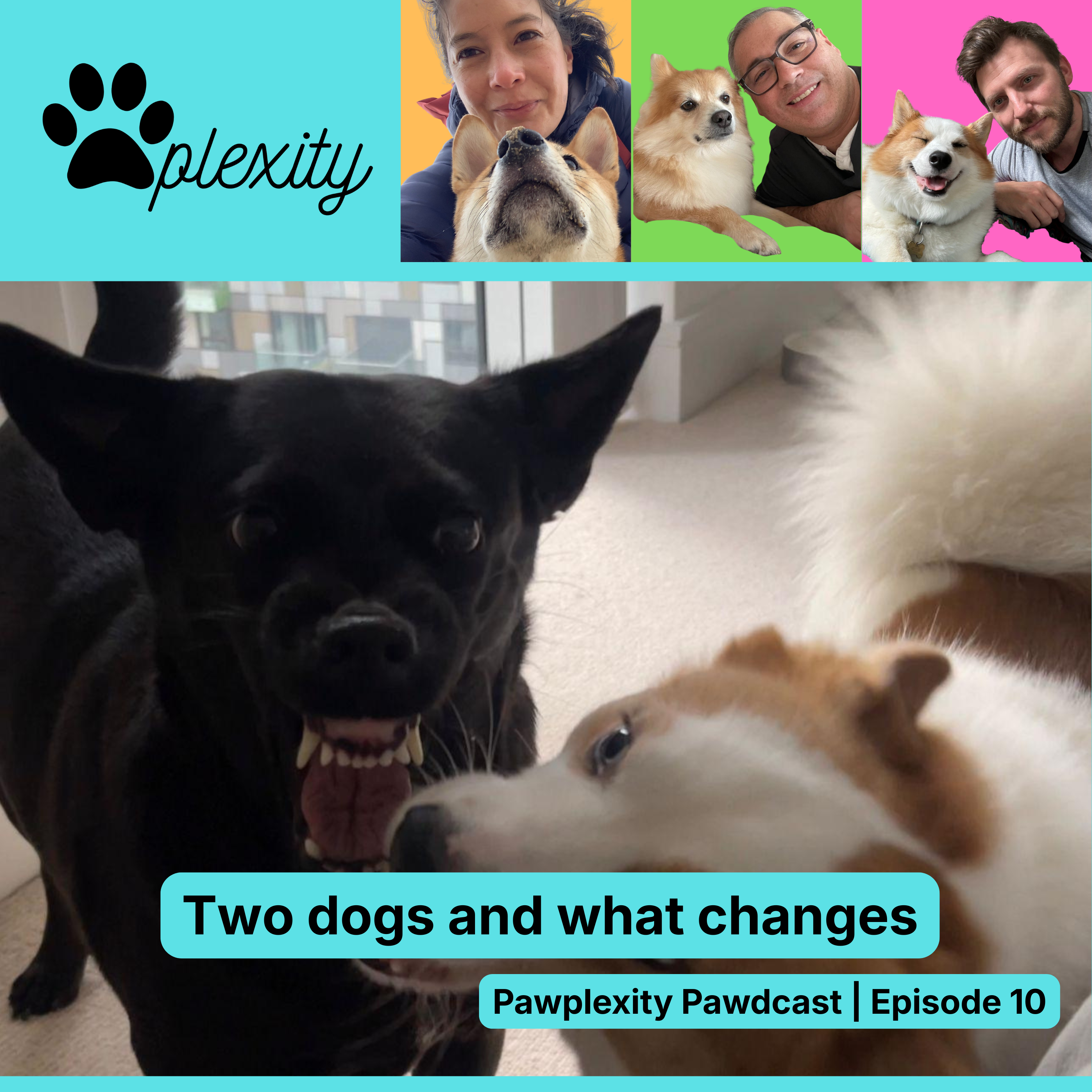
    What does getting a second dog really change at home? Two of our dogs live in a multi-dog-household, whereas one enjoys the single princess life. Life with a pet is better, but not always easier. We are chatting about what made us decide for or against adding another pet to our lives. Bowie moved in with his German Shepherd and Golden Doodle cousins, and immediately made clear that he is going to be the boss. Today he can eat from their bowls, steal their chews and play with all their toys. Judge’s first new sibling was Nipsey, the street cat. It took them a while to get used to each other, but by now they even team up to steal the remote control for Judge to chew on. Makenzie may just be the friendliest Shiba out there, but in her own home she barely tolerates even her best friends. She can go from lovely and friendly to upset in a millisecond, which makes adding a second dog an unlikely option, though we might just not have found the perfect sibling yet. What changed in your home when your second pet arrived? Tell us in the comments.

    • Transcript
  • #1
    September 2 · 9 min

    T1: The dog you pictured and the one that arrived

    This is the Pawplexity Treat for episode 1: The Dog You Pictured and the One That Arrived. Written and read by Annika. Bruce wanted anything but a Pomeranian. He came home with one anyway, after Tatiana touched the glass and the puppy inside woke up licking her fingertip. Ben bought a crate too large for Bowie, heard what he describes as a human-like scream on the first night, and ended up with his head inside it until Bowie fell asleep. The Treat moves through what those first weeks actually asked of all three of us: research on predictability and perceived control, the physiological stress a puppy can carry even while looking settled, and what a puppy's zoomies are actually asking for. We had each pictured a dog we thought we were ready for. What arrived were three dogs who'd already started reading us, long before we worked out how to read them back. Curious to go deeper? Here's the real research behind this Treat: „Human analogue safe haven effect of the owner: behavioural and heart rate response to stressful social stimuli in dogs" | Gácsi et al. (2013): An owner isn't just company. In this study, dogs facing a threatening stranger had a far smaller heart-rate spike simply because their person stayed in the room. „The influence of predictability and controllability on stress responses to the aversive component of a virtual fence" | Kearton et al. (2020): Not a dog study at all — sheep, actually — but it's the closest thing I found to an answer for a question that kept nagging at me: is knowing what's coming enough, or do you also need to feel able to do something about it? „Physiological stress reactivity and recovery related to behavioral traits in dogs (Canis familiaris)" | Lensen, Moons & Diederich (2019): Some dogs' stress markers were still elevated forty minutes after the stressful moment had ended, not just ten. Those were also the dogs more likely to struggle with fear, other dogs, or training, a reminder that "calm-looking" and "recovered" aren't always the same thing. Find everything at: https://pawplexity.substack.com

    • Transcript
  • S1 · E9
    June 17 · 44 min

    E9: What happens when the leash comes off

    Is your dog's walk about getting somewhere, or the walk itself? The three of us talk about our walks, the routes we choose, and what happens when the leash comes off. In Seattle, Makenzie could run off the leash at the dog park. In London there were none, and without a reliable recall, we both had to learn that the walk is the recreation, not just the way to get somewhere. Bowie knows what's at the end of each route and happily follows it. His recall is only a little weak when he spots dogs he wants to play with. Judge heads straight for his favourite spot. Little Max walks ahead of everyone, but when paired with his brother Judge on the coupler he mostly follows his lead. For all of us, having a reliable recall or the ability to re-focus on us is what makes the difference when walking off-leash. For Makenzie, we try to make up for the lack of freedom by letting her decide our route and sniff as much as she wants. Do you choose the route or let your dog choose it? Tell us in the comments.

    • Transcript
  • S1 · E8
    June 3 · 41 min

    E8: When you have to correct your dog

    How adorable is the guilty look on your dog’s face when they have done something wrong? And do they know they shouldn’t have? Bruce is certain Judge knows exactly when he's crossed a line. He once chewed a hole in the couch, then sat on it to hide the stuffing. Bowie drops even the most prized possession (a chew belonging to his larger cousin) instantly mid-heist when Ben says his name. Makenzie has no cute guilty look but a stern one for telling me when I am in the wrong. Some research suggests that the guilty look on our dog’s faces follows how we react to that more than what they actually did. Though that doesn't prove dogs can't feel guilt. So the next time your dog looks guilty, ask yourself what they're really reacting to. What does your dog's guilty look tell you, and does it change how you respond? Tell us in the comments.

    • Transcript
  • S1 · E7
    May 20 · 39 min

    E7: Socialisation isn't just a checklist

    Socialisation isn't just a checklist, and it isn't only about puppy classes either. We are talking about whether we're socialising our dogs for their whole lives, or only for the world they happened to live in during that period. Socialising meant different things for us. For Ben and Bruce, who were more experienced dog parents, it was about getting their boys used to unexpected noises. I initially thought it was just about ticking off the boxes from puppy school, and learned much later that socialisation is about building confidence and resilience in our dogs. Judge and Makenzie both had to learn how to poo on concrete when they moved to London. Bowie overcame his fear of bigger dogs once he moved in with his German Shepherd and Golden Doodle cousins in Southampton. In all three cases, the world Judge, Bowie, and Makenzie were prepared for is no longer the one they live in now. And all three of them got used to their new surroundings in their own way and speed. There is no one right way to socialise a dog. What's the newest thing your dog has had to get used to, and how long did it take? Tell us in the comments.

    • Transcript
  • S1 · E6
    May 6 · 43 min

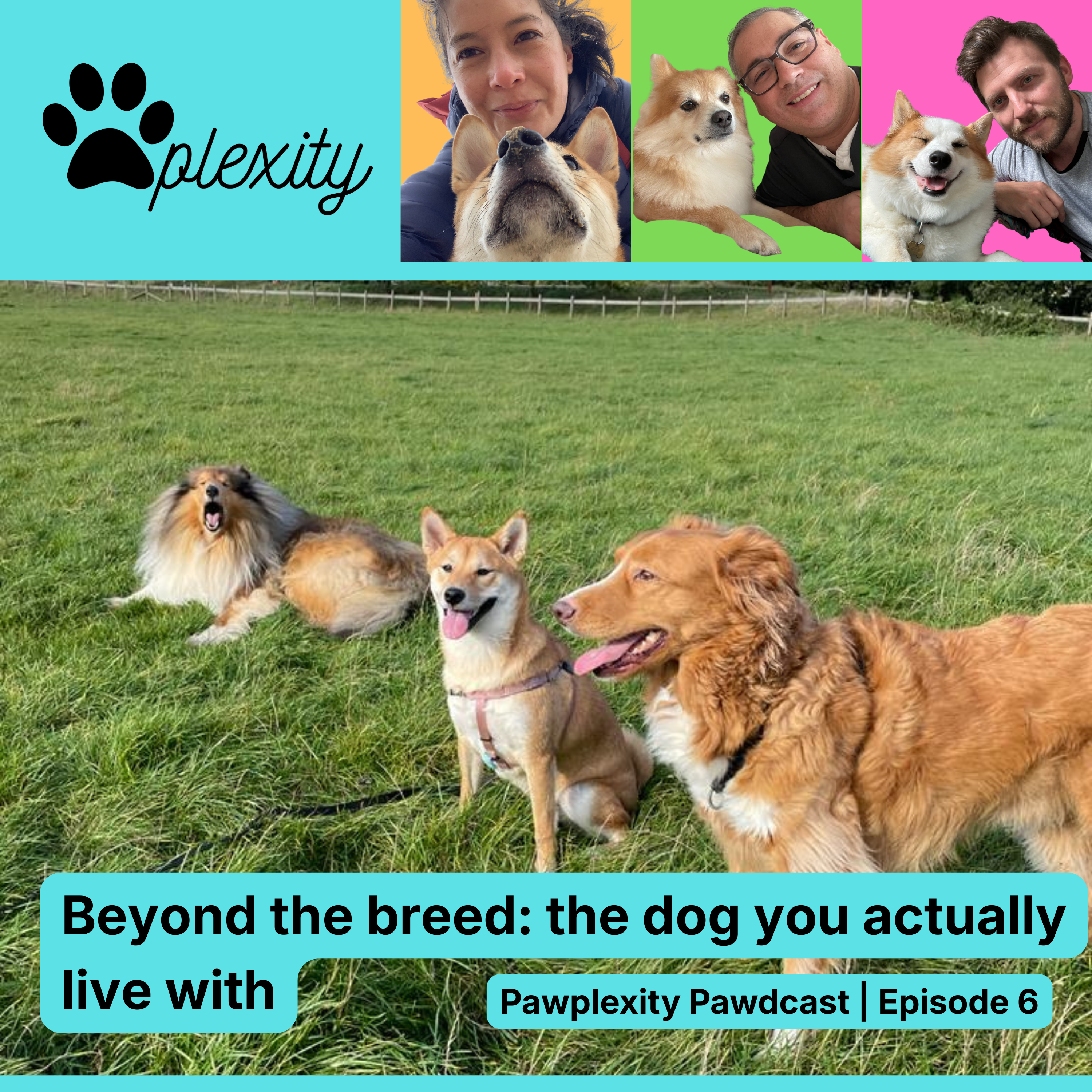
    E6: Beyond the breed: the dog you actually live with

    If the breed doesn't tell you who your dog is, what does? We prepared for our dogs' breed traits, thinking that would give us the best information for navigating dog parenting. Judge turned out to be a Pomeranian who isn't yappy, which is not what most people expect from the breed. Bowie seems to have a full husky personality in a smaller body. And though Makenzie checks all the Shiba Inu boxes (independent, intelligent, loyal, alert), knowing her breed hasn’t prepared me for life with her. So who are the dogs we actually live with? Each of them has their own dog personality and temperament. They all have their own opinions and thoughts, and many of their actions and reactions do not fit their breed profile at all. Breed explains only around 9% of the variation in behaviour between individual dogs. And who is the dog you actually live with? Tell us in the comments.

    • Transcript
  • S1 · E5
    April 26 · 42 min

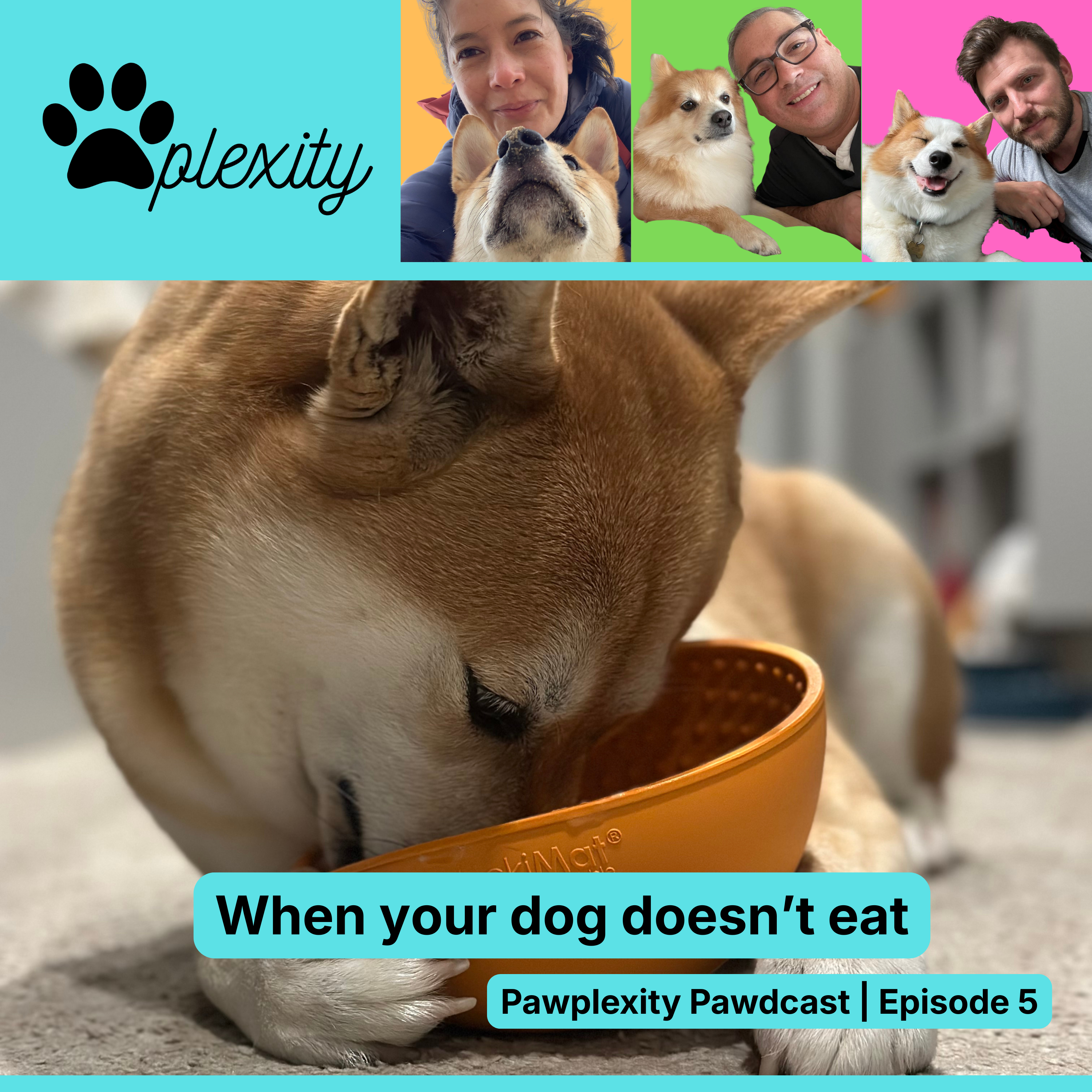
    E5: When your dog doesn't eat

    A dog not wanting to eat is something many of us can't even imagine. Judge spent last week at daycare while Bruce was away. Now Bruce is at home and Judge won’t eat because he is mad. Bowie’s food can sit in his bowl untouched for an hour when it is just him at home. But when he lives with his furry cousins his bowl is the first one emptied. Makenzie has always been a picky eater at home. She can be one of those dogs refusing food for days on end. What made her eat eventually was our connection when I hold her bowl rather than any preference for certain foods. Dogs can be emotional eaters, too. If you have a picky eater at home, or have switched dog food more times than you can count, you are not alone. Share your story with us in the comments.

    • Transcript
  • S1 · E4
    April 8 · 41 min

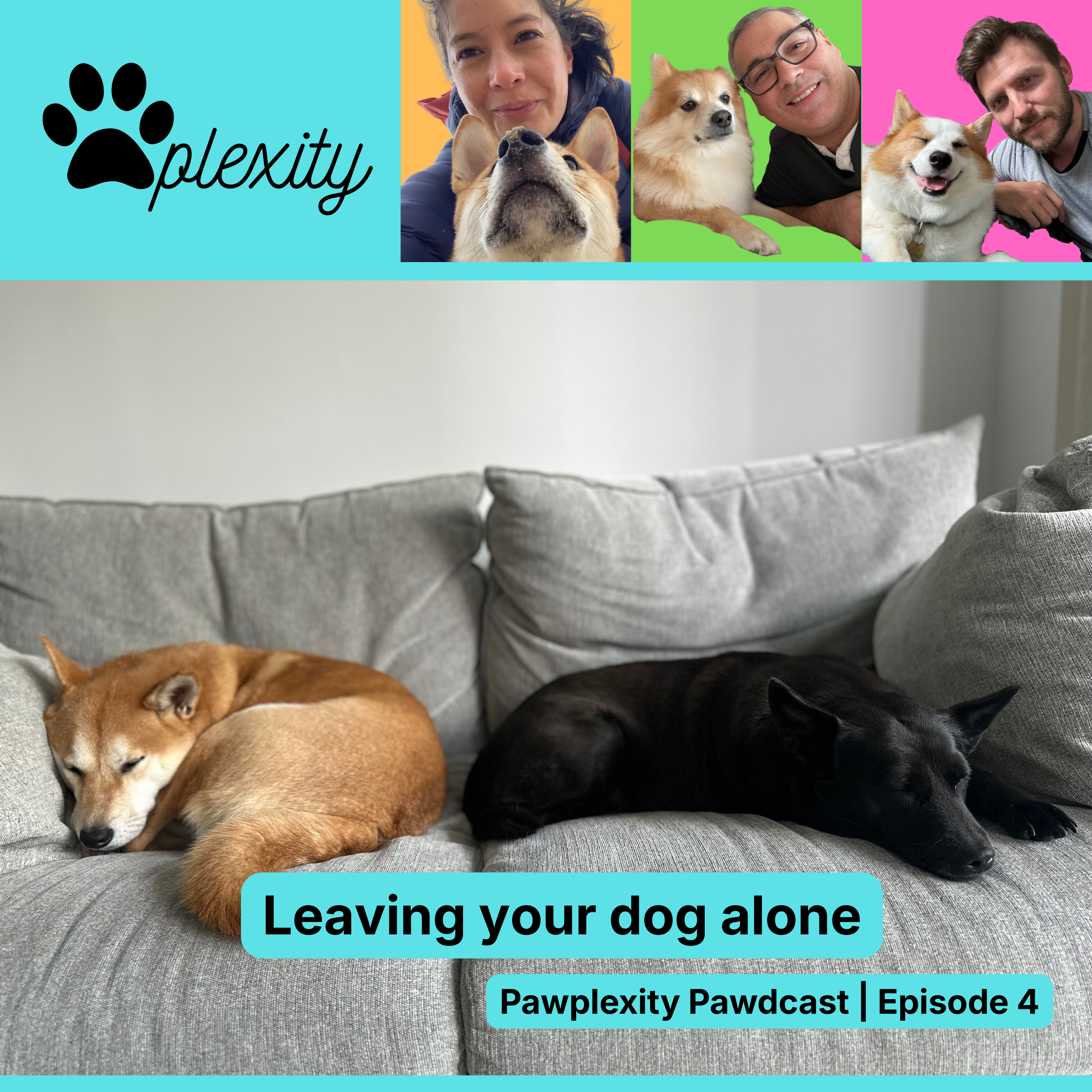
    E4: Leaving your dog alone

    Not every dog who does not like to be alone at home suffers from separation anxiety. Though their owners just might. When Ben leaves Bowie behind, he uses three phrases: "Won't be long" means a few hours. "See you soon" means a few days. If he says "see you soon," Bowie goes under the sofa. Bruce backs out of the apartment facing inward, playing goalie, because the moment his wife, Tatiana opens the door Judge makes a run for it. Makenzie has days she can stay alone at home just fine for a few hours, on other days she makes clear that leaving her behind is not an option at all. Teaching our dogs to stay alone is only part of the topic. It's just as important how we return to them, because that shapes how they experience us being away and how they recover from it. How long can your dog stay alone? And what was the biggest challenge for both of you during training? Tell us in the comments.

    • Transcript
  • S1 · E3
    March 25 · 45 min

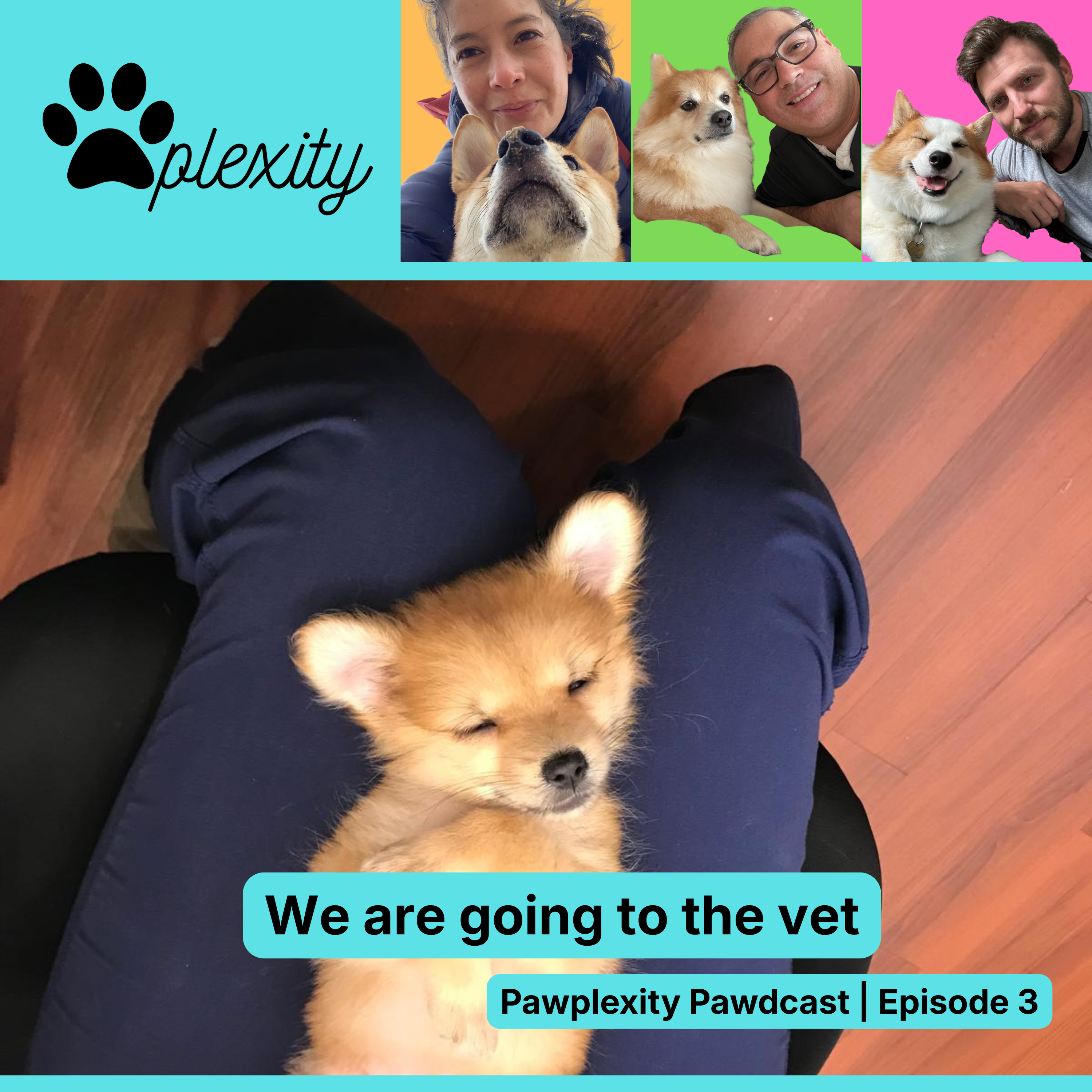
    E3: We are going to the vet

    For all three of us, the vet visit means a very different experience. Ben usually goes for a quick check- up and lovely chat. Bruce goes quite often to look at Judge’s occasional limp. I am a regular, even more since the bilateral HD diagnosis. Bowie is always happy to go to his vet and collect his toy after treatment. Even though he had a very serious incident involving the wrong version on Reactine given to him as a puppy, he just loves to go in and say hello. Judge is usually fine going to his vet, especially since he returned back home to the US and can again visit the one he has known since puppyhood. So far, he only had one incident peeing on Bruce’s leg while on the examination table. Makenzie does not like to go to any vet office. Granted, she has seen a few since her diagnosis. By now she has convinced at least 11 different vets in 4 different countries to treat her on the floor instead of the examination table. Not every dog is afraid of the vet, but for many of them (and us) some degree of nervous remains. How does your pet do at the vet’s? Share your favourite vet moment in the comments.

    • Transcript
  • S1 · E2
    March 11 · 47 min

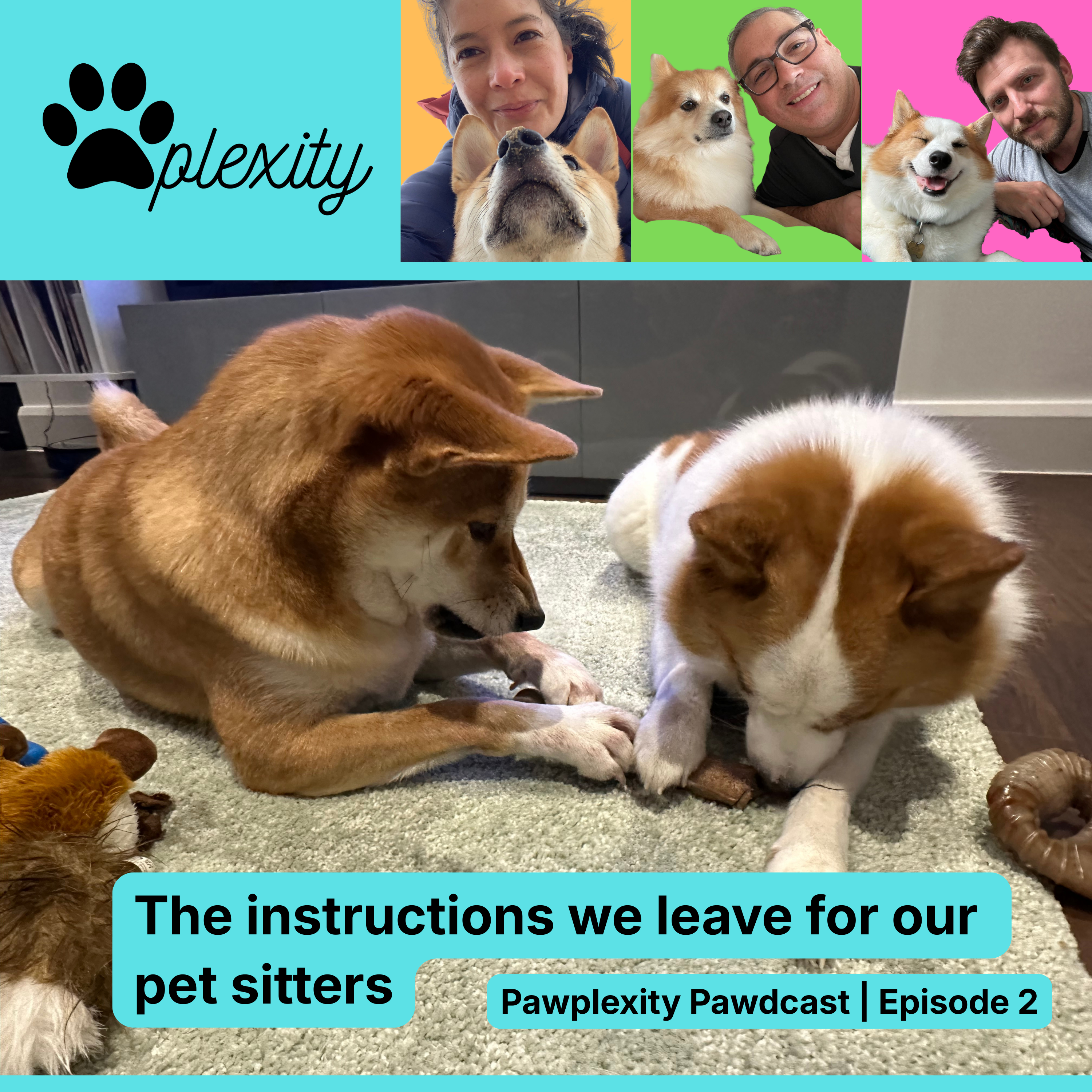
    E2: The instructions we leave for our pet sitters

    Ben, Bruce, and I leave very different instructions to our pet sitters, but we all hope to achieve the same thing: preparing them as best we can for what they have to expect caring for our pets. Bruce’s dog sitter notes had nine steps for Judge, all about possession aggression. Those were for those situations where Judge’s instincts would run ahead of his judgement. But the pet sitter read them as a warning and was quite overwhelmed at the beginning. Ben worked in dog daycare in Toronto and picked up a dog called Justice by throwing a towel over her before scooping her up, because otherwise she would bite. Once out of the apartment, she was social, relaxed, and sat on his lap the entire ride. For Makenzie, I created entire spreadsheets and presentations to make sure she is safe and comfortable when not with her parents. What notes to leave for a pet sitter to make us feel comfortable leaving our pets alone looks very different for every dog and parent. What are the craziest notes you have left for a pet sitter? Tell us in the comments.

    • Transcript
  • S1 · E1
    February 25 · 48 min

    E1: Our truth about puppyhood

    Every first-time puppy owner thinks they're ready. Here's what three of us found out when we weren't. Three owners, three Spitz-type dogs, and a lot of confidence going into puppyhood. In this first episode Ben, Bruce, and I (Annika) talk about why we got our dogs and how the reality compared with what we expected. Bruce haggled over the price at the pet store. Ben got his puppy during lockdown, with plenty of time to train him. He had always wanted a husky, but a city apartment made him choose a smaller version instead. I grew up afraid of dogs. Having just moved to Seattle, a dog paradise, at the start of the pandemic, I couldn't resist adding one to my family. If you're getting a puppy soon, or you're a few months in and wondering what you missed, this one is for you. Did you know what you were getting into? What would your pre-dog self have found hardest to believe? Start here, and tell us in the comments whether you were ready.

Showing 1–16 of 16 episodes