Skip to content
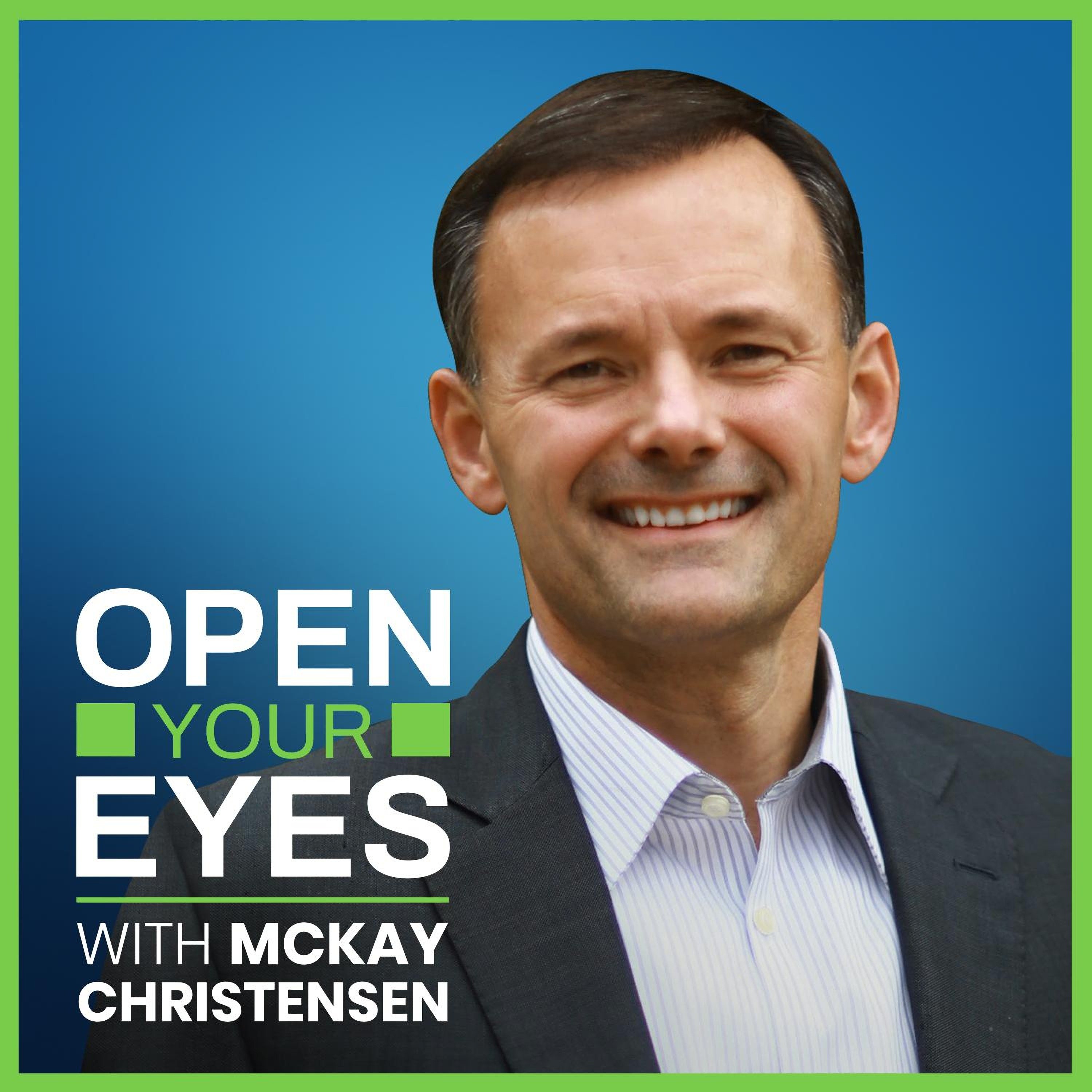
Artwork for Open Your Eyes with McKay Christensen
Open Your Eyes with McKay Christensen · July 6 · 27 min

S6E6 - What Glasses Are You Wearing?

The "belief window" - the invisible lenses that shape how we interpret every life event - comes under McKay’s learned scrutiny today as he explains that, while we assume we see objective reality, our brains actually construct our experiences based on past conditioning. He then demonstrates that questioning these default settings moves us from being constrained by old perspectives to being empowered by new ones. Referencing the Northern Thailand cave rescue and the Mann Gulch fire, McKay shows how mental models can save us or become blind spots. He highlights NVIDIA’s AI vision and Boyan Slat’s Ocean Cleanup to illustrate how "future glasses" overcome skepticism. Through Daryl Davis’s conversations and behavioral science, we learn that transformation begins with perception, not just behavior. Throughout this episode, McKay encourages us all to stop reacting to the world through the lenses of your past and start constructing a new reality through the vision of who we are becoming. Main Themes: How the "belief window" shapes our constructed reality Identifying default lenses formed by childhood and past setbacks The Tham Luang cave rescue and the power of "What if?" questions Why old "safety" habits become dangerous blind spots in new crises How "today glasses" favor immediate comfort over long-term goals Using a "five-year lens" to reduce emotional distress and gain perspective NVIDIA’s AI journey as a model for choosing future vision over current views Viewing failure as information instead of evidence of impossibility Why perception must shift before lasting behavioral change can occur The impact of environmental lenses and expectations on our decisions Top 10 Quotes: "Your brain isn’t simply observing reality, it’s actively constructing your experience of reality." "The world begins to look like the glasses that you’re wearing." "Our greatest strengths quietly become our greatest blind spots." "When you view a problem from the future, it loses some of its emotional grip." "Today’s glasses constantly ask, 'How do I feel?' Five-year glasses ask, 'Who am I becoming?'" "People wearing future glasses are willing to change strategies without abandoning the goal." "To construct a new reality or way of living, we have to first put on a new view." Show Links: Open Your Eyes with McKay Christensen

0:00-27:39

transcript

No transcript — this publisher did not publish one.

show notes

The "belief window" - the invisible lenses that shape how we interpret every life event - comes under McKay’s learned scrutiny today as he explains that, while we assume we see objective reality, our brains actually construct our experiences based on past conditioning. He then demonstrates that questioning these default settings moves us from being constrained by old perspectives to being empowered by new ones.

Referencing the Northern Thailand cave rescue and the Mann Gulch fire, McKay shows how mental models can save us or become blind spots. He highlights NVIDIA’s AI vision and Boyan Slat’s Ocean Cleanup to illustrate how "future glasses" overcome skepticism. Through Daryl Davis’s conversations and behavioral science, we learn that transformation begins with perception, not just behavior. Throughout this episode, McKay encourages us all to stop reacting to the world through the lenses of your past and start constructing a new reality through the vision of who we are becoming.

Main Themes:

  • How the "belief window" shapes our constructed reality
  • Identifying default lenses formed by childhood and past setbacks
  • The Tham Luang cave rescue and the power of "What if?" questions
  • Why old "safety" habits become dangerous blind spots in new crises
  • How "today glasses" favor immediate comfort over long-term goals
  • Using a "five-year lens" to reduce emotional distress and gain perspective
  • NVIDIA’s AI journey as a model for choosing future vision over current views
  • Viewing failure as information instead of evidence of impossibility
  • Why perception must shift before lasting behavioral change can occur
  • The impact of environmental lenses and expectations on our decisions

Top 10 Quotes:

"Your brain isn’t simply observing reality, it’s actively constructing your experience of reality."

"The world begins to look like the glasses that you’re wearing."

"Our greatest strengths quietly become our greatest blind spots."

"When you view a problem from the future, it loses some of its emotional grip."

"Today’s glasses constantly ask, 'How do I feel?' Five-year glasses ask, 'Who am I becoming?'"

"People wearing future glasses are willing to change strategies without abandoning the goal."

"To construct a new reality or way of living, we have to first put on a new view."

Show Links:

Open Your Eyes with McKay Christensen

links1

more episodes

All episodes