Skip to content
Artwork for OH!CAST | Exploring Geek Culture, Pop Culture & Sci‑Fi Interviews
TV & Film

OH!CAST | Exploring Geek Culture, Pop Culture & Sci‑Fi Interviews

OH!CAST - Geek Culture Interviews & Pop Culture Insights

OH!CAST is your deep‑dive into geek culture, retro TV, cult media, and the wonderfully chaotic worlds of science fiction fandom. Each episode blends sharp conversation, unfiltered geek humor, and genuine curiosity as Cal sits down with actors, writers, wrestlers, creators, and the people shaping the fandoms we obsess over.


From geek culture interviews and behind‑the‑scenes stories to pop culture insights that break down why these worlds matter, OH!CAST celebrates the passion, nostalgia, and weirdness that make fandom such a powerful force. Whether it’s sci‑fi, fantasy, horror, gaming, comics, or the strange corners of internet culture, the show digs into the characters, creators, and communities that keep these universes alive.

If you love nerd culture, retro classics, cult favourites, and conversations that bounce between thoughtful analysis and absolute chaos, this is your place to geek out. Every episode brings something new a fresh perspective, a forgotten gem, a wild story, or a guest who completely derails the conversation in the best possible way.

OH!CAST isn’t just a podcast. It’s a celebration of the stuff we love, the people who make it, and the fans who keep it alive.

  • 20 episodes
  • Updated Saturday

Episodes20

  • Saturday · 1 hr 21 min

    Sci Fidleity Side B: Cult Media & Sci‑Fi Fandom: An Interview with Cal

    This week on OH!CAST, we dive deep into cult media, retro 90s nostalgia, and the messy, brilliant journey of growing up geek in a decade that shaped an entire generation. In this long‑form conversation, Cal joins us for a wide‑ranging interview that moves between Therapy?, Britpop, Alien 3, Channel 4’s 625 Live, student‑union chaos, toxic masculinity, and the strange ways music becomes the emotional map of your life. Cal talks about discovering Therapy? at exactly the right moment, falling in love with the Infernal Love era, and realising how the band’s refusal to “go big” became a defining statement. We explore the Fife Ewing trilogy, the bleak brilliance of Infernal Love, and how a VHS recording of a Channel 4 gig became the spark that turned a casual listener into a lifelong fan. It’s a story rooted in cult media culture, where the right album at the right age becomes a permanent part of who you are. From there, the conversation widens into the world of Britpop, 90s alternative culture, and the strange contradictions of the era. Cal reflects on Pulp, Blur, Oasis, and the darker side of the scene — the pressure, the misogyny, the media narratives, and the artists who refused to play along. We talk about Jarvis Cocker, the rise and fall of Britpop, and how certain albums — This Is Hardcore, Ladies and Gentlemen We Are Floating in Space, Be Here Now — became cultural turning points for better or worse. The episode also dives into science fiction fandom, especially Cal’s defence of Alien 3, David Fincher’s early work, and the way certain films get rejected only to be rediscovered years later. It’s a conversation about loving things that weren’t cool to love, and how that shapes your identity long before the internet made niche fandoms mainstream. Along the way, Cal shares vivid memories of growing up in the Hebrides: hot summers, swimming every night, long walks home, staying up all night talking nonsense with mates, and the fleeting feeling that life would always be like this. We talk about student‑union nights, Byres Road pubs, the infamous Scooby Snack, absinthe limits, and the chaotic joy of being young in Glasgow in the 90s. The interview also takes a thoughtful turn into masculinity, identity, and the moment Cal realised he didn’t need to perform the “metal‑guy” persona anymore. A single music video — Melanie C & Bryan Adams’ “When You’re Gone” — becomes the catalyst for questioning the toxic expectations placed on young men. It’s honest, funny, and unexpectedly moving. We close with reflections on education, work, burnout, and the long road to finding a job that actually feels meaningful. Cal talks about studying electronics, working abroad, chasing wages, changing careers, and eventually finding a role that lets him help people every day. It’s a reminder that life doesn’t follow a straight line, and that you “get what you give” — sometimes years later. This is an episode for fans of cult media, retro culture, geek interviews, sci‑fi fandom, and anyone who grew up in the 90s with music as their emotional compass. It’s nostalgic, funny, thoughtful, and packed with stories that will resonate with anyone who ever found themselves through the albums, films, and scenes that shaped them.
  • Friday · 1 hr 16 min

    Sci‑Fidelity Side A: Cal’s Life in 20 Songs — Iron Maiden, Grunge & Hebridean Snowstorms

    Side A of Sci‑Fidelity flips OH!CAST on its head as Cal finally takes the guest chair, opening up the first half of his life through the music that shaped him. Across ten tracks, this episode blends nostalgia, geek culture, Hebridean childhood memories, and the emotional beats behind the songs that carried him from early school days into his teens. We begin in the late 80s with Iron Maiden’s The Evil That Men Do, the first album that made Cal realise music could be more than noise. It’s a vivid memory: his brother’s cassette, the infamous Eddie poster his mum hated, and a summer spent travelling back and forth to his gran’s temporary council house while renovations were underway. Cal describes being left in a hired van, rewinding the tape again and again, discovering themes, stories, and the lush soundscape that Somewhere in Time created. It’s the moment music became a world. From there, we jump to the early 90s and the Friday Rock Show, where Soundgarden’s Outshined hit him like a freight train. He remembers hearing Chris Cornell’s voice for the first time, the raw emotion, the shift into grunge, and the feeling of being on the verge of his teens as new sounds arrived. While everyone around him was blasting rave and white lightning, Cal was quietly becoming a rock kid, discovering Pearl Jam, Soundgarden, and the early stirrings of a scene that would define a generation. Stone Temple Pilots follow, with Plush triggering memories of maths class tape swaps, Kerrang reviews, and long nights gaming on his beloved Amstrad. He talks Ocean Software, 8‑bit Batman, and the guests who later shaped OH!CAST — especially the “Scousers” who became some of the show’s most influential voices. It’s a snapshot of teenage life in the Hebrides: games, tapes, and the feeling of discovering something that wasn’t cool yet, but would become essential. Rage Against the Machine’s Killing in the Name marks the point where music and politics collided. Cal recalls the first election he truly remembers, the rise of Blair’s media‑slick New Labour, Britpop summers, and the strange way teenage rebellion attached itself to a song most adults still misunderstand. It’s a look at how politics shifted into image, how leaders became brands, and how music became part of that cultural moment. Then comes Meat Loaf’s I’d Do Anything for Love, tied to one of Cal’s most dramatic memories: the legendary Hebridean snowstorm. He describes Christmas Eve turning into a blizzard within minutes, his dad returning home “like a snowman,” the power going out for days, peat fires boiling water nonstop, and the whole family taking baths every few hours just to manage the heat. With only a few batteries left in his stereo, Meat Loaf became the soundtrack to a freezing, unforgettable holiday. Side A is a journey through childhood, early teens, and the songs that shaped Cal before adulthood. It’s Iron Maiden vans, grunge awakenings, Amstrad nights, political firsts, and snowstorms powered by Meat Loaf. It’s the story of how music becomes memory — and how memory becomes identity. Side B continues the journey soon, picking up where the teenage years left off and diving into the next ten songs that carried Cal into adulthood, creativity, and the birth of OH!CAST.

  • July 24 · 1 hr 12 min

    Red Dwarf Season 3 Deep Dive: Polymorph, Backwards & Marooned | Cult Media Analysis

    Season 3 marks the moment Red Dwarf truly hits its stride — the era where the budget jumps, the writing sharpens, and the cast chemistry locks into place. In this OH!CAST deep dive, Cal, Ralph and Kieran break down the first half of the season: Polymorph, Backwards and Marooned, three episodes that define the show’s shift from scrappy sci‑fi sitcom to full‑blown cult media classic. We kick off with Polymorph, the crew’s chaotic encounter with a genetically engineered emotion‑stealing creature. From Lister’s sudden “let’s go twat it” bravado to Rimmer’s transformation into a glass‑clinking diplomat, we explore how the episode blends horror, slapstick and character psychology. The team digs into the creature’s Thing‑inspired design, the early seeds of future alter‑ego episodes like Ace Rimmer and Dwayne Dibley, and why this instalment still stands as one of Red Dwarf’s most inventive pieces of sci‑fi comedy. Next up is Backwards, the episode that blew the doors off BBC studio walls and took the boys into the real world — literally backwards. We unpack the production challenges behind filming reversed action, the cleverness of the bar fight choreography, and the debut of Robert Llewellyn’s Crichton, who slots into the ensemble with uncanny ease. From reverse eating to the infamous “bushes” gag, this is Red Dwarf at its most mischievous and technically ambitious. Then it’s Marooned, the intimate two‑hander that strips everything back to Lister and Rimmer stuck on an ice moon with dwindling supplies. We dive into the episode’s Smith & Jones‑style duologue structure, Rimmer’s tragic backstory reveals, Lister’s questionable survival choices (including dog food), and the legendary guitar‑burning twist that delivers one of Chris Barrie’s finest deadpan performances. It’s cheap, it’s simple, and it’s one of the best‑written episodes in the entire series. Along the way, the team detours into BBC budget trivia, Michael Grade’s infamous dislike of sci‑fi, Brass Eye’s one‑frame insult gag, and the strange continuity jump that introduces Crichton without explanation — unless you can read the warp‑speed opening crawl.

  • July 17 · 1 hr 21 min

    Star Trek TAS Deep Dive: Yesteryear, Counter‑Clock & Animated Canon Chaos | OH!CAST

    OH!CAST dives into Star Trek: The Animated Series — the psychedelic, Filmation‑powered continuation of TOS that quietly reshaped Trek canon and set the stage for everything from Star Trek 2009 to Strange New Worlds. In this animated deep dive, Cal, Rob, Eileen and Martin explore why TAS is far more influential than fans remember, and how its bold sci‑fi ideas still echo across the franchise. We kick off with the legendary Yesteryear, the universally‑praised TAS episode that introduced Spock’s childhood, Vulcan’s desert aesthetic, and the emotional rite‑of‑passage that shaped his adult identity. The crew break down the time‑travel paradox, the Guardian of Forever callback, the pet‑loss metaphor, and the philosophical question of whether trauma is necessary for growth. We also explore how this episode directly inspired JJ Abrams’ Star Trek 2009, from young Spock’s bowl‑cut design to Vulcan’s cultural portrayal. Next, we tackle The Counter‑Clock Incident, TAS’ mind‑bending reverse‑time adventure featuring the debut of Robert April, the Enterprise’s first captain. We discuss eternal youth, retirement ethics, mirror‑universe parallels, and how Strange New Worlds re‑canonised April decades later. Eileen digs into the gender representation of TAS, comparing Uhura’s command moments to the original pilot The Cage, and how TAS sometimes stumbled while trying to portray women in leadership. We then explore One of Our Planets Is Missing, a standout example of TAS doing truly alien sci‑fi better than TNG’s Crystal Entity. The crew analyse the episode’s cosmic‑scale threat, the alien’s incomprehensible perspective, and how animation allowed Trek to finally portray non‑humanoid intelligence convincingly. We also look at TAS’ recurring theme of humanity being judged by higher beings — a concept that later defined Q’s trial in The Next Generation. From there, we jump into The Slaver Weapon, a rare Kirk‑free adventure spotlighting Spock, Uhura and Sulu. We break down the introduction of the Kzinti, the episode’s pulpy sci‑fi energy, and why TAS was uniquely positioned to explore species and technologies that TOS couldn’t afford to portray. We also talk about TAS’ early version of the holodeck, the first appearance of Kirk’s middle name Tiberius, and the introduction of characters like Arex and M’Ress who later influenced modern Trek alien design. Throughout the episode, we debate TAS’ Filmation animation style — the Scooby‑Doo corridor runs, Batman‑style music stings, psychedelic colour palettes, and the infamous repeated stock footage. Rob shares his love for the lilac Klingon tabards, Eileen praises TAS’ science‑first storytelling, and Martin confesses he struggled to connect emotionally with animated characters. We also discuss the origins of Star Trek conventions, the challenges of 1970s kids’ TV, and how TAS kept the franchise alive between TOS and the movies.

  • July 10 · 1 hr 2 min

    Supernatural S3: Mystery Spot, Bella & Lilith | Cult Media Retrospective OH!CAST

    Supernatural Season 3 arrives with sharper writing, stronger confidence, and some of the most iconic episodes in the early run. In this OH!CAST retrospective, Cal, Heather and Ree break down the season’s biggest moments — from Mystery Spot’s chaotic brilliance to Bella’s unforgettable debut and Lilith’s chilling rise. Heather talks about returning to the panel and why the early seasons still shine with that “lighthearted, fun but serious” Monster‑of‑the‑Week charm. The team celebrate the end of the infamous blue filter, with Cal calling the new look “stunning,” while Ree admits she has a nostalgic soft spot for the 2000s colour grading. Ruby’s introduction brings a fresh dynamic to demon lore. Heather highlights Ruby’s lingering humanity, while Ree praises her “sassy vibe.” The season expands demon society, showing the chaos and power struggles unleashed after the gates opened. Bella becomes a standout topic — divisive in the fandom but adored here. Ree declares, “If Bella has no fans left, I am dead,” and the team celebrate her energy, comedic timing, and morally grey charm. Her debut episode, Bad Day at Black Rock, earns unanimous praise for Sam’s slapstick chaos and Dean’s camera‑talking. Mystery Spot remains one of the show’s most beloved episodes. Dean’s repeated deaths — especially the piano — deliver perfect comedic timing. Ree notes how Supernatural uses familiar tropes not just for laughs but to push character development. Heather even rewatched it on a Tuesday, joking about her own time loop. Heather’s pick for best episode is Jus in Bello, the tense standoff with Henriksen. The team discuss the shocking ending, the emotional investment built over multiple seasons, and the gut‑punch of Henriksen’s death. The retrospective also explores Lilith’s rise — portrayed as a terrifying child. Heather calls the performance “horrifying,” and the team compare the concept to classic horror influences like Hellraiser and Treehouse of Horror. Lilith’s introduction sets the stage for the next season’s arc and adds a chilling new dimension to demon mythology. Weaker episodes (Long Distance Call, Time Is On My Side, Malice Maleficarum) are discussed, along with how the Hollywood writers’ strike forced Season 3 to end early, compressing storylines and limiting character arcs — including Bella’s departure.

  • July 7 · 1 hr 9 min

    Krusher: Florida Wrestling, Dusty Rhodes & Territory Lore | Hebridean Hammerlock

    In this episode of Hebridean Hammerlock, Graeme sits down with Krusher, a veteran of the Florida territory era whose journey through professional wrestling spans dusty barns, brutal training sessions, wild territory crowds, and unforgettable encounters with some of the biggest names in the business. This conversation blends geek culture interviews, cult media storytelling, and real‑world wrestling history, making it a perfect fit for listeners who love retro media, territory lore, and the roots of the modern wrestling podcast scene. Krusher describes the moment he first saw Dusty Rhodes on TV — a moment that “stopped me in my tracks,” as he says in the transcript: “Dusty was basically my Babe Ruth and Michael Jordan.” That spark led him from local shows to stepping into the legendary Sportatorium in Tampa, home of Florida Championship Wrestling, one of the most influential territories in wrestling history. His stories offer a rare look at the era when wrestling was fiercely protected, brutally physical, and deeply personal. He shares memories of the Sheepherders, long before they became the Bushwhackers, recalling their violent, blood‑and‑guts matches and the chaos of territory brawls. As he puts it: “One of the most violent looking tag teams out there… blood and guts, boy.” Krusher also dives into his WCW TV days, working with teams like the Rock ’n’ Roll Express, The Steiners, Varsity Club, and the Samoans, revealing what it was really like to be a young wrestler feeding the stars on national television. From being stretched in a converted dairy barn to being tossed around the ring by Scott Steiner, Krusher’s stories capture the raw reality of old‑school training — the welts from running ropes, the exhaustion of nightly drills, and the unspoken rules of respect that governed the locker room. He explains how veterans tested newcomers, how the business kept outsiders at bay, and how one lucky break — a tape handed to the right booker — could change everything. Krusher also reflects on the wrestlers who shaped him, the opportunities he earned, and the ones that slipped away. His tale of helping a fellow wrestler get noticed, only to watch him become Mighty Wilbur in WCW, is a reminder of how unpredictable the business could be. Yet his pride in being part of that journey shows the heart behind the toughness. This episode is packed with territory history, WCW nostalgia, cult‑favourite names, and real‑world wrestling storytelling. Whether you grew up on Florida Championship Wrestling, traded tapes of Bruiser Brody matches, or discovered wrestling through WCW Worldwide, this conversation delivers the grit, humour, and humanity of an era that shaped generations of fans and performers. For listeners who follow science fiction fandom, cult media, and retro media, Krusher’s stories connect directly to the broader world of geek culture — the same world that shaped the OH!CAST audience. His journey mirrors the passion, dedication, and storytelling that define the best geek culture interviews and the most compelling wrestling podcasts today. Krusher: Florida Championship Wrestling, Dusty Rhodes & Territory Lore | Hebridean Hammerlock A deep dive into the roots of wrestling, the legends who defined it, and the stories only veterans can tell.

  • July 3 · 1 hr 4 min

    Patrick Harvie on Geek Culture, Cult Media & Sci‑Fi Politics | OH!CAST

    In this episode of OH!CAST, we sit down with Patrick Harvie for one of our most distinctive geek culture interviews — a conversation that blends cult media, science fiction fandom, queer identity, political storytelling, and the emotional power of the shows we grow up with. Patrick reflects on his earliest sci‑fi memories, from the gentle surrealism of The Clangers to the Oliver Postgate classics that shaped his imagination. He shares how these childhood stories stayed with him into adulthood, even screening them alongside Silent Green for his 40th birthday — a perfect pairing of innocence and dystopian commentary. We dive deep into Doctor Who, especially the Tom Baker era, exploring regeneration, eccentric humour, and how the Doctor’s “otherness” resonated with Patrick growing up queer in 1980s Scotland. Sci‑fi became a language for difference long before he had the vocabulary for his own experience — a theme that runs through both his personal story and wider cult media communities. From there, we explore the political power of sci‑fi. Patrick breaks down how Doctor Who has always been political — from the Daleks as fascist allegories to The Green Death tackling environmental destruction and corporate greed. He connects these pop‑culture narratives to modern political challenges, disinformation, and the cultural impact of toxic tech‑bro ideology. We move into Star Trek, discussing utopia, corruption, moral failure, and iconic moments like “There are four lights!” — linking them to propaganda, truth, and the fragility of ideals in an era dominated by AI and social media chaos. Patrick reframes Star Wars through a green‑politics lens, highlighting inequality, exploitation, and the failure of technological progress to guarantee human progress. We also talk fandom communities, neurodiversity, and the sense of belonging that conventions like OCON create. Geek spaces often attract people who never felt at home in traditional social structures, offering connection, identity, and acceptance — a core part of modern science fiction fandom. Finally, Patrick shares his love for Deep Space Nine, calling it the pinnacle of Star Trek storytelling. We explore war, trauma, faith, political complexity, and how DS9’s long‑form storytelling allowed Star Trek to explore darker, more mature themes without losing its heart. This episode blends geek culture interviews, cult media, and deep sci‑fi analysis into one of the richest conversations we’ve ever hosted.

  • June 29 · 55 min

    Ukrainian Wrestling Arena: Geek Culture Interviews & Real‑World Storytelling | Hebridean Hammerlock

    In this powerful edition of Hebridean Hammerlock, we sit down with the team behind Ukrainian Wrestling Arena for one of our most meaningful geek culture interviews to date — a deep, human conversation about resilience, identity, creativity, and the role storytelling plays when the world around you is breaking apart. Founder Kostiantyn Perlov, veteran performer Jake Koby, commentator and writer Yaroslav Aero, and champion Adam share how UWA grew from backyard rings and improvised venues into a modern promotion in Kyiv. Their story spans decades of passion, persistence, and community — from discovering wrestling on rare cable channels in the 90s to rebuilding a scene erased by Soviet history. Kostiantyn reflects on how war changed everything: audience mentality, locker‑room culture, and the emotional weight performers carry into every match. His insights reveal how wrestling becomes more than entertainment — it becomes a place to breathe, to forget, and to feel human again. Jake takes us through his evolution from backyard wrestler to one of Ukraine’s most experienced performers. He shares stories of early training, chaotic summer tours in Crimea, and working with catch wrestling practitioners connected to Japan’s Fujiwara Dojo. He also discusses how representing Ukraine abroad has reshaped his character and deepened his connection to fans. Yaroslav’s journey — from streaming WWE games on TikTok to becoming UWA’s ring announcer — shows how fandom becomes contribution. He explains how UWA builds stories, avoids war‑related trauma in its narratives, and keeps the focus on escapism, positivity, and connection. Throughout the episode, we explore how wrestling functions as a lifeline in wartime. The team discusses nerves, stress, charity work, supporting the Ukrainian Armed Forces, and the emotional responsibility of performing for crowds seeking relief from fear and uncertainty. This conversation blends geek culture interviews, cult media storytelling, and real‑world experience in a way few episodes ever do. It’s a powerful, heartfelt look at how wrestling survives — and why it matters — even in the darkest times. Whether you’re a wrestling fan, a follower of international pop culture, or someone who loves hearing how communities survive through creativity, this episode offers one of the most moving stories we’ve ever featured.

  • June 26 · 1 hr 30 min

    Buffy Season 5 Roundtable: Geek Culture Interviews & Cult Media Analysis | OH!CAST

    In this week’s episode of OH!CAST, we bring you one of our most heartfelt and emotionally charged geek culture interviews — a deep, reflective, and often tear‑soaked roundtable exploring Buffy the Vampire Slayer Season 5. What begins as a reunion of the Scoobies becomes a tribute to the late Anthony Head, whose portrayal of Rupert Giles shaped an entire generation of fans and helped define the emotional core of the Buffyverse. We open with a celebration of Giles — the mentor, the father figure, the moral compass, and the quiet storm behind Buffy’s strength. Through personal stories, favourite moments, and raw reactions, the panel explores why Giles mattered so deeply, how Anthony Head elevated the character beyond archetype, and why his loss resonates so strongly across cult media fandoms. From “Lie to Me” to “Helpless,” from Ripper’s shadow to the tenderness of The Body, this episode honours the man who taught us that knowledge is power and that showing up matters more than perfection. From there, we dive head‑first into Buffy Season 5, one of the most pivotal arcs in the series. With Dawn’s sudden arrival, the show reshapes its mythology and emotional stakes. We unpack the shock of her introduction, the brilliance of the “Be back before dawn” foreshadowing, and how Dawn becomes the emotional anchor that forces Buffy into adulthood. Themes of found family, responsibility, grief, and identity run throughout — the hallmarks of powerful cult media storytelling. We break down Glory, one of Buffy’s most iconic villains: the charisma, the comedy, the god‑tier arrogance, the fashion, the hair (yes, the hair), and the unforgettable Ben/Glory gag that has survived decades of fandom memes. We explore how Glory revitalised the show after Season 4 and why she remains a fan favourite across retro media communities. Along the way, we revisit the emotional devastation of The Body, the complexity of Buffy’s grief, the weight of becoming Dawn’s guardian, and the season’s final sacrifice — a moment that still hits as hard today as it did on first broadcast. This episode is packed with nostalgia, laughter, tears, and the kind of passionate analysis that defines OH!CAST. Whether you’re a lifelong Buffy fan, a newcomer exploring the series for the first time, or someone who loves deep‑dive conversations about storytelling, character arcs, and genre television, this roundtable blends geek culture interviews, cult media, and science fiction fandom into one of our richest discussions yet.

  • June 19 · 1 hr 8 min

    Rebecca Stewart on Scottish Folklore, Wulvers & Cult Media Storytelling | OH!CAST

    In this week’s OH!CAST, we sit down with Scottish indie author Rebecca Stewart, creator of the Wulver series and one of the most exciting new voices in modern fantasy. This conversation blends geek culture interviews, Scottish folklore, and the craft of building worlds shaped by myth, community, and emotional storytelling. Rebecca shares her journey from Wattpad beginnings to becoming a published author, reflecting on the shock of having her first novel accepted on the first try — and the courage it took to rewrite that debut from the ground up. She talks about reclaiming creative control, developing stronger female leads, and challenging the misogynistic tropes that dominate traditional werewolf fiction. We explore the Wulvers — wolf‑headed protectors from Shetland and Orkney folklore — and how Rebecca adapted them into shapeshifters rooted in compassion, community, and cultural identity. She discusses the influence of Scottish landscapes, family storytelling traditions, and the fantasy she grew up with, from Lord of the Rings to Anne of Green Gables. These retro influences shape the heart of her worldbuilding and connect her work to the wider tradition of cult media fantasy. This episode also digs into the realities of indie publishing: book covers, marketing struggles, formatting nightmares, and the incredible support network within the indie author community. Rebecca opens up about writing through anxiety and chronic illness, finding escape in creativity, and how TikTok unexpectedly became a powerful tool for reaching readers around the world. If you’re into cult media, geek culture interviews, folklore, fantasy writing, or discovering brilliant new creators, this conversation is packed with depth, humour, and heart. Rebecca’s journey offers a fresh, inspiring look into modern indie storytelling and the myths that shape us. 📚 Check out Rebecca Stewart’s books on Amazon https://tinyurl.com/3u45pkwx 🎧 Listen to all OH!CAST episodes: https://taplink.cc/ohcast 💬 Join the chat, share your thoughts, and support indie authors. 💬 Join the chat, share your thoughts, and support indie authors!

  • June 12 · 1 hr 8 min

    Red Dwarf Season 2 Deep Dive: Queeg, Better Than Life & Stasis Leak | Cult Media Analysis

    Cal, Kieran and Ralph return to the Dwarf for a full Red Dwarf Season 2 deep dive — exploring the comedy, character arcs, and cult‑sci‑fi brilliance that shaped the show’s early identity. From “Queeg” to “Better Than Life” to “Stasis Leak,” this episode blends geek culture interviews, nostalgia, trivia, and proper British comedy analysis. Season 2 marks the moment Red Dwarf truly finds its rhythm. The crew break down how the writing sharpens, the character dynamics deepen, and the show’s world expands in ways that still influence science fiction fandom today. They kick off with first impressions, how the season compares to Series 1, and why fans often rewatch from Series 3 onward — even though Season 2 contains some of the show’s most iconic moments. “Queeg” gets the spotlight as the team unpack Norman Lovett’s finest hour, Holly’s elaborate prank, Charles Augins’ unforgettable performance, and the episode’s perfect blend of character comedy and low‑budget genius. They explore why the writing works so well, how the episode uses contrast between Holly and Queeg, and why so many of its lines have become fan favourites across cult media communities. “Better Than Life” opens the door to deeper character study. The crew discuss Rimmer’s psychological collapse, Lister’s humanity, the emotional weight of the letter from Rimmer’s father, and how the episode reveals the tragic, hilarious mess inside Rimmer’s mind. They also dig into the VR‑like concept of the game, the beach filming in freezing Wales, and the Sinclair C5 trivia behind Lister’s bike — pure retro media charm. “Stasis Leak” brings time loops, future selves, and clever continuity. The team break down the layered writing, subtle background details, the Cat’s legendary technobabble moment, and Lister’s horror at becoming middle‑class. They explore how the episode ties together earlier jokes, character traits, and worldbuilding in a way that rewards rewatching. Throughout the episode, Cal, Kieran and Ralph dive into Red Dwarf’s themes: working‑class sci‑fi, British humour, character‑driven storytelling, and the show’s ability to mix absurdity with emotional depth. From Hollyhop Drives to fascist dictators, from chess matches to tax demands, Season 2 delivers some of the most memorable moments in the franchise. If you love cult media, retro sci‑fi, British comedy, or deep‑dive geek culture interviews, this episode is packed with character analysis, behind‑the‑scenes trivia, and fresh insights into one of the most beloved sci‑fi comedies ever made.

  • June 5 · 1 hr 15 min

    Star Trek TOS Season 3 Deep Dive: Klingons, Kisses & Cult Media Chaos | OH!CAST

    Cal, Martin and Eileen boldly go into the final frontier of chaos as OH!CAST tackles Star Trek: The Original Series Season 3 — the most controversial, chaotic, and culturally important season in Trek history. Is the reputation deserved, or is Season 3 unfairly maligned? The crew break it all down with humour, lore, trivia, and proper geek culture insights. The episode opens with the big question: Is Season 3 actually bad? Eileen argues it’s unfairly judged, Martin calls it the weakest but far from the worst Trek ever made, and Cal compares it to the early growing pains of TNG. From there, the team dive into the season’s biggest cultural milestones and the legacy that shaped science fiction fandom for decades. “The Day of the Dove” brings the first major depiction of Klingons — without forehead ridges — sparking a deep discussion on makeup, retcons, and how TNG reinvented Klingon culture. The crew explore the infamous “Klingon forehead problem,” the Enterprise‑era genetic‑engineering explanation, and why some fans prefer Gene Roddenberry’s original “just pretend” approach. “Plato’s Stepchildren” leads into the iconic interracial kiss between Kirk and Uhura, banned in several US states at the time. Eileen breaks down the cultural impact, Cal shares the behind‑the‑scenes story of William Shatner deliberately ruining takes so the kiss had to be used, and the team revisit the moment Martin Luther King Jr. personally convinced Nichelle Nichols to stay on the show — a defining moment in cult media history. The conversation then shifts to “Turnabout Intruder,” one of the most infamous episodes in Trek history. Eileen reviews Shatner’s performance as a woman, the sexism baked into the script, and why Sandra Smith may have played a better Captain Kirk than Shatner himself. The team unpack the episode’s wild lines (“Your world of starship captains doesn’t allow for women”) and the 1960s gender politics behind it. Other highlights include: “The Tholian Web” and its existential horror Spock vs McCoy’s legendary bickering the Romulan Cold War allegory in “The Enterprise Incident” Lee Meriwether’s appearance and the crew’s reaction the impact of budget cuts after Gene Roddenberry stepped back the remastered vs original effects debate how TOS shaped archetypes later refined in TNG, DS9 and Voyager Throughout the episode, Cal, Martin and Eileen explore why Season 3 remains fascinating: flawed, ambitious, culturally groundbreaking, and packed with moments that shaped retro media sci‑fi storytelling. If you love cult media, retro sci‑fi, Star Trek lore, deep‑dive geek culture interviews, or nostalgia‑fuelled analysis, this episode is a warp‑speed trip through one of Trek’s most debated seasons.

  • May 29 · 1 hr 3 min

    Keith R.A. DeCandido on Star Trek, Buffy, Alien & Cult Media Writing | OH!CAST

    Keith R.A. DeCandido joins OH!CAST for one of our most definitive geek culture interviews, diving deep into the craft, chaos, and creativity behind writing inside the world’s biggest franchises. If you love cult media, science fiction fandom, and the strange, wonderful corners of pop culture, this episode delivers a treasure trove of stories, insights, and behind‑the‑scenes revelations. Keith talks about being “raised by a roving pack of feral librarians” and growing up on Heinlein, Le Guin, The Hobbit, and nightly reruns of Star Trek: The Original Series throughout the 1970s. He explains how he became “a Trekkie before [he] was born,” thanks to his parents watching TOS while his mother was pregnant — a perfect origin story for a writer shaped by retro media and lifelong fandom. We explore his journey from student journalist to professional editor, working at Library Journal and later at Byron Price, where he helped develop Marvel tie‑in novels. Keith shares the frantic, hilarious story of how Marvel rejected every Venom pitch for an anthology — forcing him and co‑editor John Betancourt to write a brand‑new story overnight just to meet the deadline. That last‑minute scramble became his first published fiction, launching a career that would span Star Trek, Buffy, Alien, Doctor Who, Farscape, World of Warcraft, Starcraft, Command & Conquer, and more. This episode digs into the realities of tie‑in fiction: approvals, canon rules, plot outlines, and the challenge of capturing character voices. Keith explains why “if you're writing Jean‑Luc Picard, he has to sound like Patrick Stewart,” and how getting the voice wrong is the fastest way to lose readers. He breaks down the difference between licensors who micromanage “the commas” and those who rubber‑stamp everything without reading it. We explore the worlds he’s written for: • Star Trek — from Klingons to Picard/Sisko dynamics • Buffy the Vampire Slayer — including his Nikki Wood novel Blackout • Farscape — collaborating with Rockne O’Bannon on the official continuation comics • Alien: Isolation — expanding Amanda Ripley’s backstory • Doctor Who — pitching stories as a lifelong fan • World of Warcraft & Starcraft — navigating Blizzard’s massive lore bibles • Command & Conquer — researching a universe he barely knew before being hired Throughout the conversation, Keith brings sharp wit, warmth, and the kind of geek humour that makes this episode a joy. He talks about the realities of writing for franchises he loves, franchises he barely knew, and franchises he grew to appreciate through immersion and research. He shares stories about licensors, editors, actors, and the strange quirks of working inside someone else’s universe. If you’re passionate about cult media, retro TV, comics, gaming worlds, or the creators who keep these universes alive, this episode is a must‑listen. It’s a celebration of storytelling, fandom, and the shared language of geek culture that connects us all.

  • May 26 · 48 min

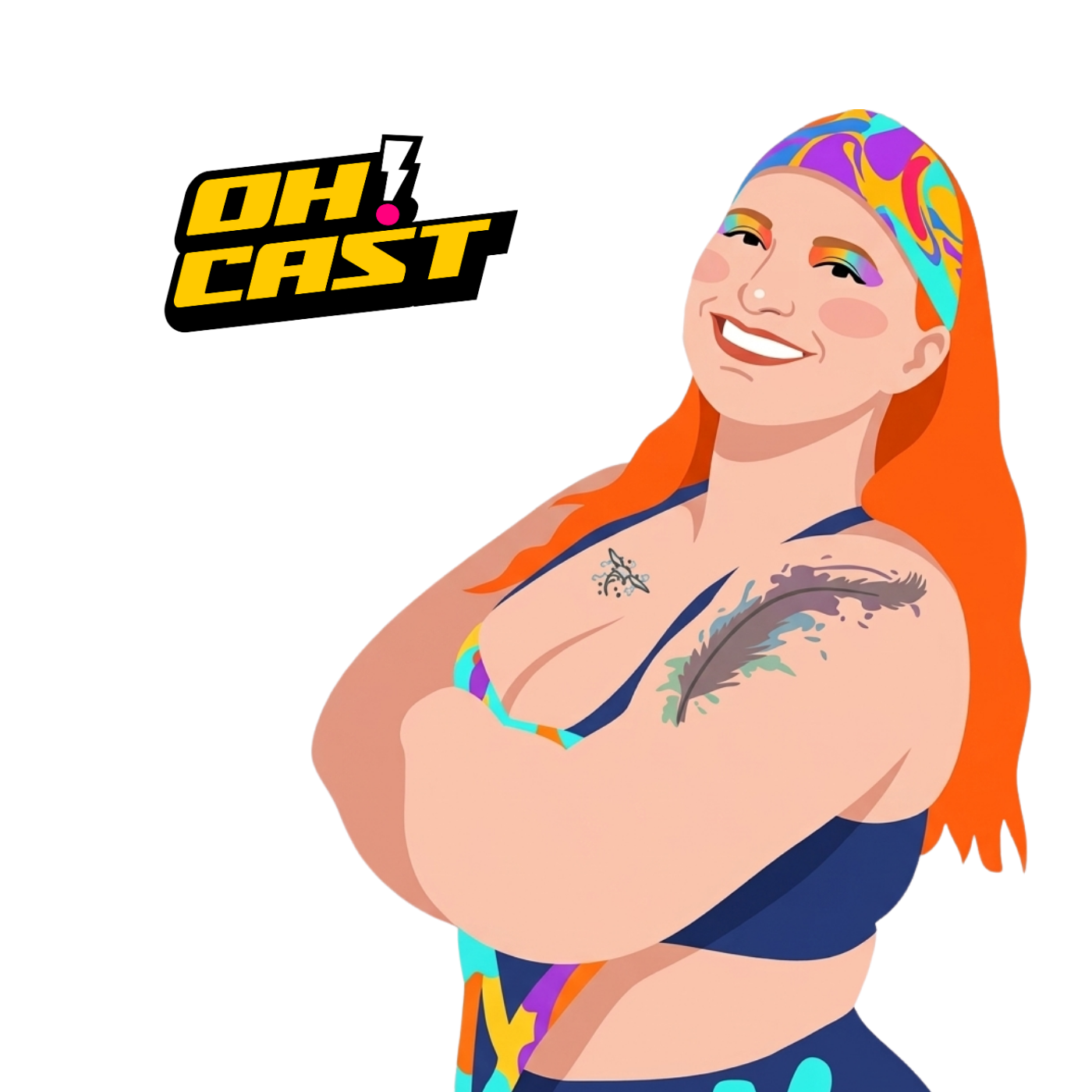
    Indie Wrestler Eliza Hayz on Character Creation, Cult Media & Chaos | Hebridean Hammerlock

    In this episode of OH!CAST, Cal sits down with indie wrestling standout Eliza Hayz for one of our most electric and unfiltered geek culture interviews. Known for her psychedelic Favourite Flower Child persona, explosive in‑ring style, and rising presence across the U.S. indie scene, Eliza brings a perfect mix of honesty, chaos, humour, and heart. This conversation blends wrestling storytelling, character‑building insights, and the kind of raw, unhinged geek humour that defines the show. Eliza dives into the origins of her Flower Child character — the colours, the energy, the psychedelic edge, and the emotional core behind the persona. She breaks down how creativity, performance, and personal experience merge to build a character that feels larger than life while still grounded in something real. For fans of wrestling and cult media storytelling, this is a masterclass in how characters evolve, adapt, and connect with audiences. Cal and Eliza explore her journey through the indie wrestling world: the grind, the travel, the locker rooms, the mentors, the weird venues, the unforgettable crowds, and the moments that made her realise she was carving out her own lane. She shares stories from DCCW, SWF, AWWA, and other promotions she’s worked with, offering a rare behind‑the‑scenes look at what it takes to survive — and thrive — on the independent circuit. The episode also digs into the crossover between wrestling and science fiction fandom — the shared love of world‑building, characters, long‑term storytelling, and passionate communities. Eliza talks about the fandoms she grew up with, the shows and games that shaped her imagination, and how those influences bleed into her wrestling persona. Whether she’s discussing horror aesthetics, psychedelic visuals, or retro inspirations, the conversation is loaded with insights that hit both wrestling fans and genre nerds right in the heart. And of course, this episode is pure OH!CAST chaos. Cal and Eliza bounce between deep emotional honesty and absolute nonsense at lightning speed. One moment they’re breaking down character psychology; the next they’re spiralling into jokes, roasting each other, or derailing into the kind of unhinged geek humour that has become a signature of the show. Eliza also opens up about the realities of being a rising indie wrestler: the physical toll, the mental grind, the pressure to constantly evolve, and the joy of connecting with fans who see themselves in her work. She talks about the moments that nearly broke her, the moments that rebuilt her, and the moments that reminded her why she fell in love with wrestling in the first place. If you’re into geek culture, wrestling storytelling, character creation, cult media, retro aesthetics, or the strange and wonderful corners of science fiction fandom, this episode is a must‑listen. It’s a celebration of creativity, performance, identity, and the power of embracing the parts of yourself that feel too weird, too colourful, or too intense for the real world — and turning them into something unforgettable. Whether you’re a wrestling fan, a genre nerd, or someone who loves hearing creators talk about the worlds they build, this episode delivers everything OH!CAST is known for: passion, chaos, humour, honesty, and a deep love for the stories that shape us.

  • May 22 · 1 hr 19 min

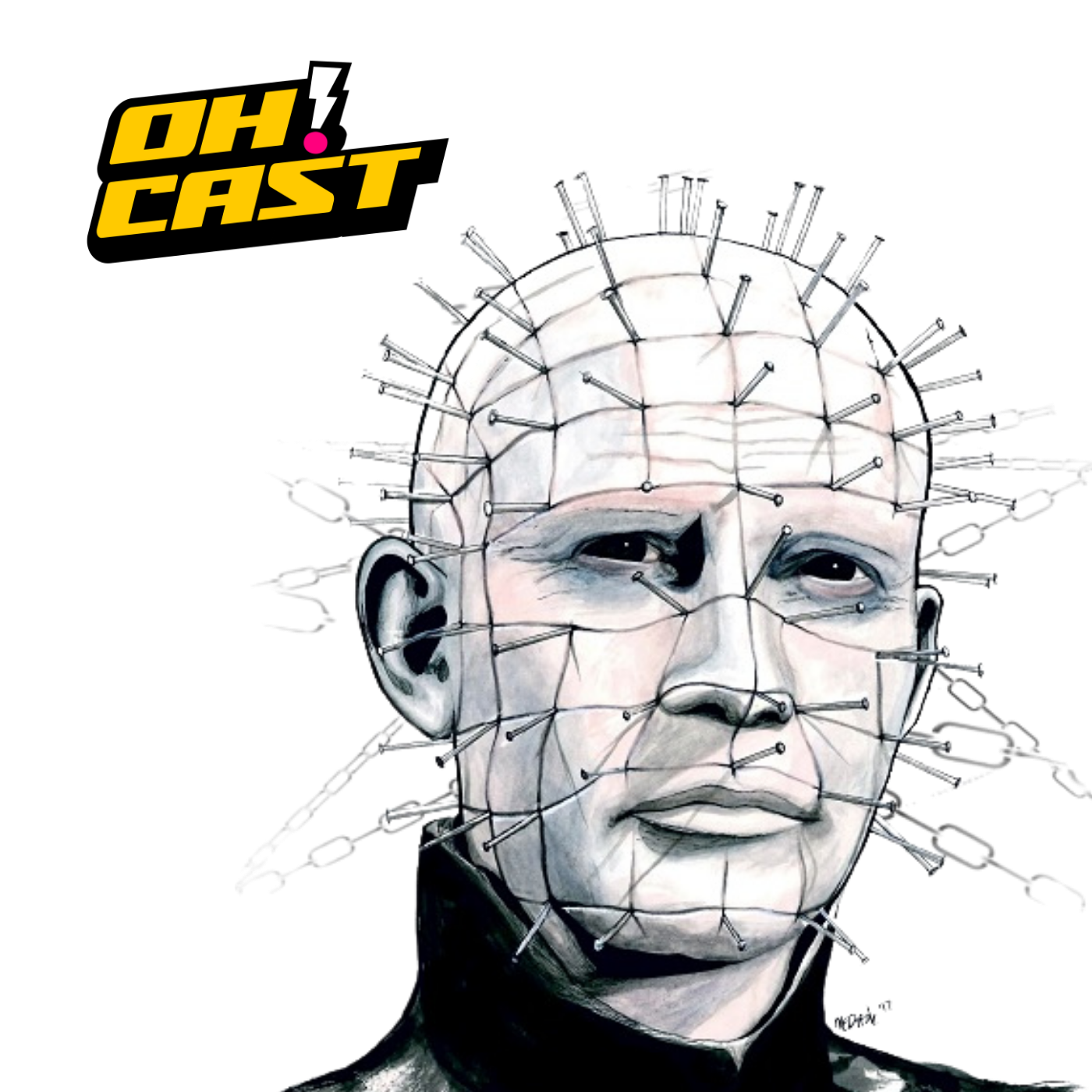
    Doug Bradley (Pinhead) on Hellraiser, Cult Media & Horror Mythology | OH!CAST

    In this landmark episode of OH!CAST, Cal and the team welcome horror legend Doug Bradley, the actor who brought the iconic lead Cenobite — known worldwide as Pinhead — to life. This is one of our most definitive geek culture interviews, blending deep filmmaking insight, horror history, and the chaotic geek humour that defines the show. The episode opens with the crew joking about accidentally summoning Doug via a mysterious puzzle box, before shifting into a rich, thoughtful conversation about the origins of Hellraiser. Doug explains why he said yes to appearing on a podcast from the Outer Hebrides, admitting he joined “purely romantically” because the location charmed him. From there, he dives into the creation of the Cenobites, explaining that “as far as I’m concerned, he has no name,” and that none of the Cenobites were named in The Hellbound Heart. The now‑famous nicknames — Pinhead, Chatterer, Butterball — were invented by the makeup team simply so they could refer to each other during production. Doug shares stories about meeting Clive Barker in school in Liverpool in the late 1960s, performing together in theatre, and eventually joining Hellraiser without hesitation. He describes the film’s low‑budget British production, the groundbreaking makeup effects, and the unique blend of slasher structure with gothic, operatic horror. He explains why the film works: not because of the Cenobites (who appear for less than ten minutes), but because of the powerful human story at its core. He also reveals how little anyone expected the film to become a global phenomenon, recalling asking Clive at a convention, “What the fuck did you do?” as fans lined up decades later. The conversation delivers major insights into Hellraiser, Hellbound, and Nightbreed. Doug discusses the ambition of Nightbreed, the studio interference that crippled it, and the heartbreaking moment when producer Chris Figg was fired mid‑production — a turning point that led to “finance on set” overriding Clive’s creative decisions. He explains how the studio tried to force the film into a slasher mold, restructuring it around David Cronenberg’s character and cutting the Breed’s scenes “to ribbons,” undermining the film’s central theme that the monsters are not the Breed, but the humans who fear them. Doug also reflects on the timelessness of the Cenobites, noting that “you could show them to a 14th‑century monk and they’d know exactly what they were looking at.” He talks about method acting (“If they’d asked for Pinhead to come to set, I would have ignored them”), the collaborative magic between Clive Barker and cinematographer Robin Vidgeon, and the importance of practical effects in creating horror that endures — the hallmark of retro media horror. Throughout the episode, Doug’s warmth, intelligence, and dry wit shine through. His stories offer a rare look behind the curtain of one of horror’s most influential franchises, making this episode essential listening for fans of cult media, dark fantasy, and the mythic storytelling worlds of Clive Barker. Whether you’re a lifelong horror fan or someone fascinated by how monsters become mythology, this conversation delivers everything OH!CAST is known for: passion, chaos, insight, and a deep love for science fiction fandom. If you love iconic characters, practical effects, retro horror, or the creators who shaped the genre, this episode is a must‑listen.

  • May 15 · 56 min

    Charlie James on Wrestling, Persona, Cult Media & Chaos | Hebridean Hammerlock

    n this episode of Hebridean Hammerlock, Cal and Graham welcome rising English indie wrestler Charlie James for one of the funniest, most heartfelt geek culture interviews in the series. Brand new to the scene but already making waves, Charlie’s mix of technical‑wrestling obsession, comedy background, queer performance energy, and chaotic honesty makes this conversation essential listening for fans of wrestling, storytelling, and cult media character creation. Charlie talks about discovering wrestling during the pandemic and becoming instantly obsessed with understanding how it works. As she puts it, “I had no intention of being a wrestler… and then I was suddenly sat in a school in Stevenage in little metallic pants thinking, I’ve really committed to the bit.” Her curiosity once led her to sneak into a magicians‑only convention just to learn secrets — the same chaotic, inquisitive energy she brings to wrestling. She explains how she’s still figuring out who “Charlie James” is in the ring. Every match teaches her something new about herself. Her style blends everything she loves: technical wrestling, spooky limb‑twisting, 80s music, leather jackets, and punk attitude. “I love doing weird, spooky stuff with arms and legs… I just smash together the things I love and hope people like it.” These influences sit perfectly in the world of retro media and alternative culture. The episode dives into her inspirations — Zack Sabre Jr.’s political openness and comedic move names, Kanji’s magnetic presence, Jordan Breaks’ calm mastery, and the technical brilliance of Connor Mills. Wrestling Mills was a turning point: “Awful stuff was happening to me, but I was lying there thinking, that’s so smart.” These moments deliver rich insights into how wrestlers grow through experience and how character psychology evolves. Charlie also opens up about training at PlayFight in London, learning to bump, taking hits, and navigating imposter syndrome. She describes the emotional reality of being new: wanting to impress veterans, hoping to be “enough,” and learning to trust people who are literally throwing you around. Her honesty gives the episode a grounded heart. The conversation expands into the evolution of indie wrestling — intergender matches, queer performers, and the rise of inclusive spaces like Fist Club. Charlie celebrates how audiences now embrace campness, drag, and character‑driven performances. This ties directly into the show’s love of science fiction fandom, alternative culture, and the shared language of geek storytelling. Of course, this is Hebridean Hammerlock — so the episode is packed with unhinged geek humour. Charlie admits her most common mid‑match shout is simply “No!” She jokes about being suplexed out of her shorts, fears wrestling a horse, and says she’d win a pillow‑fight match by “smothering them to death with the pillow.” The quick‑fire round alone is worth the listen. Charlie shares her proudest moments so far: her first women’s tag match against LA Taylor and Skye Smitson, wrestling Connor Mills, and performing with friends who’ve become family. She talks about the joy of technical wrestling, drilling her Tilt‑A‑Whirl octopus hold until she mastered it, and learning the difference between “good pain” and “bad pain.” She also opens up about her family’s reaction — especially her mum, who supports her online but refuses to watch her wrestle live because she’d “probably get in the ring with a handbag.” It’s one of the episode’s funniest and most relatable moments. The episode closes with Charlie discussing her dream of wrestling in Japan, her love of Kate Bush karaoke, and her work with Pro Wrestling Ceasefire, raising money for UNICEF and the Lebanese Red Cross.

  • May 8 · 1 hr 13 min

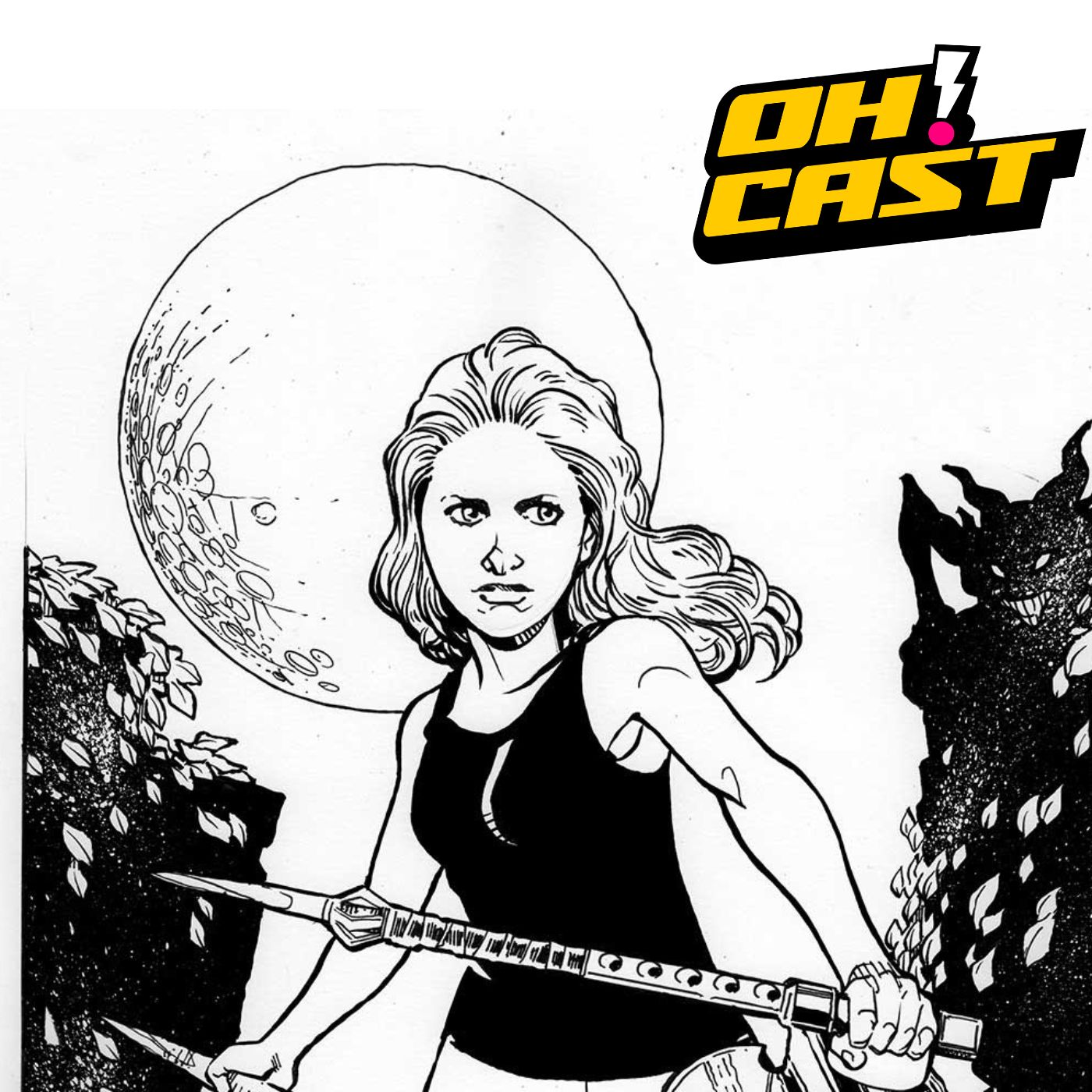
    Georges Jeanty on Buffy, Comics, Cult Media & Character‑Driven Art | OH!CAST

    In this episode of OH!CAST, Cal sits down with acclaimed comic artist Georges Jeanty for one of our most definitive geek culture interviews — a deep dive into the craft, creativity, and character‑driven storytelling behind some of the world’s most beloved franchises. From Buffy the Vampire Slayer to Firefly, Star Wars, and beyond, Georges brings sharp insight, warmth, and decades of experience inside the heart of cult media. The conversation explores Georges’ early years, his artistic education, and the moment he transitioned into comics. He breaks down how film directors shaped his visual storytelling, how sequential art works on a cinematic level, and why the comic book creation process is a collaborative dance between writer, artist, editor, and fan expectation. Georges reflects on his long tenure drawing Buffy — from discovering the show to becoming one of its defining visual voices. He talks favourite characters, artistic challenges, and the emotional weight of adapting TV performances into comic form. He explains why capturing character voices is essential, how he approached likenesses, and how the Buffy fandom’s passion shaped his work. These insights sit perfectly in the world of retro media and long‑form cult storytelling. The conversation expands into mentorship and talent development in the comic industry, exploring how new artists grow, how editors guide creative direction, and how major storyline decisions can spark intense fan reactions. Georges shares stories about drawing difficult arcs, navigating canon, and balancing artistic freedom with franchise rules. We also dig into the evolution of the comic book creation process — from traditional pencils and inks to digital workflows, motion comics, and the changing expectations of modern readers. Georges discusses his involvement in Star Wars comics, the Buffy motion comics, and how different franchises demand different artistic approaches. The episode closes with a thoughtful discussion on the current state of the comic industry and the impact of AI on artistic expression. Georges offers a grounded, honest perspective on creativity, craft, and the future of visual storytelling. If you’re passionate about cult media, comics, Buffy, retro TV, character‑driven art, or the creators who bring genre worlds to life, this episode is a must‑listen. It’s packed with insight, humour, and the kind of deep creative conversation that defines OH!CAST.

  • May 1 · 1 hr 3 min

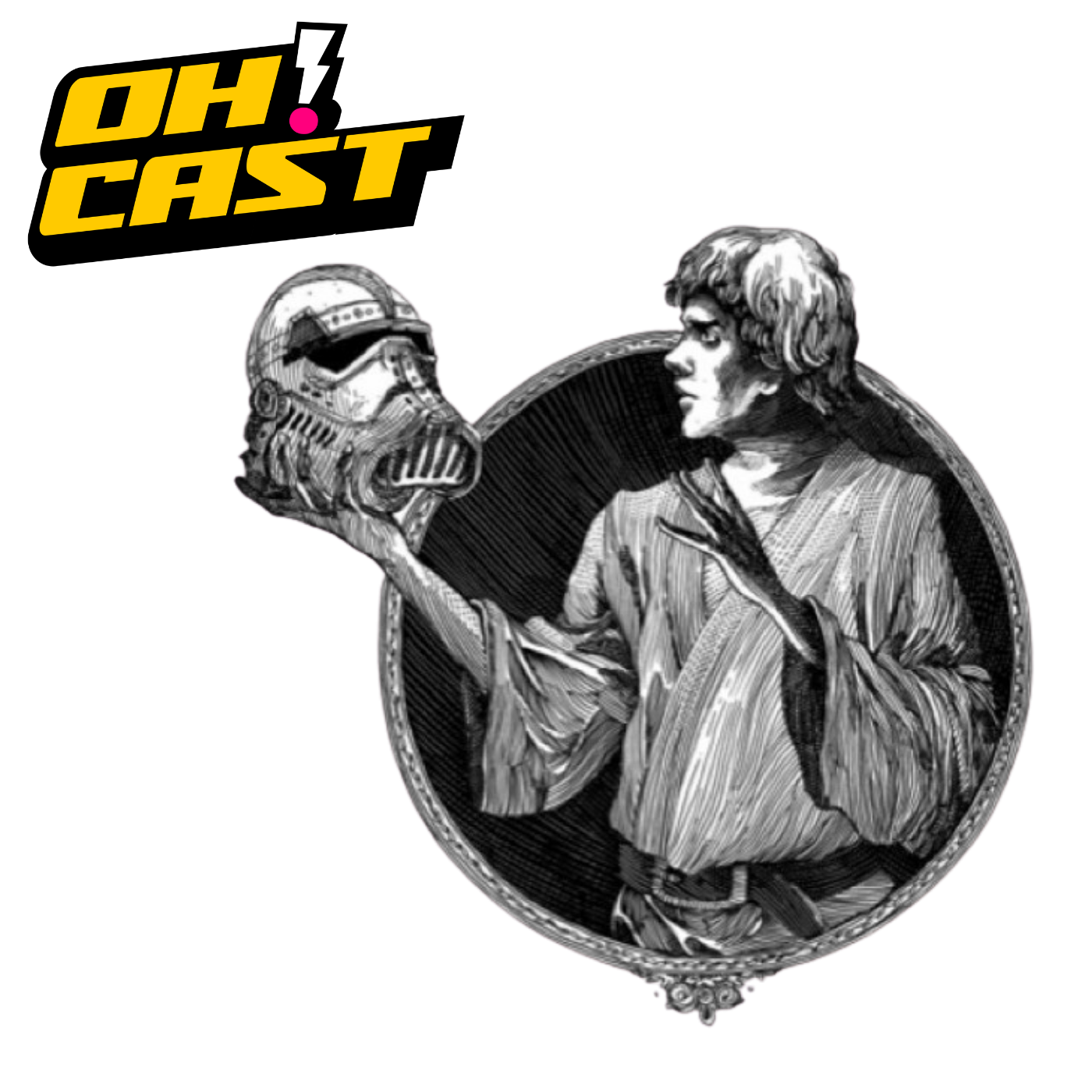
    Shakespeare Star Wars: Ian Doescher | Geek Culture Interviews | OH!CAST

    Shakespeare Star Wars takes centre stage in this creator‑focused OH!CAST interview with author Ian Doescher, the mind behind the wildly popular Shakespearean adaptations of the Star Wars saga. This conversation blends science fiction fandom, cult media appreciation, and retro storytelling influences as Ian breaks down how he transformed one of the most iconic franchises in pop culture into a dramatic verse experience worthy of the Globe Theatre. Ian discusses the origins of the Shakespeare Star Wars project, the creative spark that led him to merge Elizabethan language with galactic adventure, and the surprising structural similarities between Shakespeare’s plays and Star Wars’ mythic storytelling. He explains the challenges of adapting legendary dialogue into Shakespearean prose, how he approached characters like Vader, Luke, Leia, and Han, and why the Shakespeare community embraced the mashup rather than rejecting it. The episode explores how mashup literature fits into the broader world of cult media, retro fandoms, and genre‑bending creativity. The conversation expands beyond Star Wars as Ian talks about adapting classic literature, writing his children’s book Macbeth for Kids, and collaborating on a Shakespearean political satire covering Trump’s first two years in office. Ian shares insights into his writing process, how he balances humour with authenticity, and why Shakespeare remains a powerful storytelling tool for modern audiences. Although OH!CAST is known for wrestling podcast episodes, cult media retrospectives, and deep dives into retro fandoms, this interview fits perfectly into the show’s broader identity as a home for Geek Culture Interviews. OH!CAST continues to spotlight creators, artists, writers, and performers who reshape the stories we love across sci‑fi, fantasy, comics, wrestling, and cult entertainment. This episode reinforces OH!CAST’s mission: celebrating the people behind the fandoms, the craft behind the creativity, and the passion behind the pop culture we obsess over. Topics Covered: • Shakespeare Star Wars adaptation process • Writing Star Wars dialogue in Shakespearean verse • Creative writing insights from Ian Doescher • Mashup literature and cult media storytelling • Retro media influences on modern adaptations • Children’s book writing and educational storytelling • Shakespearean political satire • The overlap between sci‑fi fandom and classic literature Takeaways: • Shakespeare and Star Wars share deep structural similarities • Mashup storytelling thrives in cult and retro media spaces • Adapting iconic dialogue requires precision and creativity • Shakespearean structure enhances Star Wars’ dramatic beats • OH!CAST’s creator interviews span geek culture, wrestling, and cult media Chapters: 00:00 Shakespeare Star Wars: How the Mashup Began 12:40 Science Fiction Fandom Meets Shakespearean Verse 25:10 Cult Media Mashups and Retro Storytelling 38:55 Children’s Books and Creative Side Projects 47:20 Shakespearean Political Satire 58:29 Quick‑Fire Shakespeare vs Star Wars Round

  • April 27 · 2 hr 16 min

    WrestleMania 42 Breakdown: Chaos, Characters & Pop Culture Moments | Hammerlock

    WrestleMania 42 delivered one of the wildest, most chaotic, and most talked‑about weekends in modern wrestling, and OH!CAST breaks down every major moment with a mix of geek culture insight, wrestling analysis, and pop‑culture commentary. This episode dives deep into the highs, lows, shocks, and storytelling choices that defined both nights of WrestleMania, exploring how character arcs, match pacing, production decisions, and fan reactions shaped the event. The conversation begins with the hosts’ excitement heading into WrestleMania, followed by a detailed look at Night One’s openers, match structure, and the overall disappointment many fans felt. The unsanctioned match becomes a major talking point, with discussion around its tone, pacing, and whether it lived up to expectations. Entrances take centre stage as the hosts break down Liv Morgan’s presentation, Cody Rhodes’ evolving character, and the spectacle of WrestleMania’s production design. AJ Lee’s return sparks a broader conversation about nostalgia, women’s wrestling, and the significance of the Women’s Intercontinental Championship match. Gunther’s performance and impact on the event are analysed in depth, highlighting his role as one of WWE’s most reliable anchors. The episode also covers Randy Orton’s heel turn, the violent match that shocked the crowd, and the storytelling implications behind Oba Femi vs. Brock Lesnar. From there, the discussion shifts to the Lucha Brothers, the emotional weight of Penta and Rey’s separation, and the ongoing evolution of Sami Zayn’s character. The Demon’s entrance becomes a highlight, prompting a conversation about theatricality, legacy, and how presentation shapes fan perception. Jade Cargill vs. Rhea Ripley receives a full breakdown, exploring Jade’s growth, her WrestleMania moment, and her trajectory as one of WWE’s most promising stars. The episode builds toward the massive main event between Roman Reigns and CM Punk, analysing Punk’s return to WWE, the intensity of the match, and the long‑term implications for both performers. The hosts compare WrestleMania Night 1 and Night 2, discussing why Night 2 delivered more satisfying storytelling and how WWE’s booking philosophy may be shifting. The conversation closes with a forward‑looking discussion about the future of WWE talent, the potential retirement of major stars, and the ongoing debate around whether WWE needs an off‑season to protect performers and improve long‑term storytelling. This episode blends wrestling critique, character analysis, and pop‑culture insight, making it a definitive breakdown of WrestleMania 42. Topics Covered: • Night One’s disappointing matches • Unsanctioned match analysis • AJ Lee’s return and Women’s IC match • Gunther’s impact on WrestleMania • Cody Rhodes’ entrance and character evolution • Randy Orton’s heel turn • Oba Femi vs. Brock Lesnar • Intercontinental Title match • Violent match breakdown • The Demon’s entrance • Jade Cargill vs. Rhea Ripley • CM Punk’s return to WWE • Roman Reigns vs. CM Punk main event • WrestleMania Night 1 vs. Night 2 comparison • The future of WWE talent and potential retirements Takeaways: Chapters: 00:00 Introduction to WrestleMania 10:02 Unsanctioned Match and Entrances 20:02 AJ Lee’s Return and Women’s IC Match 25:30 Match Analysis: Seth vs. Gunther 41:36 Cody’s Entrance and Character Evolution 47:49 Night 1: Disappointing Matches 57:08 Oba Femi vs. Brock Lesnar 01:09:05 Intercontinental Title Match 01:16:47 The Violent Match 01:33:40 The Demon’s Entrance 01:42:11 Jade Cargill vs. Rhea 01:50:34 CM Punk’s Return to WWE 02:05:05 The Main Event: Roman Reigns vs. CM Punk 02:29:17 The Future of WWE Talent

  • April 24 · 1 hr 5 min

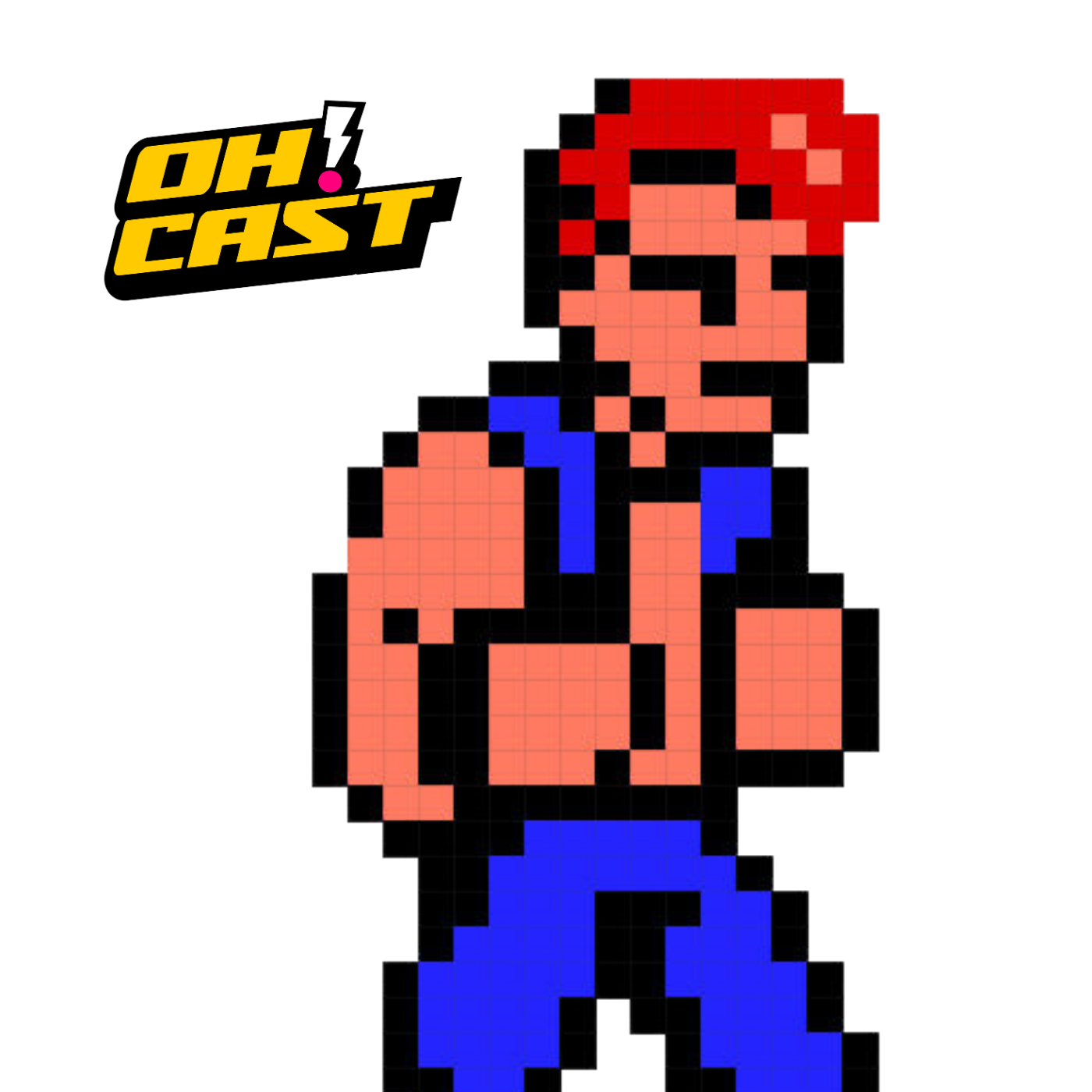
    Double Dragon: The Retro Media Beat ’Em Up That Changed Arcade History | OH!CAST

    Double Dragon (1987) isn’t just a retro game — it’s the arcade beat ’em up that changed everything. In this OH!CAST deep dive, we celebrate the legacy of Yoshihisa Kishimoto, the visionary creator who helped define the side‑scrolling brawler genre and shaped the future of arcade gaming. Following his recent passing, this episode serves as both a tribute and a full exploration of the game that set the standard for every beat ’em up that followed. As part of OH!CAST’s broader identity — blending Geek Culture Interviews, Science Fiction Fandom, Wrestling Podcast energy, Cult Media, and Retro Media — this episode focuses on how Double Dragon became a cornerstone of retro gaming culture and a defining moment in 80s and 90s arcade history. We trace the origins of beat ’em ups from Kung Fu Master to Renegade, exploring how Kishimoto’s design philosophy evolved into the blueprint for Double Dragon’s groundbreaking mechanics. We break down how Double Dragon revolutionised arcade gameplay through its weapon pickup system, environmental interactions, enemy variety, and the introduction of 2‑player co‑op brawling. Iconic characters like Abobo and Willy, the unforgettable soundtrack, the infamous slowdown, and the legendary “back elbow” strategy all get their moment in the spotlight. These elements didn’t just define Double Dragon — they shaped the DNA of the entire beat ’em up genre. From there, we explore how Double Dragon paved the way for genre‑defining classics such as Final Fight, Golden Axe, Streets of Rage, Teenage Mutant Ninja Turtles (Arcade), Turtles in Time, The Simpsons Arcade Game, and X‑Men Arcade. Each of these titles expanded the formula, refined co‑op mechanics, and pushed belt‑scrolling brawlers into the golden age of arcade gaming. We also examine how Street Fighter II and the rise of competitive fighting games shifted arcade culture away from cooperative play, reshaping the industry’s future. Whether you played Double Dragon on the NES, Sega Mega Drive / Genesis, Amiga, Atari ST, ZX Spectrum, or in the arcades themselves, this episode is packed with pure retro gaming nostalgia. We revisit the ports, the quirks of each platform, and why Double Dragon became a rite of passage for an entire generation of gamers. This episode sits firmly within OH!CAST’s mission: exploring cult media, retro fandoms, creator legacies, and the pop‑culture milestones that shaped geek culture across decades. Double Dragon isn’t just a game — it’s arcade history, retro media heritage, and a foundational pillar of the beat ’em up genre. Topics Covered: • Origins of beat ’em ups (Kung Fu Master, Renegade) • How Double Dragon revolutionised arcade gameplay • Weapon pickups and environmental combat • 2‑player co‑op and enemy design • Abobo, Willy, and iconic character archetypes • Soundtrack, slowdown, difficulty, and back elbow • Influence on Final Fight, Golden Axe, Streets of Rage, TMNT, Simpsons Arcade, X‑Men Arcade • How Street Fighter II shifted arcade culture • Retro ports across NES, Genesis, Amiga, Atari ST, ZX Spectrum • Yoshihisa Kishimoto’s legacy Takeaways: • Double Dragon defined the beat ’em up genre • Kishimoto’s design shaped decades of arcade games • Weapon pickups changed combat strategy forever • Co‑op brawling became a cultural phenomenon • The game’s influence is visible across 80s and 90s classics • Competitive fighters reshaped arcade culture • Double Dragon remains essential retro media history