Naked Nuclear · June 22 · 14 min
After-Pop! Wait... Should We Recycle Used Nuclear Fuel? The History, Economics, and Proliferation concerns
0:00-14:01
transcript
show notes
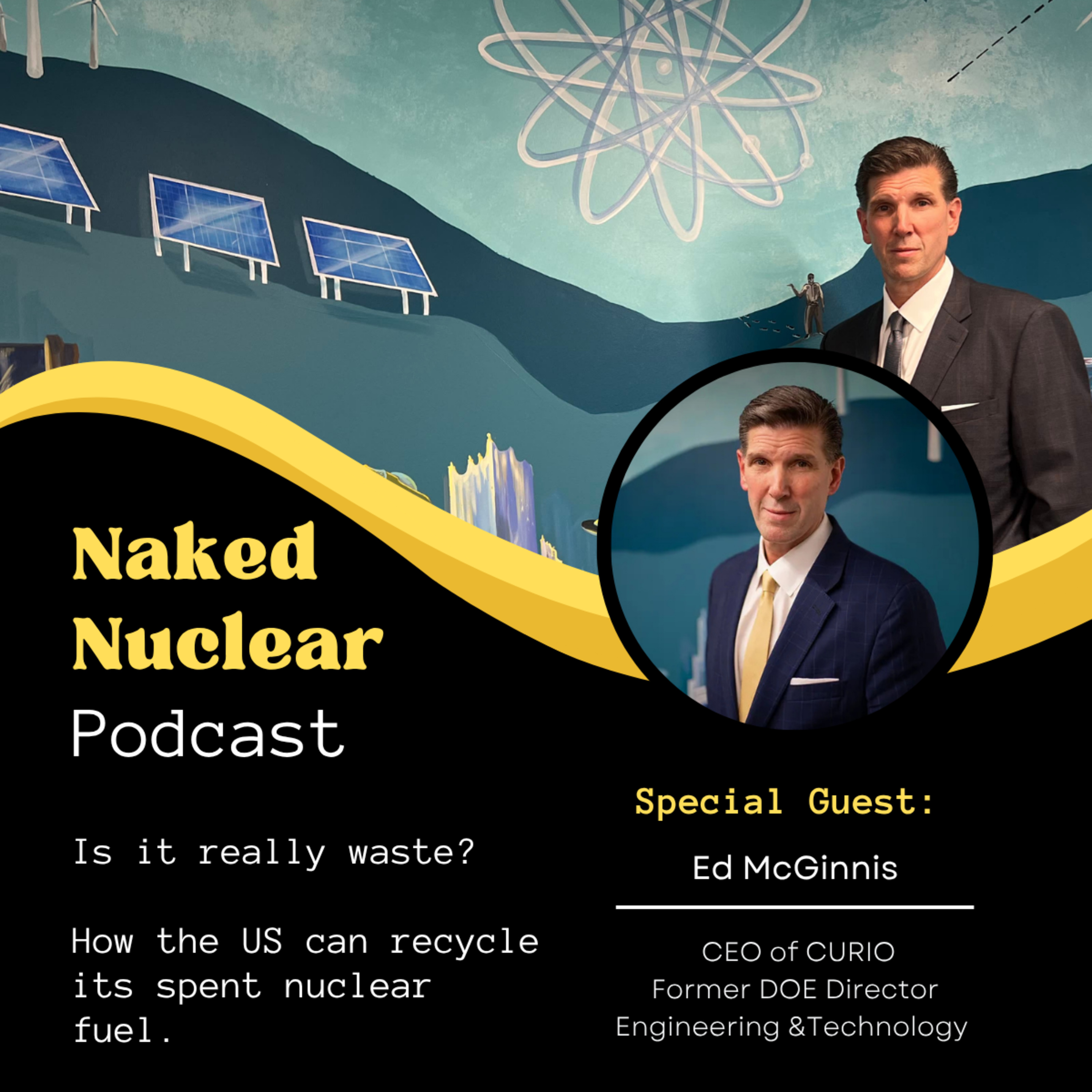
Ed McGinnis said something in our last episode that's hard to shake: 96% of the energy in spent nuclear fuel has never been touched. The physics checks out. But what happens when countries actually try to get that energy back?
This After Pop digs into the history of nuclear fuel recycling, not the theory, but the track record. France, the UK, Japan. Staggering sums of money. Complicated results. And a 1977 executive order that changed everything.
We break down what PUREX actually does, why Jimmy Carter banned commercial reprocessing, and what any next-generation recycling technology (including Curio's NuCycle) would actually have to solve to change the equation.
- France's La Hague plant: running since 1976, processing 1,000+ tons of spent fuel per year, and saving roughly 18,000 metric tons of natural uranium. Also: a Court of Auditors estimate ranging from €16 billion to €58 billion in total program costs.
- The UK's Sellafield THORP: built for £1.8 billion, promised £500 million in profit, delivered £1 billion in losses, closed in 2018. Decommissioning costs are estimated at up to £250 billion and won't be finished until 2125.
- Japan's Rokkasho: supposed to open in 1997. It's 2026. Construction costs have hit ¥3.7 trillion (~$25 billion), with lifecycle costs projected above $100 billion. It has never processed a full ton of commercial fuel at capacity.
- PUREX: what it actually does, why it was designed the way it was (Manhattan Project-era, weapons-grade plutonium), and why producing a pure stream of separated plutonium is the source of the proliferation problem.
- India's 1974 Smiling Buddha test: where Carter's concern came from, and why it wasn't theoretical.
- The five things next-gen recycling has to solve: cost, proliferation resistance, regulation, waste, and public trust.
The numbers that matter:
- ~$85/lb: current uranium spot price
- ~$140/lb (~$360/kg): the price at which reprocessing starts to break even, per Harvard's Belfer Center
- 99 metric tons: France's current separated civilian plutonium stockpile
- 44.4 metric tons: Japan's separated plutonium (most of it sitting in France and the UK)
- 300 years vs. 100,000+ years: radiotoxicity timeline for recycled waste vs. direct disposal
Resources:
- Harvard Belfer Center, The Economics of Reprocessing vs. Direct Disposal of Spent Nuclear Fuel: https://www.belfercenter.org/publication/economics-reprocessing-vs-direct-disposal-spent-nuclear-fuel
- France's Court of Auditors report on nuclear costs (English summary via World Nuclear Association): https://world-nuclear.org/information-library/nuclear-fuel-cycle/fuel-recycling/processing-of-used-nuclear-fuel
- UK Nuclear Decommissioning Authority, Sellafield: https://www.gov.uk/government/organisations/nuclear-decommissioning-authority
- Japan Atomic Energy Commission, Rokkasho lifecycle cost estimate: https://www.jaec.go.jp/en/
- Jimmy Carter's Executive Order on Reprocessing (1977): https://www.nrc.gov/docs/ml1209/ML120960615.pdf
- IAEA, Proliferation resistance of nuclear fuel cycles: https://www.iaea.org/topics/nuclear-fuel-cycle
links6
- https://www.belfercenter.org/publication/economics-reprocessing-vs-direct-disposal-spent-nuclear-fuelbelfercenter.org
- https://world-nuclear.org/information-library/nuclear-fuel-cycle/fuel-recycling/processing-of-used-nuclear-fuelworld-nuclear.org
- https://www.gov.uk/government/organisations/nuclear-decommissioning-authoritygov.uk
- https://www.jaec.go.jp/en/jaec.go.jp