Skip to content
Artwork for Messy Liberation: Feminist Conversations about Politics and Pop Culture
News

Messy Liberation: Feminist Conversations about Politics and Pop Culture

Becky Mollenkamp and Taina Brown

Join feminist coaches Taina Brown and Becky Mollenkamp for casual (and often deep) conversations about business, current events, politics, pop culture, and more. We’re not perfect activists or allies! These are our real-time, messy feminist perspectives on the world around us.

This podcast is for you if you find yourself asking questions like:
• Why is feminism important today?
• What is intersectional feminism?
• Can capitalism be ethical?
• What does liberation mean?
• Equity vs. equality — what's the difference and why does it matter?
• What does a Trump victory mean for my life?
• What is mutual aid?
• How do we engage in collective action?
• Can I find safety in community?
• What's a feminist approach to ... ?
• What's the feminist perspective on ...?

  • 20 episodes
  • Updated Tuesday
  • Explicit

Episodes20

  • Tuesday · 43 min

    Why Everyone's Obsessed with Wicker (And What It Says About Us)

    Get "Liberate Your Business" by Becky Mollenkamp https://liberateyourbusiness.com/ Becky and Taina are back from their summer Everything Is Political series with their regular weekly episode, kicking things off with the internet-breaking trailer for Wicker — the upcoming movie starring Olivia Colman, Alexander Skarsgård, and Peter Dinklage about a woman who marries a man made of wicker. What starts as trailer reactions turns into a wider conversation about the booming romance and "smutty romance" book industry, the trad wife movement's contradictions, media literacy, and who gets conditioned to be curious versus who doesn't. What we discussed: 00:00 – Welcome back after the summer Everything Is Political series 00:28 – Introducing today's topic: the Wicker trailer 01:33 – First reactions to the trailer and the Bookstagram/BookTok buzz 04:11 – Breaking down the premise (and the jokes about it) 09:52 – "It's all men until it's not all men" — men continuing to fall short 10:08 – The wicker husband, village jealousy, and the metal-collar marriage symbolism 12:17 – Why this topic: free publicity and the bigger conversation about romance/smut 15:39 – Trad wife influencers, rising conservatism, and the contradiction underneath it (Nara Smith) 16:54 – Aside on the novel Yesteryear 20:16 – Romance publishing stats: 52% revenue growth, $1.44B a year 22:59 – Wicker as a modern fairy tale / parallels to Beauty and the Beast 24:26 – Entertainment as propaganda: military movies and Hollywood contracts 26:14 – Media literacy: why it matters for everything we consume, not just news 31:21 – Privilege, curiosity, and who gets conditioned not to question things 34:07 – Curiosity as joy; how liberal arts education changed things for Becky 36:22 – The power of "why" and "what if" as questions 43:00 – Wrap-up and plans to revisit after they've both seen the movie in October Resources mentioned: • Wicker trailer: https://www.youtube.com/watch?v=HP0BWBWn14I • "The Wicker Husband" short story: https://www.scribd.com/document/163478512/The-Wicker-Husban1 • "Yesteryear" by Caro Claire Burke: https://amzn.to/3TEeLNs 🎤 JOIN US IN THE FEMINIST PODCASTERS COLLECTIVE: http://feministpodcastcollective.com/
  • July 27 · 44 min

    Everything Is Political: What We Learned From Our Whole Series

    Get "Liberate Your Business" by Becky Mollenkamp https://liberateyourbusiness.com/ On this episode of Messy Liberation, hosts Becky Mollenkamp and Taina Brown look back on their "Everything Is Political" series — reflecting on agency, systemic bias, and intersectional feminism through conversations on trash and environmental racism, clothing equity, comedy and queer identity, book diversity, AI and data bias, and podcasting access. It's a candid, funny, and grounding recap for anyone trying to hold onto hope while facing systems designed to wear you down. In This Episode, We Get Into: • Why disengaging from online arguments can be an act of agency, not avoidance • The "not my ministry" mindset and choosing which conversations are actually worth your energy • How trash pickup reveals environmental racism and the myth of "universal" utilities • The beautification effect and why cared-for spaces get cared for • How access to clothing that fits shapes self-worth, agency, and daily choices • Becky's deep dive into Universal Standard sizing and why "medium" is doing a lot of political work • What Dahlia Belle's Netflix special Gender Agenda revealed about comedy, pronouns, and survival • Becky's book-tracking dashboard and what it exposed about whose voices she was (and wasn't) reading • Why AI and algorithms only look backward, and what that means for bias and representation • Who gets the mic in podcasting, and why access doesn't always mean equity 🎤 JOIN US IN THE FEMINIST PODCASTERS COLLECTIVE: http://feministpodcastcollective.com/

  • July 20 · 48 min

    How Biased Data Is Used to Reinforce Racism, Sexism, and the Status Quo

    Get "Liberate Your Business" by Becky Mollenkamp https://liberateyourbusiness.com/ In this episode of Messy Liberation, hosts Becky Mollenkamp and Taina Brown sit down with data and analytics professional Millie to explore why data is never as neutral as it looks — and why that matters for everyone. From biased medical studies and skewed incarceration stats to the politics of AI, the census, and your personal data being sold without your consent, this conversation connects the dots between numbers on a screen and the power structures shaping our lives. In This Episode, We Get Into: • Why data isn't neutral, and how human bias gets baked in at every stage of collection, analysis, and presentation • How manipulated charts, skewed infographics, and decontextualized research statistics mislead the public • Real-world examples of data bias causing serious harm: medication dosages, Plan B effectiveness, census undercounting, and school funding • The deeply troubling way incarceration data is used to reinforce racist narratives about Black and brown communities • How AI inherits and amplifies data bias, and why "garbage in, garbage out" is a phrase everyone should know • What data literacy actually looks like, and how to become a smarter, more critical consumer of statistics and studies • The GDPR, browser cookies, and why your personal data is already a product being sold without your cut • How to use public open data resources (like NYC Open Data) to engage with information in your community 🎤 JOIN US IN THE FEMINIST PODCASTERS COLLECTIVE: http://feministpodcastcollective.com/
  • July 13 · 47 min

    Podcasting Is Political: Who Profits, Who Gets Erased, and What You Can Do About It (with Sarah Heeter)

    Get "Liberate Your Business" by Becky Mollenkamp https://liberateyourbusiness.com/ In this episode of Messy Liberation, hosts Becky Mollenkamp and Taina Brown sit down with Sarah Heeter — podcast producer, strategist, and founder of PodFox Media — to dig into the deeply political nature of the podcasting world. From who gets to profit and who gets erased by the algorithm, to how podcasts are reshaping elections and what your listening habits actually mean, this is the intersectional feminist media analysis you didn't know you needed. In This Episode, We Get Into: • Why podcasting is a political medium, even when the content has nothing to do with politics • The gatekeeping problem: who profits most from podcasting (spoiler: it's mostly white men) and what that means for independent creators • How the 2020 celebrity podcast boom reshaped the entire industry, and who it left behind • The 2024 election strategy of using podcasts as campaign tools, and what that means for democracy and misinformation • The responsibility of podcast hosts and producers to vet guests, set core values, and decide what they put their name on • Why podcast listeners are disproportionately persuadable and what top creators are doing with that influence • How consumers and independent creators can make intentional, values-aligned choices in both what they listen to and who they platform • The power of community resources like the Feminist Podcasters Collective to amplify marginalized indie voices • Why 50 loyal podcast listeners means more than 100K TikTok views, and how to think about audience depth vs. follower counts • The unresolved questions about video podcasting, transcripts, AI, and accessibility that are already shaping who can participate in this space Resources Mentioned: • PodFox Media: https://podfoxmedia.com/ • Big Brave Business podcast: https://bigbravebusiness.com/ • Feminist Podcasters Collective: https://feministpodcastcollective.com • Podchaser: https://www.podchaser.com/ • Listen Notes: https://www.listennotes.com/ 🎤 JOIN US IN THE FEMINIST PODCASTERS COLLECTIVE: http://feministpodcastcollective.com/
  • July 6 · 42 min

    The Politics of Who Gets to Be Funny: Trans Comedian Mx. Dahlia Belle Tells All!

    Get "Liberate Your Business" by Becky Mollenkamp https://liberateyourbusiness.com/ In this episode of Messy Liberation, host Becky Mollenkamp sits down with comedian and writer Mx. Dahlia Belle to pull back the curtain on the deeply political world of stand-up comedy. From gatekeeping and blacklisting to biased algorithms and the consent politics of who gets to make jokes about whom, this conversation is an essential intersectional feminist guide to understanding comedy as a site of power and resistance. In This Episode, We Get Into: • How Mx. Dahlia Belle went from writing a viral Guardian piece about Dave Chappelle to appearing on Hannah Gadsby's Netflix special Gender Agenda, and what happened to their career immediately after • Why comedy is a pyramid scheme: how the most powerful comics in any scene control who gets booked, who gets stage time, and who gets shut out • The self-replicating myth that women and trans people "aren't funny," and how internalized bias keeps marginalized audiences away from shows that could change that • How biased algorithms compound gatekeeping, and what it means when a comic's social media following matters more than their actual craft • The nuanced take on punching up vs. punching down, and why Mx. Dahlia Belle's real gauge is whether the joke lands for someone who loves them and someone who hates them • The violence and predation inside comedy scenes, and how it was the women who blew the whistle on abusers who got blacklisted, not the abusers themselves • Why stand-up is uniquely inseparable from the artist's character, and why "separating the art from the artist" doesn't work the same way for comedy as it does for painting or fiction • The concept of consent in comedy: who has the right to tell a joke about a particular identity, and what it means when that consent is absent • Where to actually find queer and alt comedy in your city (and why you should probably boycott your local mainstream comedy club) • Why marginalized people tend to be more creative, funnier, and more imaginative because survival demands it Resources Mentioned: • Mx. Dahlia Belle's "Dear Dave Chappelle" piece for the Guardian: https://www.theguardian.com/stage/2021/oct/09/dave-chappelle-letter-trans-comedian-netflix • Hannah Gadsby's Gender Agenda on Netflix: https://www.netflix.com/title/81607199 • "The Algorithms of Opression" by Safiya Umoja Noble: https://amzn.to/439nUPL • Comedian Devi Kersh: https://www.instagram.com/devikirsch/ • Comedian Sir Lance Edward: https://www.instagram.com/sir_lance_edward_comedy/ • Mx. Dahlia Belle on Instagram: https://www.instagram.com/MX.DAHLIABELLE/ • Mx. Dahlia Belle on Threads: https://www.threads.com/@mx.dahliabelle/ • Mx. Dahla Belle on YouTube: https://www.youtube.com/@mxdahliabelle 🎤 JOIN US IN THE FEMINIST PODCASTERS COLLECTIVE: http://feministpodcastcollective.com/
  • June 29 · 44 min

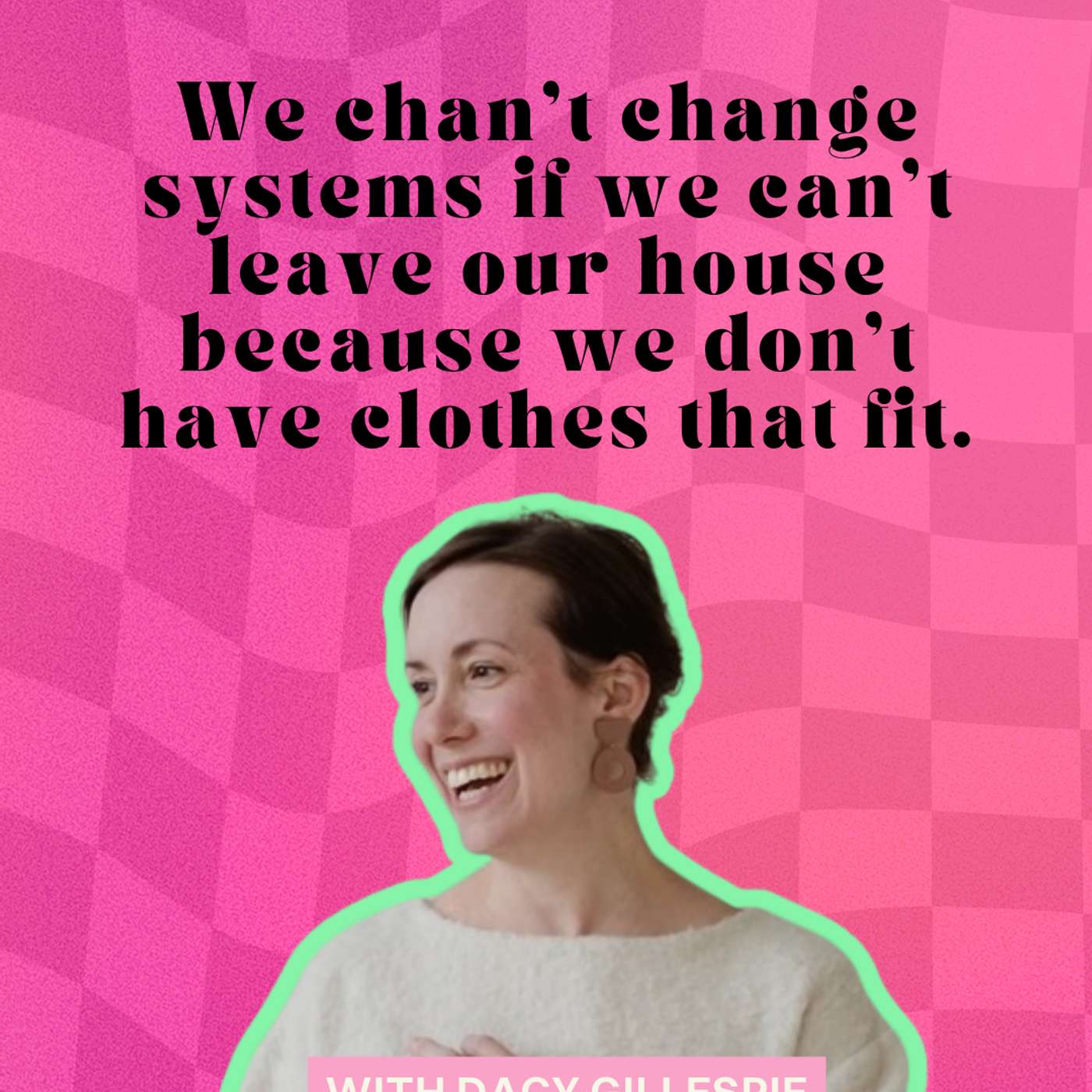
    The Politics of Your Closet: Body Liberation, Fast Fashion, and What You're Actually Allowed to Wear

    Get "Liberate Your Business" by Becky Mollenkamp https://liberateyourbusiness.com/ In this episode of Messy Liberation, hosts Becky Mollenkamp and Taina Brown sit down with personal stylist and body liberation advocate Dacy Gillespie of Mindful Closet to unpack the deeply political nature of fashion and clothing. From workplace dress codes rooted in white supremacy to the impossible standards placed on larger bodies, the return of "heroin chic," modesty culture, and the radical act of letting your hair go gray — this conversation is for anyone who has ever stood in their closet feeling like nothing fits, nothing's allowed, and nothing will ever be enough. In This Episode, We Get Into: How Dacy's mother organizing workers in a sewing factory planted the seed for her life's work — and why she was raised to believe caring about clothes was shameful The way workplace "professionalism" is really just a dress code for "look as much like a white man as possible" — and who pays the price for deviating from it Fashion as code-switching: the daily calculation people of color, trans folks, and anyone outside the norm make about how much of themselves to reveal Trayvon Martin and the deadly, literal consequences of what you're wearing Why Dacy won't tell you what's "flattering" — and why her forthcoming book is called Unflattering The return of 90s "heroin chic" body ideals and the terror of watching it happen again in the age of GLP-1s Size scarcity: why plus-size people are often left with ten moomoos and good luck — including the callout of Lucy and Yak removing their 4X sizing Modesty, the Missouri House's no-bare-shoulders rule, and how women's bodies are treated as a liability in public spaces What Chappell Roan at the Grammys has to do with the sexual double standard Aging, perimenopause, and the radical act of collecting images of women who actually look like you Why your mental health and feeling good in your body is always the top priority — even if that means buying from Target Resources Mentioned: • Dacy Gillespie: https://www.mindfulcloset.com/ • Dacy's Substack newsletter, "Unflattering": https://dacygillespie.substack.com/ • "The Body Is Not an Apology" by Sonya Renee Taylor: https://amzn.to/4uNa3L8 • Dress for Success Midwest: https://midwest.dressforsuccess.org/ 🎤 JOIN US IN THE FEMINIST PODCASTERS COLLECTIVE: http://feministpodcastcollective.com/
  • June 22 · 48 min

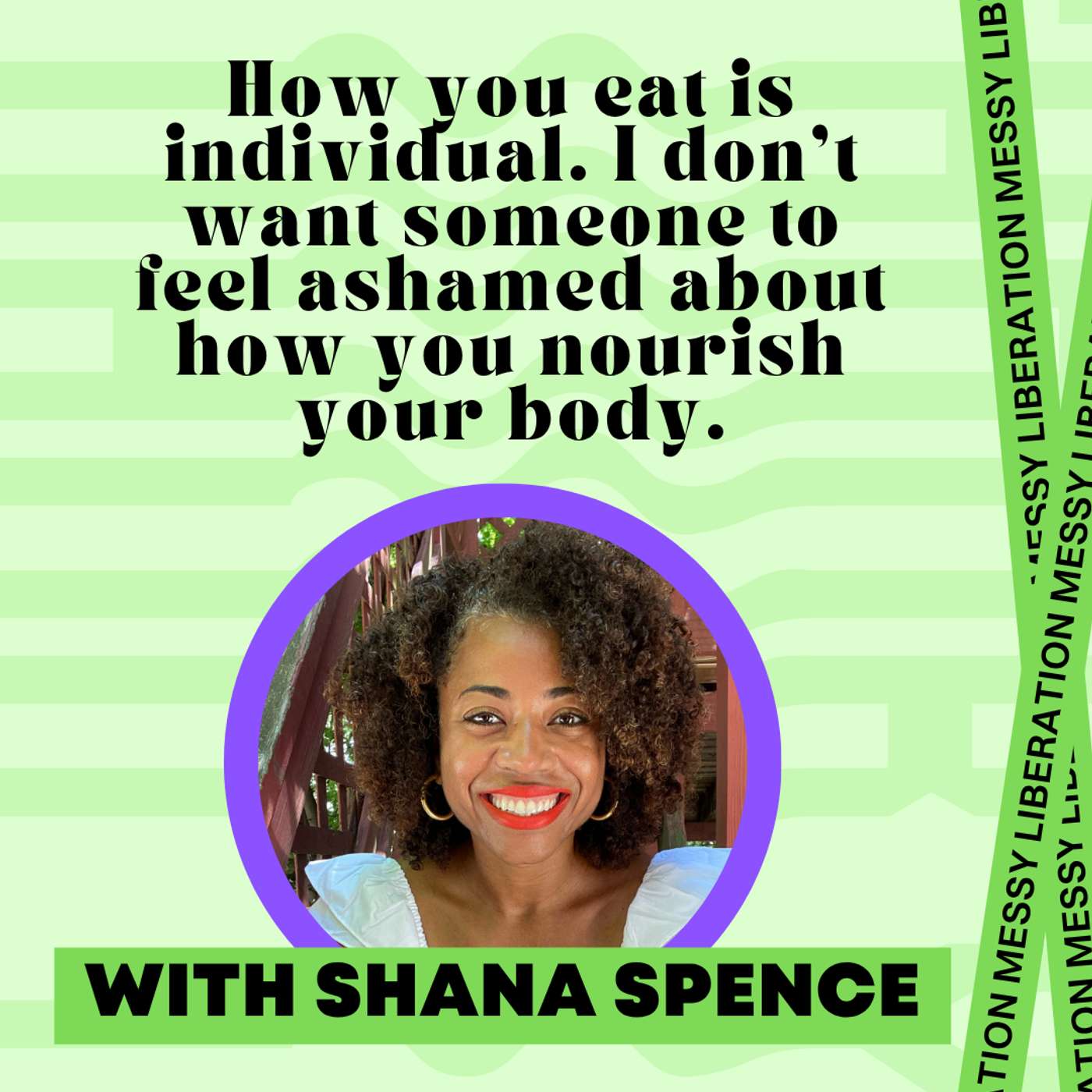
    Food Is Political: Diet Culture, Food Deserts & the Systems Keeping You From Eating Well

    Get "Liberate Your Business" by Becky Mollenkamp https://liberateyourbusiness.com/ In this episode of Messy Liberation, hosts Becky Mollenkamp and Taina Brown sit down with registered dietitian and nutritionist Shana Spence — known as @thenutritiontea on Instagram and Threads — to dig into the deeply political nature of food access, diet culture, and nutrition misinformation. From food deserts and SNAP cuts to GLP-1s and white supremacy's grip on body standards, this conversation connects the dots between what ends up on your plate and the systems of power that put it there (or don't). In This Episode, We Get Into: • What a food desert actually is, and why even dense urban areas like New York City and Atlanta have them • How redlining, gerrymandering, and structural racism shape which communities have access to grocery stores • The layered barriers to food access: disability, transportation, language, income, and more • Why "just grow your own food" and other individualist advice is completely disconnected from reality • The explosion of GLP-1 drugs (like Ozempic and Wegovy) and whether we're in pursuit of health or just thinness • How diet culture is rooted in white supremacy and Eurocentric beauty standards • The SNAP cuts in the "Big Beautiful Bill" and the domino effect on food insecurity and health outcomes • Why seed oils have been debunked as harmful, and how nutrition misinformation spreads • Lab-grown food, GMOs, and what a more just food future could actually look like • Shana's core message: how you eat is individual, not a moral failing Resources Mentioned: • "Live Nourished: Make Peace with Food, Banish Body Shame and Reclaim Joy" by Shana Spence: https://amzn.to/4e1QlEf • "Anti-Diet" by Christy Harrison: https://amzn.to/4vjQhXj • "Fearing the Black Body" by Sabrina Strings: https://amzn.to/4vhq9MM • "The Body Liberation Project" by Chrissy King: https://amzn.to/4dEzp7O • Shana's Instagram: https://www.instagram.com/thenutritiontea/ • Shana's Threads: https://www.threads.com/@thenutritiontea • The Nutrition Tea (Shana's Substack: https://substack.com/@thenutritiontea 🎤 JOIN US IN THE FEMINIST PODCASTERS COLLECTIVE: http://feministpodcastcollective.com/
  • June 15 · 47 min

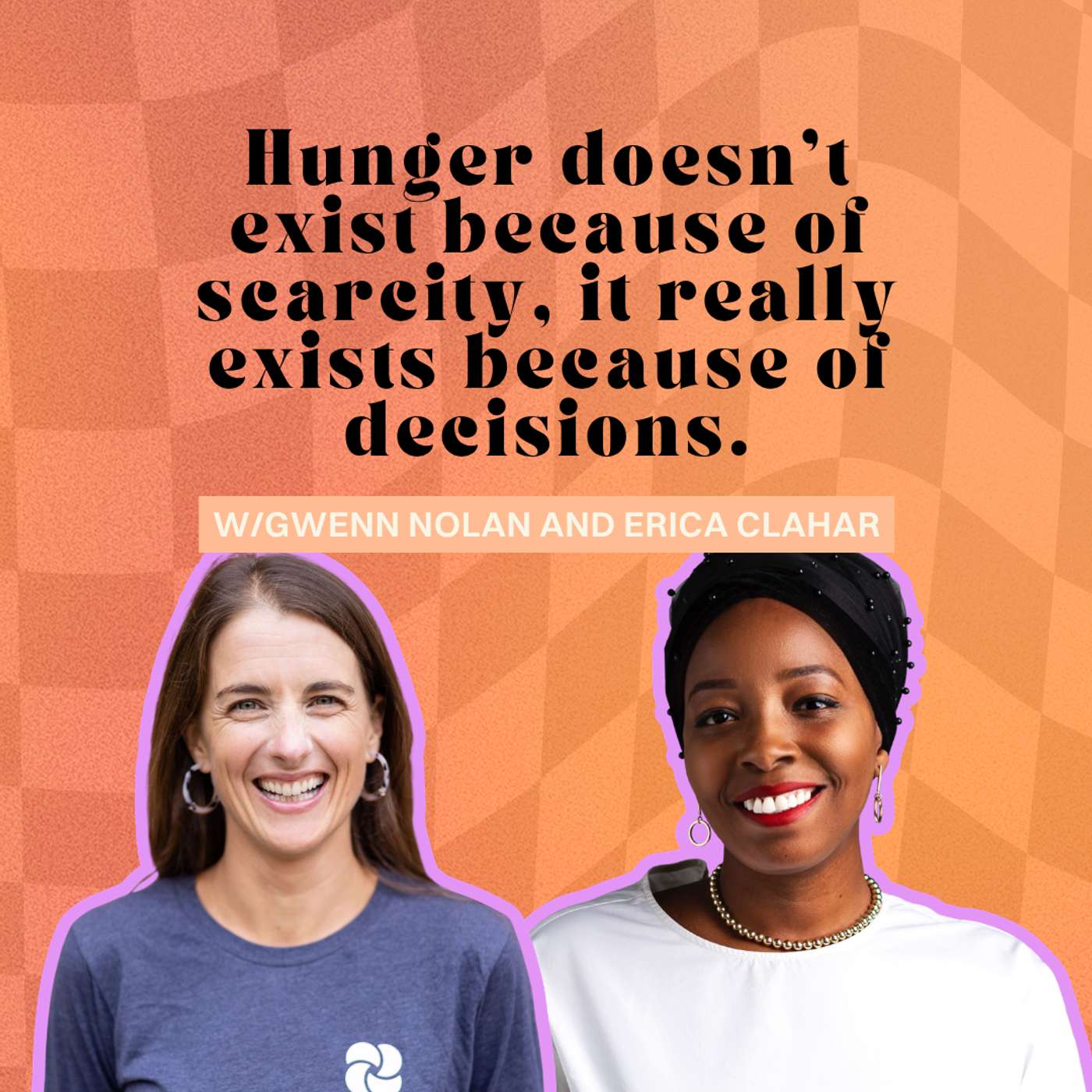
    We Throw Away 40% of Our Food While 40M People Go Hungry

    Get "Liberate Your Business" by Becky Mollenkamp https://liberateyourbusiness.com/ In this episode of Messy Liberation's Everything is Political series, hosts Becky Mollenkamp and Taina Brown are joined by Erica Clahar (founder of Uni Feeds) and Gwen Nolan (founder of Mother Compost) to explore the deeply political world of waste — from food waste and hunger to environmental racism, composting access, and the planned obsolescence built into capitalism. If you've ever wondered why trash is a feminist issue, this conversation will make everything click. In This Episode, We Get Into: • How 40% of the U.S. food supply gets thrown away every year while 40 million people remain food insecure (and why that number is chronically under-reported) • The origin stories of two women who saw a problem and built organizations to solve it, not monetize it • Environmental racism in real time: why landfills, incinerators, and illegal dumping disproportionately harm Black and brown communities • The Coldwater Creek landfill situation in St. Louis as a case study in who bears the burden of waste • The Chester, PA incineration fight, and what it means that Pennsylvania's constitution guarantees the right to clean air and water • Individual responsibility vs. corporate and government accountability, and why both matter, but not equally • Planned obsolescence, consumer culture, and how capitalism designed our throwaway society on purpose • Indigenous and collective wisdom as a model for a caretaking economy — and how white supremacist capitalism broke that relationship • Practical things you can actually do: composting, freezing leftovers, buy-nothing challenges, and sharing with neighbors • Why slowing down and making intentional choices might be the most radical act you can do right now Resources Mentioned: • Umi Feeds: https://umifeeds.org/ • Mother Compost: https://mothercompost.com/ • ReFed: https://refed.org/ • Feeding America: https://www.feedingamerica.org/ • Institute for Local Self-Reliance (ILSR): https://ilsr.org/ • Drawdown: https://drawdown.org/ • "Braiding Sweetgrass" by Robin Wall Kimmerer: https://amzn.to/3Q0j5oG • "The Serviceberry" by Robin Wall Kimmerer: https://amzn.to/4u92BZG • "Emergent Strategy" by adrienne maree brown: https://amzn.to/4fpltjr 🎤 JOIN US IN THE FEMINIST PODCASTERS COLLECTIVE: http://feministpodcastcollective.com/
  • June 8 · 40 min

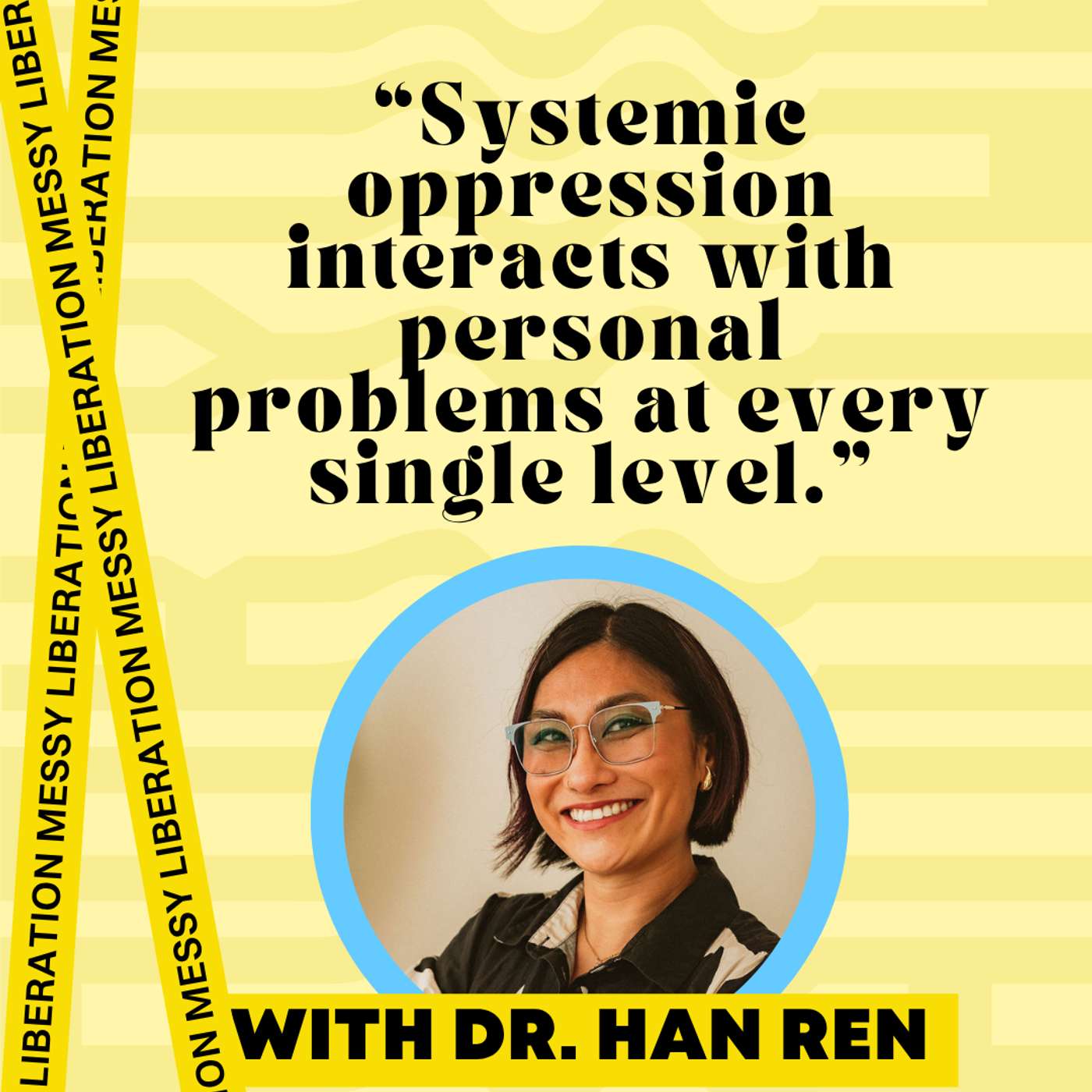
    Why Mental Health Care Is Failing Marginalized Communities (with Dr. Han Ren)

    Get "Liberate Your Business" by Becky Mollenkamp https://liberateyourbusiness.com/ In this episode of Messy Liberation, hosts Becky Mollenkamp and Taina Brown sit down with Dr. Han Ren, a licensed psychologist and author of the upcoming book The Hyphenated Life, to explore why therapy is inherently political. They discuss the systemic barriers to accessing quality mental health care, how politics shapes therapeutic practice, the dangers of pathologizing trauma responses, and why "therapy speak" often reinforces white supremacy. If you've ever struggled to find a therapist who truly understands your lived experience — or wondered why the mental health field feels so disconnected from issues of justice — this conversation is essential listening. In This Episode, We Get Into: Why therapy and psychology have always been political — even when grad school pretends otherwise How Dr. Han Ren started creating mental health content on TikTok in 2020 to fill gaps in representation The exhausting reality of finding a therapist who understands your marginalized identities Why therapists can no longer afford to keep their values "close to the chest" — it's a safety issue How politics directly impacts what happens in the therapy room (and why that matters) The concept of imposter phenomenon and how it disproportionately affects people from marginalized communities Why pathologizing trauma responses is a form of social control How "therapy speak" reinforces white supremacy and individualism The model minority myth and how different communities are villainized by mental health narratives Why healing is for everyone, but therapy doesn't have a monopoly on healing The role of self-love, community, grief, and "doing the reps" in real healing Resources Mentioned: The Hyphenated Life by Dr. Han Ren: https://amzn.to/3RhbmmF Borderlands/La Frontera by Gloria Anzaldúa: https://amzn.to/3PTXnml Dr. Han Ren's website: https://www.drhanren.com/ Dr. Han Ren on TikTok: https://www.tiktok.com/@drhanren Dr. Han Ren on Instagram: https://www.instagram.com/dr.han.ren/ 🎤 JOIN US IN THE FEMINIST PODCASTERS COLLECTIVE: http://feministpodcastcollective.com/

  • June 1 · 54 min

    How to Have Difficult Conversations Without Losing Yourself (with Danielle Marshall)

    Get "Liberate Your Business" by Becky Mollenkamp https://liberateyourbusiness.com/ In this episode of Messy Liberation, hosts Becky Mollenkamp and Taina Brown sit down with equity strategist and executive coach Danielle Marshall to explore the art of having difficult conversations across political and ideological divides. They discuss the limitations of echo chambers, the difference between engagement and community, and why being able to hold multiple perspectives — even when you disagree — is essential for creating real change. If you've ever struggled with whether to engage someone whose views challenge yours, this conversation offers a refreshing framework for navigating disagreement without sacrificing your values. In This Episode, We Get Into: Why echo chambers feel safe but can be limiting — and when that matters The difference between engaging with people and bringing them into your inner community How to set a clear goal before entering a challenging conversation Marjorie Taylor Greene as a real-time case study in people changing their minds (yes, really) Why we're so afraid to be wrong — and how binary thinking keeps us stuck The burden of trying to convince everyone to see things your way How cancel culture makes it harder to hold space for nuance and change Everything is political: how even your garbage and clothing choices are political acts Why "convincing you is not my ministry" might be the most freeing phrase you hear today How to ask yourself: Is this perspective serving me — and how is it working for me? Danielle Marshall's website: culture-principles.com 🎤 JOIN US IN THE FEMINIST PODCASTERS COLLECTIVE: http://feministpodcastcollective.com/
  • May 27 · 45 min

    100th Episode LIVE

    Get "Liberate Your Business" by Becky Mollenkamp https://liberateyourbusiness.com/ Becky Mollenkamp and Taina Brown celebrate reaching 100 episodes of Messy Liberation, the feminist podcast dedicated to helping listeners understand the world through an intersectional feminist lens. In this milestone live episode, they reflect on two years of consistent conversations about pop culture, politics, social justice, and the power of slow, sustainable activism. IN THIS EPISODE, WE GET INTO: Celebrating 100 episodes and why most podcasts don't make it this far The origin story: how Becky and Taina met and decided to start a podcast together What keeps the show sustainable and consistent over two years How personal growth and social progress both require a long-term lens The power of showing up in your life and relationships, even in small ways Why "everything is political" and how that framework changes how we move through the world The upcoming "Everything Is Political" series covering topics like composting, fashion, data analysis, and therapy Honoring your capacity and burnout prevention in activism and creative work Reflecting on monumental personal growth that only becomes visible over time The importance of community touchpoints and consistent spaces for learning and connection 🎤 JOIN US IN THE FEMINIST PODCASTERS COLLECTIVE: https://feministpodcastcollective.com/

  • May 18 · 41 min

    Punching Up vs. Punching Down: What the Kevin Hart Roast Reveals About Power

    Get "Liberate Your Business" by Becky Mollenkamp https://liberateyourbusiness.com/ Becky Mollenkamp and Taina Brown unpack the controversy around the Kevin Hart roast, exploring why comedy that punches down reinforces harmful power dynamics. They discuss how roasts, jokes about women's bodies, and casual misogyny contribute to a larger cultural moment where rights and representation are being systematically stripped away—and why pushing back matters now more than ever. In This Episode, We Get Into: Why roasts make us uncomfortable (and why that matters) The difference between punching up, punching laterally, and punching down in comedy How jokes about women's bodies and Black women's intelligence don't exist in a vacuum The connection between rape culture humor and the loss of reproductive rights Why "it's just a joke" is never just a joke when power dynamics are at play How comedy can either challenge or reinforce oppressive systems The importance of asking "what's funny about that?" when jokes cross the line Why people with privilege need to be the ones speaking up in rooms where marginalized people are the target How cultural moments like this contribute to the normalization of racism, misogyny, and authoritarianism Ways to push back without being aggressive—and why it matters 🎤 JOIN US IN THE FEMINIST PODCASTERS COLLECTIVE: http://feministpodcastcollective.com/
  • May 11 · 38 min

    Performative Activism, Billionaire Art Shows, and the Myth of Meritocracy

    Get "Liberate Your Business" by Becky Mollenkamp https://liberateyourbusiness.com/ In this episode of Messy Liberation, hosts Becky Mollenkamp and Taina Brown dive into the tone-deaf spectacle of the Met Gala, unpacking what celebrity wealth displays reveal about economic inequality and performative activism. They also explore the myth of meritocracy in higher education, the emotional labor of parenting during high-stakes testing, and how to find joy and rest when everything feels heavy. In This Episode, We Get Into: Why the Met Gala feels like a "let them eat cake" moment during skyrocketing inflation and wealth inequality The difference between art as subversion and art as "sucking the dick of power" Performative activism vs. real protest (looking at you, Sarah Paulson's dollar bill accessory) How billionaires like Jeff Bezos hosting the Met Gala undercuts any claim of artistic rebellion The myth that going to Harvard (or other elite schools) is the secret to wealth How legacy admissions and cronyism maintain class hierarchies in higher education Supporting kids through stressful standardized testing without reinforcing toxic achievement culture Processing grief, finding dopamine hits in gamified productivity, and giving yourself permission to rest The slow, steady growth of creative projects you do just because you love them Why we keep showing up for these conversations (and thank you for listening) 🎤 JOIN US IN THE FEMINIST PODCASTERS COLLECTIVE: http://feministpodcastcollective.com/
  • May 4 · 47 min

    Finding Agency When the World Is on Fire

    Get "Liberate Your Business" by Becky Mollenkamp https://liberateyourbusiness.com/ In this episode of Messy Liberation, hosts Becky Mollenkamp and Taina Brown dig into Trump's latest authoritarian moves — from putting his face on passports to plastering government buildings with his image. They explore the privilege of leaving the country when things get dark, the importance of staying present when the world feels like it's on fire, and small acts of resistance that help us reclaim agency in impossible times. In This Episode, We Get Into: Trump's plan to put his photo in U.S. passports (and why that's some dictator-level nonsense) The tan suit vs. sitting in your own shit: a study in Republican hypocrisy Why "just leave the country" is peak privilege and not as easy as people think The emotional toll of coming home from vacation to this dumpster fire How post-vacation blues hit different when your country is falling apart Becky's "Bring the Magic" challenge: finding agency through small acts of kindness Why being present isn't toxic positivity — it's survival Taina's spring gardening as embodied resistance Finding ways to control your cortisol when the world is literally on fire Choosing not to have a heart attack while everything burns around you 🎤 JOIN US IN THE FEMINIST PODCASTERS COLLECTIVE: http://feministpodcastcollective.com/
  • April 27 · 46 min

    Why Mental Health Days Are Resistance (Not Self-Indulgence)

    Get "Liberate Your Business" by Becky Mollenkamp https://liberateyourbusiness.com/ In this episode of Messy Liberation, hosts Becky Mollenkamp and Taina Brown dive into why mental health days matter more than ever, and why the world won't stop demanding productivity just because you're feeling overwhelmed. They discuss how to recognize when you need rest, navigate guilt around taking time off, challenge capitalist expectations around constant productivity, and build community care into your life even when our culture doesn't make it easy. If you've ever felt like you're supposed to just brush your teeth and go to work while the world is on fire, this conversation is for you. In This Episode, We Get Into: • Why the world feels heavier as we age, and whether things are actually worse now or if we're just more aware • How neuroscience explains why young people make different decisions (spoiler: their frontal lobes aren't fully developed yet) • The real cost of living in a culture that expects "business as usual" no matter what's happening in the world • Why mental health days aren't just about rest; they're about resistance to capitalist productivity culture • The invisible labor of managing a household and why "partnership" doesn't automatically mean equality • How to ask for help even when you feel like you shouldn't have to Why we've lost the village model of community care, and how to start rebuilding it • Setting boundaries around work, rest, and what you're actually capable of in a given moment • The difference between rest as recovery and rest as a regular practice • Why you need community care whether you're partnered up or not Resources Mentioned: • "How We Show Up: Reclaiming Family, Friendship, and Community" by Mia Birdsong: https://amzn.to/41U8M8h • "Liberate Your Business" by Becky Mollenkamp: https://beckymollenkamp.com/book/ 🎤 JOIN US IN THE FEMINIST PODCASTERS COLLECTIVE: http://feministpodcastcollective.com/
  • April 20 · 8 min

    Wealth, Fame, and White Privilege: Why "Get Rich" Feminism Is Broken

    Get "Liberate Your Business" by Becky Mollenkamp https://liberateyourbusiness.com/ In this episode of Messy Liberation, hosts Becky Mollenkamp and Taina Brown explore wealth, fame, and privilege through an intersectional feminist lens. Fresh off Taina's trip to Paris, the conversation unpacks how capitalism conditions us to believe money solves all problems, why being rich doesn't equal happiness, and how white women need to reckon with the ways whiteness shapes their relationship to money and power—even while experiencing gender-based oppression. In This Episode, We Get Into: Why we're conditioned to believe celebrities and wealthy people have no problems (and why that's bullshit) How anxiety shapes the way we think about money, safety, and access The difference between financial security and being rich-rich—and why one matters more than the other What fame actually costs: privacy, safety, constant scrutiny, and never knowing who's around you for the right reasons Why having money doesn't erase trauma, PTSD, or the way our brains are wired How wealth can buy access to things that lead to happiness—therapy, rest, travel, time with loved ones—without being a cure-all The isolation and judgment that can come with having more money than the people around you Why white women need to stop centering their own experiences when talking about wealth and financial liberation How the "all women need to get wealthy" narrative erases the different lived realities of BIPOC women Why it's critical for white women to understand that gender oppression and white privilege can (and do) coexist 🎤 JOIN US IN THE FEMINIST PODCASTERS COLLECTIVE

  • April 13 · 46 min

    The Hidden Labor of Traveling While Fat, Queer, and Disabled

    Get "Liberate Your Business" by Becky Mollenkamp https://liberateyourbusiness.com/ Becky Mollenkamp and Taina Brown get into the often-overlooked politics of travel — from queer safety and fat-body accessibility to the colonial mindset baked into Western travel culture. They explore how identity shapes every aspect of a trip, why travel is both a privilege and a political act, and what it actually looks like to show up in someone else's space with humility, curiosity, and respect. In This Episode, We Get Into: How Taina and her wife navigate travel as queer, fat-bodied, disabled women of color — including the research they do before choosing a destination The exhausting labor of traveling with multiple marginalized identities: wheelchair assistance, medications, masking, claustrophobia, seatbelt extenders, and more Why Europe — despite its appeal — can be deeply inaccessible for fat and disabled travelers, and why the Americans with Disabilities Act is actually one of the US's most important pieces of legislation The colonial mindset embedded in how Americans (especially wealthy white Americans) show up abroad — from demanding McDonald's in Peru to being obnoxiously loud in spaces that have different cultural norms How the cost of air travel continues to widen the gap between the haves and have-nots, and what it means when only the most elite get to see the world The difference between curating your travel experience and showing up as an entitled American tourist who expects to be accommodated Becky's life-changing high school trip to the USSR — and why she believes international travel at a formative age is one of the greatest gifts a young person can receive Taina's experience at a travel company in LA, and some of the most entitled client behavior she witnessed firsthand Why "different" is a better word than "weird" — and how Becky is teaching her 10-year-old son to navigate cultural difference with curiosity instead of judgment How Hawaiians and other communities are pushing back against tourism — and why some destinations are now off Becky's bucket list entirely 🎤 JOIN US IN THE FEMINIST PODCASTERS COLLECTIVE

  • April 6 · 50 min

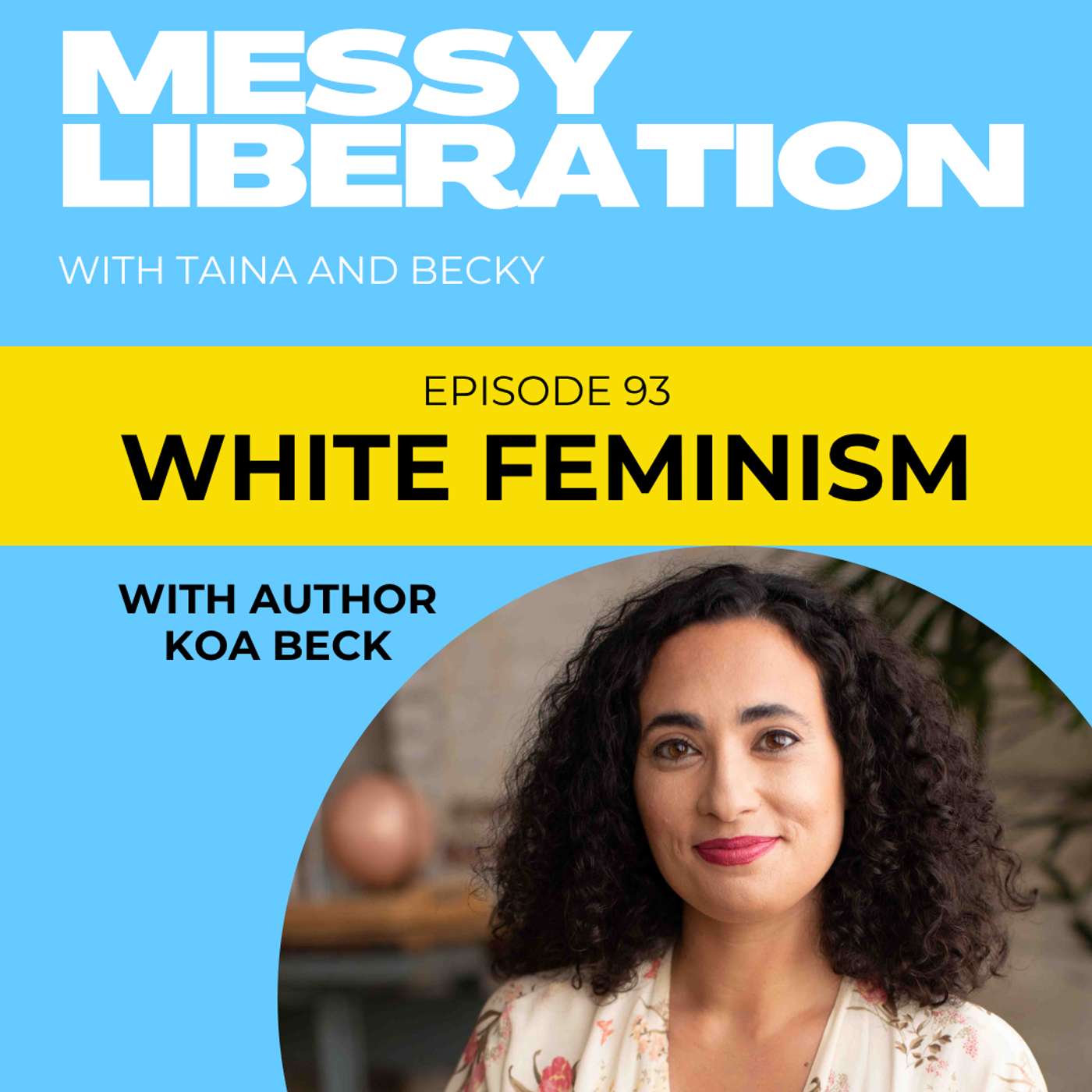
    White Feminism, Power, and Who Gets Left Behind with White Feminism Author Koa Beck

    Get "Liberate Your Business" by Becky Mollenkamp https://liberateyourbusiness.com/ What is white feminism—really—and how does it continue to shape culture, media, and power? In this episode of Messy Liberation, Becky Mollenkamp and Taina Brown sit down with author and journalist Koa Beck to unpack the origins, impact, and ongoing evolution of white feminism. Koa shares how her experience working in mainstream women’s media exposed the gap between “feminism” as a label and feminism as a practice. Together, they explore how white feminism centers privilege, rewards assimilation, and leaves marginalized communities behind. They also get into: • Why feminism isn’t one thing (and never has been) • The difference between adapting to systems vs. changing them • How young people today are engaging with these ideas in more nuanced ways • The role of media, capitalism, and culture in shaping feminist narratives • Koa’s new work on “Valley Girl” culture and what it reveals about gender, race, and power • The deeply flawed foster care system and how systemic inequality shows up in family courts This is a conversation about unlearning, discomfort, and telling the truth—even when it costs you. 📚 Resources & Mentions • Koa Beck's essay about identity in Salon • "White Feminism" by Koa Beck • Koa Beck’s “Valley Girl” Substack • Koa Beck's Massachusetts Review essay on foster care and adoption 🎤 JOIN US IN THE FEMINIST PODCASTERS COLLECTIVE

  • March 30 · 48 min

    The Truth About “Believe All Women” (It’s Not What You Think)

    Get "Liberate Your Business" by Becky Mollenkamp https://liberateyourbusiness.com/ What do you do when someone you know is accused of causing harm, and it doesn’t match your experience of them? In this episode of Messy Liberation, Becky and Taina dive into the messy, uncomfortable space between personal truth and collective reality. From celebrity accountability to corporate boycotts, they unpack how nuance gets lost in a world that craves hot takes and binary thinking. This conversation explores the tension between believing harm, honoring lived experience, and navigating systems that are fundamentally flawed. Because the truth is: most things aren’t either/or—they’re both/and. 💥 Discussed in This Episode: • Why saying “that wasn’t my experience” can be harmful—and when it isn’t • The difference between gaslighting and sharing a personal perspective • How power, platform, and identity shape accountability • The reality that most people do know someone who has caused harm • Why personal experience ≠ universal truth • The concept of lowercase truth vs. capital-T Truth • How binary thinking limits our ability to engage with complexity • The role of systemic racism in how harm and accountability are perceived • Why calling the police isn’t always a safe or just solution • What harm reduction and community accountability can look like • Cancel culture vs. actual accountability • Why cancel culture may be more appropriate for corporations than individuals • The limits of boycotts—and how capitalism restricts our choices • The privilege baked into “ethical consumption” conversations • Why no one is fully outside harmful systems (yes, even you) • Holding people accountable without flattening their humanity or talent • The danger of moral superiority in activism spaces 🧠 Key Takeaways: • You can hold multiple truths at once, even when they conflict • Believing harm doesn’t require abandoning critical thinking • Your experience with someone is real, but it’s not the whole picture • Systems (like capitalism and policing) shape outcomes more than individual intent • There is no “perfect” ethical choice under capitalism, only more informed ones • Accountability should focus on repair and harm reduction—not just punishment Nuance isn’t weakness—it’s necessary for justice 🎤 JOIN US IN THE FEMINIST PODCASTERS COLLECTIVE

  • March 23 · 55 min

    The Manosphere Is Raising Boys Into Fascism (+ "The Bride" review and art talk)

    Get "Liberate Your Business" by Becky Mollenkamp https://liberateyourbusiness.com/ Becky and Taina dig into the rise of the manosphere, toxic masculinity, and the very real pipeline from boyhood insecurity to adult misogyny. What starts as a conversation about a Netflix documentary quickly spirals into a deeper, messier truth: we are watching unhealed men build entire belief systems—and movements—around avoiding their own pain. They unpack how patriarchy, absent or harmful parenting dynamics, and systemic barriers to mental health support shape the men who go on to harm others at scale. This episode also explores the tension between empathy and accountability, the role of parenting in disrupting these cycles, and why “just get therapy” isn’t as simple (but is still necessary). Plus: a powerful conversation about fatherhood, chosen family, and what it means to grow up without the support you deserved—and how people find ways to survive anyway. 🧠 Discussed in This Episode: • The Netflix “manosphere” documentary and why it falls short • The manosphere pipeline: from young boys to radicalized men • Why men avoid therapy, and the cultural systems reinforcing that • How trauma, especially around parents, shapes harmful behavior • The tension between understanding harm vs. excusing it • Parenting boys in a misogynistic, algorithm-driven world • The role of YouTube, gaming culture, and online communities • Why representation and intersectionality matter at a systemic level • The myth of the “absent father” narrative and its racist roots • The lasting impact of the Moynihan Report • Fatherhood as a role vs. identity—and who gets to opt out • “Fake dads,” parasocial relationships, and emotional survival • The feminist critique of parenting structures and gender expectations • Art, intention vs. impact, and how we interpret meaning • Film discussion: The Bride and feminist storytelling in cinema 🔗 Resources Mentioned: • "Why Does Patriarchy Persist?" by Carol Gilligan and Naomi Snider • The Moynihan Report • The Manosphere on Netflix 🎤 JOIN US IN THE FEMINIST PODCASTERS COLLECTIVE