Skip to content
Artwork for Max Agency
Max Agency · Thursday · 1 hr 7 min

Inside Clay’s GTM agent rebuild

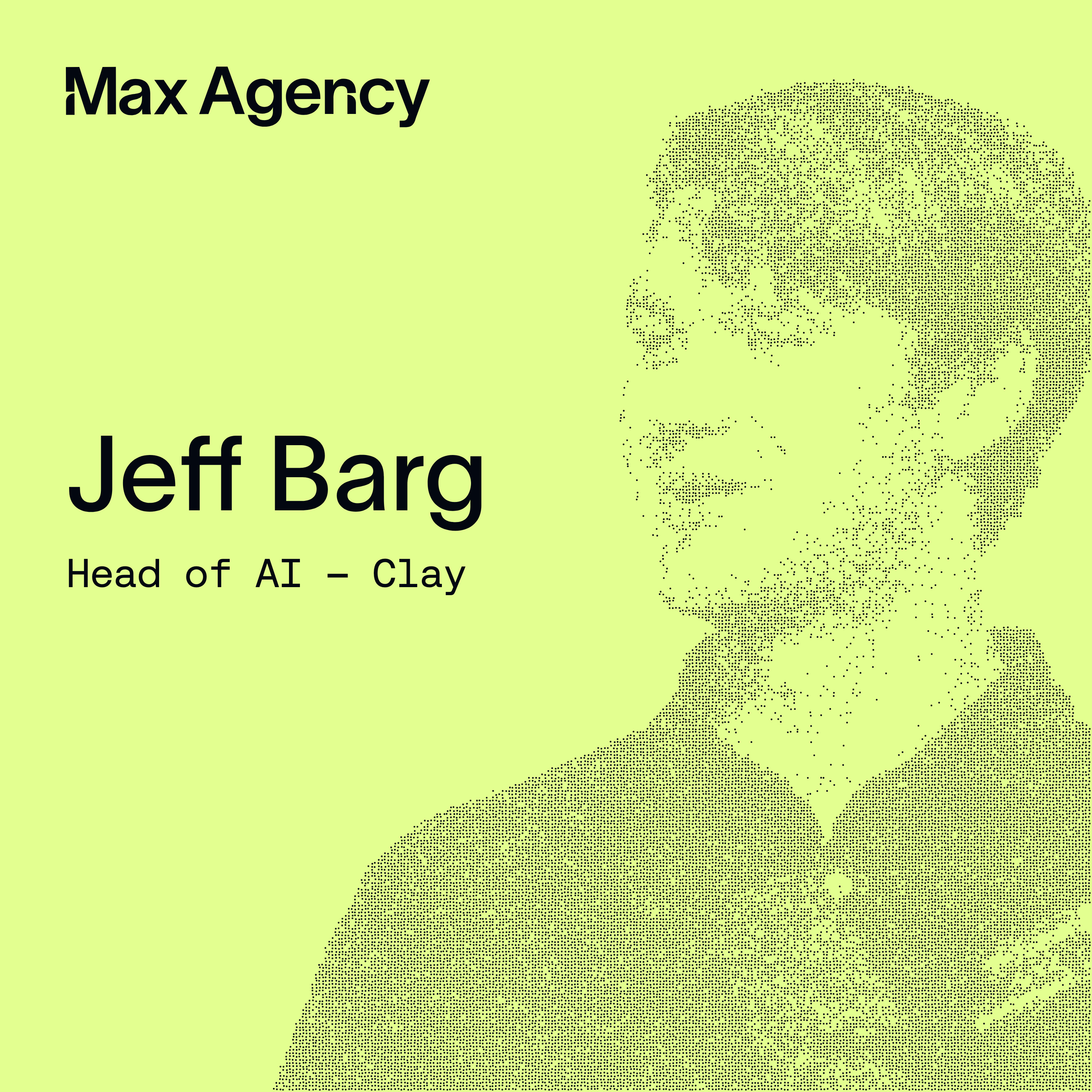
Jeff Barg is Head of AI at Clay, the go-to-market platform for list building, data enrichment and orchestration, with a dataset of 900 million contacts and 40 million companies. Clay recently launched a new global agent, built around a coding agent that runs on the same CLI external agents use. In this conversation, Jeff explains why Clay got more out of harness engineering than post-training, how the agent asks for approval on 100+ line Bash commands, and why he’d rather charge for tokens than outcomes. – We also discuss: Where a first-party agent beats a plugin on latency and cost Making a SQL-like query language for Clay’s search platform The case for picking an off-the-shelf harness Why Codex is “really bad” at debugging long traces Why memory came before the agent – Timestamps: (00:00) Introduction (01:11) From Sculptor to the global agent: tasks vs outcomes (07:32) Making Clay agent-friendly, and the CLI RevOps teams love (11:50) How Clay’s evals moved from capabilities to user journeys (15:54) First-party agent vs plugin: when to build your own (20:05) Why Clay built around a coding agent (21:53) What post-training taught Clay, and a SQL-like search language (26:49) The case for an off-the-shelf harness (30:14) Do lab-built harnesses really work best? (33:10) Running the agent outside the sandbox (37:51) Why Codex is bad at debugging long traces (41:16) Knowledge Hub: building memory before the agent (46:25) Multiplayer agents, and what the agent looks like in Slack (48:24) How close the agent is to an AI head of growth (53:44) Where the harness ends and infrastructure begins (56:57) Why Clay would rather charge for tokens than outcomes (59:14) Fine-tuning, and a post-trained model router for Claygent (01:02:37) Approvals for 100-line Bash commands (01:06:36) Eval environments and simulated users – References: ⁠Account Agents (Clay)⁠ ⁠BullMQ⁠ ⁠Christina Cacioppo⁠ ⁠Claude Code⁠ ⁠Claude Fable⁠ ⁠Claude Haiku⁠ ⁠Claude Opus⁠ ⁠Claude Sonnet⁠ ⁠Clay⁠ ⁠Clay Agent⁠ ⁠Clay CLI⁠ ⁠Claygent⁠ ⁠Claygent auto-mode⁠ ⁠Claygent Builder⁠ ⁠Codex⁠ ⁠Deep Agents⁠ ⁠Dots (OpenAI)⁠ ⁠Harvey⁠ ⁠Instinct⁠ ⁠Knowledge Hub (Clay)⁠ ⁠LangSmith⁠ ⁠LangSmith Chat (formerly Polly)⁠ ⁠LangSmith Engine⁠ ⁠Muse (Meta)⁠ ⁠OpenClaw⁠ ⁠Parker Conrad⁠ ⁠Pi⁠ ⁠QuickJS⁠ – Where to find Jeff: ⁠LinkedIn⁠ ⁠Twitter/X⁠ – Where to find Harrison: ⁠LinkedIn⁠ ⁠Twitter/X⁠ – Where to find LangChain: ⁠Website⁠ ⁠Docs⁠ – Send feedback or questions to ⁠maxagency@langchain.dev

0:00-1:07:55

transcript

No transcript — this publisher did not publish one.

show notes

Jeff Barg is Head of AI at Clay, the go-to-market platform for list building, data enrichment and orchestration, with a dataset of 900 million contacts and 40 million companies. Clay recently launched a new global agent, built around a coding agent that runs on the same CLI external agents use. In this conversation, Jeff explains why Clay got more out of harness engineering than post-training, how the agent asks for approval on 100+ line Bash commands, and why he’d rather charge for tokens than outcomes.

 –

We also discuss:

  • Where a first-party agent beats a plugin on latency and cost

  • Making a SQL-like query language for Clay’s search platform

  • The case for picking an off-the-shelf harness

  • Why Codex is “really bad” at debugging long traces

  • Why memory came before the agent 

 –

Timestamps:

(00:00) Introduction
(01:11) From Sculptor to the global agent: tasks vs outcomes
(07:32) Making Clay agent-friendly, and the CLI RevOps teams love
(11:50) How Clay’s evals moved from capabilities to user journeys
(15:54) First-party agent vs plugin: when to build your own
(20:05) Why Clay built around a coding agent
(21:53) What post-training taught Clay, and a SQL-like search language
(26:49) The case for an off-the-shelf harness
(30:14) Do lab-built harnesses really work best?
(33:10) Running the agent outside the sandbox
(37:51) Why Codex is bad at debugging long traces
(41:16) Knowledge Hub: building memory before the agent
(46:25) Multiplayer agents, and what the agent looks like in Slack
(48:24) How close the agent is to an AI head of growth
(53:44) Where the harness ends and infrastructure begins
(56:57) Why Clay would rather charge for tokens than outcomes
(59:14) Fine-tuning, and a post-trained model router for Claygent
(01:02:37) Approvals for 100-line Bash commands
(01:06:36) Eval environments and simulated users

 –

References:

 –

Where to find Jeff:

 –

Where to find Harrison:

 –

Where to find LangChain:

 –

Send feedback or questions to ⁠maxagency@langchain.dev

links34