
M365.FM - Modern work, security, and productivity with Microsoft 365
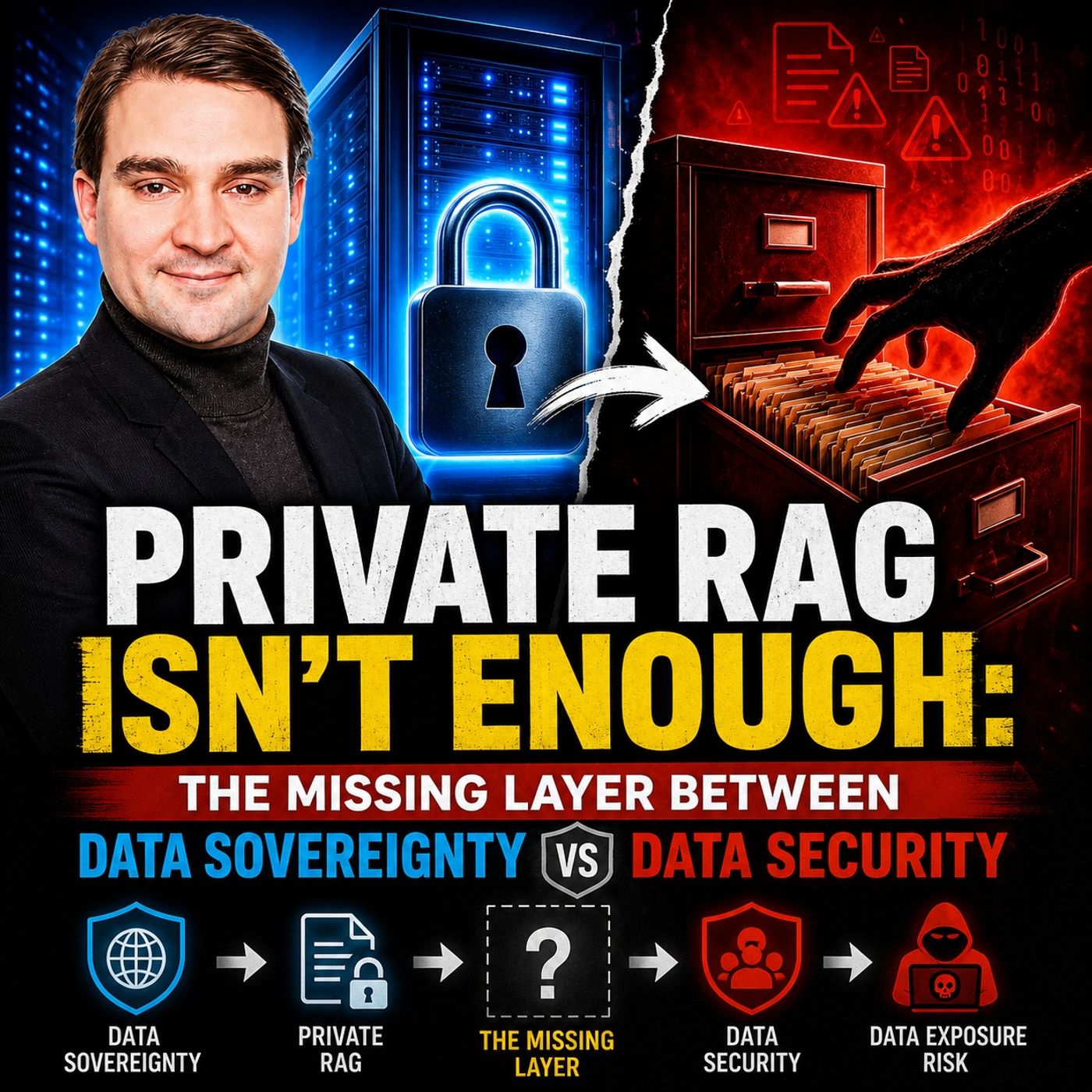
Private RAG Isn't Enough: The Missing Layer Between Data Sovereignty and Data Security
June 20 · 1 hr 11 min · Season 2 · 102.4 MB
0:00-1:11:08
Streams straight from the publisher. podnod never proxies or re-hosts episode audio.
Everyone is talking about Private RAG.Organizations invest heavily in self-hosted vector databases, sovereign cloud environments, private infrastructure, and regional data residency controls. They focus on where data lives, how it moves, and whether it remains inside specific geographic boundaries.But there is a critical question that almost nobody asks.What happens to permissions when documents leave their original system?In this episode of the M365 FM Podcast, we dive deep into one of the most overlooked security challenges in enterprise AI: the gap between data sovereignty and data security. We explore why Private RAG alone does not solve the authorization problem and how organizations are unknowingly creating massive insider data exposure risks when permissions disappear during the indexing process.
WHY DATA SOVEREIGNTY IS NOT DATA SECURITY
Many organizations assume that storing data inside a specific country or private environment automatically makes it secure.The reality is very different.A document stored in a German data center can still become accessible to unauthorized users if its permission model is lost during ingestion into a retrieval system.Key topics include:
THE MOMENT SHAREPOINT PERMISSIONS DISAPPEAR
Most organizations spend years building sophisticated permission structures across SharePoint, Microsoft 365, and enterprise content platforms.Those permissions define:
THE THREE BIGGEST PRIVATE RAG MYTHS
Many AI projects begin with assumptions that sound reasonable but create dangerous security gaps.This episode breaks down three of the most common misconceptions:
ACL METADATA EXTRACTION: THE MISSING SECURITY LAYER
One of the most important concepts discussed in this episode is ACL metadata extraction.Rather than simply extracting document content, organizations must also preserve the authorization model that determines who can access each document.Topics include:
AUTHORIZATION BEFORE RETRIEVAL
A critical architectural principle explored in this episode is simple:Never retrieve first and filter later.Authorization must occur before retrieval.The discussion covers:
WHY SINGLE AGENTS CREATE SECURITY RISKS
Many organizations are deploying single-agent AI architectures because they are faster to build and easier to understand.However, the episode explains how single-agent systems often become "confused deputies" that operate with excessive privileges and insufficient oversight.Topics include:
THE FIVE-AGENT SECURITY MODEL
To address these challenges, the episode introduces a multi-agent retrieval architecture designed around separation of responsibilities.Listeners learn about:
ZERO TRUST FOR AI SYSTEMS
The principles of Zero Trust are rapidly becoming essential for modern AI deployments.This episode explores how organizations can apply Zero Trust concepts to agentic AI systems by continuously verifying identity, authorization, and trust at every stage of the workflow.Topics include:
MULTI-TENANT AI AND CROSS-CUSTOMER DATA EXPOSURE
One of the most dangerous failure modes in enterprise AI is cross-tenant data leakage.The episode examines real-world architectural mistakes that allow data from one customer, department, or business unit to become visible to another.Discussion areas include:
THE FUTURE OF GOVERNED AI
As AI adoption accelerates, governance becomes a competitive advantage rather than a compliance burden.Organizations that preserve permissions, implement authorization-aware retrieval, and embrace Zero Trust principles will be positioned to scale AI safely across regulated environments.The discussion explores the future of:
Private RAG solves only part of the problem.The real challenge begins when organizations move documents from systems that understand permissions into systems that do not.Without authorization-aware retrieval, preserved access controls, and Zero Trust architecture, even the most sophisticated Private RAG deployment can become a large-scale insider data exposure platform.The future of enterprise AI is not simply about where data lives.It is about ensuring the right people can access the right information at the right time—and nobody else.
Become a supporter of this podcast: https://www.spreaker.com/podcast/m365-fm-modern-work-security-and-productivity-with-microsoft-365--6704921/support.
WHY DATA SOVEREIGNTY IS NOT DATA SECURITY
Many organizations assume that storing data inside a specific country or private environment automatically makes it secure.The reality is very different.A document stored in a German data center can still become accessible to unauthorized users if its permission model is lost during ingestion into a retrieval system.Key topics include:
- Data sovereignty versus data security
- Private RAG misconceptions
- Regional hosting limitations
- Compliance versus authorization
- The sovereignty illusion
THE MOMENT SHAREPOINT PERMISSIONS DISAPPEAR
Most organizations spend years building sophisticated permission structures across SharePoint, Microsoft 365, and enterprise content platforms.Those permissions define:
- Who can access documents
- Which teams can view content
- Executive-only information
- Legal and HR restrictions
- External sharing boundaries
THE THREE BIGGEST PRIVATE RAG MYTHS
Many AI projects begin with assumptions that sound reasonable but create dangerous security gaps.This episode breaks down three of the most common misconceptions:
- Self-hosted automatically means secure
- VPN access equals authorization
- The LLM will enforce security policies
ACL METADATA EXTRACTION: THE MISSING SECURITY LAYER
One of the most important concepts discussed in this episode is ACL metadata extraction.Rather than simply extracting document content, organizations must also preserve the authorization model that determines who can access each document.Topics include:
- Access Control Lists (ACLs)
- Permission inheritance
- Microsoft Graph integration
- Azure AI Search indexing
- Entra ID security identifiers
- Authorization metadata design
AUTHORIZATION BEFORE RETRIEVAL
A critical architectural principle explored in this episode is simple:Never retrieve first and filter later.Authorization must occur before retrieval.The discussion covers:
- Security trimming
- Pre-filtering versus post-filtering
- Query-time authorization
- Permission-aware vector search
- Tenant-aware filtering
- Role-based access control
WHY SINGLE AGENTS CREATE SECURITY RISKS
Many organizations are deploying single-agent AI architectures because they are faster to build and easier to understand.However, the episode explains how single-agent systems often become "confused deputies" that operate with excessive privileges and insufficient oversight.Topics include:
- Prompt injection risks
- Insider threat exposure
- Retrieval abuse
- Authorization failures
- Governance challenges
- Agent accountability
THE FIVE-AGENT SECURITY MODEL
To address these challenges, the episode introduces a multi-agent retrieval architecture designed around separation of responsibilities.Listeners learn about:
- Routing agents
- Query translation agents
- Authorized retrieval agents
- Validation agents
- Response generation agents
ZERO TRUST FOR AI SYSTEMS
The principles of Zero Trust are rapidly becoming essential for modern AI deployments.This episode explores how organizations can apply Zero Trust concepts to agentic AI systems by continuously verifying identity, authorization, and trust at every stage of the workflow.Topics include:
- Entra ID integration
- OAuth token exchange
- Workload identities
- Delegated permissions
- Mutual TLS
- Identity propagation across agents
MULTI-TENANT AI AND CROSS-CUSTOMER DATA EXPOSURE
One of the most dangerous failure modes in enterprise AI is cross-tenant data leakage.The episode examines real-world architectural mistakes that allow data from one customer, department, or business unit to become visible to another.Discussion areas include:
- Tenant isolation
- Semantic cache risks
- Cross-tenant retrieval
- Shared vector databases
- Encryption boundaries
- Compliance requirements
THE FUTURE OF GOVERNED AI
As AI adoption accelerates, governance becomes a competitive advantage rather than a compliance burden.Organizations that preserve permissions, implement authorization-aware retrieval, and embrace Zero Trust principles will be positioned to scale AI safely across regulated environments.The discussion explores the future of:
- Agentic AI governance
- Permission-aware retrieval
- AI security architecture
- Regulatory compliance
- Enterprise AI adoption
- Sovereign AI strategies
Private RAG solves only part of the problem.The real challenge begins when organizations move documents from systems that understand permissions into systems that do not.Without authorization-aware retrieval, preserved access controls, and Zero Trust architecture, even the most sophisticated Private RAG deployment can become a large-scale insider data exposure platform.The future of enterprise AI is not simply about where data lives.It is about ensuring the right people can access the right information at the right time—and nobody else.
Become a supporter of this podcast: https://www.spreaker.com/podcast/m365-fm-modern-work-security-and-productivity-with-microsoft-365--6704921/support.